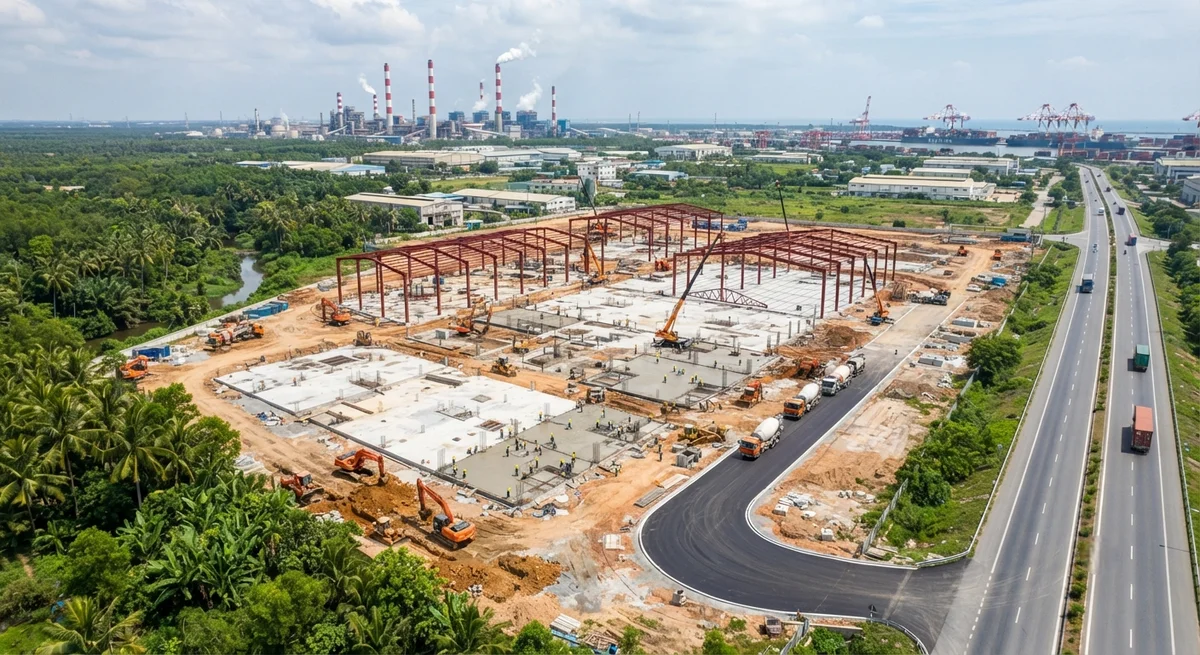
Vietnam offers compelling advantages as a diversification location for global carbon fiber manufacturing, including labor costs 40% below coastal China, zero-tariff access to EU, Japan, and South Korean markets, and expanding petrochemical infrastructure for PAN precursor production.
Vietnam: The Next Carbon Fiber Manufacturing Hub?
Global carbon fiber production capacity has grown steadily over the past decade, reaching approximately 200,000 metric tons per year in 2025. Yet this capacity remains heavily concentrated in just three regions — China accounts for roughly 45 percent of global capacity, Japan and South Korea together represent 25 percent, and the United States and Europe share the remaining 30 percent. This geographic concentration creates supply chain vulnerabilities: tariff disputes, shipping disruptions, geopolitical tensions, and single-source dependencies have all caused carbon fiber price volatility and delivery delays for buyers outside these dominant regions.
Vietnam has emerged as a compelling candidate for carbon fiber manufacturing diversification. The country offers a unique combination of cost-competitive labor, strategic geographic positioning near major shipping lanes, an expanding industrial base, and increasingly favorable trade agreements. While Vietnam currently has no large-scale PAN precursor or carbon fiber production facilities — all carbon fiber used by Vietnamese manufacturers is imported — this situation is changing rapidly as multinational composite material producers examine Southeast Asian expansion strategies.
Cost Advantages: Labor, Energy, and Capital
The primary driver of Vietnam's manufacturing competitiveness is its labor cost structure, but energy and capital costs also play significant roles. The following table compares the key cost factors for establishing a carbon fiber production line (20,000 metric tons per annum PAN precursor + 10,000 metric tons per annum carbon fiber) across the major producing regions and Vietnam.
Comparative Production Cost Factors
| Cost Factor | China (Jiangsu) | Japan (Ehime) | USA (South Carolina) | Germany (Bavaria) | Vietnam (Binh Duong) |
|---|---|---|---|---|---|
| Skilled factory labor ($/hour) | $5.50 | $28.00 | $24.00 | $32.00 | $3.20 |
| Industrial electricity ($/kWh) | $0.08 | $0.14 | $0.07 | $0.20 | $0.07 |
| Industrial land lease ($/m²/year) | $8 – $15 | $25 – $45 | $4 – $8 | $12 – $25 | $2 – $5 |
| Natural gas ($/MMBtu) | $8.50 | $12.00 | $3.50 | $10.00 | $7.00 |
| Engineering workforce availability | Very high | High | Moderate | High | Growing |
| Corporate income tax (standard) | 25% | 30% | 21% | 30% | 20% |
| Tax incentives (new manufacturing) | 15% for strategic industries | Limited | Varies by state | Limited | 10% for 15 years (HI-TECH park) |
| Construction cost ($/m² industrial facility) | $350 | $1,200 | $900 | $1,500 | $280 |
| Top-tier chemical engineer annual salary | $28,000 | $65,000 | $85,000 | $72,000 | $18,000 |
| Logistics cost (40-ft container export, $) | $650 | $850 | $2,100 | $1,600 | $550 |
Vietnam's labor cost advantage is clear — factory wages are 40 percent lower than China, 85 percent lower than Japan, and 85 percent lower than Germany. For a carbon fiber plant employing 400 workers, this translates to annual labor savings of $2.3 million versus China, $10.5 million versus Japan, and $11.5 million versus Germany. Combined with competitive electricity and land costs, the total operational expenditure for a 10,000-ton carbon fiber plant in Vietnam is estimated to be 18 to 25 percent lower than an equivalent plant in coastal China.
Trade Agreement Advantages
Vietnam's network of free trade agreements (FTAs) provides a structural advantage for carbon fiber manufacturers who export to multiple markets. Carbon fiber classified under HS 6815.10 (carbon fibers and articles of carbon fibers) benefits from preferential tariff rates under the following agreements:
Preferential Tariff Rates for Carbon Fiber Exports from Vietnam
| Export Market | FTA | Standard MFN Tariff | FTA Preferential Rate | Effective Since |
|---|---|---|---|---|
| European Union | EVFTA | 5.2% – 7.0% | 0% (phased out 2024) | 2020 |
| United Kingdom | UKVFTA | 5.2% – 7.0% | 0% | 2021 |
| South Korea | VKFTA | 8.0% | 0% | 2015 |
| Japan | VJEPA | 3.9% | 0% | 2009 |
| ASEAN (intra-bloc) | ATIGA | 5.0% | 0% | 2010 |
| Australia / New Zealand | AANZFTA | 5.0% | 0% | 2010 |
| Chile | VCFTA | 6.0% | 0% | 2014 |
| United States | — (no FTA) | 4.4% – 5.2% | N/A | — |
Vietnam's tariff-free access to the EU, UK, Japan, and South Korea — combined representing over 60 percent of global carbon fiber demand — is a powerful export advantage. For comparison, carbon fiber exported from China faces a 5.2 to 7.0 percent tariff into the EU, adding approximately $500 to $700 per metric ton to the delivered cost. For a 10,000-ton plant exporting 60 percent of its output to these markets, the tariff savings alone amount to $3.0 to $4.2 million annually.
Existing Industrial Infrastructure
Petrochemical Precursor Potential
Vietnam's growing petrochemical sector — anchored by the Long Son Petrochemicals complex (operational since 2023) and the Nghi Son Refinery — provides potential access to acrylonitrile feedstock for PAN precursor production. Acrylonitrile is currently imported primarily from Taiwan, South Korea, and Japan, but domestic production capacity is projected to reach 400,000 metric tons by 2028, reducing precursor material import dependency.
Composite Processing Ecosystem
While Vietnam lacks carbon fiber production, it has a developing composite processing ecosystem. The country hosts over 50 composite manufacturing companies producing fiberglass-reinforced plastics for construction, marine, and automotive applications. Key industrial zones — including the Dinh Vu Industrial Zone (Hai Phong), VSIP (Binh Duong), and Hiep Phuoc Industrial Park (Ho Chi Minh City) — have existing infrastructure capable of supporting carbon fiber production facilities, including wastewater treatment, high-voltage power supply, and port access.
Workforce Development
Vietnam produces approximately 70,000 engineering graduates annually from 150+ universities and technical colleges. While specialty programs in composite materials engineering are limited to a few institutions (Ho Chi Minh City University of Technology, Hanoi University of Science and Technology), the general engineering curriculum provides a strong foundation in chemistry, materials science, and mechanical engineering that can be supplemented with on-the-job training. Several foreign-invested manufacturing facilities in Vietnam have established technical training centers in partnership with local vocational schools — a model that carbon fiber investors could replicate.
Challenges and Risk Factors
Despite the advantages, carbon fiber manufacturers evaluating Vietnam face several significant challenges that must be addressed in any investment decision:
- Supply chain immaturity: Vietnam has no existing PAN precursor production, meaning carbon fiber manufacturers must either build integrated precursor + carbonization facilities (higher capital cost) or import precursor material, which partially offsets the labor and tariff cost advantages
- Skilled workforce gap: While general engineering graduates are plentiful, technicians and engineers with specific experience in high-temperature carbonization, oxidation furnace operation, and surface treatment processes are extremely rare, requiring extensive training programs or expatriate staffing for the first 3 to 5 years of operation
- Industrial gas availability: Carbon fiber production requires large volumes of high-purity nitrogen and argon for the stabilization and carbonization furnaces. Vietnam's industrial gas infrastructure is developing but currently limited — a 10,000-ton carbon fiber plant would consume approximately 8,000 to 12,000 cubic meters per hour of nitrogen, requiring on-site air separation unit investment of $15 to $25 million
- Water and wastewater treatment: The carbon fiber manufacturing process generates wastewater containing chemical oxygen demand (COD) loads from sizing removal and surface treatment steps. Vietnam's environmental regulations have tightened significantly, requiring comprehensive wastewater treatment systems that add $5 to $10 million to capital costs
- Intellectual property protection: Concerns about IP protection in Vietnam remain a consideration for companies with proprietary precursor chemistry, fiber surface treatment technology, or winding process know-how. The 2022 amendments to Vietnam's IP law improved enforcement mechanisms, but practical implementation remains uneven
Strategic Outlook: 2026–2035
Several indicators suggest Vietnam will become a meaningful carbon fiber production location within the next decade. Toray Industries, Teijin, and SGL Carbon have all conducted feasibility studies for Southeast Asian production capacity, and Vietnam has been cited in multiple industry analyst reports as the most likely location for the region's first large-scale carbon fiber plant. The Vietnamese government's 2025 masterplan for composite materials development identifies carbon fiber as a strategic priority, offering investment incentives including corporate income tax holidays (4 years full exemption, 9 years 50 percent reduction), duty-free import of machinery and raw materials, and expedited land allocation procedures.
A realistic timeline projects that Vietnam could host its first 10,000-ton carbon fiber production line by 2029–2030, scaling to 30,000 to 50,000 tons by 2035. This would position Vietnam as a key supplier to the ASEAN composite manufacturing sector (currently valued at $8.3 billion and growing at 7.2 percent CAGR) and as an export base for the EU, Japan, and South Korean markets where tariff-free access provides a decisive cost advantage over Chinese-produced carbon fiber.
Frequently Asked Questions
Has any company announced concrete plans for carbon fiber production in Vietnam?
As of mid-2026, no company has announced a confirmed investment in large-scale carbon fiber production in Vietnam. However, several multinational composite material firms have publicly acknowledged Vietnam as a candidate for future capacity expansion. Hyosung Advanced Materials (South Korea) has the most significant existing presence in Vietnam with its industrial yarn production facility, and industry observers consider it a leading candidate to establish carbon fiber capacity in the country. Formal investment announcements are expected within 12 to 18 months as the global carbon fiber supply-demand balance tightens toward 2028.
How does Vietnam's logistics infrastructure compare to China's for carbon fiber export?
Vietnam's port infrastructure has improved dramatically over the past five years. The deep-water ports at Cai Mep (Ba Ria-Vung Tau), Lach Huyen (Hai Phong), and the newly expanded Tien Sa port (Da Nang) can accommodate the container vessels and break-bulk ships used for carbon fiber export. Shipping costs from Ho Chi Minh City to Rotterdam are 10 to 15 percent lower than from Shanghai to Rotterdam, primarily due to shorter waiting times at port and competitive terminal handling charges. However, Vietnam's internal road and rail network connecting industrial zones to ports is less developed than China's, adding 1 to 2 days of inland transit time for factories located in Binh Duong or Dong Nai provinces.
What are the environmental compliance requirements for carbon fiber manufacturing in Vietnam?
Carbon fiber production facilities in Vietnam must comply with Law on Environmental Protection 2020 (effective 2022), which imposes emission standards for NOx, SOx, particulate matter, and volatile organic compounds (VOCs) from oxidation and carbonization furnaces. Wastewater discharge must meet QCVN 40:2011/BTNMT standards for industrial wastewater. A comprehensive environmental impact assessment (EIA) is required before construction approval, with public consultation requirements for projects in sensitive areas. Vietnam's environmental enforcement has strengthened considerably, with fines of up to $200,000 for violations and potential suspension of operations for serious non-compliance — an important consideration for the carbon-intensive carbon fiber manufacturing process.
Can Vietnam compete with China on carbon fiber production cost and quality?
In terms of raw production cost (operational expenditure), Vietnam holds a 15 to 25 percent advantage over coastal China due to lower labor, electricity, and land costs. However, this advantage narrows when including the additional costs of importing precursor material, developing workforce skills, and building new infrastructure (versus China's existing ecosystem). For quality, Vietnam would need to demonstrate equivalency to Chinese-produced T700-grade fiber — this requires experienced process engineers and a period of production optimization following plant commissioning, typically 6 to 18 months for a new facility. The tariff-free export advantage to EU and Japanese markets, however, is a structural benefit that China cannot match under current trade arrangements.
What would be the estimated capital expenditure for a 10,000-ton carbon fiber plant in Vietnam?
A greenfield integrated carbon fiber production facility in Vietnam (including PAN precursor production, oxidation, carbonization, surface treatment, and finishing) is estimated to require capital expenditure of $350 to $500 million. This is approximately 15 to 20 percent lower than an equivalent facility in Japan or Germany (due to lower construction costs), comparable to a facility in China, and 5 to 10 percent higher than an equivalent facility in the United States (where natural gas costs are significantly lower, reducing energy operating costs). The lower land acquisition cost in Vietnam ($2–5/m²) versus $25–45/m² in Japan partially offsets the additional infrastructure development costs for a greenfield site.
Part of topic
Related Articles
- Recycled Carbon Fiber Market Forecast 2030: Technology Maturity and Commercialization Path
- South Korea Carbon Fiber Market 2026: Hydrogen Economy and Shipbuilding Innovation
- Wind Turbine Blade Leading Edge Protection 2026: Polyurethane, Tape, and Metallic Shield Solutions
- China Carbon Fiber Overcapacity 2026: Price War Impact and Industry Consolidation
- India Carbon Fiber Market 2026: Wind Energy, Aerospace, and Defense Expansion
- PAN Precursor Market 2026: Acrylonitrile Supply and Carbon Fiber Cost Structure
Interested in Our Products?
Contact our team for competitive pricing and technical specifications.
Get a QuoteRelated Products
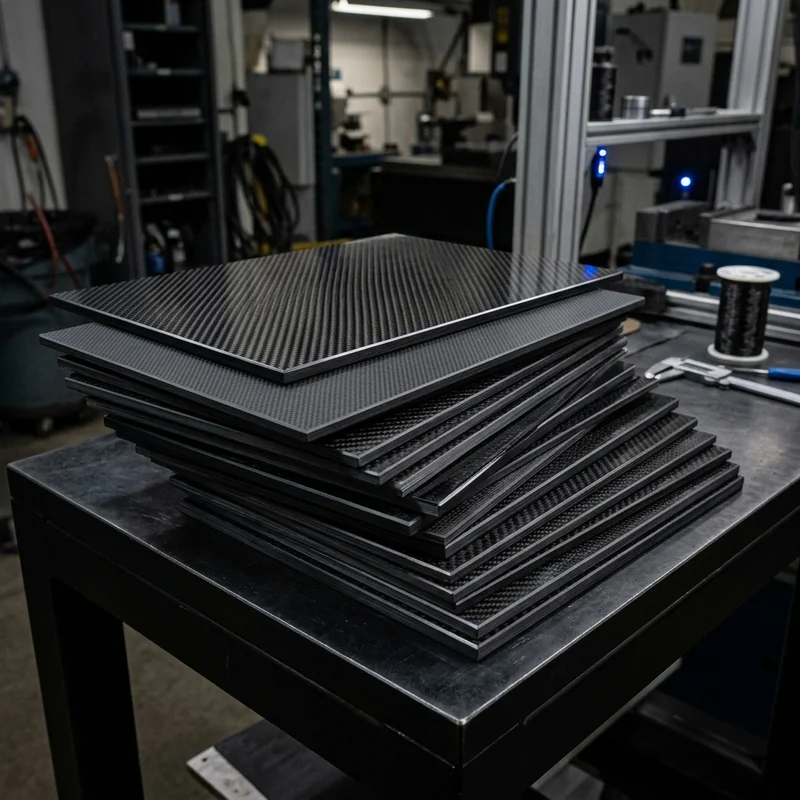
Carbon fiber standard plate-3k stripe
Lightweight, ultra-rigid standard sheets for drone fuselages, robot housings, facades and structural applications.
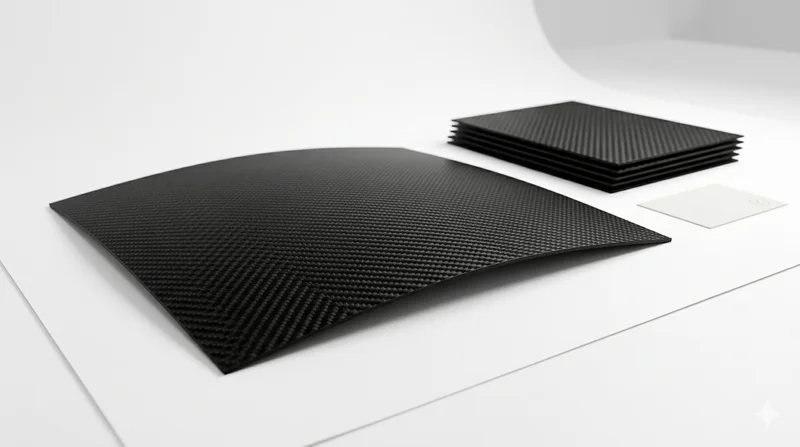
Carbon Fiber Plate — 3K Twill T700 1.5mm
Thin 1.5mm carbon fiber plate with 3K twill weave surface. Lightweight and stiff, commonly used for covers, panels, drone bodies, and applications requiring a premium aesthetic appearance.
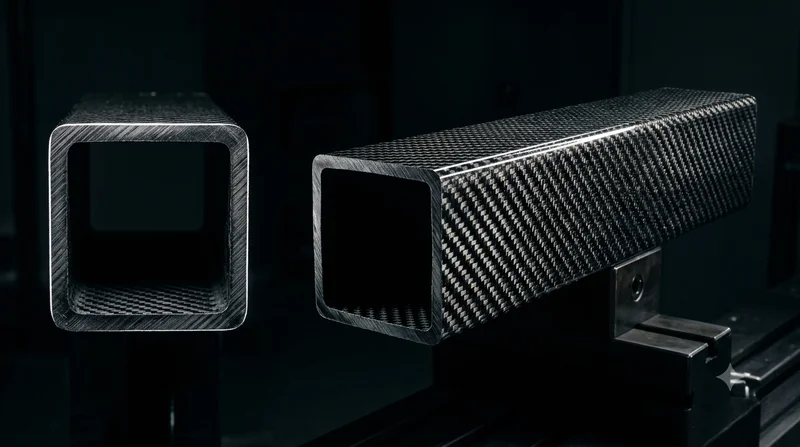
Square Carbon Fiber Tube — 3K Twill T700
Square cross-section carbon fiber tube manufactured with 3K twill weave for torsional strength. Preferred for structural frames, trusses, and support columns where rectangular geometry offers design flexibility.
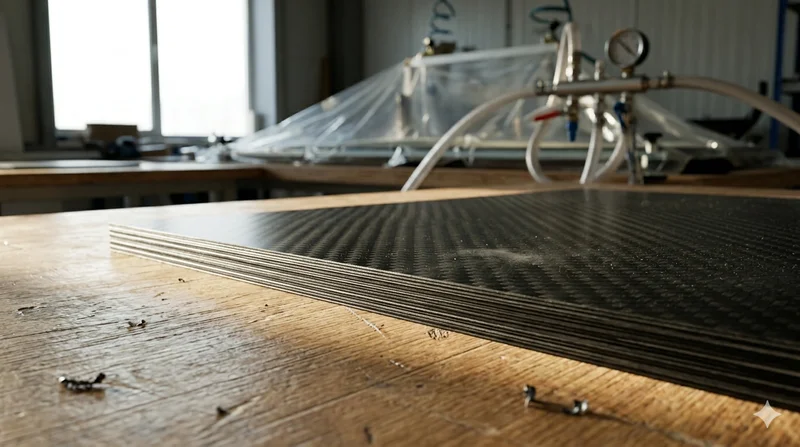
Carbon Fiber Plate — 3K Twill T700 3.0mm
Medium-thickness 3.0mm carbon fiber plate offering significantly higher load capacity while maintaining attractive 3K twill finish. Suitable for structural brackets, reinforcement plates, and load-bearing panels.
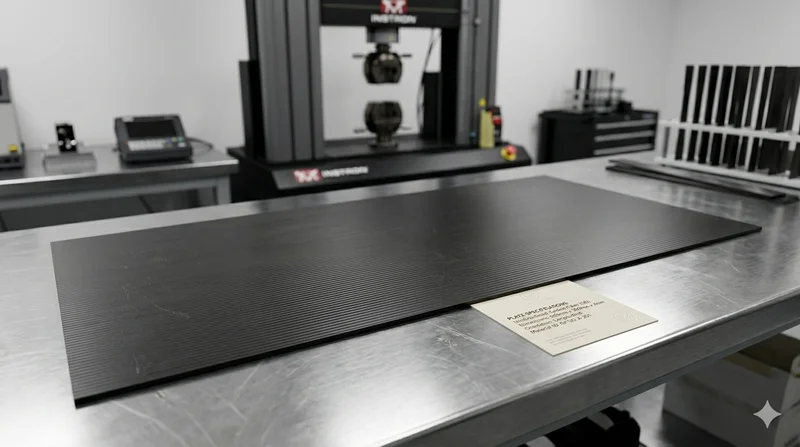
Carbon Fiber Plate — UD Unidirectional T700
Unidirectional carbon fiber plate with all fibers oriented in a single direction for maximum strength along the fiber axis. Essential for structural reinforcements, splints, and applications where load direction is predictable.