
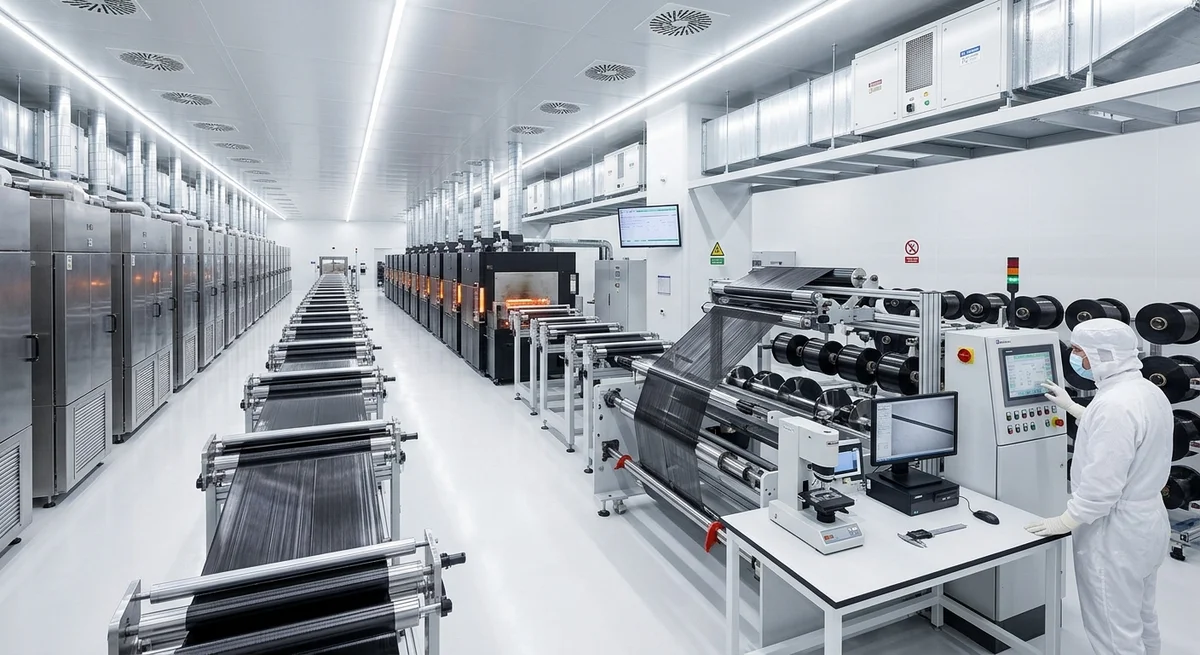
The US carbon fiber market reached 38,200 tonnes in 2025 with 7.2% YoY growth. Defense spending, aerospace recovery, and IRA-driven capacity expansion are reshaping the B2B landscape.
US Carbon Fiber Market 2026: Data-Driven Analysis for B2B Buyers
The United States consumed an estimated 38,200 tonnes of carbon fiber in 2025 (all grades), up 7.2% from 35,600 tonnes in 2024. Projections for 2026 indicate 41,500–42,800 tonnes, driven by three structural forces: sustained defense procurement under the FY2026 NDAA, commercial aerospace rate breaks, and IRA-subsidized domestic production capacity additions.
US Carbon Fiber Demand by End-Use Sector (metric tonnes)
| Sector | 2024 | 2025 | 2026 (est.) | Growth | Share 2026 |
|---|---|---|---|---|---|
| Aerospace and Defense | 11,800 | 13,100 | 14,400 | +9.9% | 34.1% |
| — Commercial Aerospace | 5,600 | 6,500 | 7,400 | +13.8% | 17.5% |
| — Defense and Space | 6,200 | 6,600 | 7,000 | +6.1% | 16.6% |
| Wind Energy | 7,800 | 8,200 | 8,600 | +4.9% | 20.4% |
| Automotive | 4,900 | 5,300 | 5,800 | +9.4% | 13.7% |
| Pressure Vessels (incl. H₂) | 3,100 | 3,600 | 4,200 | +16.7% | 9.9% |
| Sports and Recreation | 3,200 | 3,400 | 3,500 | +2.9% | 8.3% |
| Construction and Infrastructure | 2,400 | 2,600 | 2,800 | +7.7% | 6.6% |
| Other | 2,400 | 2,400 | 2,500 | +4.2% | 5.9% |
| Total | 35,600 | 38,200 | 41,800 | +9.4% | 100% |
Domestic Production Capacity (2026)
| Producer | Location | Capacity (t/yr) | Grades | Expansion |
|---|---|---|---|---|
| Hexcel | Salt Lake City, UT | 6,500 | AS4, IM7, IM9 | +2,000 by Q1 2028 |
| Toray CMA | Decatur, AL | 8,000 | T300, T700, T800 | +3,000 by Q3 2027 |
| Mitsubishi Chemical | Sacramento, CA | 2,500 | TR50S, TRH50 | — |
| Emerging producers (4 firms) | Various | 1,800 | Industrial 50K-60K | +2,500 by 2028 |
| Total US capacity | 22,500 | ~30,000 by 2028 |
The 15,700-tonne deficit was filled by imports from Japan (~9,000 t), Europe (~4,500 t), and China (~2,200 t).
B2B Buyer Implications
- Pricing: Standard-modulus tow: $18–22/kg; intermediate-modulus: $35–50/kg; high-modulus: $80–130/kg. Expect 3–5% annual increases through 2028.
- Lead times: Aerospace prepreg: 14–18 weeks; industrial 50K tow: 8–12 weeks.
- Import tariffs: Section 301 tariffs on Chinese CF remain at 25%.
FAQ
Q: Will the US become self-sufficient in carbon fiber by 2030?
A: Based on expansion plans (22,500 → ~34,000 tonnes by 2028) and projected demand (55,000–60,000 tonnes by 2030), the US will still import 38–43% of consumption. PAN precursor remains the bottleneck — domestic precursor capacity is only 8,000 t/yr vs 18,000 t/yr demand. B2B buyers should maintain dual-source strategies (domestic + Japanese/European) for critical programs.
Q: How does IRA 45X affect carbon fiber pricing?
A: 45X provides $2.20/kg tax credit for domestic CF and $1.10/kg for PAN precursor, reducing effective cost by 8–12%. Buyers should negotiate explicit 45X pass-through clauses in contracts with domestic producers. Note: imported fiber from Japan and Europe is not eligible, widening the domestic-import price gap to $4–7/kg for standard modulus grades.
Q: What impact will 2026 midterm elections have on defense CF demand?
A: FY2026 NDAA funds defense procurement through September 2027. The Next Generation Air Dominance (NGAD) program and B-21 Raider remain funded, but NGAD faces uncertainty if defense spending growth slows below 3% annually post-midterms. However, CHIPS and Science Act funding for domestic CF capacity ($520M allocated) is secured through FY2028 regardless of election outcomes.
Part of topic
Related Articles
- Recycled Carbon Fiber Market Forecast 2030: Technology Maturity and Commercialization Path
- South Korea Carbon Fiber Market 2026: Hydrogen Economy and Shipbuilding Innovation
- Wind Turbine Blade Leading Edge Protection 2026: Polyurethane, Tape, and Metallic Shield Solutions
- China Carbon Fiber Overcapacity 2026: Price War Impact and Industry Consolidation
- India Carbon Fiber Market 2026: Wind Energy, Aerospace, and Defense Expansion
- PAN Precursor Market 2026: Acrylonitrile Supply and Carbon Fiber Cost Structure
Interested in Our Products?
Contact our team for competitive pricing and technical specifications.
Get a QuoteRelated Products
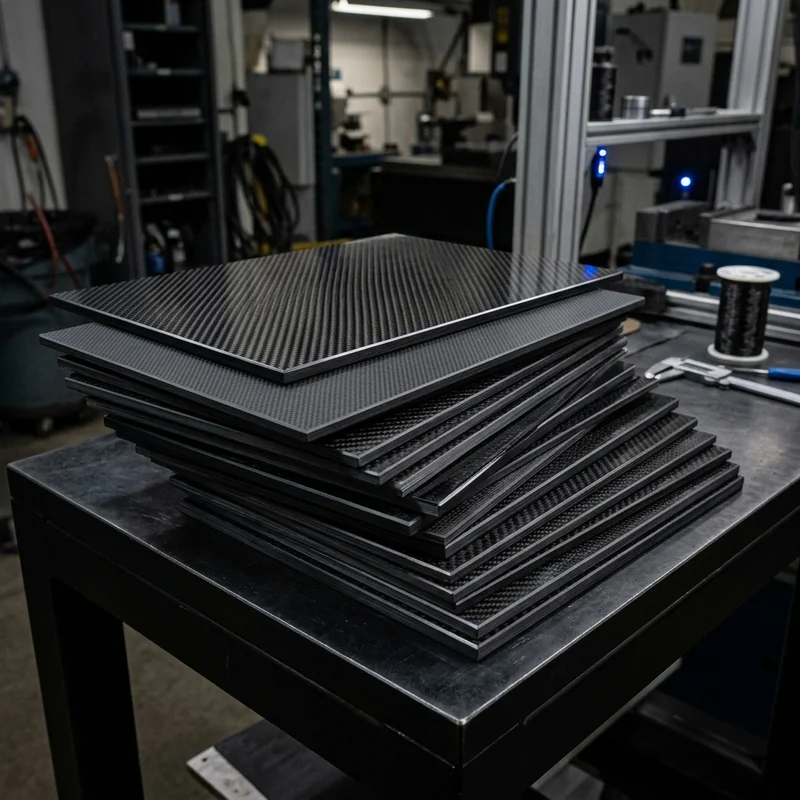
Carbon fiber standard plate-3k stripe
Lightweight, ultra-rigid standard sheets for drone fuselages, robot housings, facades and structural applications.

Carbon Fiber Plate — 3K Twill T700 1.5mm
Thin 1.5mm carbon fiber plate with 3K twill weave surface. Lightweight and stiff, commonly used for covers, panels, drone bodies, and applications requiring a premium aesthetic appearance.
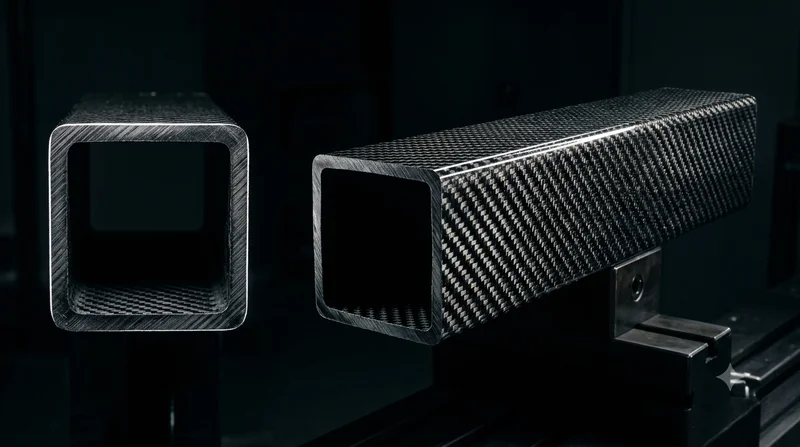
Square Carbon Fiber Tube — 3K Twill T700
Square cross-section carbon fiber tube manufactured with 3K twill weave for torsional strength. Preferred for structural frames, trusses, and support columns where rectangular geometry offers design flexibility.
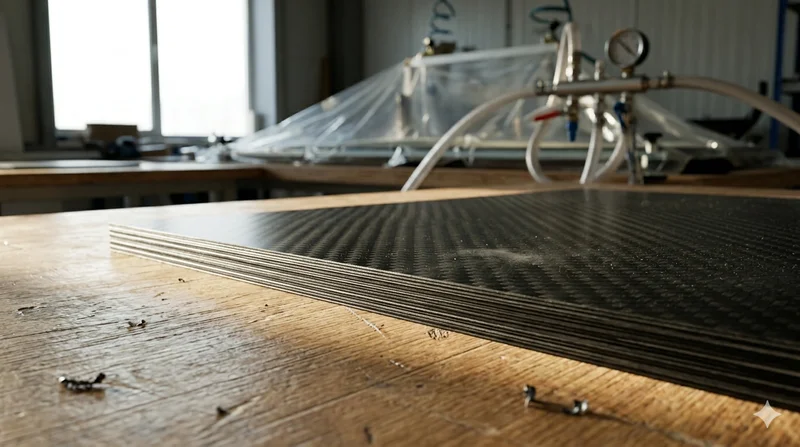
Carbon Fiber Plate — 3K Twill T700 3.0mm
Medium-thickness 3.0mm carbon fiber plate offering significantly higher load capacity while maintaining attractive 3K twill finish. Suitable for structural brackets, reinforcement plates, and load-bearing panels.
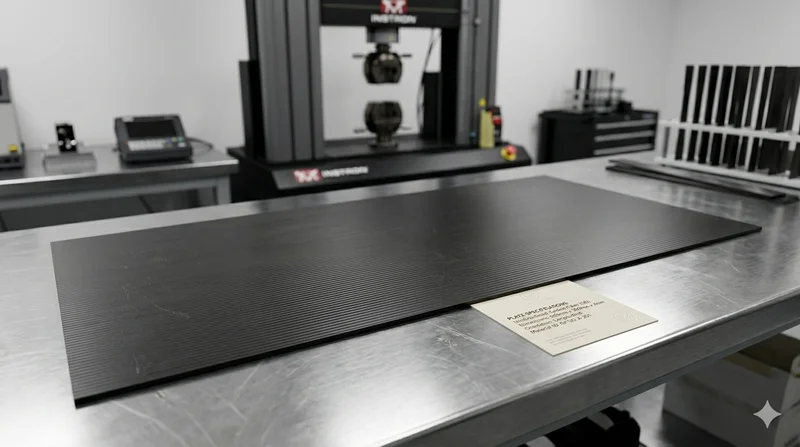
Carbon Fiber Plate — UD Unidirectional T700
Unidirectional carbon fiber plate with all fibers oriented in a single direction for maximum strength along the fiber axis. Essential for structural reinforcements, splints, and applications where load direction is predictable.