
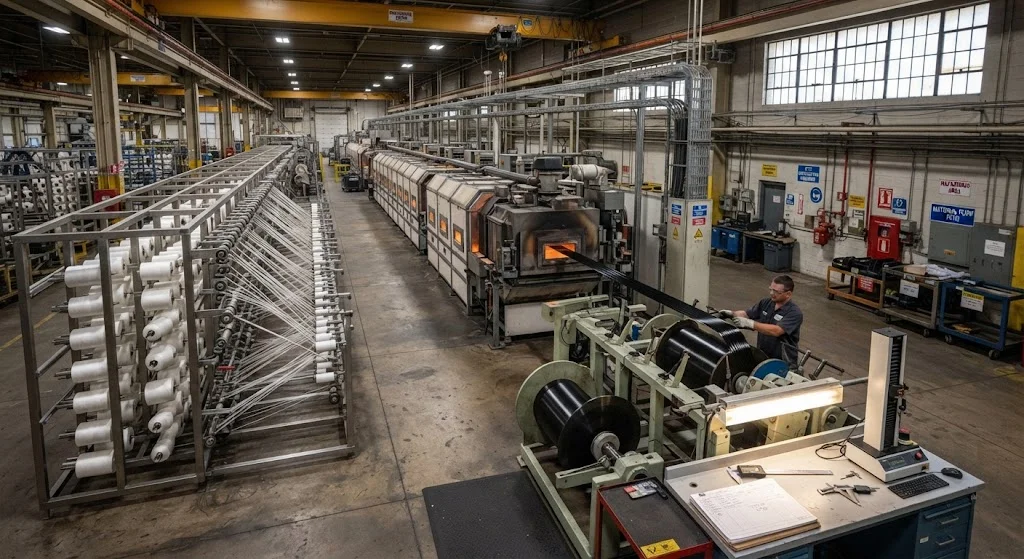
The landscape of us carbon fiber manufacturers has changed more in the past five years than in the previous two decades. Domestic demand now comes from three directions at once: aerospace production ramps, defense programs that require American-made material under security-of-supply rules, and wind
Introduction
The landscape of us carbon fiber manufacturers has changed more in the past five years than in the previous two decades. Domestic demand now comes from three directions at once: aerospace production ramps, defense programs that require American-made material under security-of-supply rules, and wind and hydrogen energy projects that consume standard-modulus tow in very large volumes. Each of these demand streams pulls a different product from the domestic base, and buyers who understand the distinction between tow producers, prepreg suppliers, and system integrators make faster, more reliable sourcing decisions.
This article maps the major US carbon fiber manufacturers, compares their portfolios across the dimensions that matter for procurement, and explains the emerging domestic capacity that is reshaping the market. It is written for engineers and purchasing teams who need a working map of American CFRP producers rather than a promotional overview.
The US Carbon Fiber Manufacturing Landscape: Who Produces What
The domestic manufacturing base for carbon fiber is anchored by a small group of large producers, most of them affiliates of global groups. Hexcel, headquartered in Stamford, Connecticut, operates carbon fiber production in Salt Lake City, Utah, and Casa Grande, Arizona, and is the largest American producer of aerospace-grade fiber under its HexTow brand, with AS4 and IM7 class products used across commercial aircraft structures. Toray Composite Materials America, in Decatur, Alabama, produces standard-modulus fiber on a very large scale for wind energy, pressure vessels, and industrial applications, and is in the middle of a multi-year capacity expansion announced after the consolidation of Zoltek into the Toray group.
Teijin Carbon America operates carbon fiber production in the southeastern United States, supplying its Tenax brand to aerospace, automotive, and industrial customers. Syensqo, the former Solvay specialty polymers business, produces aerospace-grade carbon fiber and prepreg in Greenville, South Carolina, and remains a primary supplier for aircraft secondary structures. Mitsubishi Chemical Carbon Fiber and Composites operates in Sacramento, California, and completes the aerospace-focused tier. Zoltek, now part of Toray, is headquartered in St. Louis, Missouri, but runs its large-tow production in Hungary and Mexico, which makes it the main bridge between the domestic brand presence and offshore low-cost tow.
Comparing US Carbon Fiber Manufacturers: Product Portfolios at a Glance
When procurement teams compare us carbon fiber manufacturers, the first filter is product type rather than brand. The table below summarizes the major domestic producers and what each one actually sells:
| Manufacturer | US Production Base | Core Products | Typical Grade Positioning |
|---|---|---|---|
| Hexcel | Salt Lake City, UT; Casa Grande, AZ | PAN-based tow, prepreg, honeycomb | Aerospace: AS4 and IM7 class, HexTow |
| Toray Composite Materials America | Decatur, AL | Standard-modulus tow, prepreg | Industrial and wind: T700-class, 24K-60K tow |
| Teijin Carbon America | Southeastern US | Standard and intermediate modulus fiber | Tenax brand: automotive, aerospace, industrial |
| Syensqo (ex-Solvay) | Greenville, SC | Aerospace-grade fiber and prepreg | Aircraft structures and spacecraft |
| Mitsubishi Chemical CF & Composites | Sacramento, CA | Fiber, prepreg, composite parts | Aerospace and specialty industrial |
| Zoltek (Toray Group) | HQ St. Louis, MO; production in Hungary and Mexico | Large-tow (48K-50K) low-cost fiber | PX35 class: wind, automotive, infrastructure |
The pattern is clear: aerospace-grade capacity is concentrated in a few specialized plants, while standard-modulus capacity is larger in volume and increasingly tied to wind and hydrogen programs. Buyers with aerospace requirements should expect a qualification cycle measured in months; buyers with industrial requirements can move much faster, especially with large-tow material.
MAGNA and the Integrator Role in the US Ecosystem
MAGNA, usually described together with Hexcel when the US manufacturing landscape is discussed, is not a carbon fiber producer in the fiber-making sense. It is one of the world's largest automotive system integrators and a major consumer of carbon fiber components for premium vehicles, using the material in body panels, structural modules, and battery enclosures. Its role matters for the domestic ecosystem in a different way: as a large-volume buyer that contracts with US composite manufacturers and tier-two molders, MAGNA-type integrators convert upstream fiber capacity into vehicle programs, and their sourcing decisions directly influence how much domestic carbon fiber capacity gets committed to automotive applications rather than aerospace or wind.
This distinction between three layers of the value chain matters for sourcing:
- Fiber and tow producers (Hexcel, Toray, Teijin, Syensqo, Mitsubishi) sell carbon fiber in its raw form, with grades, tow sizes, and mechanical properties defined by data sheets.
- Intermediate processors convert tow into fabric, prepreg, pultruded profiles, and molded parts; many US composite manufacturers operate at this layer.
- System integrators such as MAGNA buy finished components and manage programs, driving demand signals back to the first two layers.
For most buyers reading this article, the practical consequence is simple: specify the grade and form you need, then choose the layer of the chain that matches your volume and technical requirements. A carbon fiber supplier for a prototype part and a carbon fiber supplier for a 100,000-unit automotive program are different companies even when they sit in the same state.
Emerging Domestic Capacity: Defense and Energy Dynamics
New capacity is the most important trend among us carbon fiber manufacturers. Defense programs have created the strongest pull: the Department of Defense has identified domestic carbon fiber and PAN precursor as critical supply chain gaps and has funded multiple expansion and qualification projects since 2023, including efforts to restart or enlarge precursor production inside the United States. On the energy side, the growth of wind blade manufacturing in the Southeast and the build-out of Type IV hydrogen pressure vessels have pushed standard-modulus tow demand higher, prompting the capacity expansion at Toray's Decatur site and similar investments across the supply chain.
Two emerging dynamics deserve attention from buyers. First, the distinction between American brand and American production is narrowing: more of the fiber sold by US-based companies is now actually manufactured domestically, which changes the calculation for programs with domestic-content requirements. Second, new entrants and specialty producers are appearing at the margins, often in recycled carbon fiber, aerospace-grade tow with new precursor routes, or large-tow formats optimized for pultrusion and additive manufacturing. These emerging sources rarely replace the established producers for critical programs, but they increase competition on price and lead time at the industrial end of the market.
How to Qualify US Carbon Fiber Manufacturers
Qualification is where sourcing strategies succeed or fail. A practical sequencing rule for new programs is to start the qualification conversation before the design is frozen: material selection, testing, and supplier audit all take calendar time, and none of it can be compressed once production dates are fixed. For aerospace-grade material, ask for AS9100 certification, lot-level mechanical test data, and traceability back to precursor lots. For industrial programs, ISO 9001 and consistent data sheets are usually sufficient, but buyers should still request the same test methods used to generate the data sheet values. The American CFRP producers that pass a rigorous audit share three habits: they publish clear batch documentation, they keep wet-lay and prepreg materials under documented environmental control, and they respond to a formal corrective action request without friction. US composite manufacturers serving defense programs should additionally be able to demonstrate compliance with ITAR and domestic-content rules before any contract is signed.
Frequently Asked Questions
Who are the largest US carbon fiber manufacturers?
Hexcel is the largest American producer of aerospace-grade carbon fiber, with plants in Utah and Arizona. Toray Composite Materials America in Alabama is the largest domestic producer of standard-modulus industrial tow, followed by Teijin Carbon America in the Southeast. Syensqo and Mitsubishi Chemical complete the aerospace-focused tier.
Is MAGNA a carbon fiber manufacturer?
No. MAGNA is an automotive systems integrator and a very large consumer of carbon fiber components. It does not produce carbon fiber tow. Its importance in the US landscape comes from the demand it creates for domestic composite manufacturers and from the signal its programs send about future automotive carbon fiber volume.
Why is US carbon fiber capacity expanding?
Defense programs require domestic material under security-of-supply rules, wind energy and hydrogen pressure vessels consume large volumes of standard-modulus tow, and the Department of Defense has funded precursor and fiber expansion projects since 2023. These three forces together are pulling new capacity into the United States.
Conclusion
The map of us carbon fiber manufacturers is now clear enough for structured decision-making: aerospace-grade capacity sits with Hexcel, Syensqo, and Mitsubishi; standard-modulus volume sits with Toray in Alabama and Teijin in the Southeast; low-cost large-tow supply is anchored by Zoltek; and integrators like MAGNA drive automotive demand. Emerging capacity, pushed by defense and energy programs, is making domestic sourcing more viable every quarter, and qualification discipline separates programs that source well from programs that source cheaply and pay later.
YongXian supplies carbon fiber fabrics, prepreg, profiles, and finished composite components with full engineering support. Explore our carbon fiber product range or contact our engineering team to match a domestic or international source to your program.
Part of topic
Related Articles
- Carbon Fiber Tube Manufacturers: Procurement Guide for Engineering Buyers
- Carbon Fibre Manufacturers UK: NCC Research Hub and Supply Chain Layout
- Carbon Fiber Manufacturers USA: Aerospace-Grade Capacity and Certification Status
- Carbon Fiber Supplier Philippines: Southeast Asian Manufacturing Hub Emergence
- Carbon Fiber Pultrusion Suppliers USA: Domestic Capacity and Lead Time Comparison
- Carbon Fiber Products Manufacturer Guide: Evaluating Certification, Capacity, and Delivery Capabilities
Interested in Our Products?
Contact our team for competitive pricing and technical specifications.
Get a QuoteRelated Products
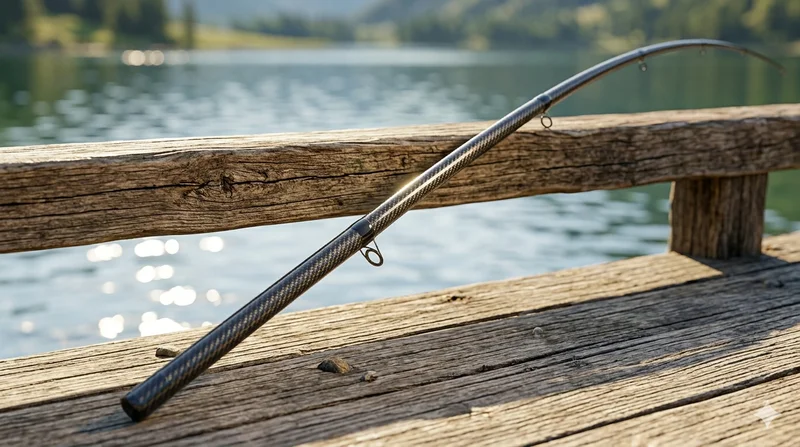
Carbon Fiber Fishing Rod Blank
High-quality carbon fiber fishing rod blank manufactured from multiple grades of Toray carbon fiber cloth. Available in a wide range of lengths, powers, and actions for freshwater and saltwater applications. Suitable for OEM rod building.

Carbon Fiber Plate — 3K Twill T700 1.5mm
Thin 1.5mm carbon fiber plate with 3K twill weave surface. Lightweight and stiff, commonly used for covers, panels, drone bodies, and applications requiring a premium aesthetic appearance.

Carbon Fiber Plate — 3K Twill T700 3.0mm
Medium-thickness 3.0mm carbon fiber plate offering significantly higher load capacity while maintaining attractive 3K twill finish. Suitable for structural brackets, reinforcement plates, and load-bearing panels.
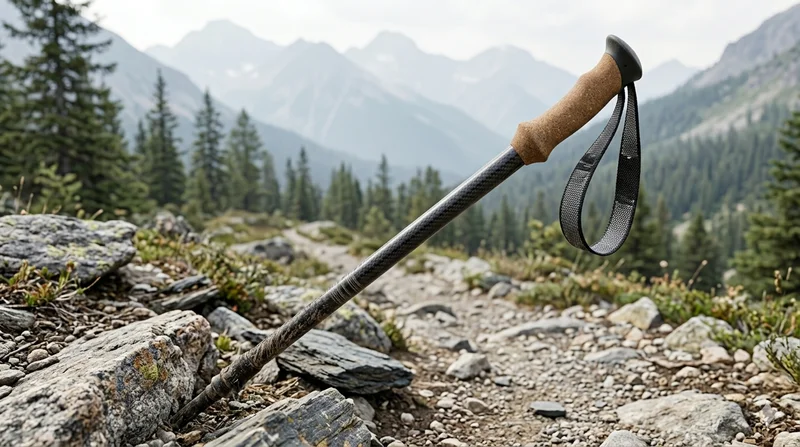
Carbon Fiber Trekking Pole
Lightweight carbon fiber trekking pole manufactured from high-grade carbon fiber tube. Weighs only 160g per pole while providing superior shock absorption and durability for hiking, trail running, and backpacking.

Square Carbon Fiber Tube — 3K Twill T700
Square cross-section carbon fiber tube manufactured with 3K twill weave for torsional strength. Preferred for structural frames, trusses, and support columns where rectangular geometry offers design flexibility.