
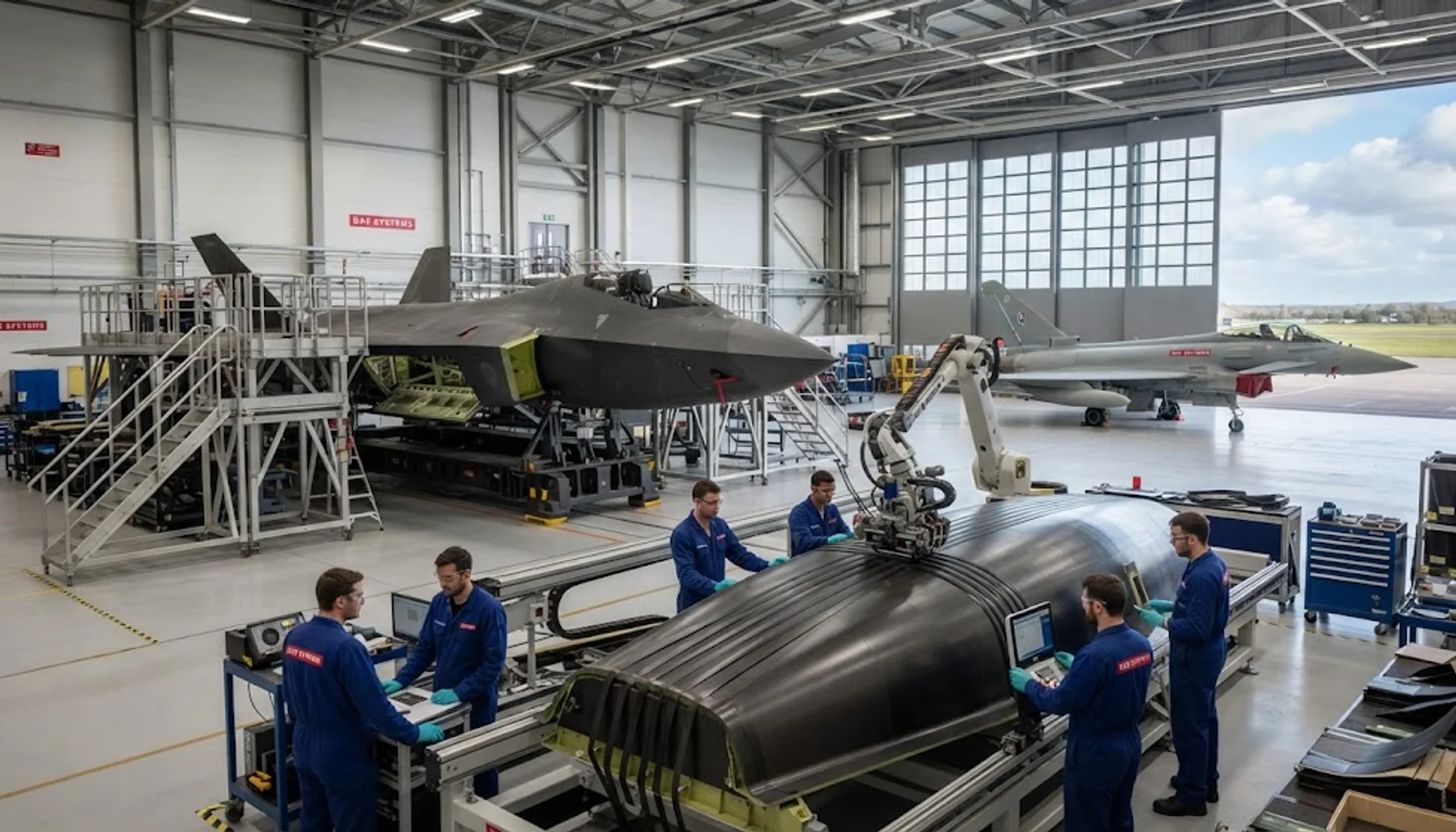
The UK hosts world-class carbon fiber research at the University of Manchester's NWCP and Cambridge, alongside major aerospace programs at BAE Systems, Rolls-Royce, and Airbus UK. This article surveys the British carbon fiber ecosystem from precursor R&D through to F1 motorsport and defense applications.
Introduction
The United Kingdom hosts one of the world's most concentrated and capable carbon fiber composites ecosystems. From the University of Manchester's Northwest Composites Centre (NWCP) — operating Europe's largest autoclave — to the Formula 1 teams of Motorsport Valley, from BAE Systems' Tempest stealth fighter to Rolls-Royce's composite fan blades, the UK combines world-class research, advanced manufacturing, and demanding end-use applications in a uniquely integrated national capability.
Carbon fiber composites are identified as a strategic technology in the UK's National Security Strategy and Industrial Strategy. The government's 2025 National Composites Strategy allocated £120 million for R&D, workforce development, and supply chain resilience — recognizing that composites capability underpins competitiveness across aerospace, defense, automotive, energy, and infrastructure sectors.
Research Infrastructure
The UK's composites research base is exceptional:
• Northwest Composites Centre (NWCP), University of Manchester: Operates the UK's largest autoclave (15 m × 6 m diameter) and leads research in automated fiber placement (AFP), out-of-autoclave processing, and thick-section composite cure optimization. NWCP's Industrial Doctorate Training Centre trains 40+ PhD students annually in composites science and manufacturing.
• Composites Research Centre, University of Bristol: Specializes in composite joint design, impact damage tolerance, and structural health monitoring. Bristol's research on bolted and bonded composite joints has become the industry standard for aerospace design.
• Centre for Composites Design, Cranfield University: Focuses on design-for-manufacturing methodologies, process simulation, and digital twin technologies for composite structures.
• Applied Composites Research Centre, University of Sheffield: Develops thermoplastic composite welding, recyclable composite systems, and bio-inspired composite architectures.
Aerospace Programs
The UK aerospace sector is the largest consumer of carbon fiber composites in the British economy:
• BAE Systems, Warton and Samlesbury: Uses carbon fiber in the Tempest sixth-generation fighter program — the UK's most advanced military aircraft development. Tempest's airframe is estimated to use 50%+ composite by weight, with extensive use of automated fiber placement and out-of-autoclave cure processes. BAE also produces Eurofighter Typhoon composite components, including the canard foreplanes and vertical tail.
• Airbus UK, Broughton: Produces the A350 XWB wing — the largest composite wing in commercial aviation — using automated fiber placement of Hexcel IM7/8552 prepreg. The Broughton facility operates multiple large-format AFP machines and autoclaves, employing 1,200+ composites technicians.
• Rolls-Royce, Derby: Uses carbon fiber composite fan blades in the Trent XWB engine (powering the A350) and is developing composite fan cases for next-generation powerplants. The composite fan blade program requires precise control of fiber orientation and resin content to meet rotational balance and bird-strike requirements.
• GKN Aerospace, Bristol: Produces composite aerostructures including engine nacelles, thrust reversers, and wing components for multiple OEM programs. GKN's Out-of-Autoclave (OoA) prepreg technology enables cure at atmospheric pressure, reducing energy costs by 40% compared to autoclave processing.
Motorsport Valley
The UK's Motorsport Valley — stretching from Oxfordshire through the Midlands — is the undisputed global capital of Formula 1 carbon fiber composites:
• McLaren Racing, Woking: Produces the McLaren F1 car's carbon fiber monocoque, one of the most complex composite structures in motorsport. The monocoque must survive 25G impacts while weighing under 100 kg.
• Mercedes-AMG Petronas, Brackley: Uses the UK's most advanced automated fiber placement and resin transfer molding (RTM) technologies for the Mercedes F1 car's chassis and bodywork.
• Williams Racing, Grove: Williams Advanced Engineering supplies composite solutions to multiple F1 teams and develops carbon fiber technologies for automotive, aerospace, and defense applications.
• Red Bull Racing, Milton Keynes: Produces its own carbon fiber components in-house, including front and rear wings, floors, and brake ducts.
The F1 industry consumes an estimated 3,000–5,000 tonnes of aerospace-grade carbon prepreg annually, driving continuous innovation in automated manufacturing, rapid cure cycles, and sustainable composite recycling.
Defense Applications
Beyond Tempest, UK defense applications of carbon fiber include:
• Submarine structures: BAE Systems Submarines in Barrow-in-Furness uses carbon fiber composites for sonar domes, masts, and non-pressure hull structures in the Astute-class and Dreadnought-class nuclear submarines.
• Unmanned systems: The UK's MQ-9B Protector drone uses extensive carbon fiber in its airframe, while indigenous UAV programs from companies like Callen-Lenz and Windracers develop carbon fiber composites for commercial and defense applications.
• Missile systems: MBDA UK produces carbon fiber motor cases and airframes for the Sea Ceptor and Meteor missile systems.
National Composites Strategy
The UK government's 2025 National Composites Strategy identified four priority areas:
• Thermoplastic composites and recycling: Developing closed-loop recycling systems for carbon fiber waste, targeting 90%+ material recovery by 2030.
• Bio-based precursors: Research into lignin-based carbon fiber precursors and sustainable manufacturing processes.
• Digital manufacturing: Digital twin technology for composite cure process optimization, reducing scrap rates by 30%.
• Workforce development: Training 5,000+ new composites technicians and engineers by 2030 through apprenticeships and university programs.
Conclusion
The UK's carbon fiber composites ecosystem is characterized by exceptional research capability, world-leading aerospace and motorsport applications, and strategic government investment. From Manchester's autoclave to Milton Keynes' F1 factories, from Derby's jet engines to Warton's stealth fighters, the UK demonstrates how concentrated expertise and demand can create a self-reinforcing composites innovation ecosystem.
Part of topic
Related Articles
- Recycled Carbon Fiber Market Forecast 2030: Technology Maturity and Commercialization Path
- South Korea Carbon Fiber Market 2026: Hydrogen Economy and Shipbuilding Innovation
- Wind Turbine Blade Leading Edge Protection 2026: Polyurethane, Tape, and Metallic Shield Solutions
- China Carbon Fiber Overcapacity 2026: Price War Impact and Industry Consolidation
- India Carbon Fiber Market 2026: Wind Energy, Aerospace, and Defense Expansion
- PAN Precursor Market 2026: Acrylonitrile Supply and Carbon Fiber Cost Structure
Interested in Our Products?
Contact our team for competitive pricing and technical specifications.
Get a QuoteRelated Products
Carbon Fiber Fishing Rod Blank
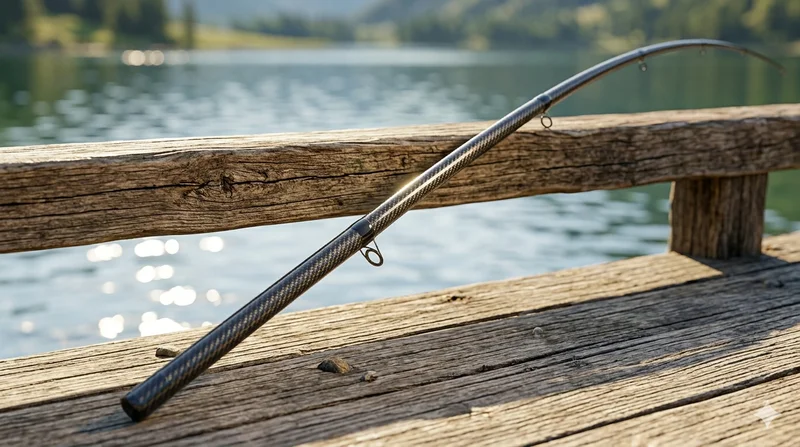
High-quality carbon fiber fishing rod blank manufactured from multiple grades of Toray carbon fiber cloth. Available in a wide range of lengths, powers, and actions for freshwater and saltwater applications. Suitable for OEM rod building.

Carbon Fiber Plate — 3K Twill T700 3.0mm
Medium-thickness 3.0mm carbon fiber plate offering significantly higher load capacity while maintaining attractive 3K twill finish. Suitable for structural brackets, reinforcement plates, and load-bearing panels.

Carbon Fiber Plate — 3K Twill T700 1.5mm
Thin 1.5mm carbon fiber plate with 3K twill weave surface. Lightweight and stiff, commonly used for covers, panels, drone bodies, and applications requiring a premium aesthetic appearance.

Square Carbon Fiber Tube — 3K Twill T700
Square cross-section carbon fiber tube manufactured with 3K twill weave for torsional strength. Preferred for structural frames, trusses, and support columns where rectangular geometry offers design flexibility.
Carbon Fiber Pickleball Paddle
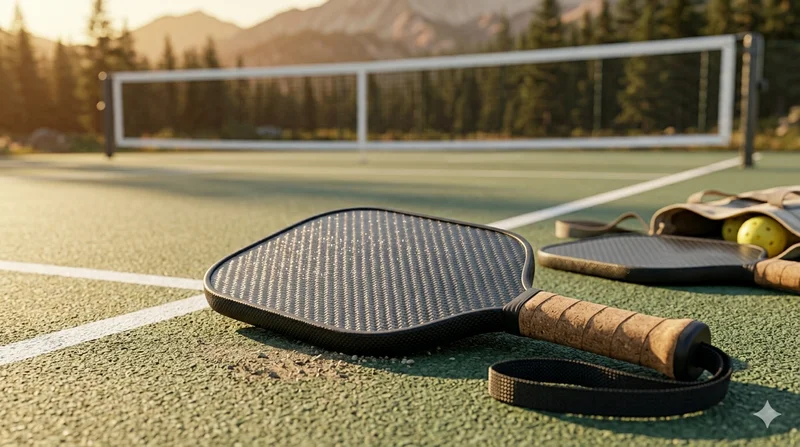
High-performance pickleball paddle with Toray T700 carbon fiber face and polypropylene honeycomb core. Delivers excellent power-to-weight ratio, spin generation, and vibration dampening for competitive play.