
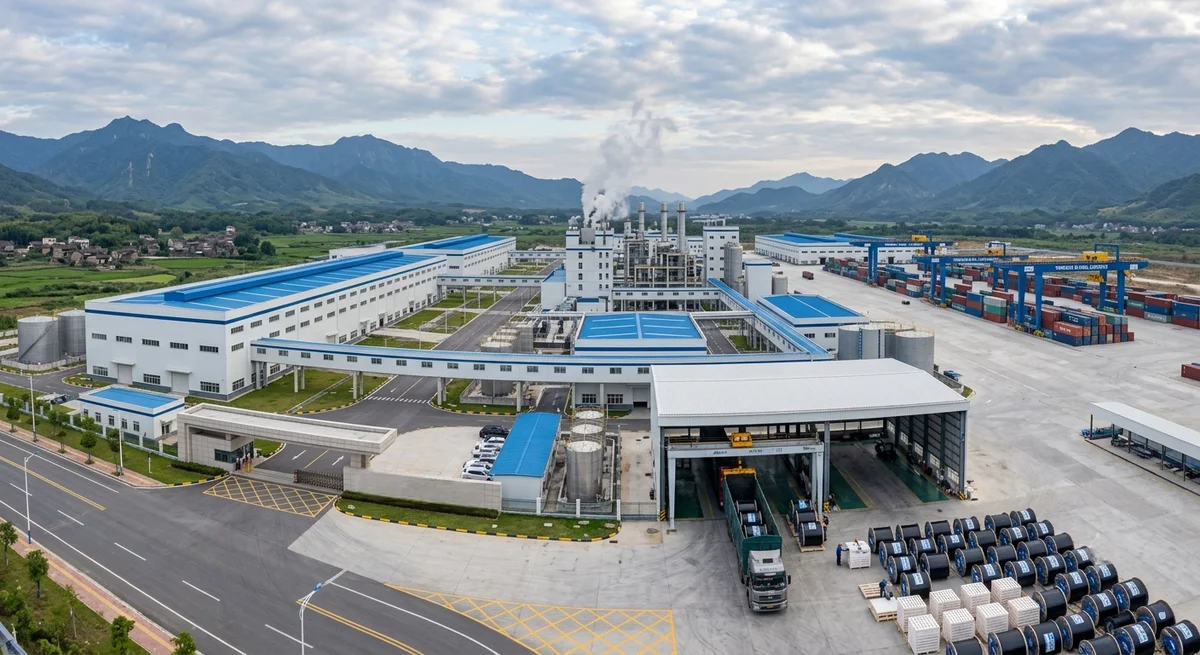
An in-depth market analysis of South Korea's carbon fiber market in 2026 — covering Hyundai Motor Group's hydrogen fuel cell vehicle expansion, the EV battery supply chain boom driving CF demand, domestic production capacity updates from Hyosung and Toray Korea, and strategic implications for B2B buyers.
Introduction
South Korea has emerged as one of the world's most dynamic carbon fiber markets, driven by two converging megatrends: Hyundai Motor Group's ambitious hydrogen fuel cell vehicle (FCEV) strategy and the explosive growth of the lithium-ion battery supply chain for electric vehicles (EVs). In 2026, South Korea's carbon fiber consumption is projected to reach 14,200–15,800 metric tonnes, representing approximately 8.3% of global demand and making it the fourth-largest national market behind China, the United States, and Germany. The domestic carbon fiber production capacity — led by Hyosung Advanced Materials and Toray Korea — has expanded to 21,500 tonnes per year as of Q2 2026, creating a net export surplus that allows Korean producers to serve Japanese, Chinese, and Southeast Asian customers even as domestic demand grows at 11–14% annually.
This market analysis examines the three forces shaping South Korea's carbon fiber landscape in 2026: (1) Hyundai's second-generation hydrogen ecosystem and the associated Type IV tank demand, (2) battery enclosure and thermal management requirements from the Korean EV battery supply chain (LG Energy Solution, Samsung SDI, SK On), and (3) the domestic production capacity expansion and technology roadmap of Hyosung Advanced Materials and Toray Korea.
Hyundai Motor Group: The Hydrogen Demand Driver
Hyundai Motor Group has placed the largest single corporate bet on hydrogen mobility of any automotive OEM globally. In 2025, Hyundai sold 15,800 units of the Nexo FCEV (up 38% from 2024) and 2,200 units of the XCIENT Fuel Cell heavy-duty truck. For 2026, Hyundai targets 22,000 FCEV sales, including the second-generation Nexo (launched Q1 2026 with a 20% larger Type IV tank) and the ST1 Fuel Cell light commercial vehicle platform. Each Nexo II contains approximately 75 kg of carbon fiber in its two Type IV hydrogen tanks (combined 6.8 kg H₂ capacity at 700 bar), while the XCIENT truck's seven-tank array consumes 220 kg of CF per vehicle.
Beyond vehicles, Hyundai's HTWO hydrogen fuel cell system (supplied to non-Hyundai OEMs) has secured orders for 450 MW of stationary and marine fuel cell capacity in 2026, each 1 MW system requiring approximately 3,800 kg of carbon fiber for its hydrogen storage buffer. The cumulative carbon fiber demand from Hyundai's hydrogen ecosystem — vehicles, stationary storage, and refueling infrastructure — is estimated at 5,200–6,100 tonnes in 2026.
| Hyundai Hydrogen Segment | 2024 CF Demand (tonnes) | 2025 CF Demand (tonnes) | 2026 CF Demand (tonnes, est.) | YoY Growth |
|---|---|---|---|---|
| Nexo / Nexo II FCEV | 720 | 1,185 | 1,650 | +39% |
| XCIENT Fuel Cell trucks | 240 | 485 | 880 | +81% |
| ST1 Fuel Cell LCV | 0 | 45 | 370 | +722% (new) |
| HTWO stationary/marine systems | 980 | 2,100 | 3,200 | +52% |
| HRS infrastructure (Hyundai-backed) | 280 | 410 | 520 | +27% |
| Subtotal | 2,220 | 4,225 | 6,620 | +57% |
Battery Supply Chain: The Emerging Demand Frontier
The Korean EV battery ecosystem — dominated by LG Energy Solution (LGES, 24% global market share in 2025), Samsung SDI (12%), and SK On (8%) — represents the fastest-growing source of carbon fiber demand in South Korea. Carbon fiber is increasingly specified in battery pack components for structural performance, thermal management, and lightweighting:
- Battery enclosures (CFRP / CF-SMC): LGES has standardized carbon fiber sheet molding compound (CF-SMC) for EV battery pack covers on three high-volume OEM platforms (including Hyundai E-GMP and GM Ultium), consuming 8–15 kg of CF per large-SUV battery pack. 2026 production of these platforms is projected at 480,000 units, representing 3,800–7,200 tonnes of CF demand.
- Thermal management plates: Samsung SDI and SK On have adopted pitch-based carbon fiber (Mitsubishi K13D grade) for thermal interface plates in prismatic-cell battery modules. Each 100 kWh pack contains 2–4 kg of pitch-based CF for thermal spreaders. 2026 production: 820,000 modules (GWh scale), consuming 1,600–3,300 tonnes.
- Module housing and busbar frames: SGL Carbon's RECAM grade (recycled carbon fiber) has been qualified by SK On for EV module end-plates, consuming 3–6 kg per module at 25% lower cost than virgin CF. Projected 2026 demand: 1,200–2,100 tonnes.
- Structural battery pack crossmembers: Hyundai's upcoming Integrated Modular Architecture (IMA) EVs (2027) will feature CFRP crossmembers and crash rails — pre-production in 2026 consuming 400–600 tonnes for tooling prove-out and initial inventory.
| Application | CF Grade | kg per EV/Module | 2026 Volume (units) | 2026 CF Demand (tonnes) |
|---|---|---|---|---|
| CF-SMC battery covers (LGES) | T700S 50K chopped | 8–15 kg/pack | 480,000 | 3,800–7,200 |
| Pitch-CF thermal spreaders (SDI/SK) | K13D pitch-based | 2–4 kg/module | 820,000 | 1,600–3,300 |
| rCF module end-plates (SK On) | RECAM recycled CF | 3–6 kg/module | 340,000 | 1,000–2,100 |
| CFRP crossmembers (Hyundai IMA) | T800S 24K | 8–12 kg/vehicle | 35,000 (pre-prod) | 280–420 |
| Total battery CF demand | 6,680–13,020 |
Domestic Production Capacity: Hyosung and Toray Korea
South Korea's domestic carbon fiber production capacity reached 21,500 tonnes per year in Q2 2026, split between Hyosung Advanced Materials and Toray Korea. Both producers are mid-way through major expansion programs:
- Hyosung Advanced Materials: Current capacity 12,000 tpy (Jeonju plant, lines 1–6). The company's ₩480 billion ($355M) TANSOME H3065 expansion program (lines 7–9, targeting 9,000 tpy additional) is 40% complete with line 7 commissioned in March 2026 (2,500 tpy). Full completion expected Q3 2027. Hyosung's TANSOME H3065 (T700S-equivalent) has become the baseline grade for Korean CFRTP piping, Type IV tank production, and CF-SMC for battery enclosures, offering a 5–8% cost advantage over imported Toray T700SC through lower logistics and tariff exposure.
- Toray Korea: Current capacity 9,500 tpy (Gumi plant). A 5,000 tpy expansion (2 × 2,500 tpy lines) was approved in December 2025 with ₩280 billion ($207M) investment, targeting completion by Q2 2028. Toray Korea supplies primarily to aerospace customers (Korean Air, KAI, and export to Boeing/Spirit AeroSystems) and premium automotive CFRP applications requiring T800S and T1100GC grades.
| Producer | Location | 2024 Capacity (tpy) | 2026 Capacity (tpy) | 2028 Target (tpy) | Primary Grades | Key Customers |
|---|---|---|---|---|---|---|
| Hyosung Adv. Materials | Jeonju | 6,500 | 12,000 | 21,000 | TANSOME H3065 (T700S-equiv) | Hyundai MOBIS, LGES, SK On, HRS integrators |
| Toray Korea | Gumi | 7,500 | 9,500 | 14,500 | T700SC, T800S, T1100GC | Korean Air, KAI, aerospace exports |
| Total Korea | 14,000 | 21,500 | 35,500 |
Strategic Implications for B2B Buyers
- Supply diversification: Korea's growing CF surplus (>5,000 tonnes net export in 2026) makes Korean producers an attractive secondary source for B2B buyers currently reliant on Toray Japan (Torayca), Teijin (Tenax), or Mitsubishi Chemical (Dialead). Prices from Hyosung TANSOME H3065 are typically 3–7% below Japanese equivalents in Southeast Asian markets.
- Hydrogen supply chain integration: Hyundai's captive demand (6,600+ tonnes in 2026 for hydrogen alone) creates a vertically integrated supply chain — Hyundai MOBIS sources Type IV tanks from Hyosung CF wound by ILJIN Hysolus. B2B buyers outside this ecosystem may face allocation pressure during supply tightness. Early qualification and long-term agreements are recommended.
- Battery-grade CF specifications: The CF-SMC and recycled CF grades used in battery applications have distinct specifications (chopped fiber length 12–50 mm, sizing compatible with vinyl ester or epoxy SMC, tensile strength retention >85% after recycling) that differ from standard towpreg or fabric grades. Korean producers are investing heavily in these specialized grades.
- Government policy support: The Korean Ministry of Trade, Industry and Energy (MOTIE) designated carbon fiber as a "national strategic technology" in 2024, providing tax credits (15–30% of R&D expenditure) and expedited permits for CF production expansions. This policy backdrop provides long-term supply security for B2B buyers contracting with Korean producers.
Frequently Asked Questions
Q: How does South Korea's CF production compare to Japan and China?
A: South Korea's 21,500 tpy capacity (2026) places it behind Japan's 39,500 tpy (Toray, Teijin, Mitsubishi Chemical) and China's 57,000+ tpy (Zhongfu Shenying, Weihai Guangwei, Jilin Sino-CF, Hengshen). However, Korea's capacity is growing faster than Japan's (stable to declining) and is more export-oriented than China's (domestic-focused). Korea's competitive advantage lies in its integrated hydrogen and battery downstream applications — a level of vertical coordination that neither Japan nor China currently matches.
Q: What are the key technical requirements for CF used in Korean battery applications?
A: For CF-SMC battery covers: chopped fiber length 25–50 mm, sizing compatible with unsaturated polyester or vinyl ester SMC resin systems, and tensile strength >3.5 GPa (T700S-class minimum). For recycled CF (rCF) module components: tensile strength retention >85% after the pyrolysis/sizing recovery process, fiber length distribution of 6–30 mm after chopping, and thermal oxidative stability <2% mass loss at 450°C. For pitch-based CF thermal spreaders: thermal conductivity >500 W/m·K, CTE <1.0 ppm/K, and filament diameter <10 μm for efficient fiber packing in the spreader laminate.
Q: Will Korean CF producers have sufficient capacity to meet both domestic and export demand through 2028?
A: Based on announced expansion plans (Hyosung +9,000 tpy by Q3 2027, Toray Korea +5,000 tpy by Q2 2028), total Korean capacity will reach approximately 35,500 tpy by 2028. If domestic demand grows at 12% CAGR (from ~15,000 tpy in 2026 to ~21,000 tpy in 2028), this leaves 14,500 tpy available for export — more than double the 2024 export volume. Barring major construction delays or feedstock disruptions (PAN precursor supply from Japan accounts for 35–40% of Korean CF raw material), the supply outlook is comfortable through 2028. However, accelerated hydrogen adoption or a sudden shift toward CF-intensive battery enclosures by multiple OEMs could tighten the market by 2029–2030.
Q: What grades of CF are most critical for the Korean market?
A: T700S-class intermediate modulus fiber (230 GPa modulus, 4.9 GPa strength) dominates 70–75% of Korean CF consumption, primarily for Type IV hydrogen tanks, CF-SMC battery covers, and CFRTP piping. High-modulus pitch-based CF (K13D-class, 790 GPa+ modulus) is a small but rapidly growing segment for battery thermal management. The recycled CF (rCF) segment is also growing quickly from a low base, driven by OEM sustainability requirements and the lower cost profile.
Conclusion
South Korea's carbon fiber market in 2026 is defined by a unique convergence of hydrogen and battery demand drivers that no other national market currently replicates. Hyundai Motor Group's hydrogen ecosystem alone accounts for over 6,600 tonnes of CF consumption, while the EV battery supply chain — LG Energy Solution, Samsung SDI, and SK On — adds another 6,700–13,000 tonnes. Domestic production capacity of 21,500 tpy, led by Hyosung Advanced Materials' aggressive expansion in TANSOME H3065-grade fiber, positions Korea as a net CF exporter with competitive pricing and strong vertical integration. For B2B buyers outside Korea, the window for securing competitive supply agreements with Korean producers is favorable through 2028, before the next wave of hydrogen and battery demand accelerates domestic consumption toward production capacity limits. We recommend initiating supply qualification with Hyosung Advanced Materials for TANSOME H3065-grade fiber for hydrogen storage and CF-SMC applications, with particular attention to sizing chemistry compatibility, tow tension control specs, and moisture content (<0.1% by weight at delivery) critical for downstream processing consistency.
Part of topic
Related Articles
- Recycled Carbon Fiber Market Forecast 2030: Technology Maturity and Commercialization Path
- South Korea Carbon Fiber Market 2026: Hydrogen Economy and Shipbuilding Innovation
- Wind Turbine Blade Leading Edge Protection 2026: Polyurethane, Tape, and Metallic Shield Solutions
- China Carbon Fiber Overcapacity 2026: Price War Impact and Industry Consolidation
- India Carbon Fiber Market 2026: Wind Energy, Aerospace, and Defense Expansion
- PAN Precursor Market 2026: Acrylonitrile Supply and Carbon Fiber Cost Structure
Interested in Our Products?
Contact our team for competitive pricing and technical specifications.
Get a QuoteRelated Products
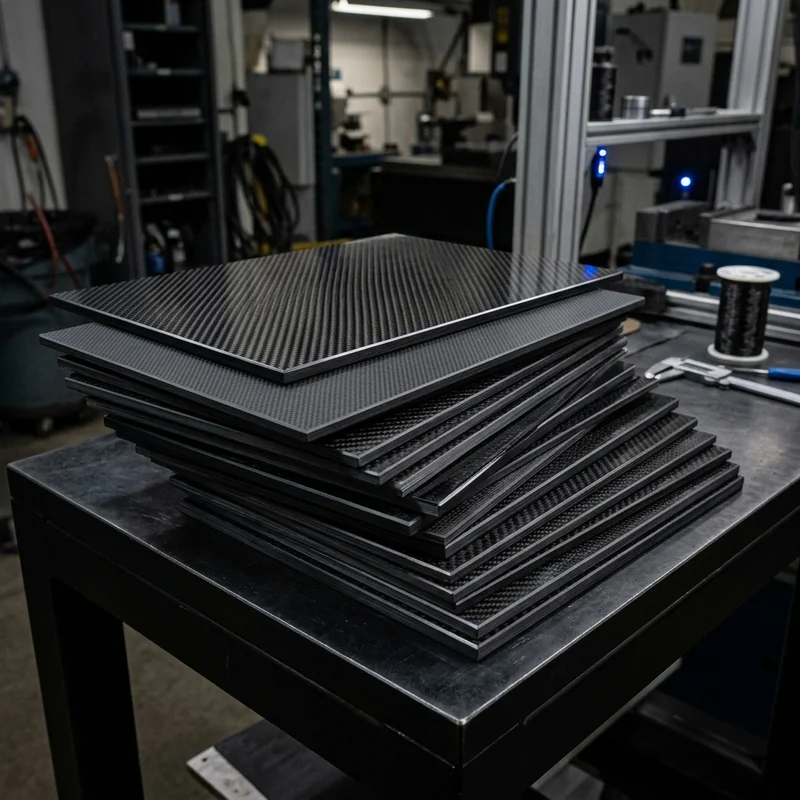
Carbon fiber standard plate-3k stripe
Lightweight, ultra-rigid standard sheets for drone fuselages, robot housings, facades and structural applications.

Carbon Fiber Plate — 3K Twill T700 1.5mm
Thin 1.5mm carbon fiber plate with 3K twill weave surface. Lightweight and stiff, commonly used for covers, panels, drone bodies, and applications requiring a premium aesthetic appearance.

Square Carbon Fiber Tube — 3K Twill T700
Square cross-section carbon fiber tube manufactured with 3K twill weave for torsional strength. Preferred for structural frames, trusses, and support columns where rectangular geometry offers design flexibility.

Carbon Fiber Plate — 3K Twill T700 3.0mm
Medium-thickness 3.0mm carbon fiber plate offering significantly higher load capacity while maintaining attractive 3K twill finish. Suitable for structural brackets, reinforcement plates, and load-bearing panels.
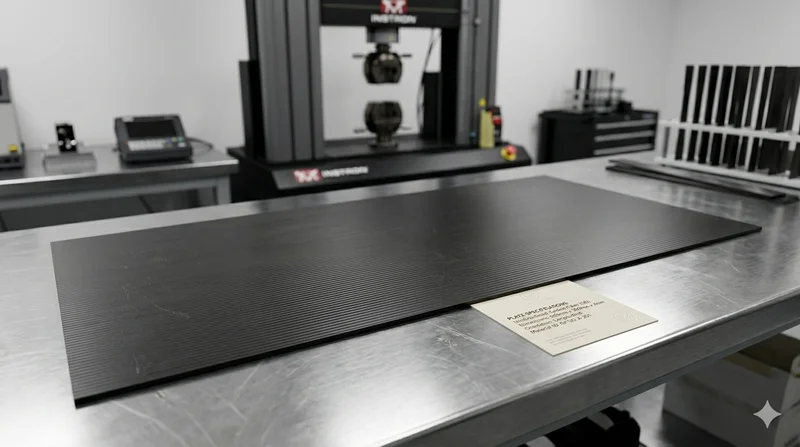
Carbon Fiber Plate — UD Unidirectional T700
Unidirectional carbon fiber plate with all fibers oriented in a single direction for maximum strength along the fiber axis. Essential for structural reinforcements, splints, and applications where load direction is predictable.