
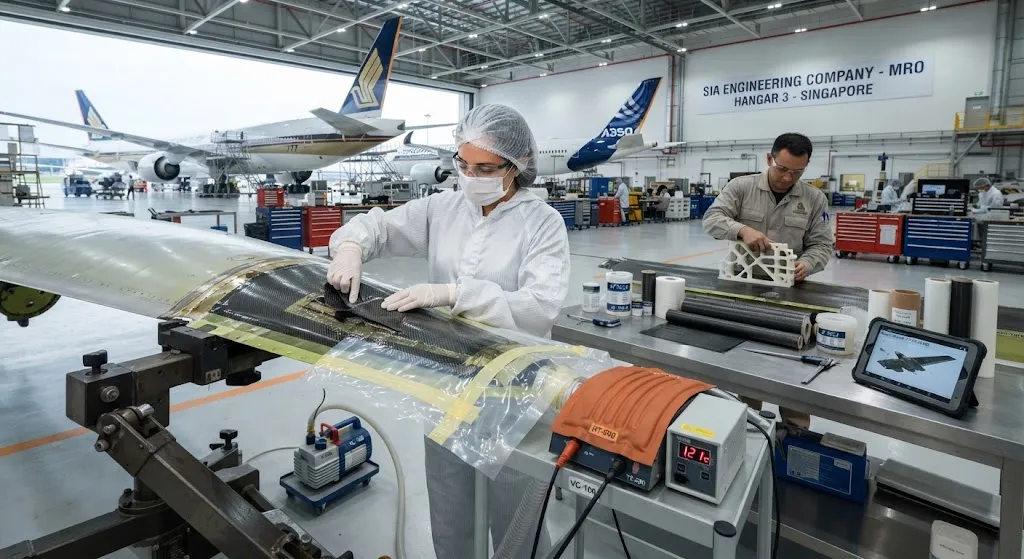
Singapore has positioned itself as the composite maintenance, repair and overhaul (MRO) hub of Asia-Pacific, and that position matters more in 2026 than ever before. The region now operates the largest share of the global commercial fleet, and modern widebody aircraft such as the A350 a
Introduction
Singapore has positioned itself as the composite maintenance, repair and overhaul (MRO) hub of Asia-Pacific, and that position matters more in 2026 than ever before. The region now operates the largest share of the global commercial fleet, and modern widebody aircraft such as the A350 and the 787 carry more than half of their structural weight in carbon fiber composites. When a composite fuselage panel, wing skin or engine nacelle is damaged, it cannot simply be swapped from a warehouse shelf. It requires a certified repair engineer, an approved repair design, controlled tooling, and a repair station licensed by the relevant airworthiness authority. Singapore concentrates all of these capabilities within one small territory, alongside the logistics infrastructure of one of the world's busiest air cargo hubs.
Three forces drive the growth of composite MRO demand in the region. First, the Asia-Pacific fleet is aging into heavy maintenance intervals, and newer aircraft are disproportionately composite-rich. Second, regional airlines are expanding their own maintenance divisions and outsourcing complex composite repairs to specialists. Third, repair turnaround speed has become a commercial weapon, because grounded aircraft lose revenue that cannot be recovered. This article examines the structure of Singapore's composite MRO industry, the certification framework that underpins it, and the way additive tooling is shortening repair cycles.
Regional Demand Context and Market Structure
The Asia-Pacific region accounts for roughly 40 percent of the global commercial aircraft fleet in 2026, and its MRO spending is projected to grow faster than any other region through the end of the decade. Composite materials do not change the total MRO bill dramatically, but they change its composition: airframe heavy checks now include bonded patch repairs, scarf repairs and inspection with advanced non-destructive testing instead of simple sheet-metal replacement. The table below summarizes the demand structure relevant to Singapore's composite MRO hub:
| MRO Segment | Share of APAC Spend | Growth Outlook | Composite Relevance |
|---|---|---|---|
| Airframe heavy maintenance | 30-35% | 3-5% per year | Bonded repairs, skin patches, stringer splices |
| Engine and nacelle MRO | 35-40% | 4-6% per year | Cowl and acoustic panel repairs, thermal protection |
| Component and landing gear | 20-25% | 5-7% per year | Flight control surfaces, radomes, fairings |
| Modifications and tooling | 8-12% | 8-10% per year | Composite mods, additive tooling, new-age fixtures |
Two structural features make Singapore particularly effective as a repair hub. The first is speed: Changi's logistics network can move repair material from a port or airport to an MRO hangar within hours, which matters when a grounded widebody costs an airline hundreds of thousands of dollars per day. The second is density: more than 200 aerospace companies operate in Singapore, supported by a skilled workforce of over 20,000 people, giving repair facilities immediate access to specialized subcontractors, testing houses and engineering consultancies.
ST Engineering and the Composite Repair Ecosystem
ST Engineering Aerospace is the anchor of Singapore's composite MRO capability, operating airframe and component maintenance facilities that serve global customers. Its hangars at Changi and its specialist workshops handle every stage of composite repair, from damage assessment to final certification of the repair. The ecosystem around it includes engine MRO joint ventures, airframe specialists, and a growing number of small and medium enterprises focused purely on composite repair technology. Key elements of the ecosystem include:
- Airframe repair stations: Facilities with CAAS AMO approval and FAA Part 145 and EASA Part 145 certificates perform structural composite repairs on narrowbody and widebody aircraft, including bonded scarf repairs on fuselage and wing skins.
- Component repair specialists: Composite flight control surfaces, radomes, engine cowls and acoustic liners are repaired to OEM specifications using approved repair schemes and controlled cure cycles.
- Non-destructive testing capability: Ultrasonic phased array, thermography and eddy current inspection services confirm damage extents before repair design begins, reducing rework and hidden damage surprises.
- Engineering support houses: Independent design organizations develop and approve repair designs, damage tolerance justifications and lifetime limitations for composite structures beyond OEM allowances.
The strategic value of this ecosystem is that an airline can enter Singapore with a damaged aircraft and leave with a certified, documented repair. That bundled service model is what separates a repair hub from a collection of workshops.
Repair Certification: CAAS, FAA and EASA Approvals
Certification is the foundation of Singapore's composite MRO hub. The Civil Aviation Authority of Singapore (CAAS) issues Approved Maintenance Organization (AMO) approvals aligned with international conventions, and the leading repair stations add foreign certificates from the FAA and EASA to serve aircraft registered in the United States and Europe. A composite repair performed under these approvals must follow an approved repair scheme, whether it comes from the airframer's Structural Repair Manual or from a dedicated design approval process.
The certification chain has important implications for suppliers of repair materials. Repair schemes specify exact prepreg systems, adhesive films, scrim cloths and cure cycles, so consumables must be purchased against approved specifications rather than generic equivalents. Material traceability, storage life control and batch documentation are mandatory, and most repair stations audit suppliers on these points. For a carbon fiber supplier, the practical consequence is that success in the Singapore MRO market depends not only on product quality but on documentation discipline and the ability to supply in the small, certified lots that repair operations consume.
Additive Tooling and the Acceleration of Repair Cycles
Additive manufacturing has quietly become one of the most important accelerants of composite repair in Singapore. Repair work is highly variable, and the tooling required for a bonded patch — a vacuum bag, a caul plate, a one-off fixture or a tapered-edge drilling guide — is different for every geometry. Machining such tooling from metal takes weeks; printing it from polymer or fiber-reinforced filament takes days. Repair stations in Singapore increasingly use additive tooling for patching, drilling and curing operations:
- Drilling guides and templates: 3D-printed drill jigs locate fastener holes precisely over a scarf patch area, eliminating error-prone freehand drilling.
- Vacuum bag and cure fixtures: Printed caul plates and support tools hold patch geometry under consolidation pressure during the cure cycle, improving bondline quality.
- Trim and fit check tools: Low-cost printed gauges verify patch edges, step sizes and surface contours before bonding, catching defects before they become rework.
The result is measured in turnaround days, not hours: repair stations that combine printed tooling with qualified composite technicians routinely return aircraft to service faster than those relying on conventional machined tooling. For a regional hub where speed is the selling point, additive tooling reinforces the entire value proposition.
Supply Chain Opportunities for Composite Material Suppliers
For suppliers of carbon fiber fabrics, prepregs and adhesive films, Singapore's composite MRO hub offers a stable, recurring demand channel with an unusually short qualification path compared with OEM assembly programs. The qualification target is a repair station's approved materials list rather than a full airframe program, and the purchasing cadence is steady: repairs consume small lots but with high frequency, and the same approved consumables are reordered as long as the repair scheme keeps the aircraft flying. Suppliers should also note the regional reach of Singapore certification — repairs performed here are documented against global airworthiness standards, which means approved materials gain visibility across the wider Asia-Pacific repair network.
Frequently Asked Questions
Why is Singapore the leading composite MRO hub in Asia-Pacific?
Singapore combines deep repair engineering capability anchored by ST Engineering, a dense network of more than 200 aerospace companies, world-class logistics through Changi, and airworthiness approvals from CAAS, FAA and EASA in a single territory. This concentration of certified repair capability and infrastructure makes it the natural hub for composite aircraft maintenance in the region.
What certifications do composite repair stations in Singapore hold?
Leading repair stations hold CAAS Approved Maintenance Organization approval plus foreign certificates from the FAA (Part 145) and EASA (Part 145), allowing them to service aircraft registered in the US, Europe and the broader region. Composite repairs must follow approved repair schemes from the Structural Repair Manual or a dedicated design approval process.
How does additive tooling improve composite repair turnaround?
Additive tooling such as 3D-printed drilling guides, caul plates and trim gauges replaces machined metal tooling that takes weeks to produce. Printed tools are produced in days, match each unique repair geometry, and improve bondline quality and drilling accuracy, which shortens aircraft downtime and reduces rework.
What do composite material suppliers need to enter the Singapore MRO market?
Suppliers must provide products against approved specifications — exact prepreg systems, adhesive films and cure cycles defined in repair schemes — with full traceability, storage life control and batch documentation. Certification is against a repair station's approved materials list, a shorter path than full OEM assembly program qualification.
Conclusion
Singapore's composite MRO hub sits at the intersection of three durable trends: a composite-rich Asia-Pacific fleet entering heavy maintenance intervals, an ever more rigorous certification environment, and an industry discovering that repair speed is a commercial advantage. The territory's concentration of certified repair capability, engineering talent and logistics infrastructure makes it the reference point for composite repair across the region, and its demand for approved repair materials is stable and recurring. For suppliers who can document quality and deliver small certified lots, the hub rewards discipline with dependable volume.
YongXian supplies carbon fiber fabrics, prepregs and adhesive materials to aerospace repair stations and manufacturers worldwide. Explore our composite material range or contact our team to discuss approved-material supply for MRO applications.
Part of topic
Related Articles
- Recycled Carbon Fiber Market Forecast 2030: Technology Maturity and Commercialization Path
- South Korea Carbon Fiber Market 2026: Hydrogen Economy and Shipbuilding Innovation
- Wind Turbine Blade Leading Edge Protection 2026: Polyurethane, Tape, and Metallic Shield Solutions
- China Carbon Fiber Overcapacity 2026: Price War Impact and Industry Consolidation
- India Carbon Fiber Market 2026: Wind Energy, Aerospace, and Defense Expansion
- PAN Precursor Market 2026: Acrylonitrile Supply and Carbon Fiber Cost Structure
Interested in Our Products?
Contact our team for competitive pricing and technical specifications.
Get a QuoteRelated Products
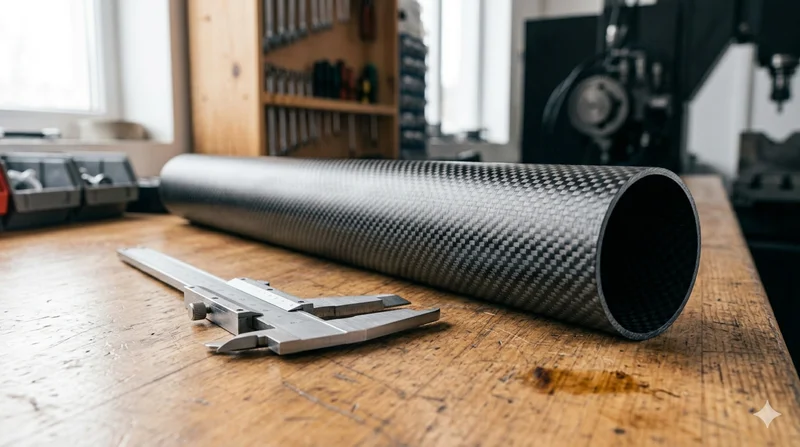
Round Carbon Fiber Tube — 3K Plain Weave T700
Standard round carbon fiber tube manufactured from Toray T700 grade fiber with 3K plain weave. Offers balanced strength and stiffness for general industrial applications including robotics, automation, sports equipment, and aerospace structures.
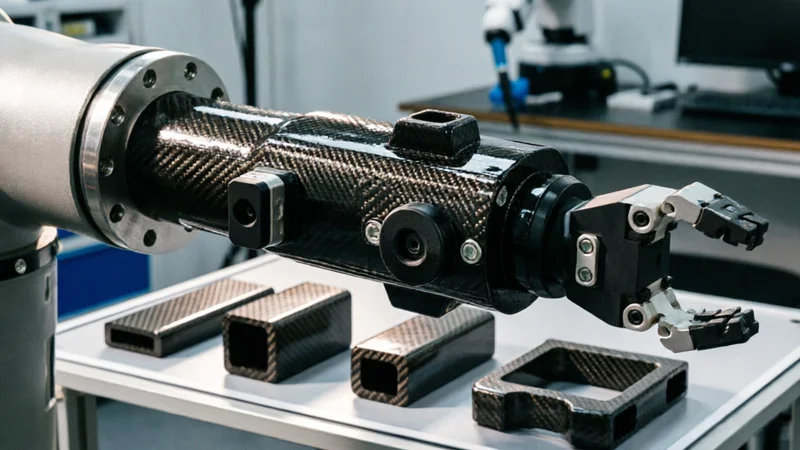
Carbon Fiber Robot End Effector Link — Custom Shape & Sensor Integration
Custom-shaped carbon fiber end effector links for robotic arms. Designed for automation integrators and research labs requiring lightweight, rigid connections between the robot wrist and gripper/tool. Can incorporate sensor mounting bosses, cable routing channels, and quick-change interfaces.
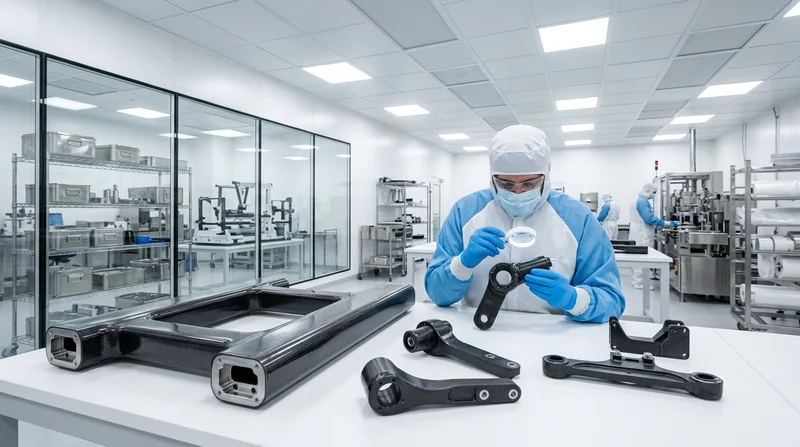
Custom Carbon Fiber Medical Device Components
Medical-grade carbon fiber components manufactured for imaging equipment, surgical instruments, and patient support systems. Carbon fiber's radiolucency (X-ray transparency) and high strength-to-weight ratio make it ideal for CT scanner beds, wheelchair frames, surgical robot arms, and MRI-compatible accessories. Biocompatible resin systems available.

Custom Carbon Fiber Musical Instrument Parts
Carbon fiber components for musical instrument manufacturing offering superior dimensional stability, low weight, and consistent acoustic properties. We produce carbon fiber bows, guitar necks, violin chin rests, drum shells, and wind instrument bodies. Carbon fiber instruments are immune to humidity changes and temperature fluctuations that affect wooden instruments.
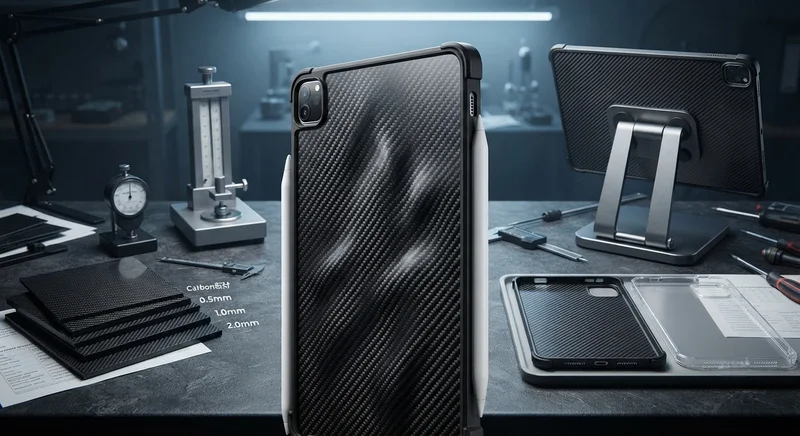
Carbon Fiber Tablet Case — Ultra-Light Protective Shell
Lightweight carbon fiber protective case for tablets and iPads. Molded from T700 3K prepreg with reinforced corner protection. Adds minimal weight while providing superior rigidity and drop protection compared to polycarbonate or silicone cases. Ideal for field workers, enterprise deployments, and professionals requiring durable tablet protection.