
Singapore occupies an unusual place in the Asia-Pacific carbon fiber map. It has no PAN precursor capacity and only limited domestic volume output, yet it operates as one of the region's sharpest test-and-integration points for advanced carbon applications. The city pairs forward regula
Introduction
Singapore occupies an unusual place in the Asia-Pacific carbon fiber map. It has no PAN precursor capacity and only limited domestic volume output, yet it operates as one of the region's sharpest test-and-integration points for advanced carbon applications. The city pairs forward regulatory frameworks for urban air mobility (AAM) with a maritime hub that must decarbonize its fleet, and it anchors a precision manufacturing and robotics base that consumes small-form, high-value carbon components at premium prices. For a carbon fiber supplier, Singapore is not a volume market; it is a premium showcase and a high-credibility gateway for wider Southeast Asia.
Singapore's economy grew 3.8 percent in 2025, and the services-and-engineering mix stays centered on transportation, aviation, and precision automation. Its twin engines of testing infrastructure and maritime regulation give carbon applications a faster pathway into commercial use than most neighbors. This article traces the three pillars — urban air mobility, maritime decarbonization, and precision manufacturing — and sets out a sourcing playbook for B2B entrants.
Urban Air Mobility as a High-Value Test Environment
Singapore is among a small group of jurisdictions where electric vertical takeoff and landing (eVTOL) aircraft can fly real test circuits. The civil aviation authority has mapped proposed air corridors over waterfront districts, and multiple eVTOL and air-vehicle developers are registered on the island, using it as a controlled environment for flight testing before commercial launch. This matters less for volume than for anchoring the demand logic of lightweight aerospace-grade carbon.
- eVTOL airframe structures: composite fuselage, rotor, and rotor surfaces that place stiffness and weight at a premium.
- Battery and electronics packaging: composite enclosures and thermal management structure for the electric drive systems that dominate the AAM weight budget.
- Ground testing and validation rigs: carbon fiber instrument mounts, sensor pylons, and charging-rig fixtures at the test and lab site, where stability and weight matter.
- Autonomous ground fleet integration: the delivery drones and ground robots that will couple with air vehicles, using carbon for lightweight structural parts.
The pattern is explicit: Singapore supplies small, high-value, aerospace-grade components at high price per kilogram, and each successfully validated program becomes a named first-buy reference that can carry the same AAM supplier to programs back home and across the region.
Maritime Decarbonization: Rebuilding Structural Composites for Cleaner Shipping
Singapore operates the world's largest bunkering and transshipment hub and is pushing its fleet toward lower-carbon fuels and lighter ships. That transition converts directly to marine carbon demand. Fast ferries, harbor craft, and offshore supply vessels redesign hulls and superstructures to save weight, which is exactly the place carbon composites gain measurable traction.
| Marine Segment | Singapore Situation (2026) | Carbon Fiber Applications | Est. Composite Content (US$ M) |
|---|---|---|---|
| Fast ferries and patrol craft | Regional speedcraft and maritime police fleets | Superstructures, decks, hatch covers | 15-40 |
| Offshore energy service vessels | Deep-water O&G and offshore wind support | Topsides enclosures, lightweight covers | 8-25 |
| Port and harbor equipment | Largest transshipment, yard cranes | Lightweight panels, protective structures | 6-15 |
| Repair and retrofit | Major floating-dock repair operators | CFRP patch plates and structural reinforcement | 4-12 |
Maritime decarbonization favors carbon because on a fast craft, weight is fuel. As operators shift toward battery-hybrid and measure power more tightly, they reduce service weight and carbon composites that saves 20-40 percent on panels and decks buys directly into fuel and range. The retrofit channel (patch plates and structural reinforcement) also grows without a full redesign, making the marine sector a fast-growing, compliance-aware buyer.
The Precision Manufacturing and Robotics Hub
Beyond aviation and marine, Singapore is one of the world's densest automation and precision-manufacturing centers: semiconductors, photonics, medical devices, and robotics. These sectors buy carbon fiber where dimensional stability and stiffness become decisive.
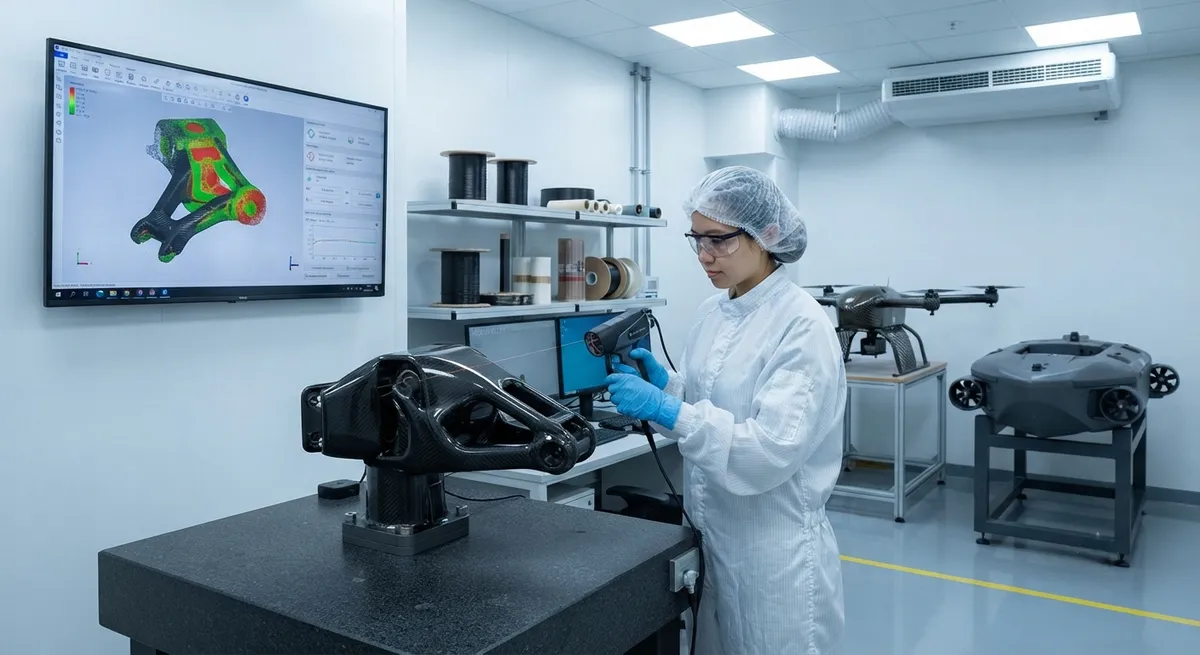
In clean-room automation, carbon fiber appears as lightweight gantries, cantilever arms, and end effectors where low mass and high bending stiffness improve positioning repeatability at cycle count, and reduce vibration. In semiconductor and wafer handling, carbon structures hold dimension to scale through temperature transients, avoiding thermal drift. For medical and optical instruments, carbon gives accuracy with minimal mass. These are small, high-precision, high-value parts — the highest value per gram of carbon fiber in any of Singapore's channels.
Supply Chain and Sourcing Position
Singapore does not manufacture carbon fiber. It has no precursor capacity and no domestic fiber from large suppliers, so essentially every kilogram of advanced carbon is imported. But the other side of the same coin is that Singapore is a gateway hub: its free-trade, logistics, and financial environment makes it an efficient redistribution point for CFRP into Southeast Asia.
For a supplier, this is a two-layer market. The first layer is direct application sales — precision manufacturing, AAM programs, and the marine retrofit channel. The second is re-export and gateway: a certified trade partner can land global aerospace-grade carbon and redistribute to regional neighbors with short connect times and a credible documentary pipeline. Export margin softens the small domestic market and rewards early compliance certification.
Frequently Asked Questions
What makes Singapore's carbon fiber demand different from larger emerging markets?
Singapore is low-volume but high-value and high-compliance. Demand concentrates on certified aerospace-grade AAM material, precision-manufacturing carbon with strict dimensional and cleanliness standards, and marine retrofit composites that must meet class requirements. Volumes are fractions of those seen in larger neighbors, but the per-unit price and the documentation burden are high. Singapore functions as a premium showcase that produces validation and credibility a supplier can carry into the wider region.
Which of AAM, maritime, and precision manufacturing should a new supplier target first in Singapore?
Precision manufacturing is the closest entry: it needs small one-piece quantities of high-quality carbon with strong stiffness and thermal data, which an established supplier can meet with good documentation. Maritime is the fastest-growing volume channel as Singapore decarbonizes its marine fleet and retrofit requirements accumulate. AAM is the visible showcase but the hardest gate because it demands full aerospace certification and program-level cooperation. The practical path is to enter through precision and marine, and use AAM as a credibility accelerator once the dossier exists.
Do I need local certification to sell carbon fiber components in Singapore?
There is no domestic mass-certification body for carbon fiber as such, but your customer will impose a defined standard. AAM programs enforce aerospace compliance and demand full material traceability, certificate of conformance, and manufacturing documentation. Marine applications require class approvals relevant to the hull or installation. Precision and robotics buyers want documented traceability and quality but impose no statutory mandate. Across all, the differentiator in Singapore is not price or volume — it is credible data, traceability, and the ability to deliver small quantities on a predictable schedule.
Conclusion
Singapore is the Asia-Pacific lens on advanced carbon fiber at its highest quality and compliance. The AAM test environment builds credibility, the maritime decarbonization program supplies structural volume and repair demand, and the precision-manufacturing economy renews premium carbon demand every cycle. Since the country does not manufacture carbon, all demand for carbon is served by disciplined, globally-aligned suppliers able to hold certification and process documentation for these ecosystems.
To qualify as a Singapore and regional carbon supplier, pair documented material quality with a clear service entry. Browse our carbon fiber range with aerospace-grade and marine documentation suited to AAM, marine and precision applications, or contact our engineering team to begin a Singapore qualification and supply program.
Part of topic
Related Articles
- Carbon Fibre Sheet Supplier UK: Sourcing Options and Specification Checklist
- Carbon Fiber Sheets Near Me Suppliers: Local Stock vs Factory Direct
- Filament Wound Epoxy Tubes: Industry Standards and Compliance Requirements
- Carbon Fiber Dealers Near Me: What a Good Dealer Actually Adds
- Carbon Fiber Supplies Near Me: Local Sourcing Without Compromising Spec
- Carbon Fiber for Sale: Online Platforms and Direct Sales Channel Comparison
Interested in Our Products?
Contact our team for competitive pricing and technical specifications.
Get a QuoteRelated Products
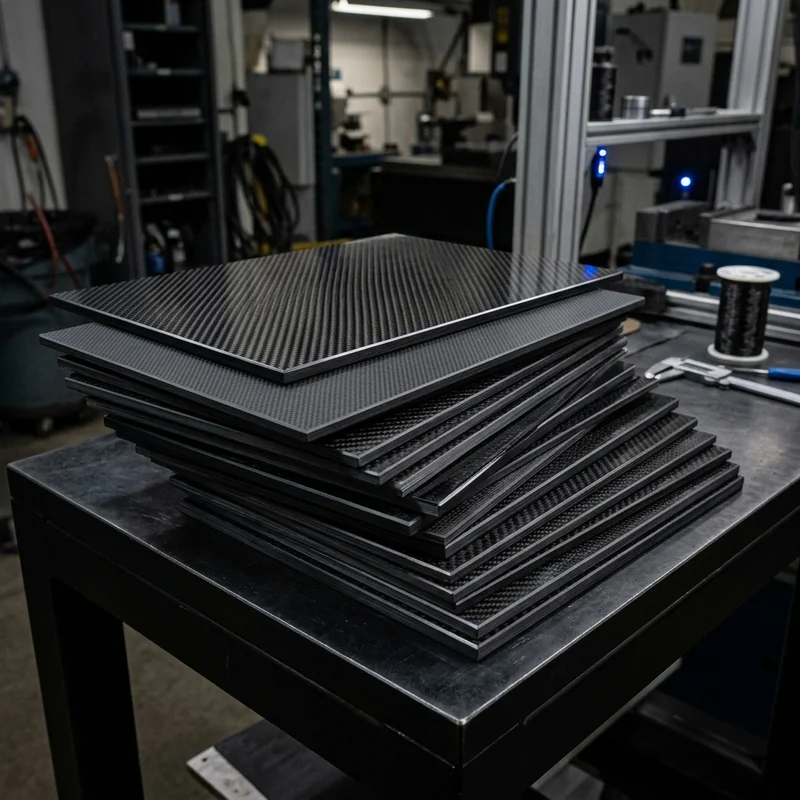
Carbon fiber standard plate-3k stripe
Lightweight, ultra-rigid standard sheets for drone fuselages, robot housings, facades and structural applications.
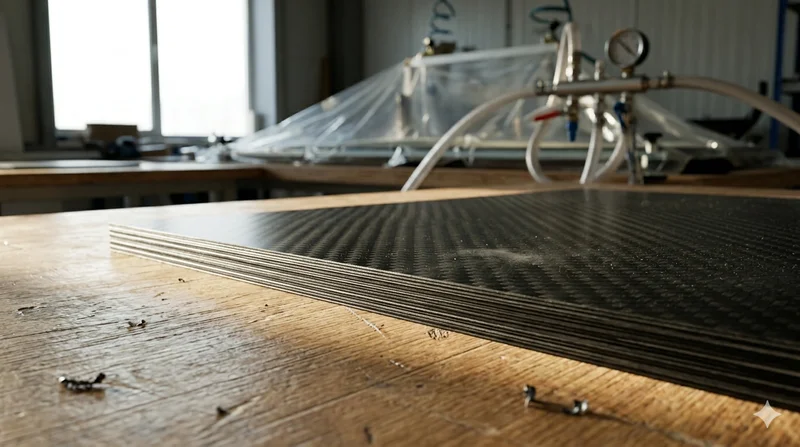
Carbon Fiber Plate — 3K Twill T700 3.0mm
Medium-thickness 3.0mm carbon fiber plate offering significantly higher load capacity while maintaining attractive 3K twill finish. Suitable for structural brackets, reinforcement plates, and load-bearing panels.

Carbon Fiber Plate — 3K Twill T700 1.5mm
Thin 1.5mm carbon fiber plate with 3K twill weave surface. Lightweight and stiff, commonly used for covers, panels, drone bodies, and applications requiring a premium aesthetic appearance.
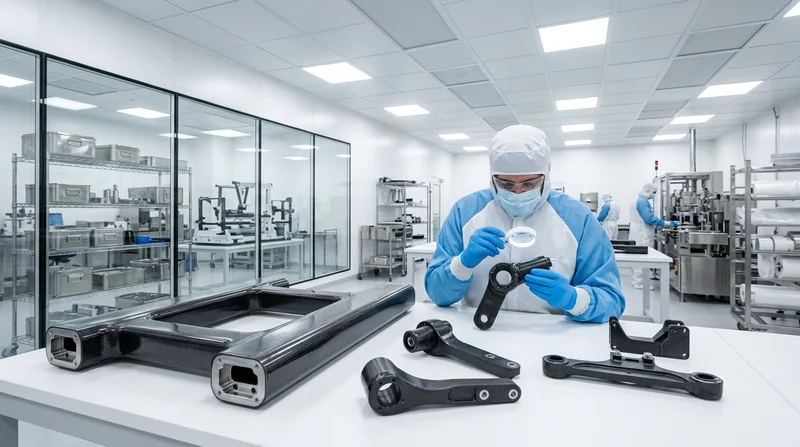
Custom Carbon Fiber Medical Device Components
Medical-grade carbon fiber components manufactured for imaging equipment, surgical instruments, and patient support systems. Carbon fiber's radiolucency (X-ray transparency) and high strength-to-weight ratio make it ideal for CT scanner beds, wheelchair frames, surgical robot arms, and MRI-compatible accessories. Biocompatible resin systems available.
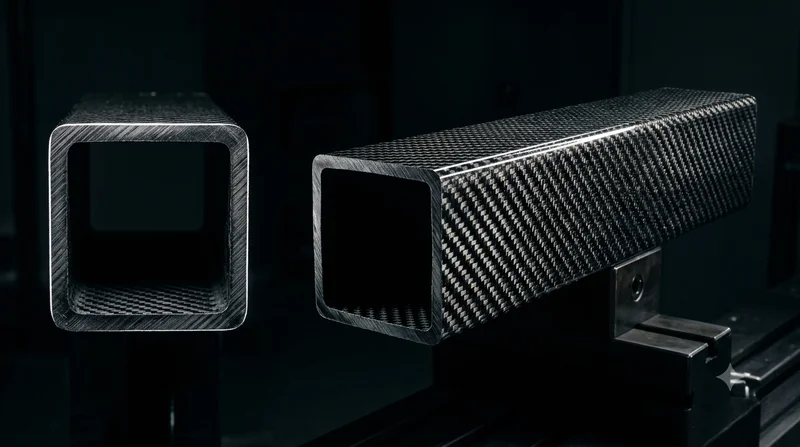
Square Carbon Fiber Tube — 3K Twill T700
Square cross-section carbon fiber tube manufactured with 3K twill weave for torsional strength. Preferred for structural frames, trusses, and support columns where rectangular geometry offers design flexibility.