
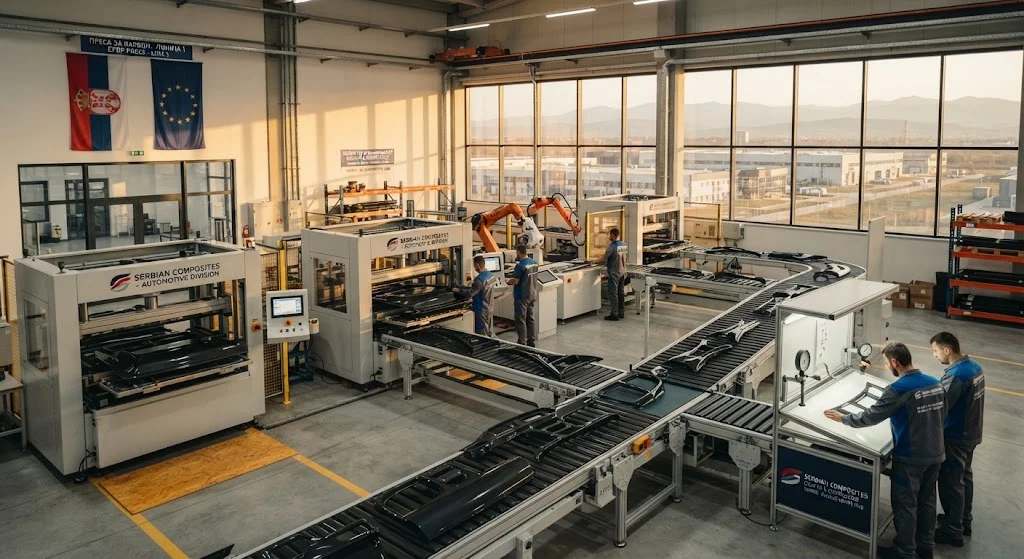
Serbia is emerging as a carbon fiber manufacturing destination in Southeast Europe, leveraging EU accession incentives, competitive labor costs, and proximity to European automotive and defense markets. This article examines Serbia's carbon fiber capabilities and market positioning.
Introduction
Serbia's carbon fiber industry has developed over the past decade, driven by foreign direct investment from European and Asian companies seeking cost-effective manufacturing locations within Europe. The country's EU candidate status provides access to pre-accession funding and regulatory alignment, while competitive labor costs and improving infrastructure make it attractive for composite manufacturing.
Serbia's strategic position at the crossroads of Central and Southeast Europe provides access to major European automotive markets in Germany, Italy, and Austria, as well as emerging defense procurement opportunities in the Balkans region.
Manufacturing Capabilities
Serbia's carbon fiber manufacturing sector includes several key capabilities:
Precursor production: PAN precursor fiber production facilities in the Belgrade and Novi Sad industrial zones supply both domestic carbon fiber producers and export markets. Production capacity has grown to several thousand tons annually.
Carbonization: Carbon fiber carbonization plants process domestic and imported precursor into standard and intermediate modulus fibers. These facilities primarily serve automotive and industrial applications.
Composite manufacturing: A growing number of facilities produce finished CFRP components — automotive interior panels, structural reinforcements, and defense-related products. These operations benefit from Serbia's proximity to OEM assembly plants in Central Europe.
Automotive Applications
Serbia's automotive carbon fiber sector is growing through supply chain integration with European OEMs:
Interior components: Carbon fiber interior trim panels, dashboard inserts, and seat structures for premium European vehicles. Serbia's labor costs and proximity to assembly plants make it competitive for these labor-intensive operations.
Structural reinforcements: CFRP structural components — B-pillar reinforcements, roof panels, underbody shields — for weight reduction in mass-market vehicles. These applications require high-volume production capabilities.
Electric vehicle components: Battery enclosures, motor housings, and lightweight body structures for European EV manufacturers. The transition to electric vehicles is creating new demand for carbon fiber components.
Defense Applications
Serbia's defense carbon fiber sector serves both domestic requirements and export markets:
Unmanned aerial vehicles: CFRP structures for military and commercial drones, leveraging Serbia's existing aerospace manufacturing expertise. Serbia has developed indigenous UAV capabilities that require carbon fiber components.
Armored vehicles: Carbon fiber composite armor panels and structural components for light armored vehicles. Serbia's defense industry has experience in composite armor production.
Communication equipment: Carbon fiber antenna housings, radar components, and shelter structures for military communication systems.
Investment Climate
Serbia offers several incentives for carbon fiber manufacturing investment:
EU pre-accession funds: IPA (Instrument for Pre-Accession Assistance) funding supports infrastructure development and technology transfer in candidate countries.
Tax incentives: Corporate income tax reductions and investment subsidies for manufacturing investments in priority sectors, including advanced materials.
Free trade agreements: Serbia has free trade agreements with the EU, CEFTA countries, and Russia, providing preferential access to multiple markets.
Workforce development: Technical universities in Belgrade and Novi Sad offer programs in materials science and composite engineering, supporting workforce development.
Challenges and Outlook
Serbia's carbon fiber industry faces several challenges alongside its growth opportunities:
Scale limitations: Current production volumes are small compared to established carbon fiber producing nations, limiting economies of scale.
Technology access: Advanced carbon fiber production technologies remain concentrated in Japan, the US, and Europe. Technology transfer is essential for moving up the value chain.
Quality certification: Achieving automotive (IATF 16949) and defense (AQAP) certifications is essential for accessing high-value market segments.
The outlook for Serbia's carbon fiber industry is positive, with growth driven by European automotive lightweighting, defense modernization, and the country's strategic position as a cost-effective manufacturing location within Europe.
Part of topic
Related Articles
- Recycled Carbon Fiber Market Forecast 2030: Technology Maturity and Commercialization Path
- South Korea Carbon Fiber Market 2026: Hydrogen Economy and Shipbuilding Innovation
- Wind Turbine Blade Leading Edge Protection 2026: Polyurethane, Tape, and Metallic Shield Solutions
- China Carbon Fiber Overcapacity 2026: Price War Impact and Industry Consolidation
- India Carbon Fiber Market 2026: Wind Energy, Aerospace, and Defense Expansion
- PAN Precursor Market 2026: Acrylonitrile Supply and Carbon Fiber Cost Structure
Interested in Our Products?
Contact our team for competitive pricing and technical specifications.
Get a QuoteRelated Products
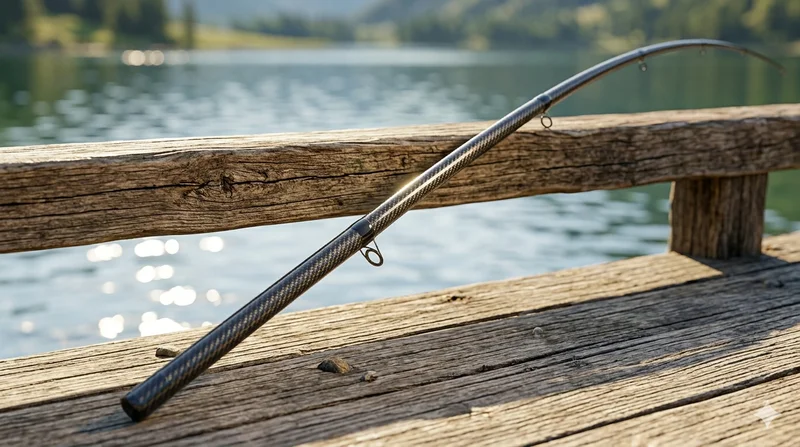
Carbon Fiber Fishing Rod Blank
High-quality carbon fiber fishing rod blank manufactured from multiple grades of Toray carbon fiber cloth. Available in a wide range of lengths, powers, and actions for freshwater and saltwater applications. Suitable for OEM rod building.

Carbon Fiber Plate — 3K Twill T700 3.0mm
Medium-thickness 3.0mm carbon fiber plate offering significantly higher load capacity while maintaining attractive 3K twill finish. Suitable for structural brackets, reinforcement plates, and load-bearing panels.

Carbon Fiber Plate — 3K Twill T700 1.5mm
Thin 1.5mm carbon fiber plate with 3K twill weave surface. Lightweight and stiff, commonly used for covers, panels, drone bodies, and applications requiring a premium aesthetic appearance.

Square Carbon Fiber Tube — 3K Twill T700
Square cross-section carbon fiber tube manufactured with 3K twill weave for torsional strength. Preferred for structural frames, trusses, and support columns where rectangular geometry offers design flexibility.
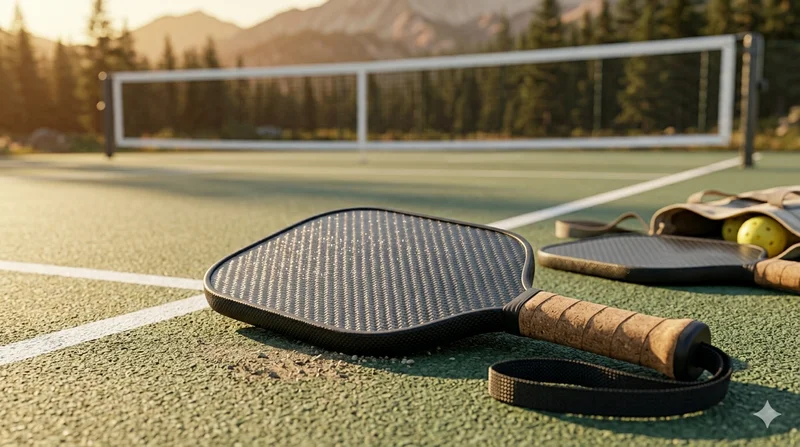
Carbon Fiber Pickleball Paddle
High-performance pickleball paddle with Toray T700 carbon fiber face and polypropylene honeycomb core. Delivers excellent power-to-weight ratio, spin generation, and vibration dampening for competitive play.