
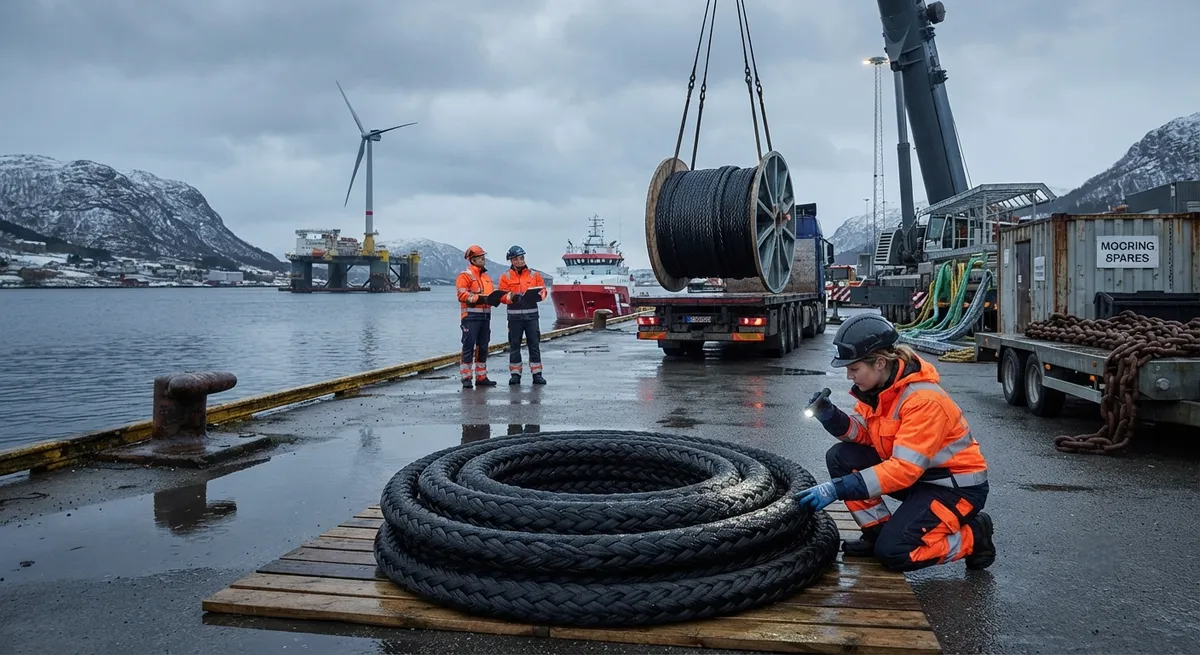
Norway has spent decades engineering in the hardest offshore environment on Earth, and that capability is now being redirected. The country's floating offshore wind program — anchored by Hywind Tampen, the world's largest floating wind farm — is scaling toward multi-gigawatt ambition, i
Introduction
Norway has spent decades engineering in the hardest offshore environment on Earth, and that capability is now being redirected. The country's floating offshore wind program — anchored by Hywind Tampen, the world's largest floating wind farm — is scaling toward multi-gigawatt ambition, its maritime hydrogen ecosystem is the most advanced in Northern Europe, and its oilfield service sector is steadily converting offshore competence into new industries. Each of these directions consumes carbon fiber in forms that are unusual for a European market: mooring line reinforcement, high-pressure hydrogen storage, and lightweight structural systems built to survive the North Sea.
For suppliers and procurement teams, Norway is a high-specification, high-value market rather than a volume market. This article breaks down the three demand streams, the flagship projects behind them, and the specification landscape that governs material selection in 2026.
Floating Offshore Wind: The Mooring-Line Opportunity
Floating offshore wind is where Norway's carbon fiber story begins. Hywind Tampen, commissioned in 2022-2023, demonstrated that floating turbines can generate power at scale in deep water, and the Norwegian government's offshore wind strategy targets allocations in the multi-gigawatt range, with Utsira Nord specifically reserved for floating technology. The technical driver is direct: floating wind turbines are anchored by mooring systems, and carbon fiber composites are entering that space through two channels.
The first is carbon fiber mooring lines. Tension-leg platforms and deepwater mooring systems benefit from materials with high specific stiffness and corrosion resistance. Carbon fiber composite mooring — built from T700-class tow in a jacketed rope or rod structure — offers weight reduction and fatigue performance that steel chain and polyester rope cannot match, particularly as water depths push past 200-300 m. The second channel is composite structural elements — turbine blades, tower sections, and platform components where established wind-sector carbon fiber use extends into the floating domain.
| Demand Stream | 2026 Status | Key Carbon Fiber Form | Primary Grade |
|---|---|---|---|
| Floating wind mooring | Hywind Tampen operational; Utsira Nord allocations ahead | Composite mooring ropes/rods, anchors | T700 12K/24K |
| Maritime hydrogen | Pilot vessels and shore infrastructure scaling | Type IV tanks, shipboard storage | T700-T800 |
| Wind blades & structures | Established OEM supply chains | Blade spars, tower stiffeners | T300-T700 |
| Oilfield service diversification | Subsea and riser programs | CFRP risers, composite spoolables | T700-T800 |
Mooring line qualification is the gate: composite mooring components must satisfy classification-society rules (DNV among them), fatigue testing in seawater, and years of service validation. Norway's advantage is that its supply chain — from its composite research institutes to its offshore certification ecosystem — is already built around exactly this type of high-assurance qualification.
Maritime Hydrogen: Storage as the Carbon Fiber Bottleneck
Norway has the most active maritime hydrogen ecosystem in Northern Europe. The country operates hydrogen ferries and pilot cargo vessels, and its coastal shipping network — where electric batteries hit range limits on longer routes — makes hydrogen the leading zero-emission candidate for the next decade. The carbon fiber content sits in the storage system: Type IV composite pressure vessels rated at 350-700 bar, carried aboard ship as horizontal or vertical racks.
Shipboard storage scales differently from land-based refueling:
- Large vessel demand per unit: a hydrogen ferry may carry 100-200 kg of hydrogen on board, requiring 400-800 kg of carbon fiber in its Type IV tank system — an order of magnitude more fiber per vehicle than a bus or truck.
- Certification density: maritime Type IV tanks must meet DNV rules and flag-state requirements on top of UN/ISO transport standards, doubling documentation and testing burden.
- Full-lifecycle economics: the fiber choice is driven by gravimetric efficiency — higher-strength fiber (T700/T800) allows thinner walls and more stored hydrogen per kilogram of system, directly extending vessel range.
The bottleneck in Norway's maritime hydrogen ramp is not tanks themselves but certified tank supply chains and the fuel-cell and refueling infrastructure around them. Carbon fiber suppliers who can document maritime-grade certification history have a structural advantage here.
Oilfield Service Diversification: Competence, Not Volume
Norway's third carbon fiber stream comes from the transformation of its oilfield service sector. Operators and suppliers that built careers in the North Sea are applying the same materials and engineering discipline to carbon fiber components:
- Composite risers and spoolables — lightweight, corrosion-resistant tubulars for subsea applications, displacing steel where weight and fatigue matter.
- Subsea structures and intervention equipment — where the specific stiffness of carbon fiber reduces handling loads at depth.
- Retrofits and life-extension — CFRP strengthening of aging steel structures, a natural extension of the offshore integrity business.
This stream is smaller in volume than wind or hydrogen but high in specification requirements. It shares DNA with the offshore wind opportunity — the same certification culture, the same demanding customers — which is why Norwegian suppliers treat the two as one engineering ecosystem.
The Specification Landscape: Why Norway Is a High-Bar Market
Every demand stream in Norway runs through the same quality infrastructure, and that is the defining feature of the market:
- Classification societies — DNV rules govern mooring systems, maritime pressure vessels, and many subsea components; material qualification is mandatory, documented, and audited.
- Marine environment testing — seawater immersion, fatigue in corrosive media, and long-term durability data are required, not optional.
- Traceability culture — Norwegian buyers expect full material traceability from tow to finished component, matching aerospace-grade documentation discipline.
The consequence is that Norway is not a market for spot sales of commodity tow. It rewards suppliers with validated marine-grade material, complete documentation, and a qualification path — and it punishes shortcuts with long delays.
Frequently Asked Questions
Why is Norway's carbon fiber demand concentrated in floating wind and hydrogen?
Norway's comparative advantage is deepwater offshore engineering, and its energy transition converts that capability into new industries. Floating offshore wind is the natural extension of its offshore platform expertise, and floating turbines require mooring systems where carbon fiber's specific stiffness and corrosion resistance pay off. Maritime hydrogen leverages Norway's coastal shipping network, where battery range limits make hydrogen the leading zero-emission option — and hydrogen storage is precisely where carbon fiber dominates in Type IV tanks. The result is a market profile built around high-specification, high-value applications rather than volume.
What carbon fiber grades does the Norwegian market require?
T700-class tow dominates mooring line reinforcement and maritime Type IV hydrogen storage in 12K and 24K formats, with T800-class material used where maximum gravimetric efficiency is required — primarily advanced shipboard storage systems. Wind blade applications use the established T300-T700 range. Across all streams, the defining requirement is not the top-end grade but documented marine-grade certification: material must carry classification-society qualification and seawater fatigue data rather than generic aerospace or industrial approvals.
How large is the carbon fiber content in a hydrogen ferry?
A hydrogen ferry carrying 100-200 kg of hydrogen typically stores it in Type IV tanks at 350-700 bar, consuming roughly 400-800 kg of carbon fiber for the tank system alone — an order of magnitude more fiber per vehicle than a hydrogen bus or truck. That per-vessel figure, multiplied across the ferry fleet Norway is evaluating for conversion and newbuild, is what makes maritime storage one of the most material-intensive routes for carbon fiber in European decarbonization.
Is Norway a large-volume carbon fiber market?
No — Norway is a high-value, high-specification market rather than a volume market. Its demand is concentrated in qualification-heavy applications: floating wind mooring, maritime hydrogen storage, and subsea components, all governed by DNV and marine certification. The commercial logic is premium pricing and long-term program relationships rather than tonnage. For suppliers with validated marine-grade material and complete documentation, that logic is favorable; for commodity-tow sellers, Norway is not the right entry market.
Conclusion
Norway's carbon fiber market in 2026 is defined by the conversion of offshore engineering capability into new energy industries. Floating offshore wind is moving from demonstration to allocation scale, pulling carbon fiber into mooring systems; maritime hydrogen is converting coastal shipping to zero-emission propulsion, with Type IV storage as the fiber-intensive core; and the oilfield service sector is carrying its certification culture into composite risers and subsea structures. Every stream runs through DNV-grade qualification, making Norway a premium, high-bar market that rewards documentation and durability.
For suppliers evaluating Northern Europe, Norway is the clearest specialist market in the region. Review our carbon fiber tow and reinforcement range for mooring, hydrogen storage, and offshore applications, or talk to our team about marine-grade certification and qualification support.
Part of topic
Related Articles
- Carbon Fibre Sheet Supplier UK: Sourcing Options and Specification Checklist
- Carbon Fiber Sheets Near Me Suppliers: Local Stock vs Factory Direct
- Filament Wound Epoxy Tubes: Industry Standards and Compliance Requirements
- Carbon Fiber Dealers Near Me: What a Good Dealer Actually Adds
- Carbon Fiber Supplies Near Me: Local Sourcing Without Compromising Spec
- Carbon Fiber for Sale: Online Platforms and Direct Sales Channel Comparison
Interested in Our Products?
Contact our team for competitive pricing and technical specifications.
Get a QuoteRelated Products
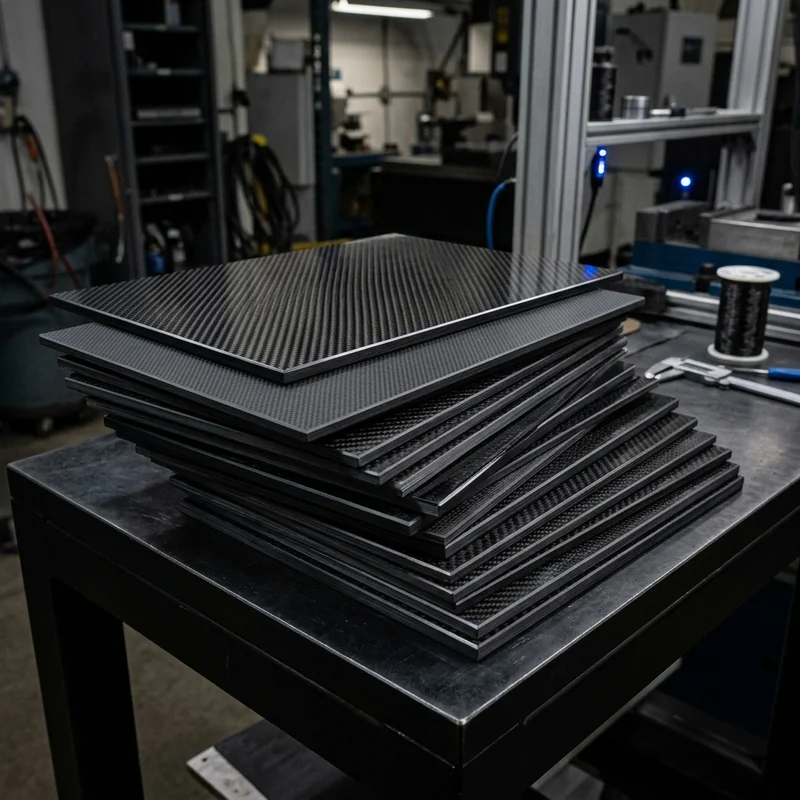
Carbon fiber standard plate-3k stripe
Lightweight, ultra-rigid standard sheets for drone fuselages, robot housings, facades and structural applications.

Carbon Fiber Plate — 3K Twill T700 3.0mm
Medium-thickness 3.0mm carbon fiber plate offering significantly higher load capacity while maintaining attractive 3K twill finish. Suitable for structural brackets, reinforcement plates, and load-bearing panels.

Carbon Fiber Plate — 3K Twill T700 1.5mm
Thin 1.5mm carbon fiber plate with 3K twill weave surface. Lightweight and stiff, commonly used for covers, panels, drone bodies, and applications requiring a premium aesthetic appearance.
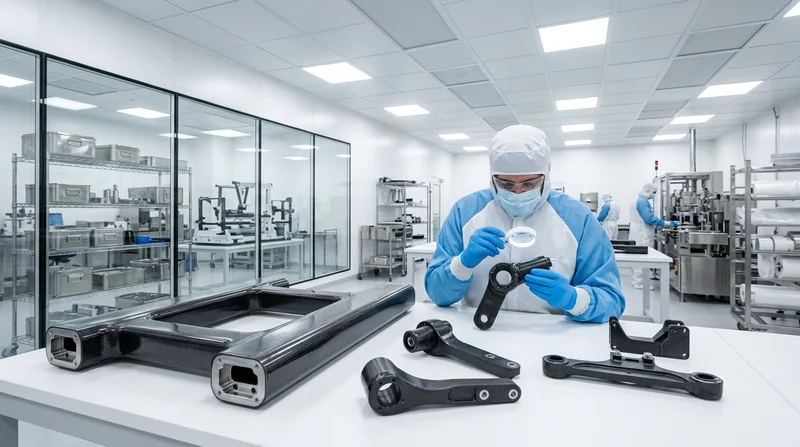
Custom Carbon Fiber Medical Device Components
Medical-grade carbon fiber components manufactured for imaging equipment, surgical instruments, and patient support systems. Carbon fiber's radiolucency (X-ray transparency) and high strength-to-weight ratio make it ideal for CT scanner beds, wheelchair frames, surgical robot arms, and MRI-compatible accessories. Biocompatible resin systems available.

Square Carbon Fiber Tube — 3K Twill T700
Square cross-section carbon fiber tube manufactured with 3K twill weave for torsional strength. Preferred for structural frames, trusses, and support columns where rectangular geometry offers design flexibility.