Comprehensive market analysis of Mexico carbon fiber composites industry — aerospace nearshoring clusters in Querétaro and Nuevo León, automotive structural composite adoption, USMCA tariff advantages, IMMEX program benefits, and supply chain dynamics.
Mexico's Carbon Fiber Market in 2026: Strategic Positioning in the Americas
Mexico has emerged as one of the fastest-growing markets for carbon fiber composites in the Americas, driven by the convergence of aerospace nearshoring, expanding automotive manufacturing capacity, and the structural advantages provided by the United States-Mexico-Canada Agreement (USMCA). The Mexican carbon fiber composites market was valued at approximately $285 million in 2025 and is projected to grow at a compound annual growth rate (CAGR) of 11.8 percent through 2031, reaching an estimated $558 million, according to a 2025 industry analysis by Markets and Markets and corroborated by data from the Mexican Composites Industry Council (Consejo de la Industria de Compuestos de México).
This growth trajectory positions Mexico not merely as a low-cost manufacturing destination but as a strategically integrated node in North American composite supply chains. With over 500 aerospace manufacturing facilities concentrated in the northern states of Baja California, Sonora, Chihuahua, Nuevo León, and Querétaro, and automotive production exceeding 3.5 million vehicles annually, Mexico's demand for advanced composite materials — including carbon fiber prepregs, woven fabrics, and pultruded profiles — is expanding across both traditional and emerging application sectors.
Aerospace Nearshoring: The Querétaro and Nuevo León Clusters
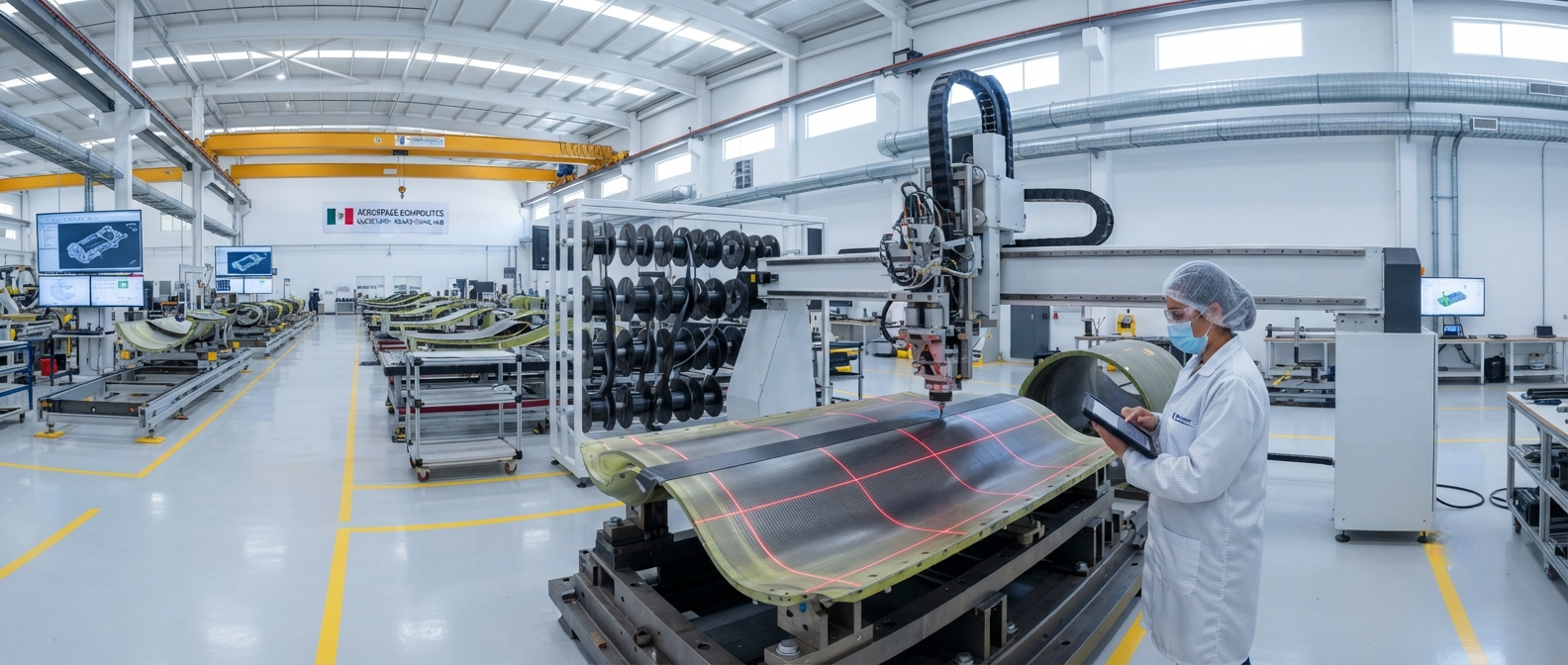
Mexico's aerospace composites sector has been transformed by nearshoring trends that accelerated following the COVID-19 pandemic. Global aerospace OEMs and Tier 1 suppliers have relocated production from Asia to Mexico to reduce supply chain risk, shorten logistics lead times, and benefit from USMCA preferential tariff treatment. The state of Querétaro has become the epicenter of Mexico's aerospace composite manufacturing, hosting over 120 aerospace enterprises including Bombardier, Safran, Airbus, and GE Aerospace within the Querétaro Aerospace Park.
In 2025, Safran announced a $72 million expansion of its Querétaro carbon fiber nacelle component facility, adding 40,000 square feet of cleanroom manufacturing space dedicated to resin transfer molding (RTM) and automated fiber placement (AFP) processes for LEAP engine nacelle components. Bombardier's Querétaro facility — already one of the largest composite manufacturing plants in Latin America — began production of composite horizontal stabilizers for the Global 7500 business jet using out-of-autoclave (OOA) curing technology, reducing cycle times by 30 percent compared to traditional autoclave processing.
| Mexican Aerospace Composite Cluster | Primary Composite Activities | Companies (2026) | Employment | Key USMCA Advantage |
|---|---|---|---|---|
| Querétaro | AFP, RTM, prepreg layup, nacelle components | 120+ | 24,000+ | Zero tariff on composite parts for US OEMs |
| Nuevo León (Monterrey) | Filament winding, compression molding, drone structures | 65+ | 14,000+ | Rule of origin: 62.5% NAFTA content |
| Baja California (Tijuana/Mexicali) | Aerospace interior panels, honeycomb cores | 85+ | 18,000+ | Cross-border logistics under 2 hours |
| Chihuahua | Harness assemblies, composite tooling | 40+ | 8,000+ | IMMEX program — duty-free raw material import |
| Sonora (Hermosillo) | Metal-to-composite conversion, secondary structures | 30+ | 5,500+ | Proximity to Arizona aerospace corridor |
Automotive Carbon Fiber: Structural Parts and Mass Production
Mexico's automotive sector — the seventh-largest vehicle producer globally — is increasingly integrating carbon fiber composites into structural and semi-structural applications. USMCA rules of origin requiring 75 percent regional value content for duty-free treatment have incentivized automakers to source composite components from Mexican suppliers rather than importing from Asia. This is particularly evident in battery electric vehicle (BEV) production, where carbon fiber battery enclosures, floor panels, and crash structures are being adopted for their weight-saving and fire-retardant properties.
In 2025, Ford's Hermosillo stamping and assembly plant announced a partnership with a Mexican composite manufacturer to supply carbon fiber-reinforced thermoplastic (CFRTP) battery tray assemblies for the Mustang Mach-E and an upcoming BEV platform. The CFRTP trays, produced via compression molding with 40-second cycle times, weigh 55 percent less than equivalent steel battery enclosures while meeting the strict fire resistance requirements of UN Regulation No. 100 for electric vehicle battery systems. Similarly, General Motors' Ramos Arizpe complex has initiated a pilot line for carbon fiber leaf springs on the Chevrolet Silverado EV, targeting a 70 percent weight reduction compared to the steel multi-leaf configuration.
USMCA Trade Benefits and Tariff Advantages
The USMCA provides a structural competitive advantage for carbon fiber composite manufacturers operating in Mexico. Under the agreement's automotive rules of origin — which require 75 percent regional value content (RVC) for passenger vehicles and 70 percent for light trucks — automakers importing composite parts from Mexico pay zero tariff, compared to 2.5 to 25 percent for imports from non-USMCA countries. For aerospace products, USMCA maintains the NAFTA-era zero-tariff regime on civil aircraft parts, while adding new provisions for digital trade and intellectual property protection that benefit composite design and engineering services.
The IMMEX (Industria Manufacturera, Maquiladora y de Servicios de Exportación) program further enhances Mexico's attractiveness. This program allows manufacturers to import raw materials — including carbon fiber tow, epoxy resins, and release films — duty-free and VAT-exempt, provided that the finished products are exported. Combined with Mexico's network of 14 free trade agreements covering 50 countries, IMMEX enables carbon fiber processors to serve not only the North American market but also European and Latin American customers with competitive logistics costs.
- Zero-Tariff Access (USMCA): Composite parts manufactured in Mexico enter the US and Canada duty-free, reducing landed cost by 5–25% compared to Asian-sourced components.
- IMMEX Duty Deferral: Carbon fiber raw materials — prepreg, tow, fabric — can be imported duty-free for re-export as finished composite parts.
- Logistics Advantage: Cross-border trucking from Querétaro to Texas composite manufacturing hubs takes 12–18 hours versus 25–35 days from Shanghai or Yokohama.
- Labor Cost Efficiency: Skilled composite technician wages in Mexico are 40–55% of equivalent US wages, with labor productivity reaching 85–92% of US levels in established aerospace clusters.
- Green Energy Access: 30% of Mexico's electricity is generated from renewables (hydro, wind, solar), supporting carbon footprint reduction targets for carbon fiber processors.
Carbon Fiber Raw Material Supply and Distribution
The supply of carbon fiber precursor and finished composite materials into Mexico is primarily channeled through three routes: direct import by major OEMs via their global procurement networks, distribution through US-based composite material distributors such as Hexcel, Toray Advanced Composites, and Solvay with Mexican warehouse facilities, and local distribution through Mexican industrial material suppliers. The growing installed base of automated fiber placement (AFP) and automated tape laying (ATL) machines in Mexican aerospace facilities is driving demand for low-void prepreg materials with controlled tack, while automotive programs increasingly specify fast-cure prepreg systems compatible with compression molding cycle times under 3 minutes.
Mexican demand for carbon fiber is heavily weighted toward intermediate-modulus (230-290 GPa) standard-grade products, which account for approximately 72 percent of total consumption. High-modulus fibers (above 350 GPa) represent roughly 15 percent of demand, concentrated in aerospace primary structures and defense applications. The remaining 13 percent comprises low-cost large-tow fibers (48K to 60K) used in automotive, infrastructure, and industrial applications where absolute mechanical performance is secondary to cost efficiency.
Challenges and Growth Constraints
Despite the favorable macro-economic trends, the Mexican carbon fiber composites market faces several structural challenges. The domestic carbon fiber precursor production capacity remains negligible — no commercial-scale PAN precursor or carbonization lines operate in Mexico, making the country entirely dependent on imported carbon fiber tow from Japan, the United States, and Germany. This import dependency exposes Mexican processors to supply chain disruptions, currency fluctuation risks, and longer lead times for specialty fiber grades. Additionally, the technical workforce pipeline — while improving — still shows a gap in advanced composite engineering expertise, particularly in computational modeling of composite structures and automated process programming.
Frequently Asked Questions
What is the current size of Mexico's carbon fiber composites market?
The Mexican carbon fiber composites market was valued at approximately $285 million in 2025. It is projected to grow at an 11.8 percent CAGR through 2031, reaching an estimated $558 million. Aerospace and automotive sectors together account for approximately 64 percent of total composite consumption, with the remainder distributed across wind energy, sporting goods, construction, and industrial applications.
How does USMCA benefit carbon fiber manufacturers operating in Mexico?
USMCA provides zero-tariff access to US and Canadian markets for composite parts meeting regional value content (RVC) requirements — 75 percent for automotive and zero tariff for aerospace under the civil aircraft products provision. Combined with Mexico's IMMEX program for duty-free raw material import, manufacturers can achieve landed cost advantages of 5 to 25 percent compared to importing finished composite parts from Asia.
Which Mexican states have the strongest carbon fiber composites manufacturing ecosystems?
Querétaro leads with the largest aerospace composites cluster (120+ companies, 24,000 aerospace workers), followed by Nuevo León (Monterrey) with 65+ companies focused on automotive and drone structures, Baja California (85+ companies in aerospace interiors), Chihuahua (composite tooling and assemblies), and Sonora (metal-to-composite conversion programs). Each cluster benefits from proximity to US border crossings and specialized industrial parks.
Part of topic
Related Articles
- Recycled Carbon Fiber Market Forecast 2030: Technology Maturity and Commercialization Path
- South Korea Carbon Fiber Market 2026: Hydrogen Economy and Shipbuilding Innovation
- Wind Turbine Blade Leading Edge Protection 2026: Polyurethane, Tape, and Metallic Shield Solutions
- China Carbon Fiber Overcapacity 2026: Price War Impact and Industry Consolidation
- India Carbon Fiber Market 2026: Wind Energy, Aerospace, and Defense Expansion
- PAN Precursor Market 2026: Acrylonitrile Supply and Carbon Fiber Cost Structure
Interested in Our Products?
Contact our team for competitive pricing and technical specifications.
Get a QuoteRelated Products
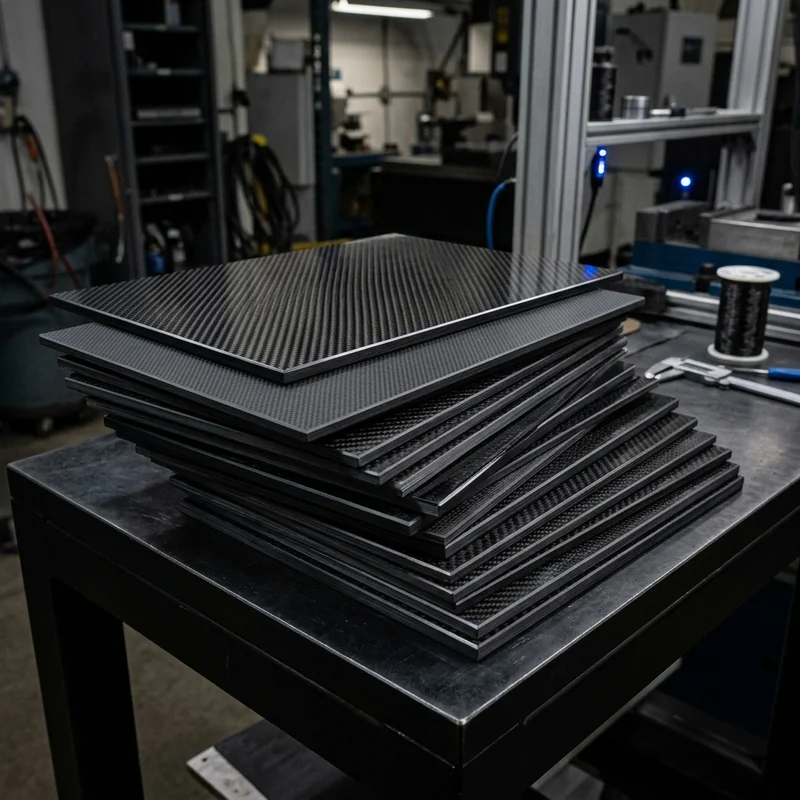
Carbon fiber standard plate-3k stripe
Lightweight, ultra-rigid standard sheets for drone fuselages, robot housings, facades and structural applications.
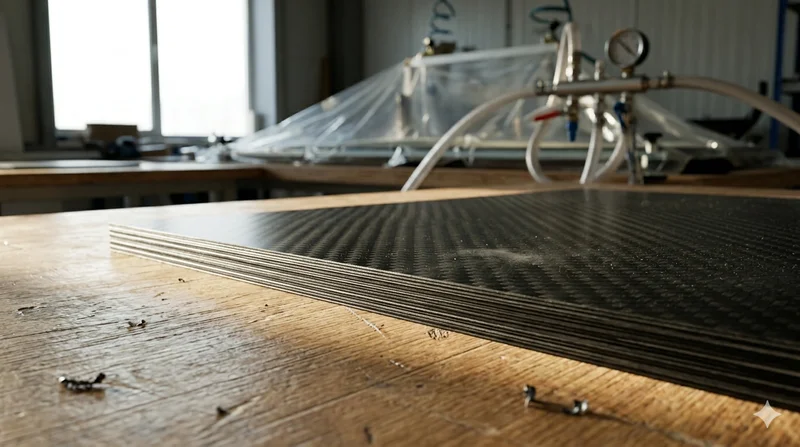
Carbon Fiber Plate — 3K Twill T700 3.0mm
Medium-thickness 3.0mm carbon fiber plate offering significantly higher load capacity while maintaining attractive 3K twill finish. Suitable for structural brackets, reinforcement plates, and load-bearing panels.
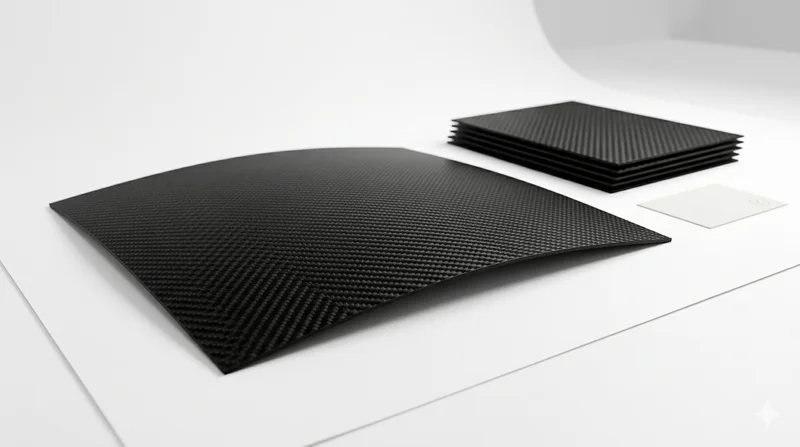
Carbon Fiber Plate — 3K Twill T700 1.5mm
Thin 1.5mm carbon fiber plate with 3K twill weave surface. Lightweight and stiff, commonly used for covers, panels, drone bodies, and applications requiring a premium aesthetic appearance.
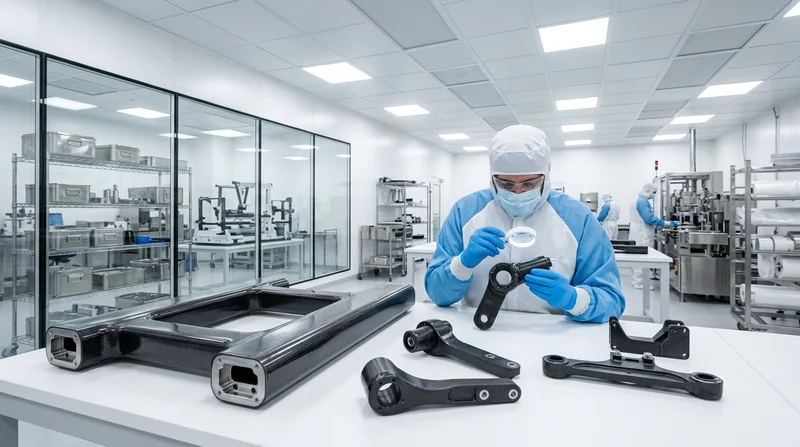
Custom Carbon Fiber Medical Device Components
Medical-grade carbon fiber components manufactured for imaging equipment, surgical instruments, and patient support systems. Carbon fiber's radiolucency (X-ray transparency) and high strength-to-weight ratio make it ideal for CT scanner beds, wheelchair frames, surgical robot arms, and MRI-compatible accessories. Biocompatible resin systems available.
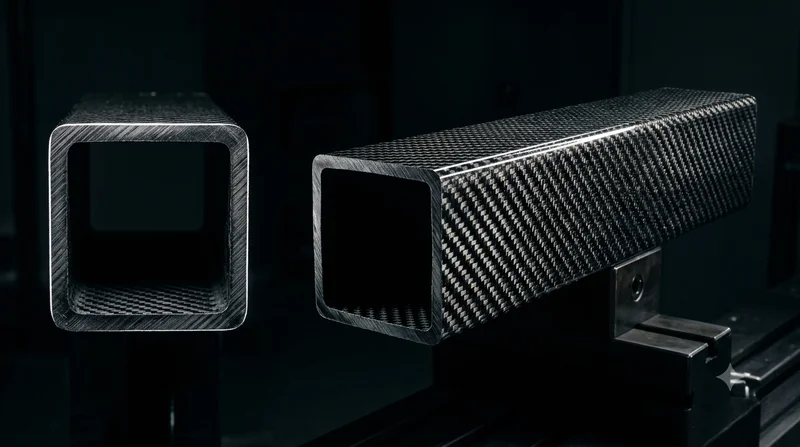
Square Carbon Fiber Tube — 3K Twill T700
Square cross-section carbon fiber tube manufactured with 3K twill weave for torsional strength. Preferred for structural frames, trusses, and support columns where rectangular geometry offers design flexibility.