
Kenya has become the composite materials market to watch in East Africa. Three demand engines are converging at once: the expansion of the Olkaria geothermal field, already Africa's largest and now targeting significant new capacity; the steady growth of Nairobi's Jomo Kenyatta Internat
Introduction
Kenya has become the composite materials market to watch in East Africa. Three demand engines are converging at once: the expansion of the Olkaria geothermal field, already Africa's largest and now targeting significant new capacity; the steady growth of Nairobi's Jomo Kenyatta International Airport as the region's busiest aviation hub; and a national infrastructure pipeline spanning roads, water transmission and the LAPSSET corridor. For carbon fiber and glass fiber suppliers, Kenya combines industrial scale, government investment and access to an East African market of roughly 300 million people.
Geothermal Expansion Drives FRP Demand
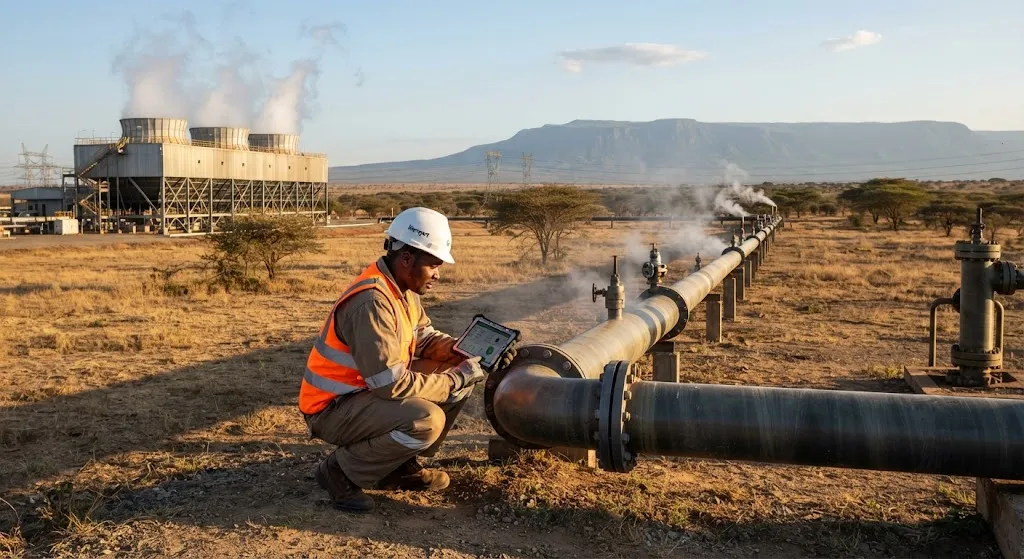
Kenya's geothermal program is the natural anchor of composites demand. The Olkaria complex near Naivasha has pushed installed geothermal capacity past 900 MW, and national plans add further development at Menengai, Suswa and the Baringo-Silali field. The development pipeline is material-intensive: production wells reach depths of 2,000-3,000 meters, and the hot, saline brine produced from the reservoir is highly corrosive to steel.
That corrosion problem is exactly what glass fiber reinforced plastics (FRP) are specified to solve. FRP pipes are used for brine conveyance and reinjection lines because they resist acid attack and scaling, with service lifetimes of 20-30 years against 5-10 years for carbon steel in the same duty. GFRP also appears in cooling tower structures, separator internals and selected well casing applications. Each new geothermal development therefore consumes a meaningful tonnage of composite pipe, ducting and structural profiles, alongside the metal and concrete of the power plant itself.
| Geothermal project | Location | Capacity | Status |
|---|---|---|---|
| Olkaria I-V complex | Naivasha | ~800 MW | Operating, brownfield expansion |
| Menengai Phase 1 | Nakuru | ~105 MW | Operating / ramping |
| Suswa field | Narok | 400 MW potential | Exploration and development |
| Baringo-Silali field | Baringo | 300 MW potential | Exploration |
| National target | Rift Valley | ~1,600 MW by 2030 | GDC roadmap |
The expansion path matters for materials suppliers because each new wellfield repeats the same procurement pattern: wellhead equipment, steam gathering pipework, brine handling and reinjection systems. Corrosion-resistant composite piping is a recurring line item, and the project-linked nature of geothermal development supports suppliers that can commit to delivery windows rather than spot orders.
Nairobi Aviation Hub Growth Lifts Aerospace Composites
Jomo Kenyatta International Airport (JKIA) is the busiest airport in East Africa, handling roughly 8-9 million passengers per year at peak, and it anchors the region's air cargo network. Kenya Airways and a growing roster of international carriers use Nairobi as the connect point for flights across Africa, the Middle East, Europe and Asia. Planned terminal expansion is designed to add capacity for millions more passengers a year, cementing the airport's role as the region's hub.
Modern aircraft fleets are the direct channel for carbon fiber into Kenya's aviation economy. The Boeing 787 and Airbus A350, both operated into Nairobi, use carbon fiber for roughly half of their structural weight, and engine nacelles, fan blades and interior structures add further composite content. Maintenance, repair and overhaul (MRO) activity in Nairobi supports a steady market for composite repair materials, adhesives and replacement parts, a segment that grows in step with fleet size and utilization.
Roads, Water and Corridor Infrastructure
Kenya's infrastructure pipeline creates the broadest composite demand base. The LAPSSET corridor program, which links the port of Lamu to oil fields and highways running toward South Sudan and Ethiopia, represents a multi-decade construction effort. Recent flagship projects such as the Nairobi Expressway and the expansion of the port of Mombasa have already absorbed large volumes of construction materials.
Water transmission is the most composite-intensive infrastructure sector in Kenya. Long-distance pipelines such as the Mombasa-Nairobi water scheme and rural water supply programs increasingly specify FRP and GRP pipes, which outperform concrete or steel in corrosion resistance, joint integrity and installation speed. FRP septic tanks, chemical storage vessels and wastewater components are standard items in Kenyan construction. The same corrosion logic is starting to apply to fiber reinforced polymer rebar in aggressive environments such as coastal zones and geothermal areas.
Market Structure and Sourcing Realities
Kenya's domestic composites manufacturing base is limited but active. A few dozen fabricators produce FRP tanks, pipes, panels and boat hulls, almost entirely from imported raw materials. There is no domestic carbon fiber production, so carbon fiber and high-modulus fabrics enter through Mombasa, the main import gateway for the East African Community. In practice, material flows through three main channels:
- Stock-holding distributors in Nairobi and Mombasa carry glass fiber mat, roving, resin and core materials for spot purchases and small batches.
- Tender-driven supply through project contractors and engineering, procurement and construction firms that consolidate materials for geothermal and water schemes.
- Direct sourcing for aerospace-grade carbon fiber and prepreg, transacted between OEMs or MRO providers and international producers with certification paperwork.
Carbon fiber and prepreg, by contrast, are rarely held in stock and are typically sourced to order with lead times measured in weeks, which makes advance planning essential for time-sensitive maintenance programs.
For foreign suppliers, Kenya is a practical entry point into a customs union of seven countries. Multilaterally financed projects, from the World Bank, the African Development Bank and the EU, specify international standards, which favors suppliers with documented quality systems and consistent export documentation. The congestion at the Mombasa gateway and the cost of inland logistics remain persistent constraints that shape pricing and service expectations in the market.
Composite Demand Outlook for Kenya
The table below summarizes the three demand pillars and the composite materials each one pulls into the Kenyan market.
| Sector | Current scale | Planned pipeline | Composite-intensive components | Demand profile |
|---|---|---|---|---|
| Geothermal | ~950 MW installed | ~1,600 MW by 2030 | FRP brine pipes, GFRP structures, cooling towers | Steady, project-linked |
| Aviation | 8-9M passengers / yr | Terminal expansion, growing MRO | CFRP airframe, repair materials, interiors | Growing with fleet |
| Water & roads | Large installed base | LAPSSET, water schemes, coastal works | FRP/GRP pipes, FRP rebar, tanks | Broad and sustained |
Across all three pillars, glass fiber reinforced products dominate by volume, while carbon fiber demand concentrates in aviation and selected high-performance applications. Suppliers that can serve both tiers, commodity glass fiber for infrastructure and qualified carbon fiber for aerospace, are best positioned in the Kenyan market.
Frequently Asked Questions
Why is geothermal brine so damaging to steel piping?
Geothermal brine is hot, saline and laden with dissolved minerals. As it cools and pressure drops, silica and carbonates precipitate, scaling the inside of steel pipes, while chloride and sulfide species attack the metal surface. In aggressive fields, carbon steel lines can develop serious corrosion and scaling within 5-10 years. Glass fiber reinforced plastic resists both mechanisms: the resin system provides chemical resistance, and the smooth internal surface suppresses scale accumulation, which is why FRP brine and reinjection lines commonly achieve 20-30 year service lives in Kenyan and international geothermal projects.
Does Kenya produce carbon fiber locally?
No. Kenya has no domestic carbon fiber production capacity, and neither do neighboring East African countries. Carbon fiber tow, fabric and prepreg arrive by sea through Mombasa, usually as part of broader composite raw material imports. For aerospace and defense requirements, buyers typically work with international suppliers on an order basis, while distributors cover the smaller recurring demand for repair materials and sporting goods. This import dependence is precisely the opening that overseas carbon fiber suppliers use to enter the East African market through Kenyan distributors and project tenders.
Which composites dominate Kenyan demand by volume?
Glass fiber reinforced products dominate by far. FRP and GRP pipes for water, sewage and geothermal brine, FRP tanks and vessels, and glass fiber mat and roving for construction and boat building account for most of the tonnage. Carbon fiber is a smaller, higher-value niche concentrated in aviation MRO, sporting goods and a handful of industrial applications. The volume-versus-value split means suppliers targeting the Kenyan market usually need both product tiers, with glass fiber generating steady volume and carbon fiber generating margin.
Conclusion
Kenya combines three structural demand streams, geothermal energy expansion, aviation hub growth and infrastructure investment, into East Africa's most attractive composites market. The country remains almost entirely dependent on imports for both glass fiber and carbon fiber materials, which keeps the door open for suppliers able to commit to delivery schedules and international quality standards.
For a practical conversation about supplying glass fiber and carbon fiber products into Kenyan and East African projects, explore our product range or contact our export team with your material specifications and delivery requirements.
Part of topic
Related Articles
- Recycled Carbon Fiber Market Forecast 2030: Technology Maturity and Commercialization Path
- South Korea Carbon Fiber Market 2026: Hydrogen Economy and Shipbuilding Innovation
- Wind Turbine Blade Leading Edge Protection 2026: Polyurethane, Tape, and Metallic Shield Solutions
- China Carbon Fiber Overcapacity 2026: Price War Impact and Industry Consolidation
- India Carbon Fiber Market 2026: Wind Energy, Aerospace, and Defense Expansion
- PAN Precursor Market 2026: Acrylonitrile Supply and Carbon Fiber Cost Structure
Interested in Custom Carbon Fiber Products?
Contact our team for competitive pricing and technical specifications.
Get a QuoteRelated Products
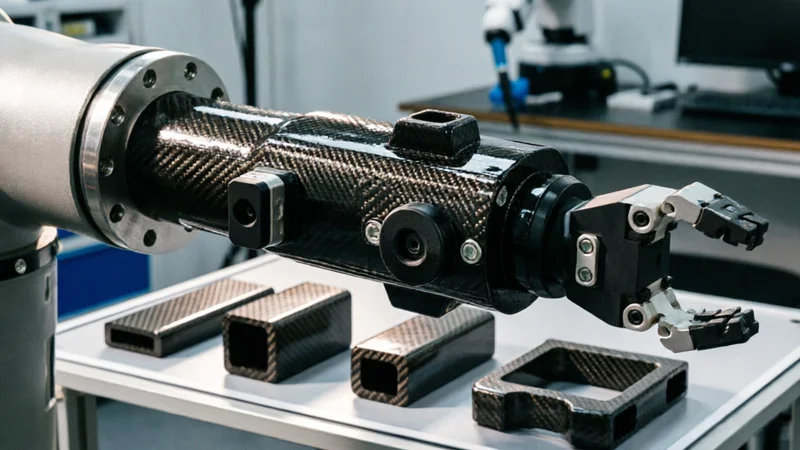
Carbon Fiber Robot End Effector Link — Custom Shape & Sensor Integration
Custom-shaped carbon fiber end effector links for robotic arms. Designed for automation integrators and research labs requiring lightweight, rigid connections between the robot wrist and gripper/tool. Can incorporate sensor mounting bosses, cable routing channels, and quick-change interfaces.
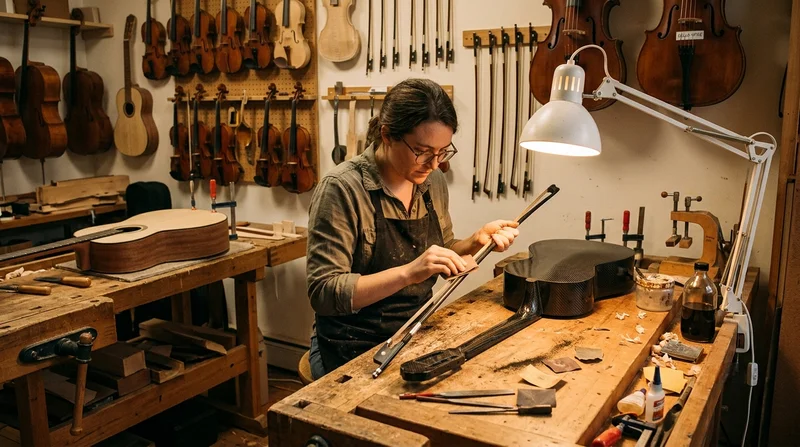
Custom Carbon Fiber Musical Instrument Parts
Carbon fiber components for musical instrument manufacturing offering superior dimensional stability, low weight, and consistent acoustic properties. We produce carbon fiber bows, guitar necks, violin chin rests, drum shells, and wind instrument bodies. Carbon fiber instruments are immune to humidity changes and temperature fluctuations that affect wooden instruments.
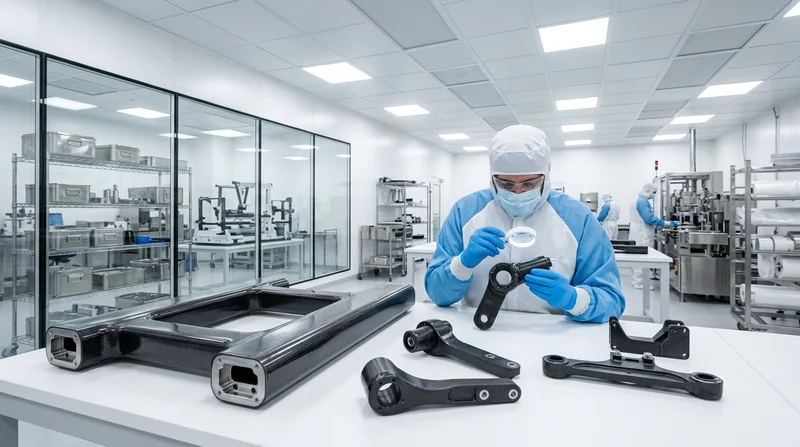
Custom Carbon Fiber Medical Device Components
Medical-grade carbon fiber components manufactured for imaging equipment, surgical instruments, and patient support systems. Carbon fiber's radiolucency (X-ray transparency) and high strength-to-weight ratio make it ideal for CT scanner beds, wheelchair frames, surgical robot arms, and MRI-compatible accessories. Biocompatible resin systems available.
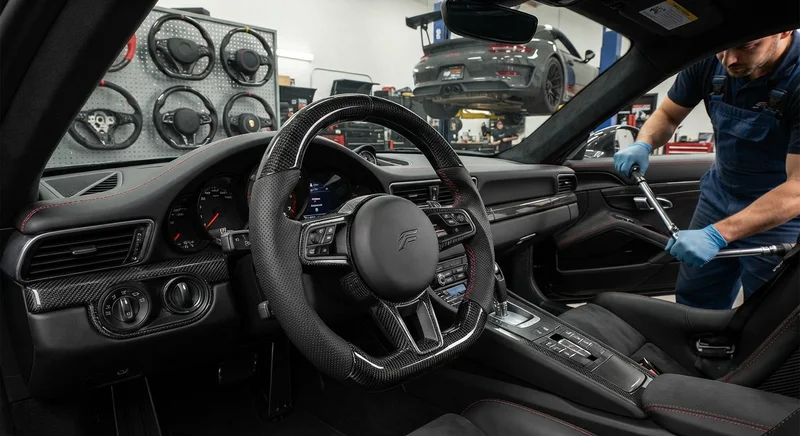
Carbon Fiber Steering Wheel — Custom Leather-Wrapped with CF Inlay
Custom carbon fiber steering wheel with genuine leather wrapping and carbon fiber inlay sections. Molded from T700 3K prepreg for maximum rigidity with a 30% weight reduction over OEM wheels. Available in D-shape (flat bottom) and round profiles. Direct bolt-on fitment for popular sports car and performance vehicle models. Custom stitching color and leather grade available.
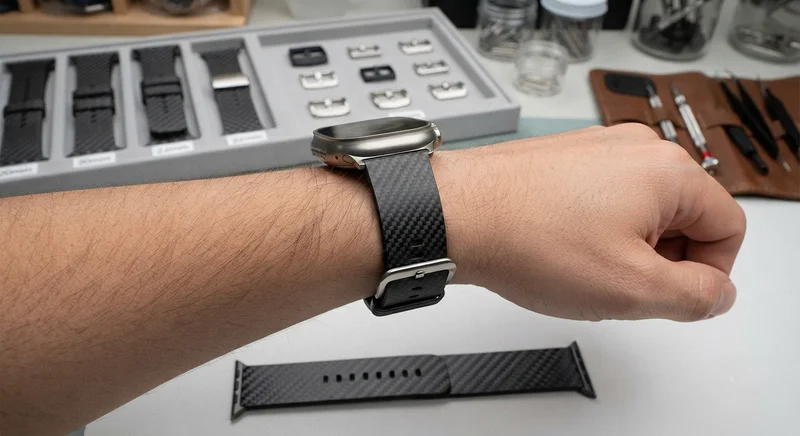
Carbon Fiber Watch Strap — 20mm/22mm Quick-Release
Premium carbon fiber watch strap with quick-release spring bars. Woven from T700 3K twill prepreg with a flexible resin system that conforms to the wrist. Available in 20mm and 22mm lug widths, compatible with Apple Watch, Samsung Galaxy Watch, Garmin, and traditional mechanical watches. Features a stainless steel buckle and carbon fiber keepers. The natural weave pattern makes each strap unique.