
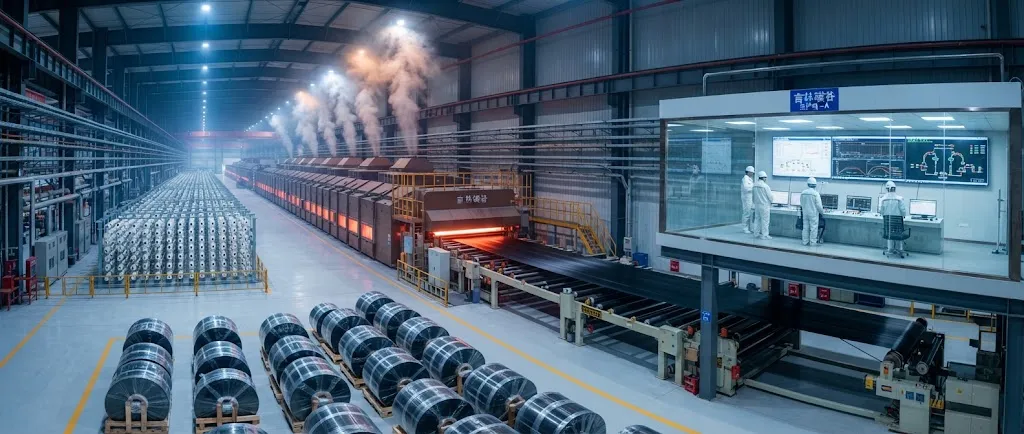
Carbon fiber production is a scale business, and no single region has pursued scale more aggressively than Jilin in Northeast China. Over the course of roughly six months Jilin Chemical Fiber has brought three 4,000-tonne single production lines into operation — the largest single-line
Introduction
Carbon fiber production is a scale business, and no single region has pursued scale more aggressively than Jilin in Northeast China. Over the course of roughly six months Jilin Chemical Fiber has brought three 4,000-tonne single production lines into operation — the largest single-line capacities in their class globally — pushing the group's trajectory toward a 2026 capacity above 100,000 tonnes and a domestic market share approaching 51%. The concentration of precursor, carbonization and downstream processing in one industrial corridor has created what industry observers now call "China Carbon Valley".
For buyers of large-tow carbon fiber — wind blade manufacturers, industrial part producers, automotive suppliers — the Jilin cluster matters because it is rewriting the cost curve of the material itself. This article examines how the cluster was assembled, why the 4,000-tonne line is significant, and what the economics mean for global large-tow pricing and supply security.
What Makes the 4,000-Tonne Single Line Different
The headline number is not capacity — other Chinese producers operate larger aggregate plants — it is the single-line scale. A carbonization line is a train of ovens and furnaces: low-temperature oxidation ovens, low- and high-temperature carbonization furnaces, and surface treatment and sizing stages, with the fiber continuously drawn through at high speed. Line size is limited by how uniformly temperature can be controlled across the tow band and how precisely tension can be maintained over hundreds of meters of running fiber.
A 4,000-tonne single line implies several technical advances at once:
- Wider tow bands and higher linear speeds: More filaments running in parallel through the oxidation ovens raise throughput per square meter of furnace footprint.
- Energy and yield engineering: Larger lines amortize the enormous electricity and inert-gas cost of carbonization across more output, directly lowering cost per kilogram.
- Automated process control: Sustaining 4,000 tonnes on one line demands tight distributed control of temperature, tension and residence time across the full train; this is process-engineering capability, not just furnace size.
The key point for buyers is that single-line scale converts fixed cost into volume more efficiently than operating many smaller lines. It is the same logic that drove steel and aluminum consolidation — but compressed into a much shorter window.
Scale thresholds matter in absolute terms as well. Fixed costs such as plant engineering, quality systems and utility connections are paid once per line, so a 4,000-tonne line carries roughly the same overhead burden as a 500-tonne line while producing eight times the output. That arithmetic explains why the industry has moved steadily toward larger lines: at the 1,000-tonne scale common a decade ago, fixed-cost allocation was roughly four times higher per kilogram than at today's 4,000-tonne configuration, before considering the yield and energy gains. The 4,000-tonne line is not an isolated record — it is the current endpoint of a deliberate cost-reduction trajectory that large-tow producers have followed for years.
Cluster Economics: Why Jilin Runs as One Ecosystem
Jilin Chemical Fiber's strategy is not one plant but a vertically integrated corridor. The cluster couples precursor production with carbonization, and carbonization with downstream consuming industries, all within one city region. The cost advantages compound along the chain:
| Cost driver | Dispersed production | Jilin cluster model | Effect |
|---|---|---|---|
| Precursor supply | Precursor shipped from a separate province or imported | Dedicated precursor lines feeding carbonization on site | Lower logistics and working-capital cost, stable input quality |
| Energy infrastructure | Plant pays standard regional industrial tariffs | Concentrated demand supports negotiated power and gas terms | Lower effective cost per kWh and per tonne |
| Labor and skills | Specialist operators retrained per project | Shared talent pool across lines and plants | Faster ramp-up, less yield loss in commissioning |
| Equipment maintenance | External service contracts | Local engineering and spares pool | Higher line availability |
| Downstream offtake | Producer negotiates independent sales | Regional wind, industrial and automotive buyers anchored nearby | More predictable order book |
Importantly, precursor integration is the largest single lever. Roughly 50-60% of finished carbon fiber cost traces back to precursor, so making the acrylonitrile-based precursor in the same corridor as the carbonization lines removes cross-region freight and quality variance that dispersed producers cannot avoid.
The Wind and Industrial Demand Pull
Cluster economics only work if offtake exists, and Jilin's timing aligns with the two demand engines of Chinese large-tow carbon fiber. The first is wind energy: the shift toward longer offshore blades and 10 MW-plus turbines has made carbon fiber spar caps standard on the largest rotors, and regional blade plants create natural offtake for large-tow product. The second is industrial applications — pressure vessels, infrastructure strengthening and general engineering composites — which are more price-sensitive than aerospace and therefore the first to benefit from cost-reduced large-tow supply.
Both demand engines are growing in absolute volume, which changes the competitive logic for new capacity. Global offshore wind installations have scaled the size of individual turbines steadily, and each generation of blades consumes more carbon fiber per rotor than the last — a 10 MW class rotor can carry proportional weight in structural carbon compared with earlier 5-6 MW machines. On the industrial side, hydrogen storage vessels and construction strengthening are adding demand that is largely new rather than substitutional. A producer with integrated precursor and low-cost large-tow lines is positioned to serve both streams from the same asset base.
The 51% domestic market share claim, viewed with the cluster backdrop, is less about capturing a fixed pie and more about cost-driven substitution: as Jilin's integrated cost falls, domestic industrial demand that previously used glass fiber or imported carbon fiber shifts to domestic large-tow material. That substitution loop — lower cost, larger volume, further cost reduction — is the core of the China Carbon Valley economics story.
What This Means for Global Buyers
For international buyers the Jilin cluster changes the supply picture in three ways. First, pricing pressure: globally benchmarked large-tow prices increasingly reflect the Chinese integrated cost base, which constrains pricing power everywhere. Second, supply security: a cluster that concentrates most of a country's capacity in one city region is efficient but concentrated, meaning buyers should maintain qualified dual sourcing at a regional level. Third, product strategy: standard-modulus large-tow is becoming a commodity where cost and consistency win, while differentiated products — higher modulus, toughened sizing, aerospace-grade low-tow — remain the sustainable premium space.
Frequently Asked Questions
Is a 4,000-tonne single line really the largest of its kind in the world?
Within the large-tow carbon fiber segment, the 4,000-tonne single-line capacity commissioned by Jilin Chemical Fiber is widely reported as the largest single-line configuration of its class, with no comparable single-line capacity disclosed by other global producers at the time of commissioning. It should be distinguished from aggregate plant capacity: several Chinese producers operate larger total plants built from multiple lines. The significance of the single line is its cost and efficiency profile, not simply total tonnage.
Why is domestic market share of around 51% reported for the Jilin group?
The figure reflects the group's share of Chinese domestic carbon fiber supply, including output from its precursor-integrated production complex. Market share in China is dynamic because capacity is being added faster than in any other region — new lines across multiple producers come online quarterly. The number is best read together with capacity announcements and utilization rates, and buyers should treat it as an indicator of scale leadership rather than a static market structure.
How does Jilin's large-tow product differ from aerospace-grade carbon fiber?
Jilin's core output targets the industrial large-tow segment — typically 48K and above tow sizes with standard-modulus properties — which prioritizes cost, consistency and processing speed over the tight property windows required in aerospace. Aerospace-grade material involves smaller tows, stricter property allowables, more extensive qualification testing and substantially higher price. The two segments share production chemistry but differ in quality system, yield strategy and cost structure; a cluster that is optimal for large-tow is not automatically suitable for aerospace-grade output.
Conclusion
The Jilin carbon fiber cluster demonstrates how industrial policy, precursor integration and single-line scale can combine to reshape the cost curve of an advanced material. Three 4,000-tonne lines, a 100,000-tonne capacity outlook and roughly half of the domestic market make China Carbon Valley the reference point for large-tow economics, and the pressure it applies to global pricing is structural, not cyclical. Buyers of standard-modulus large-tow should treat the cluster both as a pricing driver and as a reminder to maintain geographically balanced, qualified sourcing.
YongXian supplies carbon fiber materials across the industrial spectrum, from large-tow standard modulus products to higher-performance grades for specialized applications. Browse our carbon fiber range or contact our team to compare current specifications and pricing against your qualification requirements.
Related Articles
- Recycled Carbon Fiber Market Forecast 2030: Technology Maturity and Commercialization Path
- South Korea Carbon Fiber Market 2026: Hydrogen Economy and Shipbuilding Innovation
- Wind Turbine Blade Leading Edge Protection 2026: Polyurethane, Tape, and Metallic Shield Solutions
- China Carbon Fiber Overcapacity 2026: Price War Impact and Industry Consolidation
- India Carbon Fiber Market 2026: Wind Energy, Aerospace, and Defense Expansion
- PAN Precursor Market 2026: Acrylonitrile Supply and Carbon Fiber Cost Structure
Interested in Our Products?
Contact our team for competitive pricing and technical specifications.
Get a QuoteRelated Products
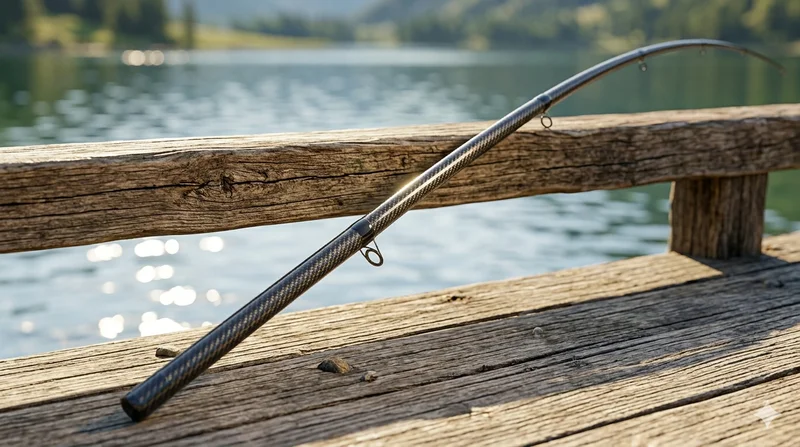
Carbon Fiber Fishing Rod Blank
High-quality carbon fiber fishing rod blank manufactured from multiple grades of Toray carbon fiber cloth. Available in a wide range of lengths, powers, and actions for freshwater and saltwater applications. Suitable for OEM rod building.

Carbon Fiber Plate — 3K Twill T700 3.0mm
Medium-thickness 3.0mm carbon fiber plate offering significantly higher load capacity while maintaining attractive 3K twill finish. Suitable for structural brackets, reinforcement plates, and load-bearing panels.
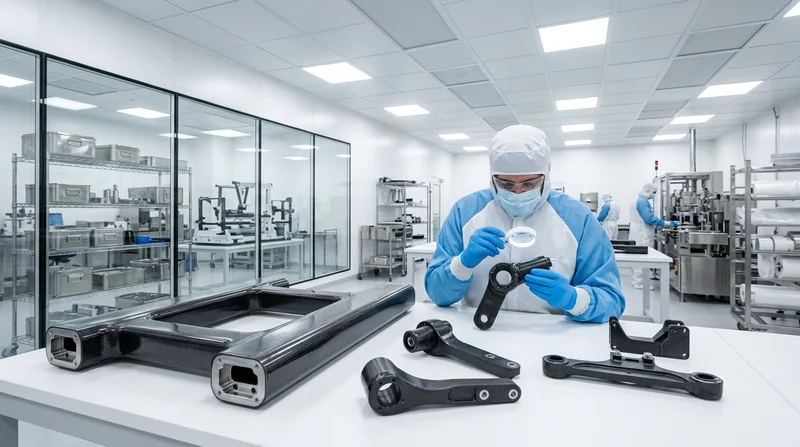
Custom Carbon Fiber Medical Device Components
Medical-grade carbon fiber components manufactured for imaging equipment, surgical instruments, and patient support systems. Carbon fiber's radiolucency (X-ray transparency) and high strength-to-weight ratio make it ideal for CT scanner beds, wheelchair frames, surgical robot arms, and MRI-compatible accessories. Biocompatible resin systems available.

Carbon Fiber Plate — 3K Twill T700 1.5mm
Thin 1.5mm carbon fiber plate with 3K twill weave surface. Lightweight and stiff, commonly used for covers, panels, drone bodies, and applications requiring a premium aesthetic appearance.

Square Carbon Fiber Tube — 3K Twill T700
Square cross-section carbon fiber tube manufactured with 3K twill weave for torsional strength. Preferred for structural frames, trusses, and support columns where rectangular geometry offers design flexibility.