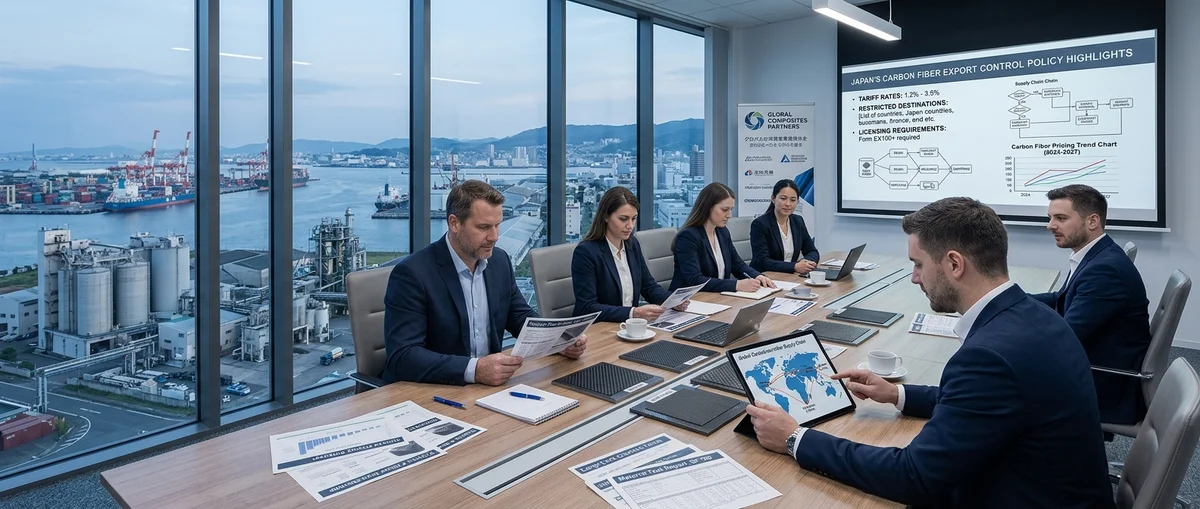
Analysis of Japan's 2026 carbon fiber export policy changes — impact on Toray, Teijin, and Mitsubishi supply chains, pricing outlook for B2B buyers, and global supply diversification strategies.
Japan Carbon Fiber Export Policy 2026: Global Supply Chain Impacts
Japan accounts for approximately 55–60% of global carbon fiber production capacity, with Toray Industries, Teijin Limited, and Mitsubishi Chemical Group controlling 78,000 tonnes of annual nameplate capacity as of Q1 2026. In early 2026, Japan's Ministry of Economy, Trade and Industry (METI) implemented revised export controls on carbon fiber and related precursor materials, citing national security concerns and alignment with allied export regimes. This article analyzes the policy changes and their implications for global B2B buyers.
Japan's Carbon Fiber Export Control Framework (2026 Update)
| Control Category | Previous Regime (Pre-2026) | Revised Regime (2026) | Key Change |
|---|---|---|---|
| High-modulus CF (>350 GPa) | Case-by-case license | Presumptive denial for certain destinations | Stricter end-use review |
| Intermediate modulus CF (250–350 GPa) | General license (most destinations) | Individual license required for non-Wassenaar countries | Expanded license scope |
| Standard modulus CF (<250 GPa) | General license (bulk shipments) | General license with enhanced end-use certification | New certification requirement |
| PAN precursor | No specific controls | Export monitoring (non-restrictive) | New monitoring program |
| CF production equipment | Controlled (Wassenaar) | Controlled + technology transfer restrictions | Expanded scope to include technical data |
| Prepreg and intermediate forms | General license | Individual license for aerospace grades | Segmented by grade |
Impact on Major Japanese Producers
- Toray Industries (42,000 tonnes capacity): The world's largest carbon fiber producer faces the most significant impact. Toray's high-modulus M-series (M40, M55, M60) and intermediate modulus T-series (T800, T1000) are now subject to presumptive denial for military end-uses in non-allied countries. Toray has accelerated its US expansion — the company's Greenwood, South Carolina plant (3,000 tonnes IM CF capacity) began production in Q2 2026, and a second expansion to 6,000 tonnes by 2028 has been announced. Toray's European facility in Abidos, France (5,000 tonnes) now supplies about 70% of European aerospace demand.
- Teijin Limited (12,000 tonnes capacity): Teijin's Tenax range (standard and intermediate modulus) faces expanded individual licensing requirements. Teijin has shifted strategy toward automotive and industrial applications, where export controls are less restrictive. Their new Tenax-E品牌 (E-grade) targets wind energy and pressure vessel markets with 15–20% lower pricing than aerospace-grade fibers. Teijin's sales to China declined 28% year-on-year in Q1 2026 as Chinese buyers shift to domestic alternatives.
- Mitsubishi Chemical Group (24,000 tonnes capacity): Mitsubishi's Pyrofil and Grafil brands serve primarily aerospace and industrial markets. The company has invested heavily in US production capacity — a 4,000 tonne expansion at their Sacramento, California plant will bring total US capacity to 8,000 tonnes by 2027. Mitsubishi's PAN precursor supply from Japan remains under the new monitoring program, potentially affecting cost structure for non-Japan production.
Global Supply Impact Assessment
| Market Impact | Magnitude | Timeline | B2B Buyer Action Required |
|---|---|---|---|
| Short-term price increase (standard modulus) | +8–15% | Immediate (Q2–Q3 2026) | Negotiate 6-month fixed-price contracts |
| Medium-term supply tightness (IM grade) | +15–25% pricing | 6–18 months | Qualify alternative suppliers (US, EU, CN) |
| Long-term diversification | Structural shift | 2–5 years | Develop multi-source procurement strategy |
| Aerospace-grade CF availability | −10–20% accessible volume | Ongoing | Secure priority allocation from Toray/Hexcel |
| Chinese CF producers' market share | +5–10% annual share growth | Accelerating | Evaluate CN suppliers (Zhongfu Shenying, Guangwei) |
| European/US producer expansion | +12,000 tonnes new capacity by 2028 | Medium-term | Pre-qualify new sources early |
B2B Buyer's Strategy for 2026–2027
- Dual sourcing is now mandatory: Single-supplier reliance on Japanese carbon fiber is increasingly risky. Minimum two qualified suppliers from different regions (e.g., one Japanese + one US/European + one Chinese) is the new industry standard for B2B buyers.
- Long-term agreements with price escalation clauses: Standard terms in 2026 include 6–12 month fixed pricing with cost-adjustment mechanisms tied to PAN precursor pricing (China) and energy costs. Expect 3–5% quarterly escalation clauses.
- Chinese fiber qualification accelerated: Chinese producers (Zhongfu Shenying Carbon Fiber, Weihai Guangwei Composites, Jilin Tangu Carbon Fiber) now offer standard modulus fibers at $15–20/kg — 20–30% below Japanese equivalents. Qualification testing (ASTM D3039, D3410, D3518) typically takes 3–6 months for non-aerospace applications.
- Precursor supply chain diversification: PAN precursor — the raw material for carbon fiber — is also subject to evolving export controls. B2B buyers should ask suppliers about their precursor sourcing strategy. Suppliers using domestic (US/EU) or Chinese PAN precursors have lower supply chain risk.
- Inventory buffer of 30–60 days: The industry benchmark for safety stock has increased from 2 weeks (pre-2025) to 4–8 weeks in 2026. Factor this into working capital projections.
Producer Capacity Expansion (Announced 2025–2028)
| Producer | Location | New Capacity (tonnes) | Online Date | Grade |
|---|---|---|---|---|
| Toray | Greenwood, SC, USA | 3,000 | Q2 2026 | IM T800-class |
| Toray | Abidos, France | 2,000 | Q4 2026 | SM + IM |
| Mitsubishi | Sacramento, CA, USA | 4,000 | 2027 | SM + IM |
| Hexcel | Décines, France | 2,000 | 2026 | Aerospace-grade |
| Zhongfu Shenying | Xining, China | 5,000 | 2026 | SM |
| SGL Carbon | Meitingen, Germany | 1,500 | 2027 | Industrial-grade |
Q: How quickly are Chinese carbon fiber producers bridging the quality gap with Japanese suppliers?
A: Chinese carbon fiber quality has improved dramatically since 2023. Zhongfu Shenying's ZS-42 standard modulus fiber (42 GPa modulus, 4,000 MPa strength) now meets or exceeds Toray T700-equivalent specifications, with batch-to-batch CV of 4–6% (vs Toray's 3–5%). The gap in intermediate modulus grades (T800-equivalent) is narrowing — Guangwei's IM-grade fiber achieved 5.2 GPa strength and 295 GPa modulus in 2025 production trials, compared to Toray T800 at 5.9 GPa and 300 GPa. The remaining gaps are in: (1) surface treatment consistency (affects prepreg adhesion), (2) void content in large-tow production (<2% vs <1% for Japanese), and (3) qualification lead time for aerospace applications (3–5 years vs immediate for commercial/industrial). For non-aerospace B2B applications (automotive, wind energy, sports equipment, construction), Chinese fibers are now a viable alternative at 20–30% cost savings.
Q: Will Japan's export controls lead to a global carbon fiber shortage in 2026–2027?
A: A system-wide shortage is unlikely, but selective shortages are already emerging. Global capacity in 2026 is approximately 145,000 tonnes (nameplate) with effective production of ~110,000 tonnes (76% utilization rate). The METI controls affect an estimated 15–20% of Japanese exports (primarily IM and HM grades to non-allied countries). This represents roughly 8,000–12,000 tonnes of annual supply that must be re-routed, substituted, or absorbed. US and European producers are adding ~12,000 tonnes of new capacity by 2028, but the transition period (2026–H1 2027) will see tight supply for IM and HM grades, with lead times extending from 8–12 weeks to 16–24 weeks. Standard modulus fiber supply remains adequate due to Chinese capacity expansion. B2B buyers in aerospace and defense should secure allocation contracts immediately; buyers in automotive, wind, and industrial applications should qualify Chinese or European alternatives to avoid production disruptions.
Q: What are the compliance requirements for B2B buyers importing Japanese carbon fiber in 2026?
A: Under the revised METI framework, B2B buyers must submit: (1) End-use certification (form C-12-2026) confirming the carbon fiber will not be used in military applications, weapons systems, or sensitive dual-use technologies. (2) End-user identification — the importing company must provide entity details, business registration, and a statement of legitimate commercial activity. (3) Destination country compliance — buyers in Wassenaar Arrangement member countries face streamlined processing (14–21 day license review); buyers in non-Wassenaar countries face 45–90 day individual license review with enhanced documentation requirements. (4) Auditing rights — METI reserves the right to conduct on-site audits of end-users within 5 years of export. Non-compliance penalties include export license revocation, fines up to ¥10 million ($67,000), and criminal liability for deliberate diversion. B2B buyers should maintain auditable records for all imported carbon fiber lots, including batch numbers, quantities, and end-use declarations.
Related Articles
- Recycled Carbon Fiber Market Forecast 2030: Technology Maturity and Commercialization Path
- South Korea Carbon Fiber Market 2026: Hydrogen Economy and Shipbuilding Innovation
- Wind Turbine Blade Leading Edge Protection 2026: Polyurethane, Tape, and Metallic Shield Solutions
- China Carbon Fiber Overcapacity 2026: Price War Impact and Industry Consolidation
- India Carbon Fiber Market 2026: Wind Energy, Aerospace, and Defense Expansion
- PAN Precursor Market 2026: Acrylonitrile Supply and Carbon Fiber Cost Structure
Interested in Our Products?
Contact our team for competitive pricing and technical specifications.
Get a QuoteRelated Products
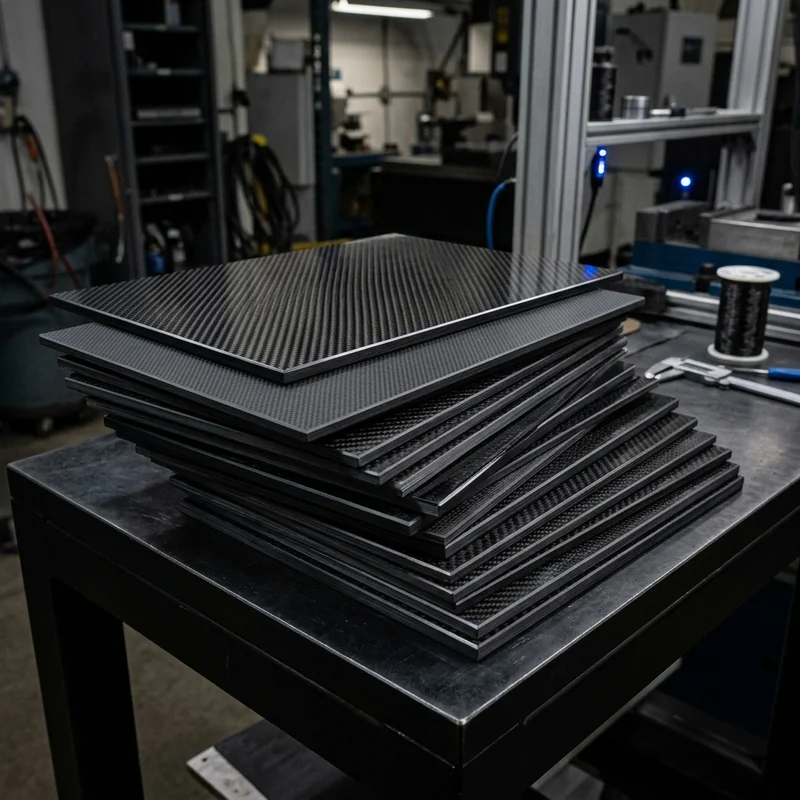
Carbon fiber standard plate-3k stripe
Lightweight, ultra-rigid standard sheets for drone fuselages, robot housings, facades and structural applications.
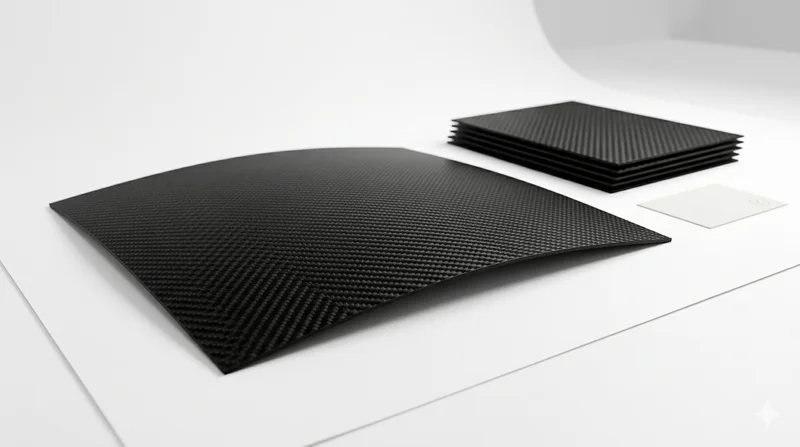
Carbon Fiber Plate — 3K Twill T700 1.5mm
Thin 1.5mm carbon fiber plate with 3K twill weave surface. Lightweight and stiff, commonly used for covers, panels, drone bodies, and applications requiring a premium aesthetic appearance.
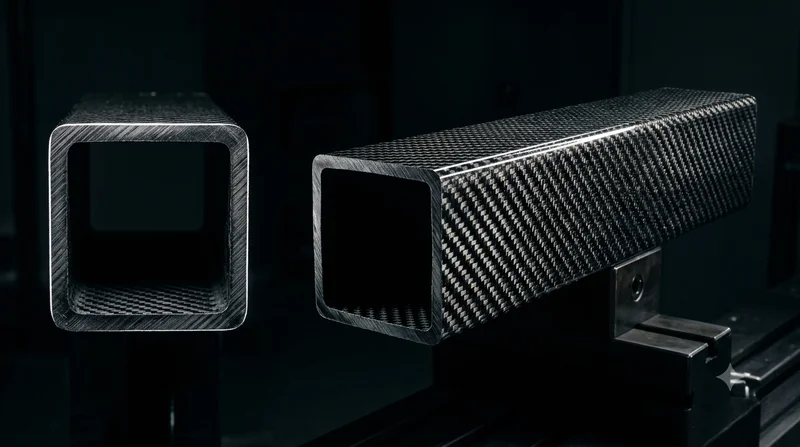
Square Carbon Fiber Tube — 3K Twill T700
Square cross-section carbon fiber tube manufactured with 3K twill weave for torsional strength. Preferred for structural frames, trusses, and support columns where rectangular geometry offers design flexibility.
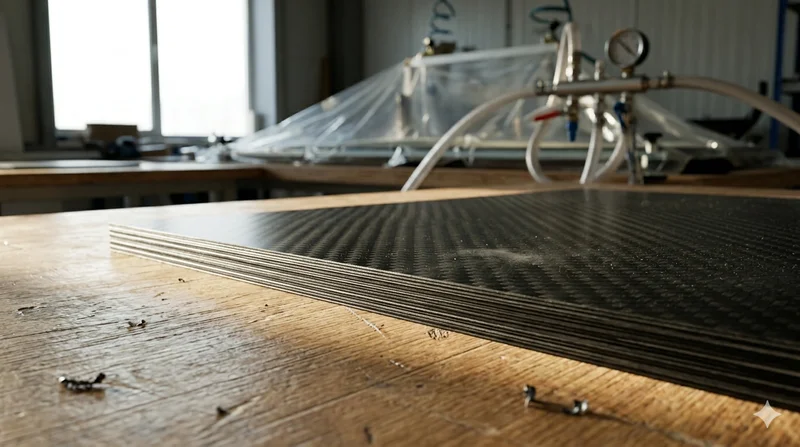
Carbon Fiber Plate — 3K Twill T700 3.0mm
Medium-thickness 3.0mm carbon fiber plate offering significantly higher load capacity while maintaining attractive 3K twill finish. Suitable for structural brackets, reinforcement plates, and load-bearing panels.
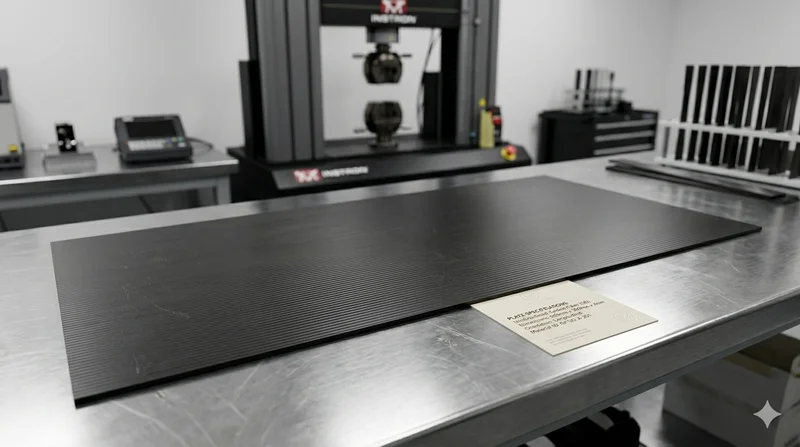
Carbon Fiber Plate — UD Unidirectional T700
Unidirectional carbon fiber plate with all fibers oriented in a single direction for maximum strength along the fiber axis. Essential for structural reinforcements, splints, and applications where load direction is predictable.