
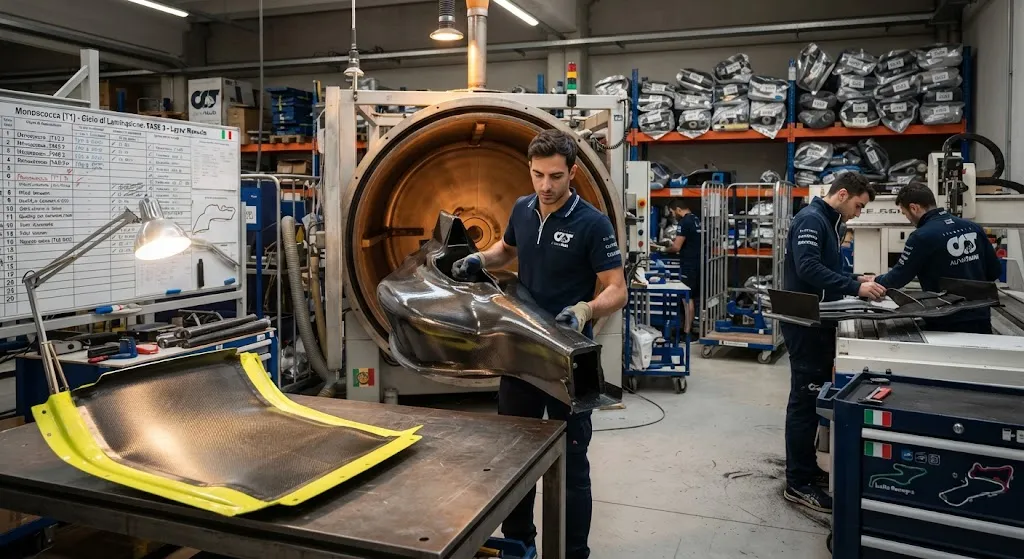
Italy is one of Europe's most sophisticated carbon fiber markets, and its composites industry in 2026 is defined by three sectors where Italian engineering is globally dominant. The Formula 1 supply chain clustered in Emilia-Romagna consumes some of the highest-grade carbon fiber in the
Introduction
Italy is one of Europe's most sophisticated carbon fiber markets, and its composites industry in 2026 is defined by three sectors where Italian engineering is globally dominant. The Formula 1 supply chain clustered in Emilia-Romagna consumes some of the highest-grade carbon fiber in the world, producing monocoques, wings, and suspension components within compressed race schedules. Racing yacht builders on the Ligurian and Tuscan coasts construct America's Cup contenders and offshore racers whose carbon fiber masts, hulls, and foils push material performance to its limits. And the aerospace industry, anchored by Leonardo's plants across northern and southern Italy, maintains steady demand for certified structural composites. Each of these sectors is small in volume but exceptionally high in value, which gives the Italian market its distinctive character.
For international suppliers, understanding the Italian composites market matters because it is a high-margin, technically demanding market with unusual procurement patterns. The Italian composites industry generates an estimated €4 billion in annual revenue, and the racing and aerospace segments consume a disproportionate share of advanced carbon fiber per unit of output. This article breaks down the demand structure of the F1 supply chain, racing yacht, and aerospace segments, and explains what suppliers need to know to serve Italian customers profitably.
Market Structure: High Value, Low Volume
The Italian carbon fiber market diverges sharply from volume-driven markets such as Germany's wind energy sector or China's industrial base. Demand is concentrated in performance applications where material cost is secondary to weight, stiffness, and reliability. Three segments define the structure:
- Formula 1 and motorsport supply chain: The Emilia-Romagna region around Modena, Maranello, and Parma hosts race teams, design houses, and a dense network of composite part specialists serving Formula 1, GT racing, and the supercar industry.
- Racing yacht construction: Shipyards and mast builders on the Ligurian and Tuscan coasts construct America's Cup boats, offshore racers, and high-performance cruising yachts with extensive carbon fiber content.
- Aerospace structures: Leonardo's aerostructures and helicopter divisions, together with a large Tier 2 and Tier 3 supplier base, consume certified prepreg materials for commercial and defense programs.
These segments share one trait: they purchase at the top of the performance spectrum, where specification depth, process certification, and delivery reliability matter more than price. That is why the Italian market rewards suppliers who combine technical capability with responsive service.
The Formula 1 Supply Chain: A Technical Standard Setter
The F1 supply chain is the most demanding carbon fiber buyer in Italy, and its technical requirements set the benchmark for the entire national industry. Formula 1 teams purchase pre-preg carbon fiber with tightly controlled mechanical properties, and the specialist manufacturers around Emilia-Romagna maintain some of the strictest process controls in the composite industry. The requirements of racing versus typical aerospace and marine use are summarized below:
| Parameter | Formula 1 / Racing | Aerospace Structures | Racing Yachts |
|---|---|---|---|
| Fiber tensile modulus | 230-395 GPa (IM to HM) | 230-300 GPa (IM) | 230-395 GPa (IM to HM) |
| Resin cure temperature | 120-180°C, toughened | 120-180°C, certified | 80-120°C, marine-tolerant |
| Fiber areal weight | 150-380 g/m², ±2% | 150-300 g/m², ±3% | 200-600 g/m², ±3% |
| Typical certification | FIA, ISO 9001 | NADCAP, AS9100 | RINA, Lloyd's, DNV |
| Inspection regime | 100% ultrasonic C-scan | 100% NDT on critical parts | Sampling plus critical-part NDT |
Two features define the racing supply chain. First, speed: Formula 1 teams require carbon parts within 2-6 weeks of design freeze, forcing suppliers toward fast-curing resin systems, automated layup, and integrated quality control. Second, the ecosystem effect: the Emilia-Romagna cluster includes legendary design and production houses such as Dallara, as well as a web of small specialist shops that handle prepreg cutting, autoclave curing, and machining for race teams. A supplier qualified for Italian racing typically earns certification that opens doors across the entire European high-performance market.
Racing Yachts: Performance Engineering on Water
Italy's racing yacht sector is the second pillar of the domestic carbon fiber market, and it is where the country's composites engineering is most visible. The America's Cup — the sport's showcase event — has been dominated by Italian participation through teams such as Luna Rossa, whose AC75 foiling monohulls are built in Italian yards and carry masts, hull panels, foils, and rigging made almost entirely of carbon fiber. The AC75 rule requires teams to control weight tightly, which pushes mast builders and hull laminators to use the highest-modulus fibers available. Beyond the Cup, Italian builders construct offshore racers, maxi yachts, and high-performance cruising boats whose requirements span the full range of advanced composites.
Racing yacht construction differs from F1 in two ways. The first is environmental tolerance: marine carbon fiber must survive saltwater exposure, UV degradation, and repeated load cycling, demanding careful resin selection and protective coatings. The second is structural scale: masts exceeding 30 meters and hulls of 20 meters or more require laminates that balance stiffness, impact resistance, and weight with different design logic than small racing components. Yacht builders also work in longer cycles than race teams, typically 6-18 months from design to launch, which gives suppliers more lead time but requires consistency across many material lots. Classification society rules from RINA, Lloyd's Register, and DNV frequently apply, especially for superyachts that carry passenger certification requirements.
Aerospace Structures: Leonardo and the Supplier Base
Leonardo anchors the Italian aerospace demand for carbon fiber. Its aerostructures division produces fuselage sections, empennage components, and wing assemblies for commercial programs, while its helicopter division relies on composite airframes and rotor blades for the AW series. The aerospace segment differs from racing and marine in its emphasis on long qualification cycles and standardized material specifications. Suppliers must maintain qualification documentation that often takes 12-24 months to establish, and purchasing follows long-term framework agreements rather than spot orders.
Around Leonardo has formed a dense network of Italian Tier 2 and Tier 3 manufacturers who produce composite components, subassemblies, and bonded structures. These mid-sized companies consume prepreg, honeycomb, RTM, and film adhesive materials, and they increasingly source directly from Asian manufacturers to control cost while maintaining European certification. For international carbon fiber producers, this Tier 2 base is often the most accessible entry point into Italian aerospace, offering lower qualification barriers than the prime itself while still providing stable, recurring demand. The defense dimension adds further stability: military helicopter and fighter programs guarantee multi-year demand that is less sensitive to commercial cycles, and Italian defense spending commitments through 2030 underpin the outlook.
Supply Chain Dynamics and Sourcing Considerations
Serving the Italian market requires a sourcing strategy that matches its fragmented, performance-driven structure. Key dynamics shaping supplier decisions in 2026 include:
- Short lead-time expectations: Racing customers work on 2-6 week cycles and expect European stock holding; suppliers who can guarantee responsive delivery gain a decisive advantage.
- Technical service depth: Italian customers expect processing advice, qualification documentation, and hands-on application engineering — not just material delivery.
- Certification breadth: Suppliers serving multiple segments must manage FIA, NADCAP, AS9100, and classification society requirements simultaneously, which favors organized quality systems.
- Price discipline in non-prime segments: Racing and marine buyers are consolidating purchases to control costs, creating opportunities for suppliers who combine competitive pricing with technical support.
The outlook for 2026 is constructive. The Italian composites industry is forecast to grow at 5-7% annually through 2030. Formula 1's expanding calendar and the 2027 America's Cup cycle keep racing demand elevated, Leonardo's program backlog provides aerospace stability, and EV performance programs are transferring racing technology into road car production. For suppliers prepared to invest in qualification and responsiveness, the Italian market rewards depth of capability with premium margins.
Frequently Asked Questions
Which Italian industries consume the most carbon fiber?
The three largest consuming sectors are the Formula 1 and motorsport supply chain, racing yacht construction, and aerospace structures. The Emilia-Romagna racing cluster consumes the highest-grade aerospace materials on compressed schedules, racing yacht builders on the Ligurian and Tuscan coasts use high-modulus fibers for masts, hulls, and foils, and Leonardo's aerospace and helicopter divisions provide stable certified demand. Together these segments account for an estimated 70-80% of Italian carbon fiber consumption by value.
What certifications do suppliers need to serve Italian customers?
Requirements vary by segment. Formula 1 customers require FIA-recognized materials and 100% inspection traceability for safety-critical components. Aerospace customers require NADCAP-accredited processes and material qualification against customer specifications, typically under ISO 9001 or AS9100 quality systems. Marine customers need materials that comply with classification society requirements from RINA, Lloyd's Register, or DNV, including documented flammability and environmental resistance. Most Italian customers expect technical datasheets in Italian or English and responsive application engineering support.
How does the Italian market compare with other European carbon fiber markets?
Italy is smaller in total tonnage than Germany, France, or the UK but concentrates on higher-value applications. Germany leads in automotive series production and wind energy, France and the UK have larger aerospace programs, while Italy's distinct profile combines F1 motorsport, racing yachts, and aerospace with a dense network of specialized small and medium manufacturers. The practical consequence is that the Italian market rewards technical differentiation and service quality over volume pricing, and margins in the performance segments tend to be higher than in industrial applications elsewhere in Europe.
What are the key sourcing considerations for the Italian racing and marine market?
Suppliers should hold European stock to meet 2-6 week racing lead times, provide technical service and processing guidance in addition to material delivery, and maintain qualification breadth across racing, aerospace, and marine standards. The Italy segments are fragmented, so a distribution and agent network remains valuable for market access, particularly in the marine sector where individual shipyards buy in relatively small but recurring volumes.
Conclusion
Italy's carbon fiber industries in 2026 offer a distinctive combination: the world's most demanding racing supply chain, leading racing yacht engineering, and a stable aerospace base anchored by Leonardo. For suppliers, the market rewards technical capability, certification depth, and responsiveness over volume pricing. Formula 1's compressed schedules, the America's Cup cycle, and Leonardo's program backlog provide sustained demand across the decade. For buyers, the Italian supply base offers access to some of the most sophisticated carbon fiber processing capabilities in Europe, particularly in small-batch, high-performance production.
Whether you are sourcing carbon fiber fabrics for Italian racing, marine, or aerospace customers, understanding the segment structure is the first step to successful engagement. Explore our carbon fiber product range for motorsport, marine, and aerospace applications, or contact our team to discuss sourcing and qualification requirements for your program.
Part of topic
Related Articles
- Recycled Carbon Fiber Market Forecast 2030: Technology Maturity and Commercialization Path
- South Korea Carbon Fiber Market 2026: Hydrogen Economy and Shipbuilding Innovation
- Wind Turbine Blade Leading Edge Protection 2026: Polyurethane, Tape, and Metallic Shield Solutions
- China Carbon Fiber Overcapacity 2026: Price War Impact and Industry Consolidation
- India Carbon Fiber Market 2026: Wind Energy, Aerospace, and Defense Expansion
- PAN Precursor Market 2026: Acrylonitrile Supply and Carbon Fiber Cost Structure
Interested in Our Products?
Contact our team for competitive pricing and technical specifications.
Get a QuoteRelated Products

Carbon Fiber Fishing Rod Blank
High-quality carbon fiber fishing rod blank manufactured from multiple grades of Toray carbon fiber cloth. Available in a wide range of lengths, powers, and actions for freshwater and saltwater applications. Suitable for OEM rod building.

Carbon Fiber Plate — 3K Twill T700 3.0mm
Medium-thickness 3.0mm carbon fiber plate offering significantly higher load capacity while maintaining attractive 3K twill finish. Suitable for structural brackets, reinforcement plates, and load-bearing panels.

Carbon Fiber Plate — 3K Twill T700 1.5mm
Thin 1.5mm carbon fiber plate with 3K twill weave surface. Lightweight and stiff, commonly used for covers, panels, drone bodies, and applications requiring a premium aesthetic appearance.

Square Carbon Fiber Tube — 3K Twill T700
Square cross-section carbon fiber tube manufactured with 3K twill weave for torsional strength. Preferred for structural frames, trusses, and support columns where rectangular geometry offers design flexibility.
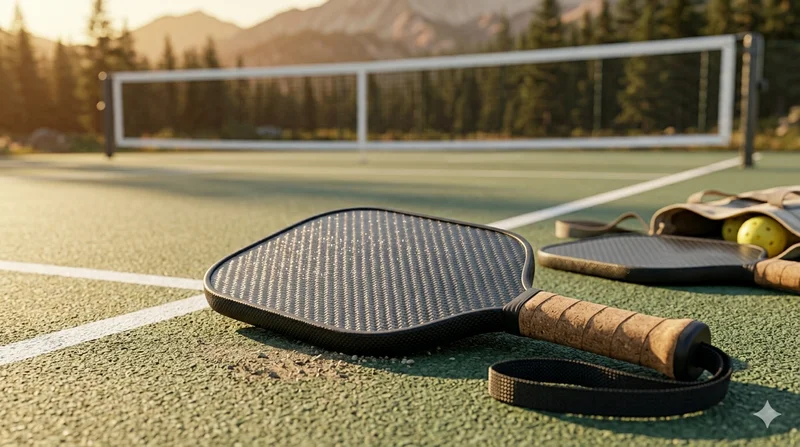
Carbon Fiber Pickleball Paddle
High-performance pickleball paddle with Toray T700 carbon fiber face and polypropylene honeycomb core. Delivers excellent power-to-weight ratio, spin generation, and vibration dampening for competitive play.