
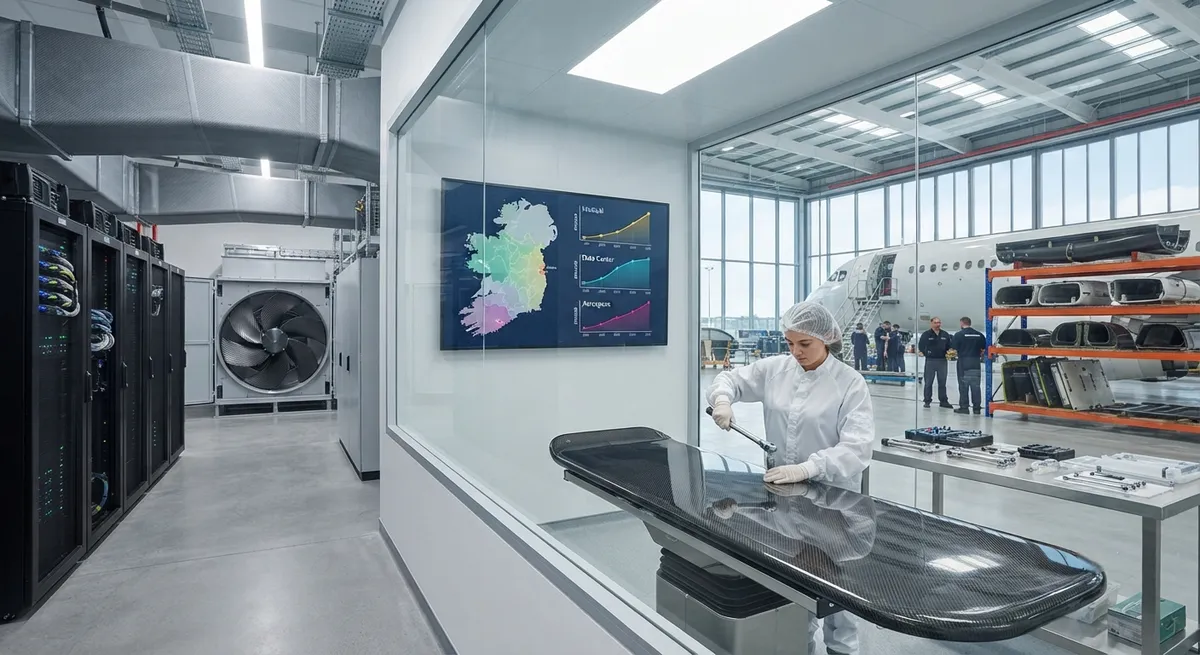
Ireland is a small country with an outsized role in global industry. It hosts Europe's largest medical device manufacturing cluster, a deep aerospace leasing and MRO presence anchored by Shannon, and some of the world's highest-density data center capacity. Each of these sectors has a g
Introduction
Ireland is a small country with an outsized role in global industry. It hosts Europe's largest medical device manufacturing cluster, a deep aerospace leasing and MRO presence anchored by Shannon, and some of the world's highest-density data center capacity. Each of these sectors has a growing relationship with carbon fiber: medtech devices need stiff, light, radiolucent materials; aerospace operations specify documented composite parts; and data center operators are beginning to specify lightweight composite solutions for cooling and airflow management.
This article examines the reported 2026 picture for carbon fiber in Ireland across three demand pillars — aerospace FDI, medical device manufacturing, and data center cooling — and explains what the market structure means for a supplier entering the Irish and wider European market.
Aerospace FDI: Leasing, MRO, and Component Demand
Ireland's aerospace presence is built on aircraft leasing and maintenance rather than airframe assembly. The country is the world's largest aircraft leasing hub, with most of the global leasing fleet managed from Dublin, and Shannon is a historic center for aircraft maintenance, repair, and overhaul (MRO). Reported in 2026 industry data, these operations continue to generate steady demand for documented composite components — interior panels, fairings, and structural parts specified by airlines, lessors, and MRO providers who require full material traceability.
The table below summarizes the reported shape of Irish carbon fiber demand by sector in 2026:
| Sector | Primary Carbon Fiber Use | Reported 2026 Demand Trend |
|---|---|---|
| Aerospace leasing and MRO | Interior panels, fairings, structural repairs, tooling | Steady, traceability-driven |
| Medical device manufacturing | Radiolucent imaging tables, surgical instruments, braces | Growing with device innovation |
| Data center cooling | Composite cooling towers, ducting, airflow management | Rising with AI and hyperscale buildout |
| Engineering and tooling | Fixtures, automation components, machine frames | Moderate, reshoring-driven |
| Wind and marine | Lightweight components for energy and marine use | Project-linked, growing offshore |
For aerospace buyers in Ireland, the defining requirement is documentation: composite parts must carry complete batch records and process data, matching the leasing and MRO industry's insistence on traceable material. Volume per order is smaller than in airframe manufacturing, but specification rigor makes it a valuable segment for a materials supplier with strong quality documentation.
Medical Device Manufacturing: Europe's Medtech Hub
Ireland is Europe's medical technology manufacturing hub. Global medtech companies operate their largest European facilities in the country, producing cardiovascular devices, orthopedics, and surgical instruments for worldwide distribution. Reported in 2026 industry data, the sector continues to grow, and it has a specific and growing appetite for carbon fiber.
Carbon fiber's value in medical devices comes from three properties that metals cannot combine:
- Radiolucency: carbon fiber is transparent to X-rays and CT, making imaging tables, patient positioning systems, and surgical accessories that do not obscure scans.
- Stiffness-to-weight ratio: carbon fiber braces, surgical instruments, and robotic surgery components are stiff yet light, reducing fatigue for surgeons and improving patient comfort.
- Corrosion and chemical resistance: carbon fiber parts survive repeated sterilization cycles and aggressive cleaning chemicals better than many metals.
Medtech manufacturing in Ireland buys carbon fiber in small but repeated volumes, with specifications that emphasize biocompatibility, sterilizability, and dimensional consistency. For a supplier, the medtech sector offers long-term, specification-driven relationships rather than one-off project sales.
Data Center Cooling: The New Demand Driver
Ireland hosts one of the world's highest concentrations of data centers, driven by low corporate tax, Atlantic connectivity, and renewable energy. The rapid buildout of AI compute is intensifying cooling demand, and reported 2026 industry data points to data centers as the fastest-growing source of new demand for lightweight composite products in Ireland.
Composite materials are entering data center cooling in several roles:
- Cooling tower components: composite fan blades, drift eliminators, and structural panels resist corrosion and moisture better than metal equivalents in evaporative cooling systems.
- Ducting and airflow management: composite ducting and plenums are lighter and easier to install in retrofit projects, where floor loading and installation access are constrained.
- Liquid cooling components: carbon fiber composites are evaluated for cold plates and manifolds where thermal expansion matching and weight matter.
For data center operators, the decision to specify composites is driven by total cost of ownership — corrosion resistance that extends service life, and weight reduction that simplifies installation — rather than raw material price. This is a young but fast-growing demand stream that did not exist for carbon fiber suppliers five years ago.
Reported Market Data and the 2026 Picture
Reported 2026 industry data shows Irish carbon fiber demand growing across all three pillars, with data center cooling adding the fastest marginal growth and medtech providing the most consistent specification-driven volume. Ireland does not host significant domestic carbon fiber production, so demand is met by imports — a structural fact that makes it a reliable destination for overseas suppliers.
It is important to read these figures as reported ranges rather than precise official statistics; Irish trade data is published with lags and revisions, and exact tonnage varies by classification. What is consistent is the direction: Irish carbon fiber demand is rising, and the most distinctive growth is in sectors — medtech and data center cooling — that are less visible in traditional composite market reporting.
Frequently Asked Questions
Is Ireland a producer or an importer of carbon fiber?
Ireland is primarily an importer. The country does not host significant domestic carbon fiber production, so demand across aerospace, medtech, and data center sectors is met by imports from major producing economies. This makes Ireland a net import market and an accessible destination for overseas suppliers of fabric, prepreg, and tow.
Why is Ireland a hub for medical device carbon fiber?
Ireland hosts the largest medical device manufacturing cluster in Europe, with global medtech companies operating their major European facilities there. The sector uses carbon fiber for radiolucent imaging tables, surgical instruments, and braces, drawn by its X-ray transparency, stiffness-to-weight ratio, and sterilization compatibility. These are specification-driven, repeat-purchase applications.
How is carbon fiber used in data center cooling?
Composite materials are used in cooling tower fan blades and drift eliminators, ducting and airflow management, and are being evaluated for liquid cooling components. Their corrosion resistance and light weight reduce maintenance and simplify retrofit installation, which matters in dense, floor-loading-constrained data center facilities.
What specifications do Irish buyers typically require?
It depends on the sector. Aerospace leasing and MRO buyers require documented, traceable material with complete batch records. Medical device buyers emphasize biocompatibility, sterilization resistance, and dimensional consistency. Data center operators prioritize corrosion resistance, weight, and total cost of ownership over raw material price.
Conclusion
Ireland's carbon fiber market in 2026 is defined by three demand pillars that are unusual for a small economy: a world-leading aerospace leasing and MRO presence, Europe's largest medtech manufacturing cluster, and one of the world's densest data center industries. Reported industry data points to growth in all three, with data center cooling the fastest new source of demand. Because the country is structurally dependent on imports, it remains an accessible and attractive market for overseas suppliers.
Whether you are supporting aerospace leasing specifications, medtech device programs, or data center cooling projects, consistent and traceable carbon fiber inputs make the difference. Explore our carbon fiber fabrics and prepreg materials with consistent batch documentation, or contact our engineering team to discuss specifications for your Irish or European program.
Part of topic
Related Articles
- Carbon Fibre Sheet Supplier UK: Sourcing Options and Specification Checklist
- Carbon Fiber Sheets Near Me Suppliers: Local Stock vs Factory Direct
- Filament Wound Epoxy Tubes: Industry Standards and Compliance Requirements
- Carbon Fiber Dealers Near Me: What a Good Dealer Actually Adds
- Carbon Fiber Supplies Near Me: Local Sourcing Without Compromising Spec
- Carbon Fiber for Sale: Online Platforms and Direct Sales Channel Comparison
Interested in Our Products?
Contact our team for competitive pricing and technical specifications.
Get a QuoteRelated Products
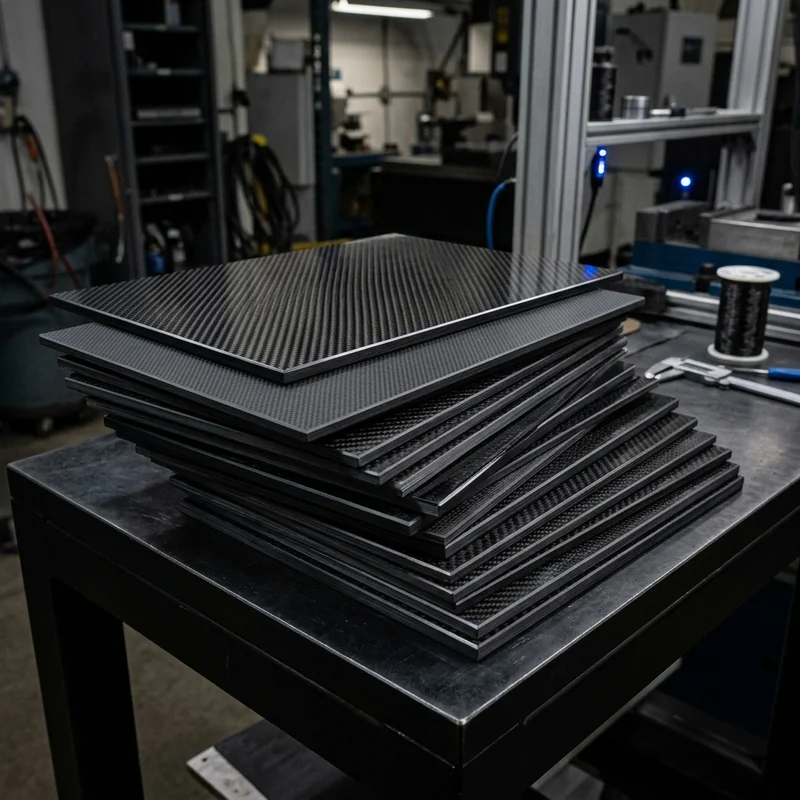
Carbon fiber standard plate-3k stripe
Lightweight, ultra-rigid standard sheets for drone fuselages, robot housings, facades and structural applications.
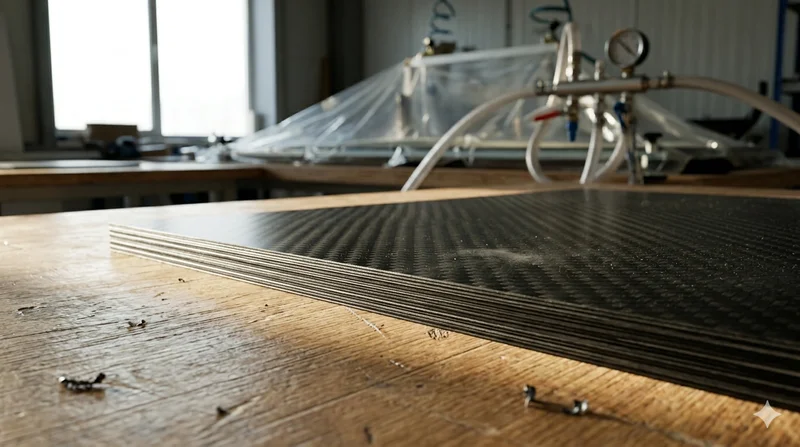
Carbon Fiber Plate — 3K Twill T700 3.0mm
Medium-thickness 3.0mm carbon fiber plate offering significantly higher load capacity while maintaining attractive 3K twill finish. Suitable for structural brackets, reinforcement plates, and load-bearing panels.
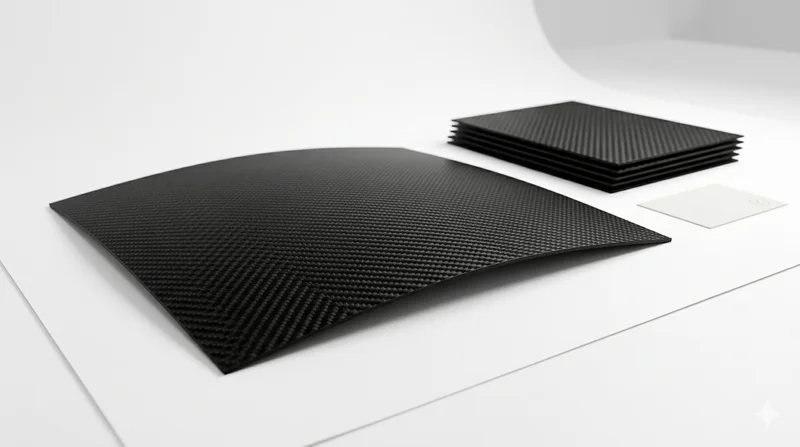
Carbon Fiber Plate — 3K Twill T700 1.5mm
Thin 1.5mm carbon fiber plate with 3K twill weave surface. Lightweight and stiff, commonly used for covers, panels, drone bodies, and applications requiring a premium aesthetic appearance.
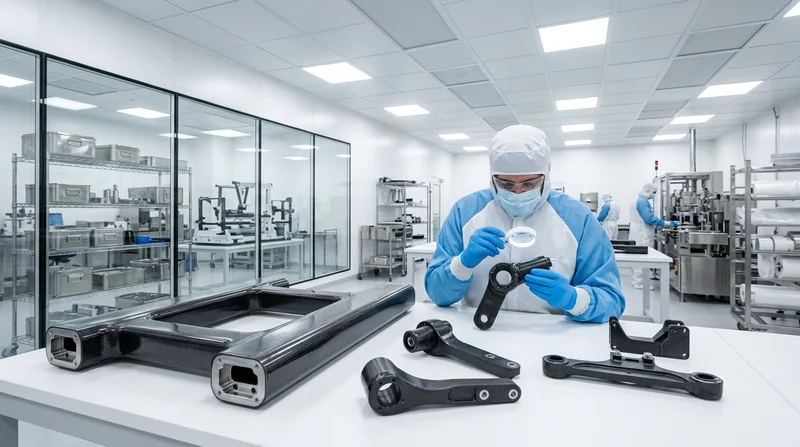
Custom Carbon Fiber Medical Device Components
Medical-grade carbon fiber components manufactured for imaging equipment, surgical instruments, and patient support systems. Carbon fiber's radiolucency (X-ray transparency) and high strength-to-weight ratio make it ideal for CT scanner beds, wheelchair frames, surgical robot arms, and MRI-compatible accessories. Biocompatible resin systems available.
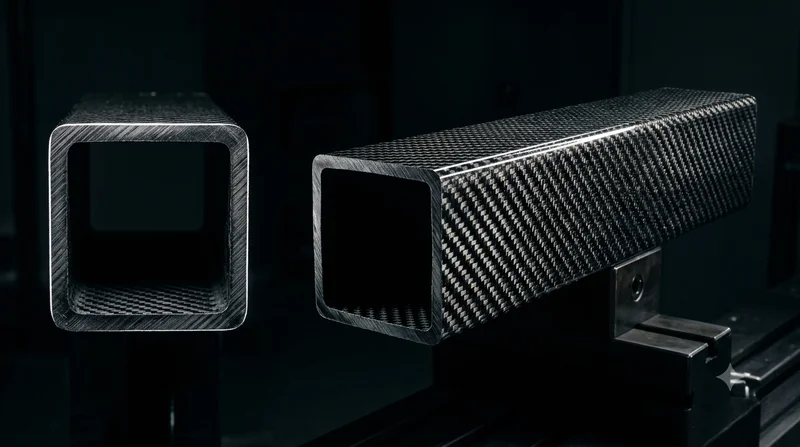
Square Carbon Fiber Tube — 3K Twill T700
Square cross-section carbon fiber tube manufactured with 3K twill weave for torsional strength. Preferred for structural frames, trusses, and support columns where rectangular geometry offers design flexibility.