
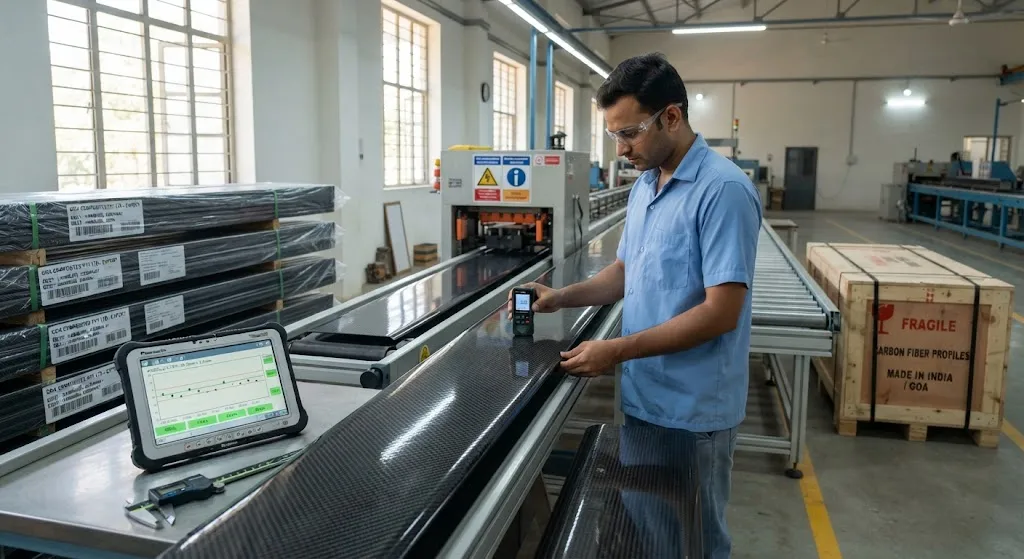
India is joining the global wind-grade carbon fiber supply chain from a position most observers did not anticipate: not as a raw fiber importer or a blade maker's secondary source, but as a supplier of pultruded carbon planks to one of the world's largest wind turbine manufacturers. Kin
Introduction
India is joining the global wind-grade carbon fiber supply chain from a position most observers did not anticipate: not as a raw fiber importer or a blade maker's secondary source, but as a supplier of pultruded carbon planks to one of the world's largest wind turbine manufacturers. Kineco Exel, an Indian composites company operating from Goa, won a Vestas tender for carbon fiber pultruded planks — the structural components used in wind turbine blade spar caps — with deliveries scheduled to begin in the fourth quarter of 2025. The win is significant not only for the contract itself, but for what it signals about the direction of the industry: large-tow carbon fiber supply for wind is becoming a multi-node, multi-country market, and India is positioning itself inside it.
This article examines the Kineco Exel win and the technology behind pultruded spar cap planks, maps the Production Linked Incentive program that is creating domestic carbon fiber capacity, and analyzes how India's local content policies and growing wind program are rerouting global large-tow export flows. For buyers of wind-grade carbon fiber, the India story matters as a diversification option against the current concentration of supply.
The Kineco Exel Win and Pultruded Spar Cap Technology
Pultruded carbon fiber planks are the workhorse building block of modern wind blade spar caps. Instead of laying up dry fiber or prepreg in the blade mold, blade makers bond prefabricated pultruded planks into the spar cap region — a continuous profile pulled through a heated die, cured in line, and cut to length. The pultrusion process delivers high fiber volume fraction (typically 60-70%), excellent straightness, and a low-cost, high-throughput manufacturing route that suits the industrial volumes of wind energy.
Kineco Exel operates a composites facility in Goa that has focused on aerospace and defense structures, and the Vestas contract extends that capability into the wind segment. Winning the tender required the same disciplines the wind industry demands of any spar cap supplier: a documented process chain, qualified tensile and fatigue data for the exact fiber lots, the geometry tolerances blade makers specify for plank width and thickness, and a delivery schedule that matches a wind plant construction calendar. Delivering on a quality basis to a tier-one wind OEM is the credential that positions Indian processors for further wind work.
| Pultruded Plank Parameter | Typical Specification | Why It Matters |
|---|---|---|
| Fiber volume fraction | 60-70% | Sets stiffness and fatigue performance of the spar cap |
| Tensile modulus | 120-165 GPa (large-tow grade) | Defines blade bending stiffness contribution |
| Plank width | 50-100 mm | Determines bonding pattern into the spar cap |
| Plank thickness | 3-6 mm | Sets laminate build-up steps and cycle time |
| Straightness tolerance | Within 1 mm/m | Controls gap quality during bonding into the blade |
The commercial logic for India is straightforward. Pultrusion is a capital-efficient, semi-skilled-operator process, which suits a country with a fast-growing industrial base and competitive labor costs. Goa's port access shortens the logistics path to global blade plants, and the Kineco Exel facility already carries the quality certifications that wind OEMs accept as a starting point for qualification. The Vestas contract is the proof point that Indian pultrusion can meet the price, quality, and schedule profile the wind market requires.
The PLI Program and Domestic Carbon Fiber Capacity
Behind the Kineco Exel win sits a larger policy engine: the Production Linked Incentive scheme for specialty steel and chemicals, which extends incentives to carbon fiber and composite intermediate products. The PLI program rewards production milestones with direct fiscal incentives, creating a financial case for domestic manufacturers to build carbon fiber lines rather than import fiber or rely solely on low-value conversion work. The structure is designed to move Indian industry up the value chain — from importing converted fiber to producing precursor, carbonizing it, and delivering semi-finished products such as pultruded planks and prepreg.
Several announced projects target large-tow carbon fiber, the grade that wind blades consume in the highest volumes. Large-tow fiber (48K and above) is cheaper per kilogram than aerospace-grade small-tow fiber, and its production economics favor scale — a single line designed for wind-grade output can serve multiple blades programs. The PLI incentives, combined with India's own wind program (which is expanding onshore capacity and adding offshore pilots), create a domestic demand base that justifies investment while the country also positions itself as an export node for the wider Asian and Middle Eastern wind markets.
- Precursor production: building PAN precursor lines is the first step in a domestic fiber supply chain, replacing imported precursor.
- Carbonization capacity: multi-line carbonization plants convert indigenous precursor into large-tow fiber for wind and industrial grades.
- Intermediates: pultruded planks, prepreg, and fabric conversion bring Indian processors into the value chain.
- B2B sourcing: domestic availability of large-tow fiber shortens lead times for Indian blade and part makers.
How India Is Rerouting Large-Tow Export Flows
India's entry changes the geography of large-tow carbon fiber trade. Historically, wind-grade large-tow fiber production has been concentrated in a small number of countries, with the largest volumes flowing to blade plants in China, Europe, and increasingly the Middle East. India adds a new production and conversion node with several structural advantages: proximity to the fast-growing Indian wind market, port access for export, cost-competitive conversion, and a policy environment that actively favors domestic industrial development through PLI and local content requirements.
Local content policy is the sharper instrument. Several countries, including India, have introduced or tightened local content requirements for wind projects, effectively requiring a share of the supply chain to be domestic. For a global blade manufacturer serving the Indian market, this shifts the calculation: instead of shipping blades or spar caps from abroad, the OEM looks for local suppliers of the highest-value carbon sub-structure. Kineco Exel's position inside this dynamic is not accidental — local content rules make domestic pultrusion suppliers commercially attractive regardless of their global brand recognition.
The export dimension matters equally. Indian pultrusion capacity built for the domestic market can be extended to export markets with modest incremental investment, and the country's geographic position between Europe, Asia, and the Middle East makes it a logistically natural hub for wind-grade planks and fiber. The likely trajectory is a two-track development: domestic capacity serving Indian wind demand under local content rules, alongside an export channel that competes on cost and reliability with existing Asian and European sources.
What It Means for Global Buyers
For buyers of wind-grade carbon fiber and spar cap components, India's emergence is a risk-diversification story. The concentration of large-tow supply in a few countries has been a recurring procurement concern, and a functioning Indian node — fiber production under development, pultrusion operational, and a tier-one OEM relationship already proven — offers an alternative qualification route. Qualification remains the gate: any new supplier must demonstrate the full traceability chain, mechanical property data on the exact fiber lots, and geometry consistency over production volumes before a blade program commits.
The timing matters as well. The Vestas contract deliveries beginning in the fourth quarter of 2025 are the first major proof of Indian pultrusion at wind scale, and the next two to three years will show whether domestic fiber production reaches the volumes that justify large-tow capacity expansion. Buyers that qualify Indian suppliers early gain a second source at a time when global wind demand is growing; buyers that wait will face the same qualification queue once the market tightens further.
Frequently Asked Questions
What did Kineco Exel win from Vestas?
Kineco Exel, an Indian composites company in Goa, won a Vestas tender for carbon fiber pultruded planks — the structural components bonded into wind turbine blade spar caps — with deliveries scheduled to begin in the fourth quarter of 2025. It is the first major proof that Indian pultrusion can supply a tier-one wind OEM at the required price, quality, and schedule.
What is the PLI program for carbon fiber in India?
The Production Linked Incentive scheme extends fiscal incentives to carbon fiber and composite intermediates, rewarding production milestones with direct fiscal benefits. It creates a financial case for building precursor lines and carbonization capacity domestically, with several announced projects targeting large-tow fiber for wind and industrial grades, supported by India's expanding domestic wind program.
Why are pultruded planks used in wind blades instead of dry fiber layup?
Pultruded planks deliver a higher fiber volume fraction (60-70%), better dimensional consistency, and a lower-cost high-throughput manufacturing route than in-mold layup. Because they are prefabricated continuous profiles cut to length, blade makers bond them into the spar cap region in fewer steps, improving cycle time and consistency across the blade series.
How does local content policy affect wind carbon fiber sourcing?
Local content requirements in several countries, including India, require a share of the wind supply chain to be domestic. This shifts blade makers toward local suppliers of high-value carbon sub-structures, making domestic pultrusion companies commercially attractive regardless of global brand recognition, and rerouting a portion of what was formerly cross-border large-tow trade.
Conclusion
India's entry into wind-grade carbon fiber supply, anchored by the Kineco Exel Vestas win and the PLI program's push for domestic fiber capacity, marks a structural change in the geography of large-tow carbon fiber. Pultruded spar cap planks are the product form that suits India's industrial strengths, local content policy provides the demand pull, and the country's position between Europe, Asia, and the Middle East makes it a natural export hub. For global buyers, the practical implication is a genuine diversification option in a supply chain that has been too concentrated for too long. The qualification evidence base is being built now, and the next two to three years will determine how much of the wind-grade large-tow market India captures.
YongXian supplies carbon fiber materials and engineering support for wind energy programs, including fabrics and reinforcement products for spar cap and blade manufacturing. Explore our wind-grade product range or contact our engineering team to discuss material sourcing strategies for your blade or spar cap supply chain.
Part of topic
Related Articles
- Recycled Carbon Fiber Market Forecast 2030: Technology Maturity and Commercialization Path
- South Korea Carbon Fiber Market 2026: Hydrogen Economy and Shipbuilding Innovation
- Wind Turbine Blade Leading Edge Protection 2026: Polyurethane, Tape, and Metallic Shield Solutions
- China Carbon Fiber Overcapacity 2026: Price War Impact and Industry Consolidation
- India Carbon Fiber Market 2026: Wind Energy, Aerospace, and Defense Expansion
- PAN Precursor Market 2026: Acrylonitrile Supply and Carbon Fiber Cost Structure
Interested in Our Products?
Contact our team for competitive pricing and technical specifications.
Get a QuoteRelated Products
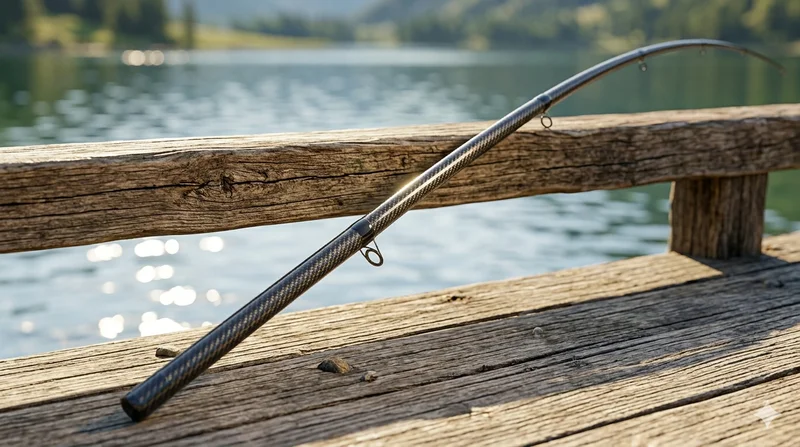
Carbon Fiber Fishing Rod Blank
High-quality carbon fiber fishing rod blank manufactured from multiple grades of Toray carbon fiber cloth. Available in a wide range of lengths, powers, and actions for freshwater and saltwater applications. Suitable for OEM rod building.

Carbon Fiber Plate — 3K Twill T700 3.0mm
Medium-thickness 3.0mm carbon fiber plate offering significantly higher load capacity while maintaining attractive 3K twill finish. Suitable for structural brackets, reinforcement plates, and load-bearing panels.
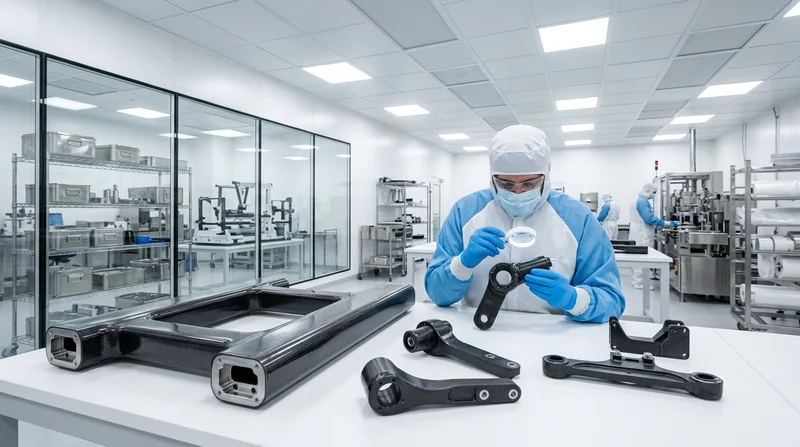
Custom Carbon Fiber Medical Device Components
Medical-grade carbon fiber components manufactured for imaging equipment, surgical instruments, and patient support systems. Carbon fiber's radiolucency (X-ray transparency) and high strength-to-weight ratio make it ideal for CT scanner beds, wheelchair frames, surgical robot arms, and MRI-compatible accessories. Biocompatible resin systems available.

Carbon Fiber Plate — 3K Twill T700 1.5mm
Thin 1.5mm carbon fiber plate with 3K twill weave surface. Lightweight and stiff, commonly used for covers, panels, drone bodies, and applications requiring a premium aesthetic appearance.

Square Carbon Fiber Tube — 3K Twill T700
Square cross-section carbon fiber tube manufactured with 3K twill weave for torsional strength. Preferred for structural frames, trusses, and support columns where rectangular geometry offers design flexibility.