
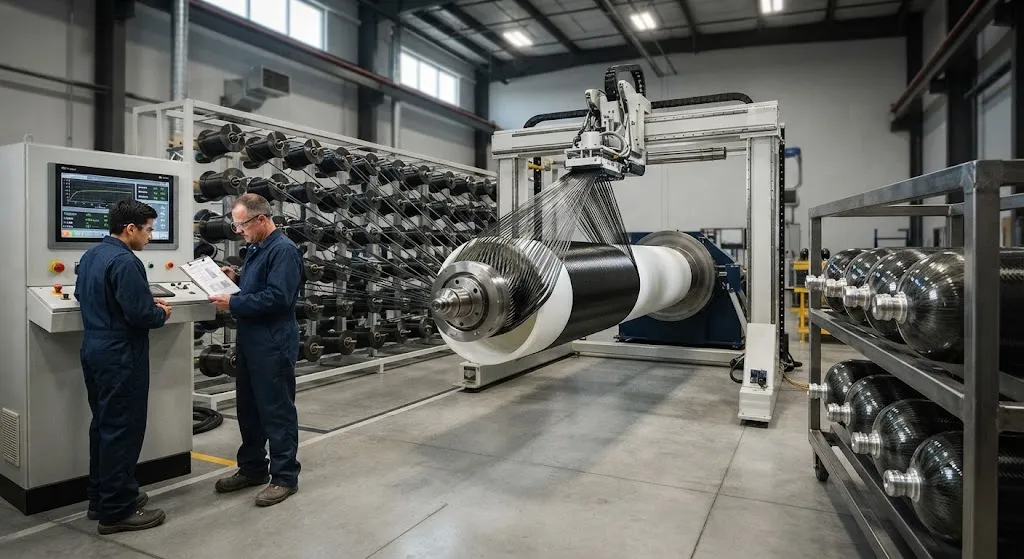
Compressed hydrogen storage is the quiet engine behind much of the carbon fiber industry's demand growth. While aerospace and wind energy dominate headlines, hydrogen cylinders have emerged as one of the fastest-scaling applications for high-tensile fiber, driven by fuel-cell vehicles,
Introduction
Compressed hydrogen storage is the quiet engine behind much of the carbon fiber industry's demand growth. While aerospace and wind energy dominate headlines, hydrogen cylinders have emerged as one of the fastest-scaling applications for high-tensile fiber, driven by fuel-cell vehicles, heavy-duty trucking, and stationary refueling infrastructure. The reason is structural: a Type IV cylinder is essentially a polymer liner overwrapped with carbon fiber reinforced polymer, which means the fiber is not an accessory but the load-bearing core of the product.
For buyers and procurement teams, this niche matters for two reasons. The first is growth: analysts project the hydrogen storage cylinder market to expand at a compound annual growth rate above 20 percent between 2026 and 2031, a pace few other composite segments can match. The second is fiber intensity: carbon fiber represents roughly half to two-thirds of a cylinder's manufacturing cost, so every percent of cylinder growth multiplies into fiber demand. This article walks through the demand logic, the cost structure, the supply response, and the practical specification criteria that determine whether a cylinder program delivers reliable, certifiable performance.
Why Type IV Cylinders Became the Growth Engine
Hydrogen storage cylinders are classified by their architecture, and the shift toward Type IV designs explains most of the fiber demand growth. A comparison of the four standard types makes the trend clear:
| Cylinder Type | Construction | Typical Working Pressure | Weight per Unit Volume | Role in the Market |
|---|---|---|---|---|
| Type I | All-steel | 200-300 bar | High | Industrial gas, stationary storage |
| Type II | Steel liner, hoop-wrapped fiber | 200-300 bar | Medium | CNG, industrial gas |
| Type III | Aluminum liner, fully wrapped | 350-700 bar | Medium-low | Automotive, aviation |
| Type IV | Polymer liner, fully wrapped | 350-700 bar | Lowest | Fuel-cell vehicles, transport, refueling |
Type IV cylinders dominate new fuel-cell vehicle programs because they deliver the highest gravimetric efficiency: the polymer liner removes the metal mass entirely, and the carbon fiber overwrap carries all structural load. At 700 bar working pressure, the overwrap makes up the majority of the vessel wall, which is precisely why fiber demand scales so directly with cylinder production. As automakers and truck OEMs standardize on 350-700 bar systems, the market has gravitated toward the architecture that consumes the most fiber per unit of stored hydrogen.
The Fiber Share Inside a Cylinder's Cost
No other hydrogen storage component dominates cost the way carbon fiber does. Industry cost models typically break down a Type IV 700-bar cylinder as follows:
| Cost Component | Share of Total Cost | Key Driver |
|---|---|---|
| Carbon fiber | 50-65% | T700-class tow price, winding efficiency |
| Polymer liner | 10-15% | Sealing integrity, permeation resistance |
| Boss and valve hardware | 8-12% | Metallic fittings, certification |
| Labor and winding | 10-15% | Cycle time, automation level |
| Testing and overhead | 5-10% | Hydrostatic and burst testing burden |
Two consequences follow. First, fiber price and fiber yield during winding are the dominant levers on cylinder cost — a one-percent improvement in material utilization is worth more than a one-percent reduction in almost any other line item. Second, this cost share makes long-term fiber supply agreements attractive: cylinder manufacturers who lock in dedicated fiber supply reduce both price volatility and qualification risk, since switching fiber sources requires re-qualification of the entire vessel.
Demand Projections: The 20%+ CAGR Niche
The combined effect of vehicle adoption, transport corridors, and refueling build-out is a demand curve that outpaces most of the composite industry. Analysts tracking the hydrogen storage segment project the following trajectory:
| Segment | 2026-2031 CAGR | Primary Driver | Fiber Intensity |
|---|---|---|---|
| Type IV automotive tanks | 18-22% | Fuel-cell passenger vehicle programs | 5-12 kg fiber per cylinder |
| Heavy-duty transport tanks | 22-30% | Long-haul trucking, bus fleets | 25-60 kg fiber per cylinder bank |
| Stationary and refueling storage | 15-20% | Hydrogen refueling stations, buffers | High-volume banks |
| Aviation and marine pilots | 25%+ | Demonstration programs | Weight-critical, premium fiber |
The heavy-duty segment deserves particular attention. A Class 8 fuel-cell truck carries multiple 350 bar tanks or a bank of 700 bar vessels, consuming tens of kilograms of carbon fiber per vehicle. Even modest fleet penetration translates into thousands of tons of annual fiber demand, which is why several fiber producers now treat pressure vessels as a strategic growth pillar rather than a side market. For fiber suppliers, the message of this 20%+ CAGR niche is that capacity planning must look beyond today's vehicle volumes to the refueling and transport infrastructure being built around them.
Supply Response: Capacity Dedicated to Pressure Vessels
Fiber producers have begun answering the demand signal with dedicated capacity. The most significant example is Toray's expansion at its South Carolina plant, where roughly 3,000 tons per year of new capacity is earmarked for pressure vessel applications — explicitly aligned with hydrogen cylinder programs rather than generic industrial tow. Similar logic applies across the supply base: established producers of T700-class fiber and new large-tow entrants have both identified cylinders as a priority outlet because the application rewards consistent quality, tight areal weight control, and long-term supply reliability.
For buyers, this supply response is double-edged. More dedicated capacity reduces the risk of allocation shortfalls during demand surges, but it also means that generic industrial-grade tow may not carry the traceability and qualification data required for certified cylinders. The practical implication is to qualify fiber at the supplier level, on documented lots, with mechanical test data that matches the cylinder's design allowables — not to assume that any high-strength tow is automatically suitable for pressure vessel use.
Specifying Carbon Fiber for Hydrogen Cylinders
Buyers evaluating fiber for Type IV cylinder programs should hold suppliers to a specification that covers both material and process compatibility. Key criteria include:
- Strength class: T700-class fiber (tensile strength around 4,900 MPa) is the workhorse for 350-700 bar cylinders; higher-strength T800-class tow is selected where weight targets demand it, at higher cost.
- Tow size and areal weight: 12K-24K tow is typical, with areal weight controlled within ±1% to keep laminate thickness uniform across the dome and cylinder sections.
- Consistent sizing: Compatible sizing chemistry ensures low fiber-resin interface voids, which directly affect burst pressure and fatigue life.
- Batch traceability: Lot-level mechanical test certificates, from tensile strength to strain-to-failure, must map to the design allowables used in cylinder qualification.
- Qualification support: Suppliers willing to share data and support re-qualification reduce the cost of switching and accelerate product certification.
Standard frameworks such as ISO 19882 for gaseous hydrogen land-vehicle containers and UN Global Technical Regulation No. 13 govern cylinder design, testing, and periodic inspection. Fiber selection sits upstream of these standards but determines whether a vessel passes them: burst ratio, fatigue performance under 15,000 or more pressure cycles, and thermal stability all trace back to the overwrap material and its process control.
Frequently Asked Questions
Why does carbon fiber account for so much of a hydrogen cylinder's cost?
Because the fiber is the structural material. In a Type IV cylinder the polymer liner only seals the hydrogen — it carries almost no load. The carbon fiber overwrap must contain 350-700 bar of pressure repeatedly over decades of service, which requires a thick, high-quality laminate. T700-class tow is expensive relative to steel or aluminum, and a single automotive cylinder can consume 5-12 kg of fiber. Combined with the costs of winding, curing, and certifying each cylinder, fiber naturally becomes the largest cost line. This is why cylinder manufacturers negotiate multi-year fiber supply agreements and invest heavily in winding efficiency.
What is the difference between Type III and Type IV cylinders?
Type III cylinders use an aluminum liner overwrapped with carbon fiber, while Type IV cylinders use a polymer liner such as high-density polyethylene or polyamide. Type IV designs are lighter because the metal liner is eliminated, improving gravimetric efficiency by roughly 30-50 percent for the same volume. The trade-off is that the polymer liner must resist hydrogen permeation and manage thermal cycling, and the fiber overwrap must carry a larger share of the structural load. For weight-critical applications such as fuel-cell vehicles, Type IV has become the default; Type III remains in use in some aerospace and high-pressure applications where liner behavior is tightly characterized.
Which fiber grade is used in hydrogen cylinders?
The dominant grade is T700-class fiber, with a nominal tensile strength around 4,900 MPa, wound from 12K-24K tow. It offers the best balance of strength, cost, and processability for 350-700 bar vessels. For programs where weight saving justifies a premium, T800-class fiber (around 5,900 MPa) enables thinner overwraps. High-modulus fibers are generally avoided because their lower strain-to-failure can reduce pressure-cycle fatigue life. The practical specification question is less about picking the strongest grade and more about consistency: areal weight tolerance, sizing compatibility, and batch-to-batch traceability matter more than peak strength in a well-designed cylinder.
Is there enough fiber capacity for the projected hydrogen cylinder growth?
Currently yes, but with regional caveats. Producers including Toray have announced dedicated expansions — Toray's South Carolina project adding roughly 3,000 tons per year for pressure vessels — and other large-tow entrants are targeting the segment. The structural risk is cyclical: if aerospace and wind demand recover simultaneously with hydrogen scale-up, high-strength tow could see allocation pressure. The mitigation for cylinder manufacturers is the same as for any strategic raw material: qualify multiple suppliers, maintain documented inventories, and structure contracts that protect against short-notice allocation shifts.
Conclusion
Hydrogen storage cylinders represent one of the most reliable growth stories in carbon fiber, combining a 20%+ compound growth rate with extreme fiber intensity — half to two-thirds of the cylinder's cost sits in the overwrap. The Type IV architecture's dominance, the scale-up of heavy-duty transport, and the arrival of dedicated fiber capacity all point in the same direction: this niche will keep pulling high-tensile tow for years. For buyers, the winning approach is specification-driven procurement: qualify T700-class fiber on documented lots, lock in dedicated supply, and treat material consistency as the foundation of cylinder certification.
Whether you are a cylinder manufacturer building a fiber pipeline or a program team specifying overwrap material for the first time, procurement discipline pays off across the entire product lifecycle. Explore our carbon fiber products for pressure vessel applications, or contact our engineering team to discuss material selection, lot traceability, and qualification support for your hydrogen storage program.
Part of topic
Related Articles
- Recycled Carbon Fiber Market Forecast 2030: Technology Maturity and Commercialization Path
- South Korea Carbon Fiber Market 2026: Hydrogen Economy and Shipbuilding Innovation
- Wind Turbine Blade Leading Edge Protection 2026: Polyurethane, Tape, and Metallic Shield Solutions
- China Carbon Fiber Overcapacity 2026: Price War Impact and Industry Consolidation
- India Carbon Fiber Market 2026: Wind Energy, Aerospace, and Defense Expansion
- PAN Precursor Market 2026: Acrylonitrile Supply and Carbon Fiber Cost Structure
Interested in Our Products?
Contact our team for competitive pricing and technical specifications.
Get a QuoteRelated Products
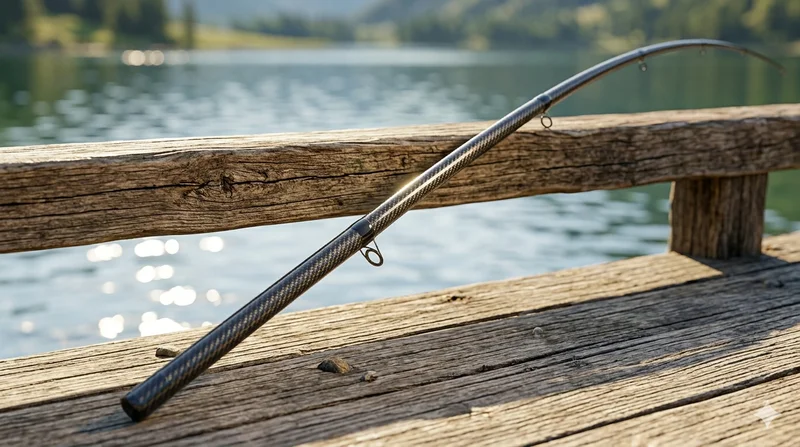
Carbon Fiber Fishing Rod Blank
High-quality carbon fiber fishing rod blank manufactured from multiple grades of Toray carbon fiber cloth. Available in a wide range of lengths, powers, and actions for freshwater and saltwater applications. Suitable for OEM rod building.

Carbon Fiber Plate — 3K Twill T700 3.0mm
Medium-thickness 3.0mm carbon fiber plate offering significantly higher load capacity while maintaining attractive 3K twill finish. Suitable for structural brackets, reinforcement plates, and load-bearing panels.

Carbon Fiber Plate — 3K Twill T700 1.5mm
Thin 1.5mm carbon fiber plate with 3K twill weave surface. Lightweight and stiff, commonly used for covers, panels, drone bodies, and applications requiring a premium aesthetic appearance.

Square Carbon Fiber Tube — 3K Twill T700
Square cross-section carbon fiber tube manufactured with 3K twill weave for torsional strength. Preferred for structural frames, trusses, and support columns where rectangular geometry offers design flexibility.
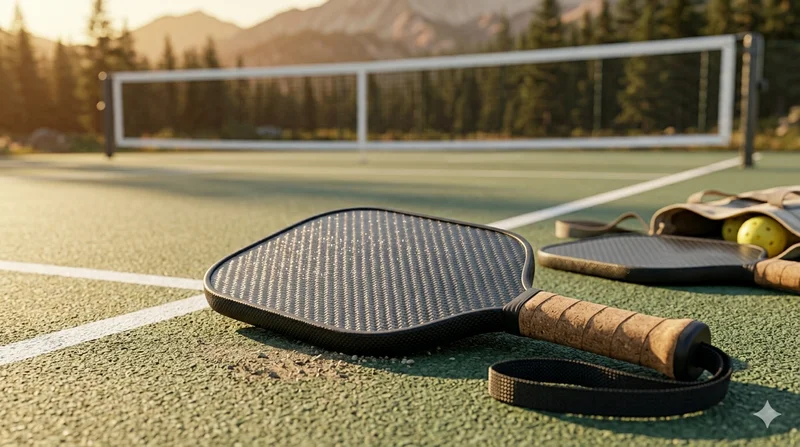
Carbon Fiber Pickleball Paddle
High-performance pickleball paddle with Toray T700 carbon fiber face and polypropylene honeycomb core. Delivers excellent power-to-weight ratio, spin generation, and vibration dampening for competitive play.