
For most of the past decade, carbon fiber moved along a handful of predictable routes. Japanese producers supplied high-modulus tow to aerospace; Chinese and Taiwanese mills filled the industrial and sporting-good segments; and a thin stream of precursor traveled from low-cost producers
Introduction
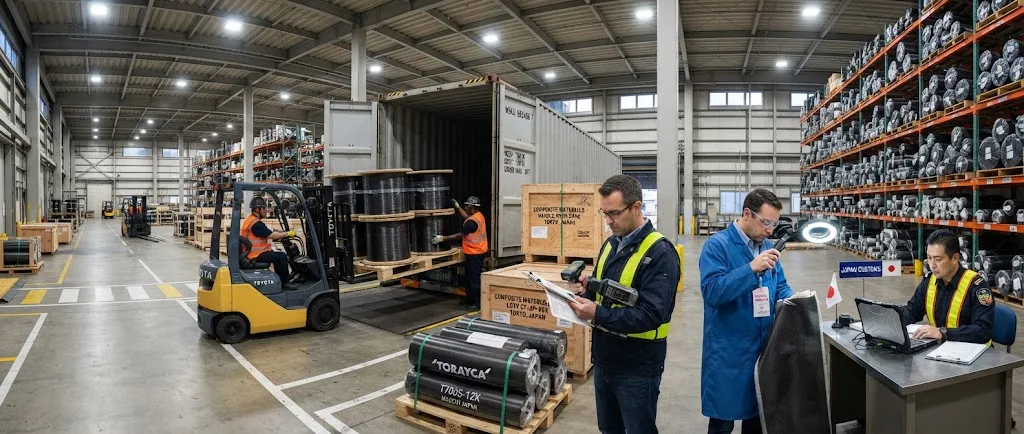
For most of the past decade, carbon fiber moved along a handful of predictable routes. Japanese producers supplied high-modulus tow to aerospace; Chinese and Taiwanese mills filled the industrial and sporting-good segments; and a thin stream of precursor traveled from low-cost producers to fiber lines wherever the economics made sense. In 2026 that map is being redrawn by trade policy. Tariff measures introduced in the United States during 2025 and extended into 2026 now reach into precursor and intermediate carbon fiber imports, and European buyers are responding with localization commitments and long-term contracts that lock in supply before terms change again.
This article examines the new geography of carbon fiber trade: what the tariff regime actually covers, where the major flows are shifting, and how buyers and suppliers are restructuring agreements in response.
What the 2025-2026 Tariff Regime Actually Covers
The trade measures that matter for composites are not a single clean tariff line. They arrive in layers, and each layer touches a different part of the carbon fiber value chain:
- Precursor duties: polyacrylonitrile precursor, the raw input for most carbon fiber, is subject to new duties when imported into the US, raising the landed cost of fiber produced by converters who rely on imported PAN.
- Intermediate and tow tariffs: additional duties apply to carbon fiber tow and fabric imports above certain origin-based thresholds, hitting industrial users who source standard-modulus material from Asian mills.
- Rules-of-origin tightening: stricter origin documentation requirements make it harder to route material through third countries to avoid duties, closing the transshipment loopholes that flourished in earlier cycles.
- Safeguard investigations: several jurisdictions have opened trade-remedy cases on carbon fiber and prepreg, adding uncertainty that pushes buyers toward fixed-supply agreements.
The net effect is that landed cost now depends more on origin and routing than on the mill price itself. A buyer who signed a 2024 contract based on ex-works pricing may face a delivered cost increase of 15-25 percent in 2026, depending on the supply route. For converters who purchase precursor from multiple origins, the calculation is even more complex, because each input carries its own duty and documentation burden, and the cost of non-compliance — rejected shipments, delayed customs clearance, and retroactive assessments — can exceed the duty itself.
The tariff design also matters for what it does not cover. Filament wound or compression molded parts that incorporate carbon fiber typically face duties at the finished-goods rate, which is often lower than the intermediate rate applied to tow and fabric. That asymmetry is already reshaping trade: instead of importing fiber and converting it locally, some OEMs are importing finished composite components from partner factories in third countries, accepting a longer supply chain in exchange for a lower total duty bill. This is a structural change, not a temporary workaround, because it moves value-added conversion out of the importing country.
How the Major Trade Flows Are Reconfiguring
| Trade Route | Material | Historical Direction | 2026 Shift |
|---|---|---|---|
| Japan to North America | High-modulus tow, aerospace-grade prepreg | Direct export, stable pricing | Growth capped; suppliers push local conversion and JV capacity |
| China and Taiwan to US industrial users | Standard-modulus tow, fabric | High volume, price-led | Sharp decline; duties redirect volume to third-country routes |
| China and Taiwan to Europe | Industrial tow, low-cost fiber | Volume flow via Rotterdam and Antwerp | Moderated by EU localization incentives and Carbon Border mechanisms |
| Precursor (PAN) to fiber converters | Precursor tow | Multi-country sourcing, spot pricing | Duties push converters toward domestic or long-contract precursor |
| US and EU domestic production | All grades | Small share of global output | Expansion announcements multiply; new lines target 2030 availability |
Two patterns stand out. First, the routing of standard-modulus tow is becoming regional rather than global: North America is sourcing more from Mexico, Canada, and domestic lines, while Europe leans on Turkey and Eastern European converters. Second, the premium segments are less affected because aerospace-grade material already moves under long-term agreements with strict qualification, so the tariff impact is concentrated on the industrial spot market — which is exactly where price volatility was already highest.
Nearshoring and Long-Term Contracts as the Buyer Response
Buyers are not waiting for trade policy to stabilize. The dominant response across European and North American composite manufacturers is a combination of nearshoring and contract restructuring:
- Regional supplier qualification: manufacturers are qualifying secondary regional sources even at a 5-10 percent cost premium, treating diversification as insurance rather than expense.
- Take-or-pay volume commitments: multi-year agreements with fixed annual quantities give fiber producers the revenue visibility to justify capacity investment, in exchange for price stability for the buyer.
- Inventory buffers for precursor: converters sourcing PAN under new duties are rebuilding raw-material inventories to survive supply disruptions without halting production.
- Shared-cost clauses: newer contracts explicitly allocate tariff exposure between buyer and supplier, with agreed thresholds before price adjustments trigger.
- Local conversion partnerships: tow imported in bulk is increasingly converted to fabric or prepreg in-country, changing the duty basis and supporting local value-added jobs.
The shift is visible in public announcements: multiple regional compounders and weavers have disclosed capacity additions timed to 2026-2027, all explicitly citing trade-driven demand for local supply. For the buyer, the practical consequence is that long-term relationships now matter more than spot price, and suppliers with committed capacity are commanding a premium.
Europe is following a similar but distinct trajectory. The EU has used localization incentives rather than tariffs as the primary instrument, pairing carbon-border measures with funding programs that support domestic precursor and fiber capacity. The result is that European buyers are consolidating around a small set of regional suppliers with certified low-carbon production, while US buyers are consolidating around suppliers with diversified sourcing and domestic conversion capability. The two markets are converging on the same structural outcome — fewer, longer, more qualified supply relationships — through different policy paths.
What This Means for Pricing and Inventory Strategy
The pricing logic of the next 18 months differs from the oversupply-led softness of 2023-2024. With tariffs raising landed costs and buyers consolidating around fewer, longer relationships, standard-modulus tow prices in North America and Europe are expected to firm, while the spot market thins. Inventory strategy becomes a balancing act: too little stock exposes the buyer to routing delays and duty changes; too much locks in capital at precisely the moment delivered prices may fall as new regional capacity comes online in 2027.
For composite manufacturers, the practical planning horizon is two to three years. Suppliers who can demonstrate diversified precursor sourcing, regional conversion capacity, and contractual flexibility will emerge as preferred partners — and those characteristics matter more to a 2026 procurement decision than a marginal price difference on a single shipment. Procurement teams that treat trade policy as a planning input rather than an external shock will be the ones with workable supply agreements when the next regulatory change lands.
Frequently Asked Questions
How much are carbon fiber prices expected to change because of tariffs?
Expect delivered-cost increases of roughly 15-25 percent for standard-modulus tow in the US, depending on origin and routing, with European price movement moderated by localization incentives. Premium aerospace grades are less exposed because they move under long-term qualified agreements. The exact figure depends on product mix, origin, and the terms of each contract.
What is nearshoring changing for a mid-size composite manufacturer?
It changes the qualification workload and the contract structure. A mid-size manufacturer typically needs to qualify one or two regional second sources, accept a small cost premium for diversification, and shift from spot purchases to commitments of 12-24 months. The benefit is supply security and more predictable pricing in a policy-driven market.
Are high-modulus and aerospace-grade carbon fibers affected by the tariff measures?
Yes, but less severely. These grades move under multi-year agreements with rigorous qualification, so duty exposure is usually absorbed into negotiated contract terms rather than reflected in spot prices. The greater practical risk for premium users is routing and documentation delays, which is why most large aerospace buyers have already locked in fixed supply arrangements.
Conclusion
Trade policy has permanently altered the geography of carbon fiber supply. The era of buying standard-modulus tow from the lowest-cost mill on the spot market is closing, replaced by regional sourcing, multi-year commitments, and contract structures that explicitly manage tariff risk. For composite manufacturers the strategic question is no longer just price, but resilience: which suppliers can deliver consistent material, diverse precursor sourcing, and dependable output through 2027 and beyond.
For procurement teams evaluating their next supply agreement, the practical first step is building a sourcing map that scores suppliers on origin diversification and contractual flexibility, not price alone. Explore our carbon fiber product range or contact our team to discuss supply strategies that hold up under shifting trade conditions.
Part of topic
Related Articles
- Recycled Carbon Fiber Market Forecast 2030: Technology Maturity and Commercialization Path
- South Korea Carbon Fiber Market 2026: Hydrogen Economy and Shipbuilding Innovation
- Wind Turbine Blade Leading Edge Protection 2026: Polyurethane, Tape, and Metallic Shield Solutions
- China Carbon Fiber Overcapacity 2026: Price War Impact and Industry Consolidation
- India Carbon Fiber Market 2026: Wind Energy, Aerospace, and Defense Expansion
- PAN Precursor Market 2026: Acrylonitrile Supply and Carbon Fiber Cost Structure
Interested in Our Products?
Contact our team for competitive pricing and technical specifications.
Get a QuoteRelated Products

Carbon Fiber Fishing Rod Blank
High-quality carbon fiber fishing rod blank manufactured from multiple grades of Toray carbon fiber cloth. Available in a wide range of lengths, powers, and actions for freshwater and saltwater applications. Suitable for OEM rod building.
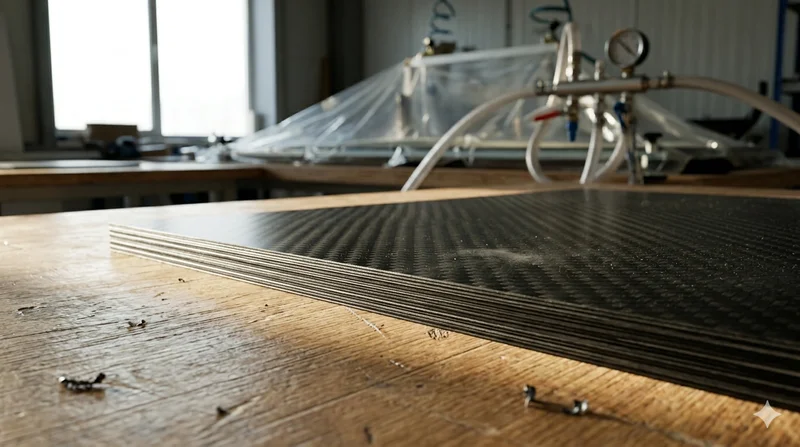
Carbon Fiber Plate — 3K Twill T700 3.0mm
Medium-thickness 3.0mm carbon fiber plate offering significantly higher load capacity while maintaining attractive 3K twill finish. Suitable for structural brackets, reinforcement plates, and load-bearing panels.

Custom Carbon Fiber Medical Device Components
Medical-grade carbon fiber components manufactured for imaging equipment, surgical instruments, and patient support systems. Carbon fiber's radiolucency (X-ray transparency) and high strength-to-weight ratio make it ideal for CT scanner beds, wheelchair frames, surgical robot arms, and MRI-compatible accessories. Biocompatible resin systems available.
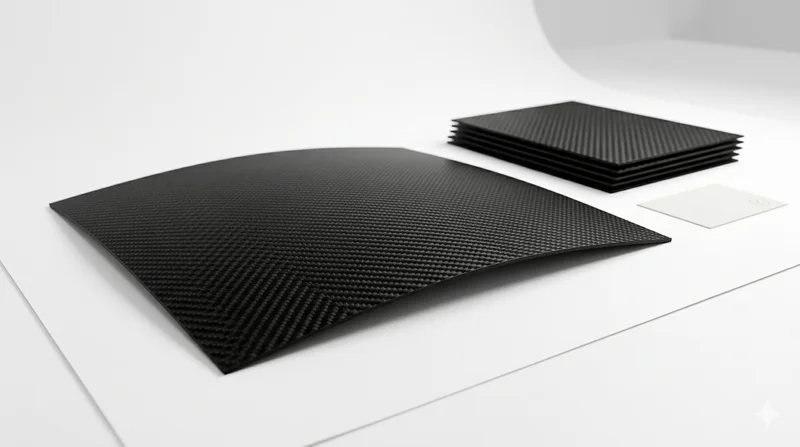
Carbon Fiber Plate — 3K Twill T700 1.5mm
Thin 1.5mm carbon fiber plate with 3K twill weave surface. Lightweight and stiff, commonly used for covers, panels, drone bodies, and applications requiring a premium aesthetic appearance.

Square Carbon Fiber Tube — 3K Twill T700
Square cross-section carbon fiber tube manufactured with 3K twill weave for torsional strength. Preferred for structural frames, trusses, and support columns where rectangular geometry offers design flexibility.