
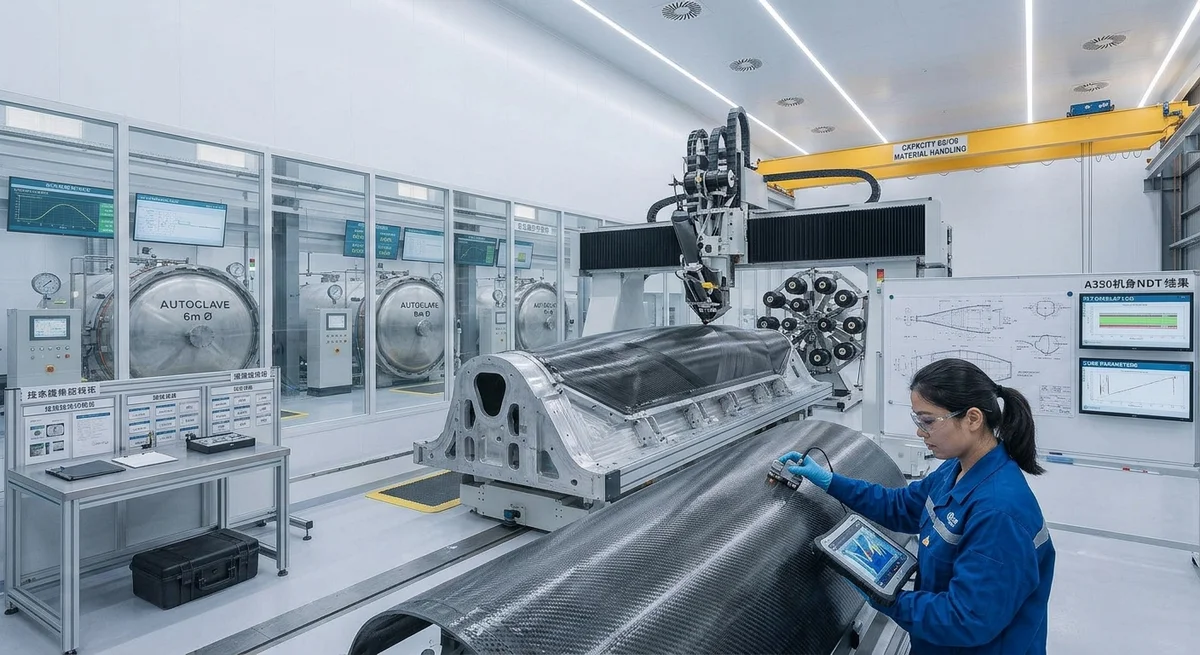
Germany is home to Europe's most concentrated carbon fiber aerospace supply chain, centered around the ZAC (Zentrum für Angewandte Luftfahrtforschung) in Stade and the CFK Valley cluster. This article profiles key German suppliers serving Airbus, premium aerostructures manufacturers, and emerging Tier 2/3 opportunities for international B2B buyers.
Germany has established itself as the undisputed epicenter of European carbon fiber aerospace manufacturing. The country's composite aerospace ecosystem — anchored by Airbus's Hamburg-Finkenwerder facility, the CFK Valley cluster in Stade, and the Augsburg high-performance materials corridor — represents over €3.5 billion in annual CFRP-related output and employs more than 15,000 specialized engineers and technicians. For international B2B buyers, understanding this cluster is essential for accessing the European aerospace supply chain, which consumes approximately 18,000 metric tons of carbon fiber annually and is projected to grow at 8-10% CAGR through 2030.
The German Aerospace Composite Landscape
| Cluster/Location | Key Focus Areas | Major Organizations | Employees | Est. Annual Output |
|---|---|---|---|---|
| CFK Valley, Stade (Lower Saxony) | Aircraft structures (fuselage, wings, empennage), automated fiber placement, repair technologies | Airbus Stade, Premium Aerotec, DLR Institute, FibreTech Composite | 3,500+ | €850 million |
| Hamburg Aviation (Finkenwerder) | Final assembly, large fuselage sections, wing box assembly, R&D | Airbus Finkenwerder, Airbus Operations, Premium Aerotec Hamburg | 8,000+ (composites-related) | €1.8 billion |
| Augsburg-Munich Corridor | Engine components, structural parts, RTM technology, surface treatment | Premium Aerotec Augsburg, MT Aerospace, Schunk Kohlenstofftechnik | 2,500+ | €550 million |
| Bremen-Oldenburg | Space structures, satellite components, cryogenic tanks | Airbus Defence & Space, OHB, ArianeGroup | 1,200+ | €250 million |
| Bavaria (Munich/Manching) | Defense aerospace, fighter jet components (Eurofighter), drone structures | Airbus Defence & Space Manching, Premium Aerotec | 1,000+ | €180 million |
Key German Suppliers Serving Airbus
Premium Aerotec (Augsburg & Stade)
Premium Aerotec is a wholly owned subsidiary of Airbus and Europe's largest independent aerostructures manufacturer. The company operates 10 facilities across Germany, with 8,700 employees and annual revenue of approximately €2.1 billion (2025). Their CFRP capabilities include:
- A350 fuselage shells: The A350's center fuselage section (Sections 13-15) is manufactured at Premium Aerotec's Augsburg and Nordenham facilities using automated fiber placement (AFP) of carbon fiber/epoxy prepreg. Each fuselage shell measures up to 7 m × 5 m and is co-cured in a large autoclave. Production rate: 10 ship sets per month.
- A320/A321 flap tracks: Carbon fiber-reinforced plastic flap track beams manufactured at the Stade facility using resin transfer molding (RTM). Replacing aluminum, each flap track saves 35% weight — approximately 12 kg per aircraft.
- A400M cargo ramp: Large CFRP structure (6 m × 4 m) manufactured at Augsburg using hand layup of carbon fiber fabric with automated trimming and drilling.
FibreTech Composite (CFK Valley, Stade)
A specialized Tier 2 supplier focusing on composite sub-assemblies for aerostructures. FibreTech has 280 employees and annual revenue of €65 million. They specialize in:
- Composite stringers and stiffeners: Pultruded carbon fiber profiles for fuselage and wing stiffening. Production capacity: 40,000+ meters per month.
- Fire-resistant interior panels: Phenolic resin/carbon fiber sandwich panels for cabin interiors meeting FAR 25.853 fire standards.
- Repair patches and kits: Pre-cured and pre-kitted CFRP repair patches for Airbus field service. Supplied to 60+ MRO facilities worldwide.
Schunk Kohlenstofftechnik (Heuchelheim & Augsburg)
Part of the Schunk Group (€1.3 billion revenue), this division specializes in carbon and graphite solutions for aerospace and industrial applications. Their key products include:
- Carbon fiber preforms: Near-net-shape textile preforms using 3D weaving and braiding technology. Fiber orientations: 0°, ±45°, 90° in z-direction reinforcement.
- High-temperature carbon fixtures: Graphite tooling and fixtures for composite autoclave and curing oven processes. Withstands >2,000°C in inert atmosphere.
- Electrically conductive composite components: Lightning strike protection (LSP) solutions integrating metallic mesh or conductive veils into CFRP structures.
ELG Carbon Fibre (now part of Toray Advanced Composites)
Located in Niedersachsen proximity, ELG (now operating under Toray's Advanced Composites division) is Europe's largest carbon fiber recycler and a critical supplier of recycled carbon fiber (rCF) for non-structural aerospace applications. Their output feeds into secondary aerospace structures, tooling, and MRO applications.
How the Supply Chain Works
The German aerospace CF supply chain operates on a four-tier structure:
| Tier | Role | Examples | Entry Requirements |
|---|---|---|---|
| Tier 1 | Large structure manufacturing, final assembly, system integration | Premium Aerotec, Airbus Operations GmbH | EN 9100, NADCAP, 5+ years aerospace track record |
| Tier 2 | Sub-assemblies, detailed parts, specialized processes | FibreTech Composite, SGL Composites (Wackersdorf) | EN 9100, preferred supplier status, 3-5 year contracts |
| Tier 3 | Raw materials, precursor, prepreg, process consumables | SGL Carbon (Meitingen), Toray (formerly Toho Tenax Europe) | Material qualification per Airbus AIMS or Boeing BMS |
| Tier 4 | Specialized equipment, tooling, software, testing | Schunk, Dieffenbacher, Broetje-Automation, ZwickRoell | Technology qualification, proven track record |
Opportunities for International B2B Suppliers
Several gaps and opportunities exist for international suppliers looking to enter the German aerospace CF supply chain:
- Specialty carbon fiber grades: German aerospace OEMs require specific fiber types (Tenax IMS65, Toray T700, T800, intermediate modulus fibers) that may be sourced from qualified international suppliers. Price points: €45-85/kg for aerospace-grade prepreg, €25-45/kg for dry fiber.
- Automated manufacturing equipment: German Tier 1/2 suppliers are investing €200-400 million annually in AFP, ATL, and robotic pick-and-place systems. International automation suppliers with proven aerospace reference installations have strong growth potential.
- NDT and inspection services: Non-destructive testing (ultrasonic C-scan, shearography, thermography) for production quality assurance. The German aerospace NDT market for composites is estimated at €80-120 million annually.
- MRO-grade repair materials: Field-level and depot-level composite repair materials and consumables. 65+ MRO stations across Europe require certified repair patches, vacuum bagging materials, and adhesive films. Annual consumables spending: €180-250 million.
- Sustainability and recycling services: German aerospace OEMs under pressure from EU sustainability directives (CSRD, ESPR) are actively seeking recycling partners. rCF uptake in aerospace secondary structures is projected to grow from 2% to 15% of total fiber use by 2032.
Quality and Certification Requirements
Entering the German aerospace supply chain requires compliance with stringent certification standards:
- EN 9100 / AS9100D: Mandatory quality management system certification for any aerospace supplier. Audit cycle: annual surveillance + full recertification every 3 years.
- NADCAP (National Aerospace and Defense Contractors Accreditation Program): Required for specialized processes including nondestructive testing, chemical processing, heat treating, composites processing, and materials testing.
- Airbus AIMS qualification: Airbus-developed material and process specifications. Each material grade must pass AIMS test matrix (mechanical, thermal, flammability, environmental). Typical qualification timeline: 12-24 months, cost: €50,000-200,000 per material grade.
- VDA 6.3 process audit: German Automotive Association standard increasingly adopted by aerospace Tier 1s for process capability assessment. Minimum score: 80% (B-grade) for supplier qualification.
FAQ
What is the CFK Valley and why is it important for carbon fiber aerospace manufacturing?
The CFK Valley (Carbon Composite Valley) in Stade, Lower Saxony, is Europe's leading cluster for carbon fiber composite aerospace R&D and manufacturing. Founded in 2004, it brings together 50+ companies and research institutions including Airbus Stade, Premium Aerotec, the DLR Institute of Composite Structures, and FibreTech Composite. The cluster focuses on automated manufacturing technologies (AFP/ATL, RTM), repair technologies, and composite recycling — generating approximately €850 million in annual output. It is strategically located within 30 km of Airbus's Hamburg-Finkenwerder final assembly line.How can a foreign supplier qualify to sell carbon fiber materials to German aerospace manufacturers?
The qualification process typically takes 12-24 months. Steps include: (1) Obtain EN 9100 certification; (2) Contact the Airbus procurement team (airbus.com/procurement) or Premium Aerotec's supply chain department; (3) Submit material samples for AIMS qualification testing (€50,000-200,000 per grade); (4) Complete a VDA 6.3 process audit (target: 80%+ score); (5) Establish a frame contract with agreed pricing and delivery terms. NADCAP accreditation is required for specialized processes. International suppliers that already serve Boeing, Embraer, or Bombardier typically have a faster qualification path.What are the main carbon fiber material grades used in German aerospace manufacturing?
The most commonly specified grades include: (1) Tenax IMS65 (24K, intermediate modulus 290 GPa) — widely used by Airbus for primary structures including the A350 wing and fuselage; (2) Toray T800S (12K/24K, intermediate modulus 294 GPa) — specified for highly loaded structural applications; (3) Toray T700G (12K/24K, standard modulus 240 GPa) — used for secondary structures and interior components; and (4) Hexcel IM7 (12K, intermediate modulus 276 GPa) — used in some Airbus programs. Prepreg forms account for approximately 75% of aerospace carbon fiber consumption in Germany, with RTM-optimized fabrics and dry fiber for AFP making up the remainder.Part of topic
Related Articles
- Recycled Carbon Fiber Market Forecast 2030: Technology Maturity and Commercialization Path
- South Korea Carbon Fiber Market 2026: Hydrogen Economy and Shipbuilding Innovation
- Wind Turbine Blade Leading Edge Protection 2026: Polyurethane, Tape, and Metallic Shield Solutions
- China Carbon Fiber Overcapacity 2026: Price War Impact and Industry Consolidation
- India Carbon Fiber Market 2026: Wind Energy, Aerospace, and Defense Expansion
- PAN Precursor Market 2026: Acrylonitrile Supply and Carbon Fiber Cost Structure
Interested in Our Products?
Contact our team for competitive pricing and technical specifications.
Get a QuoteRelated Products
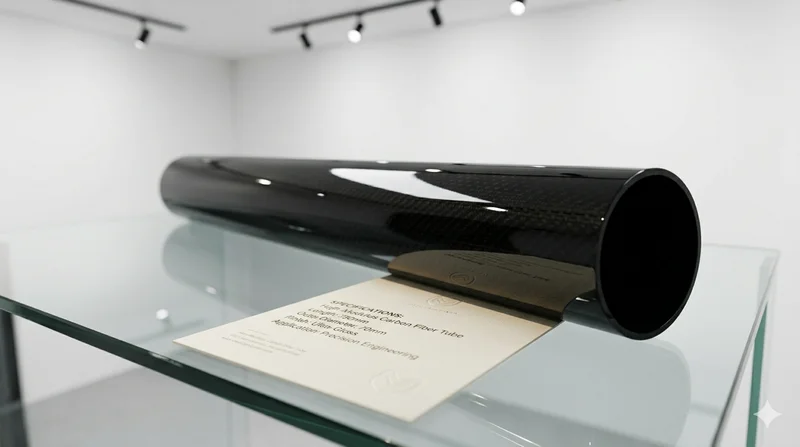
High Modulus Round Carbon Fiber Tube — M40
High modulus round tube manufactured with M40 grade fiber (tensile modulus 400 GPa). Designed for applications where maximum stiffness-to-weight ratio is critical, such as optical systems, precision machinery, and aerospace structures.
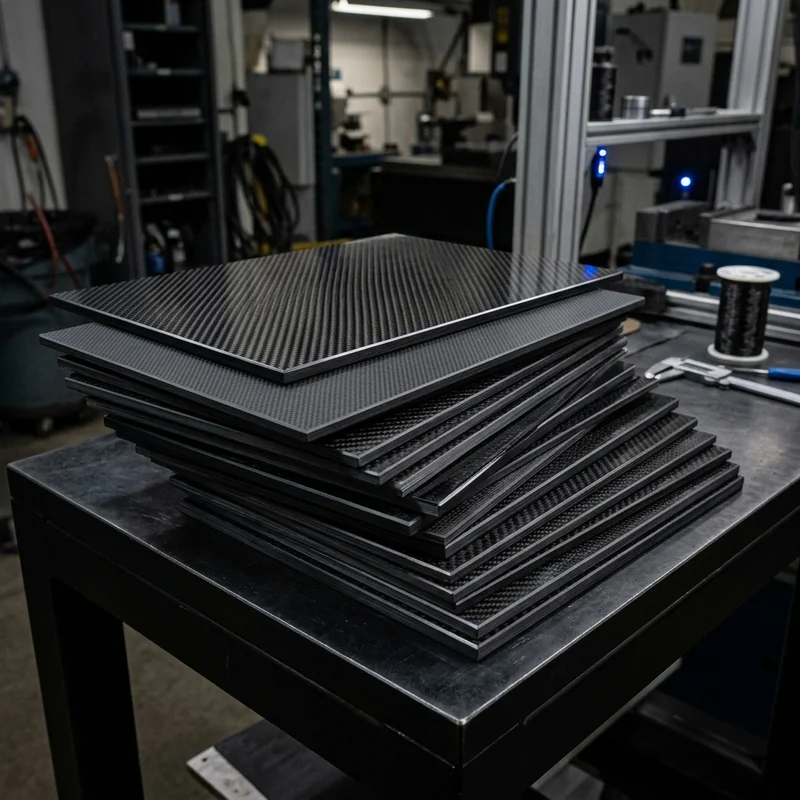
Carbon fiber standard plate-3k stripe
Lightweight, ultra-rigid standard sheets for drone fuselages, robot housings, facades and structural applications.

Carbon Fiber Plate — 3K Twill T700 1.5mm
Thin 1.5mm carbon fiber plate with 3K twill weave surface. Lightweight and stiff, commonly used for covers, panels, drone bodies, and applications requiring a premium aesthetic appearance.

Square Carbon Fiber Tube — 3K Twill T700
Square cross-section carbon fiber tube manufactured with 3K twill weave for torsional strength. Preferred for structural frames, trusses, and support columns where rectangular geometry offers design flexibility.

Carbon Fiber Plate — 3K Twill T700 3.0mm
Medium-thickness 3.0mm carbon fiber plate offering significantly higher load capacity while maintaining attractive 3K twill finish. Suitable for structural brackets, reinforcement plates, and load-bearing panels.