
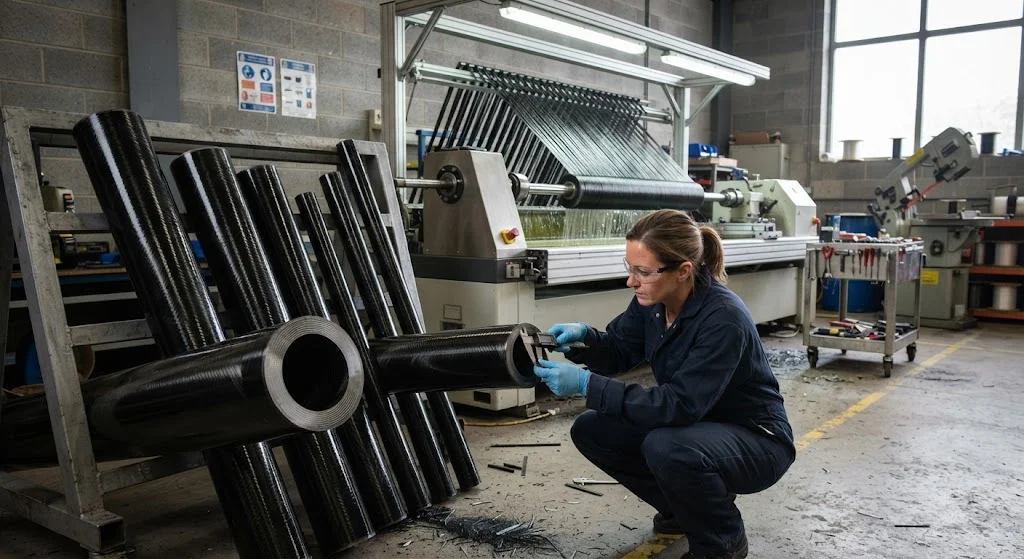
Choosing the right filament wound epoxy tubes suppliers is one of the most consequential procurement decisions for engineering teams building lightweight structural systems, because the tube is usually the structural backbone of the final product. A filament wound epoxy tube carries bending loads in
Introduction
Choosing the right filament wound epoxy tubes suppliers is one of the most consequential procurement decisions for engineering teams building lightweight structural systems, because the tube is usually the structural backbone of the final product. A filament wound epoxy tube carries bending loads in a robotic arm, contains pressure in a hydraulic liner, or forms the fuselage spine of a composite drone. The manufacturing process winds continuous carbon fiber or glass fiber tows onto a rotating mandrel at programmable angles, then cures the epoxy matrix to create a seamless tube with high specific strength and excellent fatigue life. Because winding angle, fiber volume fraction and resin system can all be tuned, suppliers can tailor stiffness, burst pressure and torsional performance to a specific application. This article explains how filament wound epoxy tubes are manufactured, which specifications to provide, how to audit supplier quality systems, and what drives bulk pricing — so that procurement and engineering teams can shortlist suppliers with confidence.
How Filament Wound Epoxy Tubes Are Manufactured
Filament winding begins with a dry fiber tow that passes through a resin bath before being deposited onto a rotating mandrel. The delivery carriage travels along the mandrel axis while the mandrel spins, laying fiber at a controlled helical angle. After enough passes build the required wall thickness, the wound package is cured — typically in an oven or with resistance heating — and the mandrel is extracted for reuse. Three winding patterns dominate tube production:
- Helical winding: fibers are laid at ±15° to ±55° from the tube axis, producing high bending and torsional stiffness with moderate hoop strength. Most structural tubes use helical layers as the primary load path.
- Hoop winding: fibers are wrapped close to 90° from the axis, adding circumferential strength that resists internal pressure and improves crush resistance.
- Combined patterns: suppliers alternate helical and hoop layers, allowing stiffness, pressure rating and buckling resistance to be balanced for the exact duty cycle of the part.
Quality-focused FW tube manufacturers control three variables that determine finished performance: tow tension, resin bath temperature and winding angle accuracy. Computer-controlled winders with servo-driven carriages hold angle within ±0.5°, while resin content is managed to a target fiber volume fraction of 55-65 percent for carbon and 60-70 percent for glass. These process controls are the first thing a buyer should verify during a supplier audit.
What to Specify When Choosing Filament Wound Epoxy Tubes Suppliers
The quality of your specification determines the quality of the quote. Filament wound epoxy tubes suppliers can produce almost any cylindrical geometry, but every requirement that is left vague will be resolved in the supplier's favor. A complete inquiry should include at minimum:
- Dimensions and tolerances: inner and outer diameter, wall thickness, length, and the tolerance class required — rolled tolerances run ±0.2-0.5 mm, while ground and machined tubes hold ±0.05 mm.
- Fiber and resin system: carbon (T300, T700, T800 or intermediate-modulus grades) or E-glass and S-glass; epoxy type (bisphenol A/F, toughened, or flame-retardant variants).
- Winding angle and stacking sequence: describe the helical angle and layer pattern, or provide the load case and let the supplier design the laminate.
- Surface finish and end treatment: as-wound, sanded, painted, or machined ends with toleranced squareness and chamfers.
- Test requirements: burst pressure, stiffness, or dielectric strength values the tube must meet, plus any NDT requirement.
Suppliers that respond with a written specification sheet, a proposed layup and a test plan are signaling mature engineering capability; suppliers that quote from a price list alone are not.
Typical Specifications and Mechanical Data
The table below shows representative properties of filament wound epoxy tubes at two quality tiers. Values are indicative; a certified supplier will provide test data for its specific fiber-resin combination.
| Property | Commercial grade (E-glass/epoxy) | Aerospace grade (T700 carbon/epoxy) |
|---|---|---|
| Tensile strength (0°) | 500-900 MPa | 1,600-2,200 MPa |
| Tensile modulus (0°) | 30-45 GPa | 120-140 GPa |
| Fiber volume fraction | 55-62% | 58-65% |
| Density | 1.9-2.1 g/cm³ | 1.5-1.6 g/cm³ |
| Burst pressure (50 mm OD, 2 mm wall) | 30-50 MPa | 70-110 MPa |
| Dimensional tolerance | ±0.3-0.5 mm | ±0.05-0.1 mm |
Carbon fiber tubes deliver roughly three times the stiffness of glass at two-thirds the density, which is why most structural applications specify carbon. The trade-off is price: carbon fiber tow costs 15-40 USD per kilogram against 1.5-3 USD for E-glass, and the gap shows up directly in tube pricing.
Certification and Quality Assurance
Certification separates professional filament wound epoxy tube suppliers from low-cost workshops. A defensible supplier should hold ISO 9001 registration, provide material certificates with batch traceability from tow supplier to finished tube, and document its winding parameters for every production lot. For demanding applications, look for additional evidence:
- Material certificates: tow supplier, lot number, resin batch, and cure cycle records for each tube or lot.
- NDT capability: ultrasonic or eddy-current inspection for porosity and delamination, plus proof testing for pressure-rated tubes.
- Dimensional inspection: CMM or micrometer records confirming that diameters, wall thickness and concentricity meet the agreed tolerance class.
- Process change control: written notification when the supplier changes tow brand, resin system or winding machine.
Ask for a sample audit pack — one lot's full documentation — before placing a production order. The depth of the response tells you more about the supplier than any brochure.
Bulk Purchasing from Filament Wound Epoxy Tubes Suppliers: MOQ, Lead Times and Pricing
Volume purchasing changes the economics of filament wound epoxy tubes significantly, and the pricing structure varies by supplier type. A specialist composite tube supplier with in-house winding machines typically quotes tiered pricing that drops 15-30 percent as order volume moves from single pieces to annual contracts, because set-up time and mandrel changeovers are amortized over more parts. An epoxy wound tube supplier focused on stock sizes can offer off-the-shelf pricing with lead times of 1-2 weeks, while fully custom tubes with new tooling run 4-8 weeks including first article approval. When negotiating a bulk contract, clarify four items in writing:
- Minimum order quantity per diameter and layup, and whether mixed sizes count toward the MOQ.
- Lead time stability — whether the quoted time is per order or per scheduled production slot.
- Tooling ownership and cost — mandrel or winding fixture charges and who retains the tooling after the project.
- Quality documentation — whether certificates are included per lot or invoiced separately.
Annual-volume contracts with a certified supplier usually beat spot buying from multiple vendors, because the supplier can reserve capacity and standardize the layup, reducing both unit cost and incoming inspection burden.
Frequently Asked Questions
What is the difference between filament wound and roll-wrapped composite tubes?
Roll wrapping (also called sheet rolling) wraps a prepreg sheet around a mandrel and cures it under pressure, producing tubes with a seam line and lower fiber volume fraction — typically 50-60 percent — with fibers running mostly in the axial and circumferential directions. Filament winding lays continuous tows under tension at programmed angles, eliminating the seam and achieving fiber volume fractions of 55-65 percent with fully controlled helical and hoop layers. Filament wound tubes therefore offer higher strength, better fatigue life and seamless construction, while roll-wrapped tubes are cheaper for short, thin-wall runs where the performance gap is not critical.
How do I verify that a filament wound epoxy tube supplier actually meets its claimed specifications?
Three checks cover most of the risk. First, request test certificates from recent production lots and compare the numbers against the claimed specification — consistent values across multiple lots indicate a stable process. Second, ask for a destructive or proof test on a sample from your own batch; burst and stiffness testing is inexpensive relative to the cost of a field failure. Third, audit the process records: winding angle, tow tension, resin content and cure cycle data should be documented per lot. If a supplier cannot produce these records, treat its data sheet as marketing material rather than engineering data.
What lead time should I expect for custom filament wound epoxy tubes?
For a custom tube with existing tooling, most certified suppliers quote 2-4 weeks from order confirmation. New tooling — a custom mandrel diameter or a winding fixture — adds 2-4 weeks for design and fabrication, so a fully new tube typically lands at 4-8 weeks including first article approval. Stock sizes from a supplier with standard tooling can ship in 1-2 weeks. During peak demand periods, capacity reservations for annual contracts can shorten effective lead time considerably.
Conclusion
Filament wound epoxy tubes suppliers differ far more than their price lists suggest. The differentiating factors are process control — winding angle accuracy, tow tension and resin content — documentation discipline, and the willingness to publish real test data. For structural applications, carbon fiber filament wound tubes deliver roughly three times the stiffness of glass at two-thirds the density, and the premium over commercial grades is justified wherever fatigue life and weight matter. Shortlisting suppliers on specifications, certification evidence and bulk pricing structure, rather than on unit price alone, is the fastest route to a dependable supply chain.
Explore our range of carbon fiber fabrics, tows and prepregs for filament winding programs, or contact our engineering team to discuss tube specifications, material selection and qualification support for your next project.
Part of topic
Related Articles
- Carbon Fiber Supplies Near Me: Local Sourcing Without Compromising Spec
- Carbon Fiber for Sale: Online Platforms and Direct Sales Channel Comparison
- Carbon Fibre Suppliers UK: Post-Brexit Supply Chain Reorganization
- Carbon Fiber Suppliers Canada: North American Supply Chain Diversification Options
- Carbon Fiber Car Parts Manufacturers: IATF 16949 Certification and Mass Production Capability
- Carbon Fiber Tube Manufacturers: Procurement Guide for Engineering Buyers
Interested in Custom Carbon Fiber Products?
Contact our team for competitive pricing and technical specifications.
Get a QuoteRelated Products
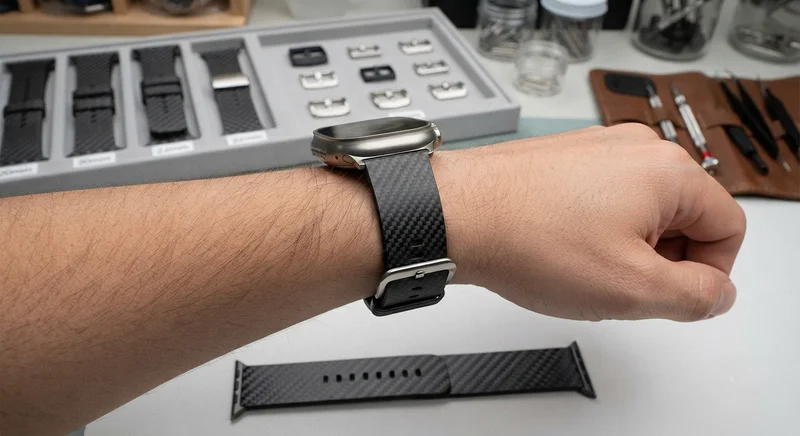
Carbon Fiber Watch Strap — 20mm/22mm Quick-Release
Premium carbon fiber watch strap with quick-release spring bars. Woven from T700 3K twill prepreg with a flexible resin system that conforms to the wrist. Available in 20mm and 22mm lug widths, compatible with Apple Watch, Samsung Galaxy Watch, Garmin, and traditional mechanical watches. Features a stainless steel buckle and carbon fiber keepers. The natural weave pattern makes each strap unique.
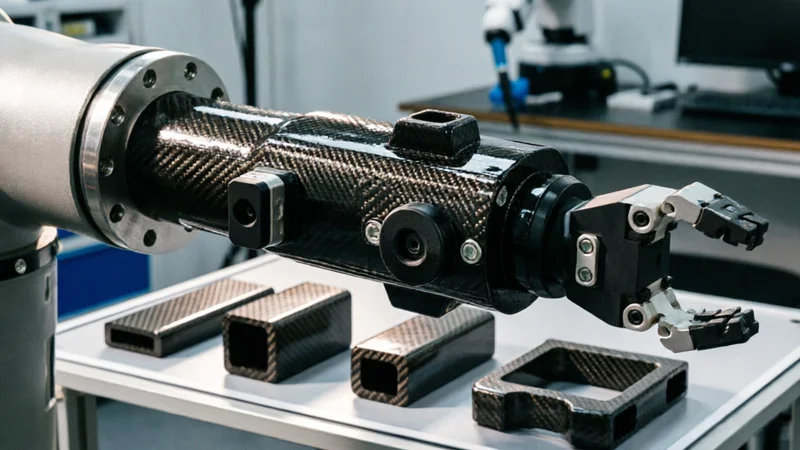
Carbon Fiber Robot End Effector Link — Custom Shape & Sensor Integration
Custom-shaped carbon fiber end effector links for robotic arms. Designed for automation integrators and research labs requiring lightweight, rigid connections between the robot wrist and gripper/tool. Can incorporate sensor mounting bosses, cable routing channels, and quick-change interfaces.

Custom Carbon Fiber Musical Instrument Parts
Carbon fiber components for musical instrument manufacturing offering superior dimensional stability, low weight, and consistent acoustic properties. We produce carbon fiber bows, guitar necks, violin chin rests, drum shells, and wind instrument bodies. Carbon fiber instruments are immune to humidity changes and temperature fluctuations that affect wooden instruments.
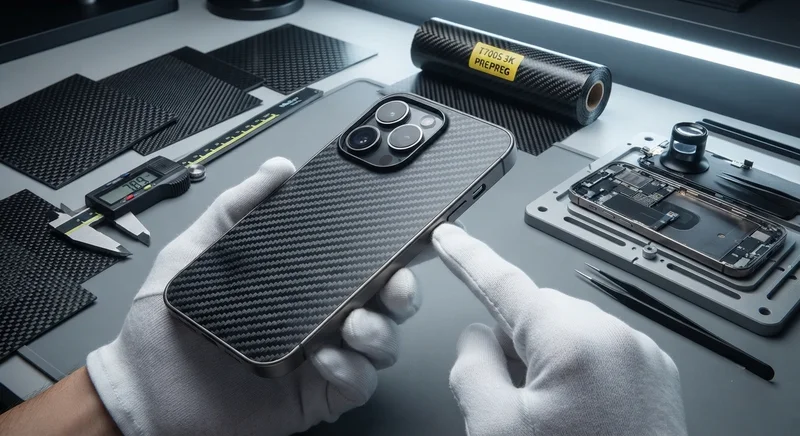
Carbon Fiber Phone Case — Ultra-Thin 3K Twill T700
Precision-molded carbon fiber phone case made from T700 3K twill prepreg. Ultra-thin 0.8mm profile adds minimal bulk while providing excellent drop protection. The natural carbon fiber weave finish gives a premium aesthetic. Available for iPhone and Samsung Galaxy flagship models. OEM/ODM branding available for bulk orders.
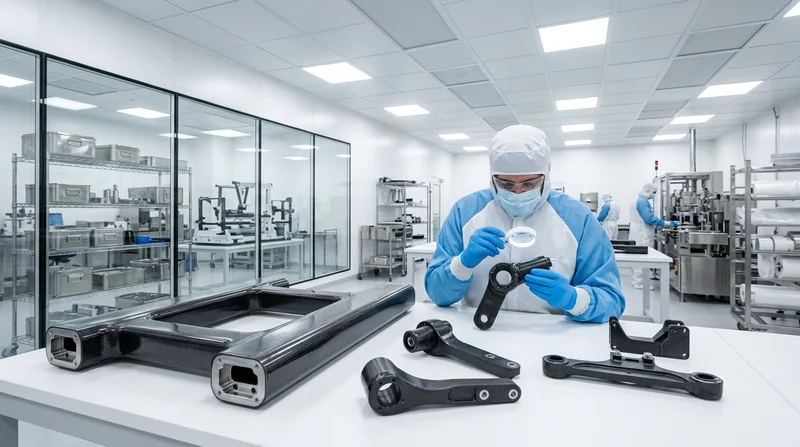
Custom Carbon Fiber Medical Device Components
Medical-grade carbon fiber components manufactured for imaging equipment, surgical instruments, and patient support systems. Carbon fiber's radiolucency (X-ray transparency) and high strength-to-weight ratio make it ideal for CT scanner beds, wheelchair frames, surgical robot arms, and MRI-compatible accessories. Biocompatible resin systems available.