
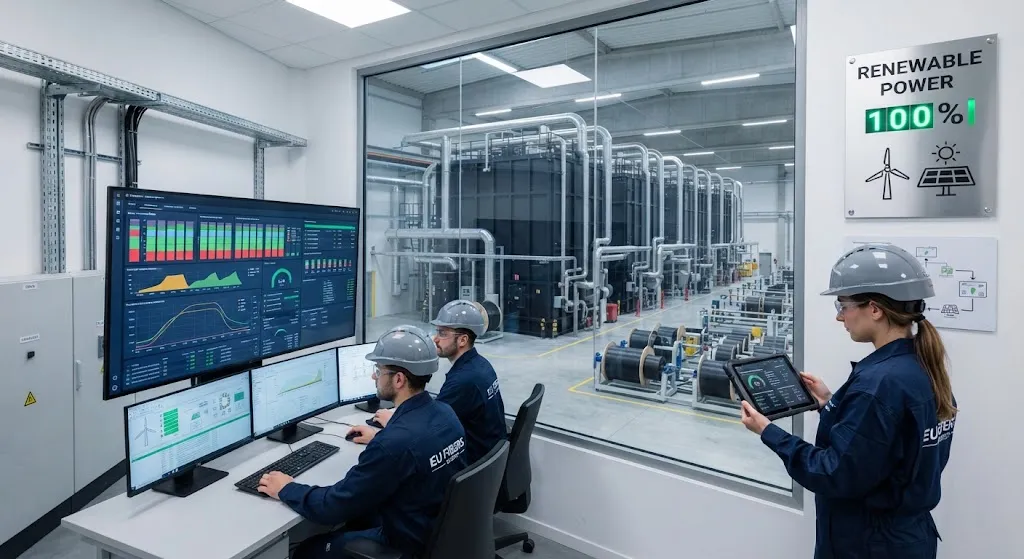
The European Union's Critical Raw Materials Act, in force since 2024, was written with metals and battery materials in mind — lithium, cobalt, rare earths. But its logic reaches far beyond mining, and carbon fiber has become one of the clearest industrial illustrations of how the regula
Introduction
The European Union's Critical Raw Materials Act, in force since 2024, was written with metals and battery materials in mind — lithium, cobalt, rare earths. But its logic reaches far beyond mining, and carbon fiber has become one of the clearest industrial illustrations of how the regulation reshapes advanced manufacturing. The Act's benchmarks are blunt: by 2030 the EU wants at least 10 percent of critical raw material extraction, 40 percent of processing, and 25 percent of recycling to happen inside the Union. Those numbers, applied to strategic advanced materials, create a policy environment in which domestic capacity is not just encouraged but effectively required for suppliers who want to serve European OEMs at scale.
This article examines what the Critical Raw Materials Act means for carbon fiber specifically: how its capacity incentives work, why energy cost has become the hidden variable, and what the Toray Hungary renewable-electricity program — announced with a 30 percent carbon reduction target — reveals about the direction of European production.
What the Act Incentivizes for Advanced Materials
The Critical Raw Materials Act operates through a mix of financing, permitting, and procurement pressure rather than direct production subsidies. Its instruments matter for carbon fiber because they change the payback math of European plants:
- Strategic Projects status: projects designated as strategic gain accelerated permitting, coordinated financing access, and priority in public procurement — a meaningful advantage for capital-intensive fiber lines.
- Diversified sourcing requirements: the Act caps dependence on any single third country for strategic materials, pushing supply chains to qualify multiple origins including European production.
- Recycling and circularity targets: minimum recycled-content expectations and improved waste reporting raise the value of recycling capacity and secondary feedstock.
- Member-state coordination: national support schemes aligned with the Act make state aid approval easier for domestic capacity projects, de-risking investment decisions.
The composite industry reads these mechanisms as a directional signal: European-based carbon fiber capacity will have regulatory tailwind that imported material lacks. That asymmetry matters most at the margin — when an OEM compares a domestic bid with an import bid, the domestic option now carries policy support that did not exist three years ago.
Energy Cost: The Hidden Variable in European Production
Carbon fiber production is exceptionally energy-intensive. Stabilization, carbonization, and surface treatment consume large amounts of electricity and heat, and depending on the energy mix, energy can represent 20-30 percent of total production cost. This is the structural disadvantage European producers have faced against Asian mills with access to coal-based power at industrial tariffs: raw energy cost has historically favored Asian locations. The energy share also scales with grade — high-modulus aerospace fiber, with its longer high-temperature processing, sits at the upper end of the range, which is precisely the segment Europe prioritizes.
| Cost Driver | Impact on Fiber Cost | European Position | Change Under the Act |
|---|---|---|---|
| Electricity for carbonization lines | High single-digit to low double-digit share | Historically above Asian benchmarks | Renewable PPAs narrow the gap |
| Process heat | Significant in stabilization and oxidation | Gas-dependent plants face price swings | Electrification and heat pumps reduce exposure |
| Carbon footprint compliance | Growing share via CBAM and buyer requirements | Low-carbon grid already an advantage | Becomes a pricing premium, not just a cost |
| Permitting and financing cost | Capital overhead on new lines | High, historically slow | Strategic Projects status accelerates and lowers it |
The table points to a subtle shift. Under the Critical Raw Materials Act, European energy cost is no longer evaluated as a pure cost line; it is evaluated together with carbon compliance value. A plant powered by renewable electricity produces fiber with a fraction of the carbon footprint of coal-powered equivalents, and as customers from wind, aerospace, and automotive increasingly require low-carbon materials, that footprint becomes a sellable premium rather than a penalty. In practical terms, the buyer pays once for the energy that enters the fiber, and again for the carbon that comes with it — so a low-carbon energy source acts on both terms of the equation at once.
The Toray Hungary Case: Renewable Power and the 30 Percent Target
Toray's Hungarian carbon fiber plant, producing aerospace-grade fiber, has become a working demonstration of this logic. The company announced a program to shift the plant's electricity supply to renewable sources, targeting an approximately 30 percent reduction in production-related CO2 emissions at the site. The program combines a renewable power purchase agreement with process improvements that reduce energy consumption per kilogram of fiber — attacking both sides of the emissions equation.
The significance is double. First, it shows that aerospace-grade European production can meaningfully cut carbon without sacrificing output or quality, which strengthens the case for domestic sourcing among OEMs with emission-reduction commitments. Second, it signals to the wider market that the EU policy environment rewards exactly this kind of investment: renewable-powered European fiber slots into the low-carbon supply story that wind-turbine and automotive buyers are paying for. A supplier without such a program is not necessarily uncompetitive today, but it is accumulating a structural disadvantage for the decade ahead, and the gap will widen as carbon reporting becomes mandatory across more customer segments from 2026 onward.
What This Means for Buyers and Suppliers
For European buyers, the practical implication is that procurement decisions now carry a carbon and policy dimension that the price sheet does not capture. Domestic or renewable-powered supply offers lower carbon footprint, reduced exposure to import duties and logistics disruption, and alignment with the emission-reduction targets many OEMs have signed. These benefits deserve a place in total-cost-of-ownership calculations, not just the per-kilogram price.
The comparison is straightforward in practice. An import bid may win on unit price while losing once carbon reporting, duty risk, and supply-chain emissions are priced in; a domestic bid may carry a higher invoice but shrink total compliance and logistics cost. Buyers who run both numbers side by side are consistently finding that the gap between import and European low-carbon supply is smaller than the price sheets suggest — and that it closes further each time energy or freight markets move.
For suppliers, the strategic response is clear: energy transition is becoming a market-access requirement in Europe, not a sustainability nicety. Plants that secure renewable power, document their footprint, and align with the Act's capacity and circularity expectations will capture the premium segment of European demand. Manufacturers evaluating where to place new capacity or how to position existing output should treat energy strategy and regulatory alignment as part of the same decision, because in the European procurement reality of 2026 and beyond, they are inseparable.
Frequently Asked Questions
Does the Critical Raw Materials Act directly list carbon fiber as a critical raw material?
Carbon fiber as a finished material is not on the Act's core critical raw materials list, which is oriented to ores and metals. However, the Act's principles — domestic capacity, diversified sourcing, recycling — apply to strategic advanced materials in practice, and European policy supports for low-carbon advanced manufacturing create direct benefits for domestic carbon fiber producers.
How much of carbon fiber production cost is energy?
Energy typically represents 20-30 percent of total production cost for carbon fiber, depending on the energy mix and the fiber grade. Aerospace-grade lines with longer carbonization cycles tend toward the higher end. This is why the shift to renewable power, and the associated carbon footprint, has become a decisive competitive variable for European producers.
Is the Toray Hungary renewable-power program a one-off or part of a broader trend?
It is part of a broader trend. Multiple European advanced-material producers are pairing renewable power purchase agreements with process energy improvements, driven by the same combination of regulatory pressure, buyer carbon requirements, and the Critical Raw Materials Act's capacity incentives. The Hungary program is notable mainly because it demonstrates the economics on aerospace-grade fiber, the segment where such transitions were long considered hardest.
Conclusion
The EU Critical Raw Materials Act has turned industrial policy into a competitive variable for carbon fiber. Domestic capacity carries regulatory tailwind, diversified sourcing is becoming a procurement requirement, and — through cases like Toray Hungary — renewable energy is emerging as the pivot on which European production can compete with low-cost Asian supply. The result is a European market where low-carbon, policy-aligned domestic fiber commands a structural premium.
For manufacturers evaluating material sourcing or capacity strategy in Europe, the practical first step is to add carbon footprint and regulatory alignment to the same decision sheet as price and lead time. Explore our carbon fiber product range or contact our technical team to discuss supply options that match European low-carbon and compliance requirements.
Part of topic
Related Articles
- Recycled Carbon Fiber Market Forecast 2030: Technology Maturity and Commercialization Path
- South Korea Carbon Fiber Market 2026: Hydrogen Economy and Shipbuilding Innovation
- Wind Turbine Blade Leading Edge Protection 2026: Polyurethane, Tape, and Metallic Shield Solutions
- China Carbon Fiber Overcapacity 2026: Price War Impact and Industry Consolidation
- India Carbon Fiber Market 2026: Wind Energy, Aerospace, and Defense Expansion
- PAN Precursor Market 2026: Acrylonitrile Supply and Carbon Fiber Cost Structure
Interested in Our Products?
Contact our team for competitive pricing and technical specifications.
Get a QuoteRelated Products
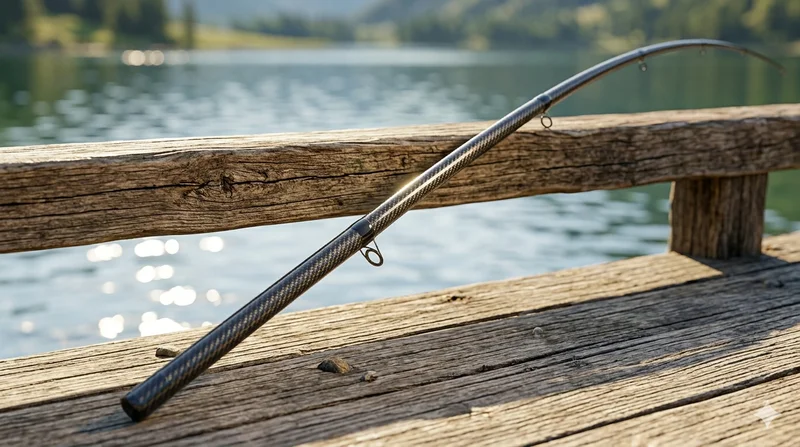
Carbon Fiber Fishing Rod Blank
High-quality carbon fiber fishing rod blank manufactured from multiple grades of Toray carbon fiber cloth. Available in a wide range of lengths, powers, and actions for freshwater and saltwater applications. Suitable for OEM rod building.

Carbon Fiber Plate — 3K Twill T700 3.0mm
Medium-thickness 3.0mm carbon fiber plate offering significantly higher load capacity while maintaining attractive 3K twill finish. Suitable for structural brackets, reinforcement plates, and load-bearing panels.
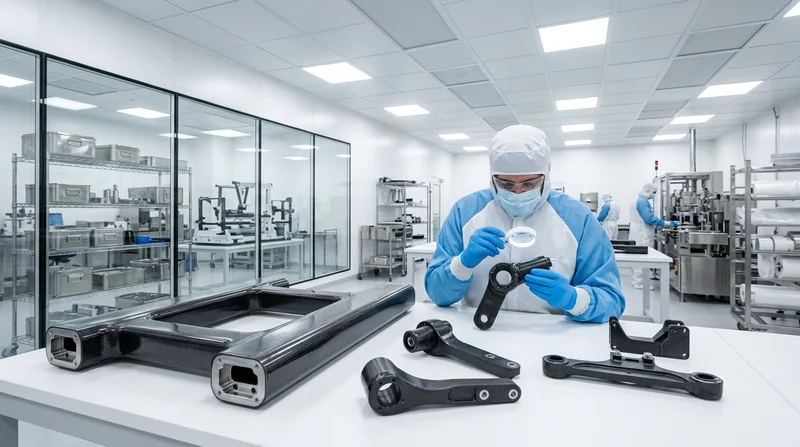
Custom Carbon Fiber Medical Device Components
Medical-grade carbon fiber components manufactured for imaging equipment, surgical instruments, and patient support systems. Carbon fiber's radiolucency (X-ray transparency) and high strength-to-weight ratio make it ideal for CT scanner beds, wheelchair frames, surgical robot arms, and MRI-compatible accessories. Biocompatible resin systems available.

Carbon Fiber Plate — 3K Twill T700 1.5mm
Thin 1.5mm carbon fiber plate with 3K twill weave surface. Lightweight and stiff, commonly used for covers, panels, drone bodies, and applications requiring a premium aesthetic appearance.

Square Carbon Fiber Tube — 3K Twill T700
Square cross-section carbon fiber tube manufactured with 3K twill weave for torsional strength. Preferred for structural frames, trusses, and support columns where rectangular geometry offers design flexibility.