
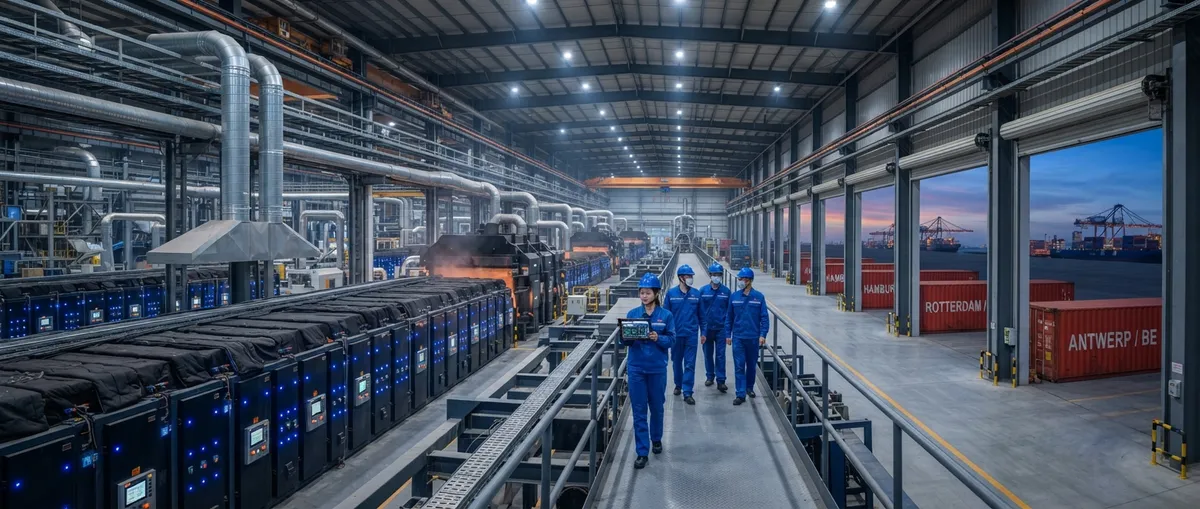
Analysis of EU import tariff structure for carbon fiber products under HS 6815.11 and 3926.90, the impact of the Carbon Border Adjustment Mechanism (CBAM) effective 2027, compliance cost projections for Chinese and Asian exporters, and strategic recommendations for supply chain restructuring.
Introduction
The European Union is the world's second-largest market for carbon fiber composite products, importing approximately 1.8 billion euros worth of carbon fiber materials and semi-finished goods annually. For Asian exporters - particularly Chinese manufacturers who now account for 34% of global carbon fiber production capacity - understanding the evolving EU tariff regime and the incoming Carbon Border Adjustment Mechanism (CBAM) is essential for maintaining competitive access to this critical market.
This article provides a detailed analysis of current EU import tariffs on carbon fiber products, the phased implementation of CBAM through 2027, projected compliance costs, and strategic implications for supply chain configuration.
Current EU Tariff Structure for Carbon Fiber Products
Carbon fiber materials imported into the EU fall under several Harmonized System (HS) codes, each with distinct Most-Favored-Nation (MFN) tariff rates and preferential rates under various trade agreements:
| HS Code | Product Description | MFN Rate | CN/Japan Rate | Korea FTA Rate |
|---|---|---|---|---|
| 6815.11.00 | Carbon fibers and articles thereof | 3.7% | 3.7% | 0% |
| 3926.90.92 | Articles of plastics, including CFRP parts | 6.5% | 6.5% | 0% |
| 7019.40.00 | Woven carbon fiber fabrics | 5.2% | 5.2% | 0% |
| 3801.90.00 | Carbon fiber prepregs and intermediates | 4.0% | 4.0% | 0% |
| 8803.30.00 | Aerospace-grade CFRP components | 2.7% | 2.7% | 0% |
Chinese exporters face the standard MFN rates with no preferential trade agreement in place. South Korean exporters benefit from zero duty under the EU-Korea FTA, giving them a 3.7-6.5% price advantage over Chinese competitors. The EU-Vietnam FTA similarly eliminates duties for Vietnamese carbon fiber processors, further intensifying competition for Chinese exporters.
CBAM: Mechanism and Timeline
The Carbon Border Adjustment Mechanism, adopted as part of the EU's Fit for 55 legislative package, will impose a carbon price on imported goods equivalent to the EU Emissions Trading System (ETS) carbon price. For carbon fiber manufacturers, this represents a significant new compliance cost because carbon fiber production is energy-intensive, requiring 150-300 kWh per kilogram of fiber produced.
The phased implementation timeline is as follows:
- October 2023 - December 2025: Transitional period - reporting obligations only, no financial payments
- January 2026 - December 2026: Phase 1 - 25% of full CBAM liability applied
- January 2027: Full CBAM implementation - 100% liability, free ETS allowances phased out
- 2027-2030: Gradual expansion of product scope and embedded emissions methodology refinement
CBAM Cost Projections for Carbon Fiber Exporters
The embedded carbon intensity of carbon fiber production varies significantly by manufacturing process and energy source:
| Production Route | Energy Source | Emissions (tCO2e/t fiber) | CBAM Cost at 90 euros/t (euros/t fiber) |
|---|---|---|---|
| PAN-based (coal power) | China grid average | 35-42 | 3,150-3,780 |
| PAN-based (gas power) | US/European grid | 22-28 | 1,980-2,520 |
| PAN-based (hydro/nuclear) | Low-carbon grid | 12-16 | 1,080-1,440 |
| RTM/composite molding | China grid average | 8-12 | 720-1,080 |
| Recycled carbon fiber | Any source | 2-5 | 180-450 |
For a Chinese PAN-based carbon fiber exporter selling at 25 euros/kg FOB, the estimated CBAM cost of 3.15-3.78 euros/kg at full implementation represents a 12.6-15.1% additional cost burden on top of existing tariffs. This substantially erodes the cost advantage that Chinese manufacturers have traditionally held over European producers like SGL Carbon and Solvay.
Supply Chain Implications
The combined effect of MFN tariffs (3.7-6.5%) and full CBAM costs (projected 12-15%) could add 16-21% to the landed cost of Chinese carbon fiber in the EU market by 2027. This has several strategic implications for exporters:
- Manufacturing relocation: Several Chinese carbon fiber producers are evaluating the establishment of precursor production or conversion facilities in EU member states (particularly Hungary and Poland) to bypass tariffs and CBAM
- Energy transition investments: Fujian-based producers are investing in on-site renewable energy (solar + wind) to reduce the embedded carbon footprint of their fiber, targeting embedded emissions below 18 tCO2e/t by 2027
- Supply chain segmentation: Exporters are likely to segment production lines - low-carbon (hydro/solar-powered) lines for EU-bound product and standard lines for domestic and ASEAN markets
- Recycled content strategy: Incorporating 20-30% recycled carbon fiber content can reduce embedded emissions by 40-50%, substantially lowering CBAM liability. Companies like Gen 2 Carbon and ELG Carbon Fibre are scaling rCF capacity to meet this demand
- Carbon credits and offsets: Some exporters are pre-purchasing EU ETS allowances or Verified Carbon Standard credits to hedge against rising CBAM costs
CBAM Compliance Requirements
Exporters must meet specific documentation and verification requirements to calculate their CBAM liability accurately:
- Embedded emissions declaration: Quarterly reporting of direct (Scope 1) and indirect (Scope 2) emissions associated with the manufacturing process, calculated per verified methodology
- Third-party verification: Emissions data must be verified by an accredited third-party verifier, adding 15,000-30,000 euros annually in compliance overhead
- CBAM certificate purchase: Importers must purchase CBAM certificates at the prevailing EU ETS auction price (projected 80-120 euros/tCO2e by 2027)
- Default value penalty: If an exporter cannot provide verified emissions data, a default value of 1.5x the EU ETS benchmark will be applied, potentially doubling the CBAM cost for Chinese coal-dependent producers
Strategic Recommendations
For Asian carbon fiber exporters serving the EU market, the following strategies are recommended to mitigate tariff and CBAM impacts:
- Begin embedded emissions monitoring now to establish baseline data before the reporting obligation becomes a financial liability
- Invest in on-site renewable energy capacity or Power Purchase Agreements (PPAs) to reduce Scope 2 emissions intensity
- Develop recycled carbon fiber product lines specifically for the EU market to leverage the significantly lower CBAM burden on rCF
- Explore joint venture partnerships with EU-based composite processors to share CBAM liability and access preferential HS classification
- Engage with EU importers to structure CBAM cost-sharing arrangements that maintain competitive pricing
Conclusion
The combination of existing MFN tariffs and the full implementation of CBAM in 2027 will structurally alter the cost competitiveness of carbon fiber imports to the European Union. Chinese exporters face a potential 16-21% aggregate cost disadvantage versus FTA-benefiting competitors. However, proactive investments in low-carbon production capacity, recycled fiber technology, and emissions monitoring infrastructure can substantially mitigate these costs. The next 18 months are a critical window for strategic positioning, as the transitional reporting period provides valuable data for optimizing compliance strategies before full financial liability takes effect in 2027.
FAQ
What is the current tariff rate for Chinese carbon fiber exported to the EU?
Under HS code 6815.11.00 (carbon fibers and articles thereof), Chinese exporters pay the MFN rate of 3.7%. For fabricated CFRP parts under HS 3926.90.92, the rate is 6.5%. There is no preferential FTA rate for China. South Korean exporters pay 0% under the EU-Korea FTA.
When does the full CBAM take effect and what will it cost?
Full CBAM implementation begins January 1, 2027, when importers must purchase certificates covering 100% of embedded emissions. At a projected EU ETS price of 90 euros/tCO2e, Chinese coal-based carbon fiber could face an additional 3,150-3,780 euros per metric ton of fiber, representing roughly 13-15% of the product value.
Does CBAM apply to semi-finished composites or only raw carbon fiber?
CBAM currently covers raw carbon fiber and precursor materials under its product scope. Semi-finished CFRP products (prepregs, fabric) are partially covered, while fully finished composite parts may fall under downstream industrial product categories whose inclusion is scheduled for review during the 2027-2030 expansion phase.
Can using recycled carbon fiber reduce CBAM costs?
Yes, significantly. Recycled carbon fiber has embedded emissions of only 2-5 tCO2e per ton compared to 35-42 tCO2e for virgin coal-based fiber. This could reduce CBAM cost from approximately 3,600 euros/t to under 450 euros/t at 90 euros/tCO2e pricing.
What happens if an exporter fails to provide verified emissions data?
If no verified data is available, CBAM requires the use of default values set at 1.5 times the EU ETS benchmark for that product category. For coal-based carbon fiber, this would nearly double the estimated CBAM cost, making it critical for exporters to invest in emissions monitoring and third-party verification.
Part of topic
Related Articles
- Recycled Carbon Fiber Market Forecast 2030: Technology Maturity and Commercialization Path
- South Korea Carbon Fiber Market 2026: Hydrogen Economy and Shipbuilding Innovation
- Wind Turbine Blade Leading Edge Protection 2026: Polyurethane, Tape, and Metallic Shield Solutions
- China Carbon Fiber Overcapacity 2026: Price War Impact and Industry Consolidation
- India Carbon Fiber Market 2026: Wind Energy, Aerospace, and Defense Expansion
- PAN Precursor Market 2026: Acrylonitrile Supply and Carbon Fiber Cost Structure
Interested in Our Products?
Contact our team for competitive pricing and technical specifications.
Get a QuoteRelated Products
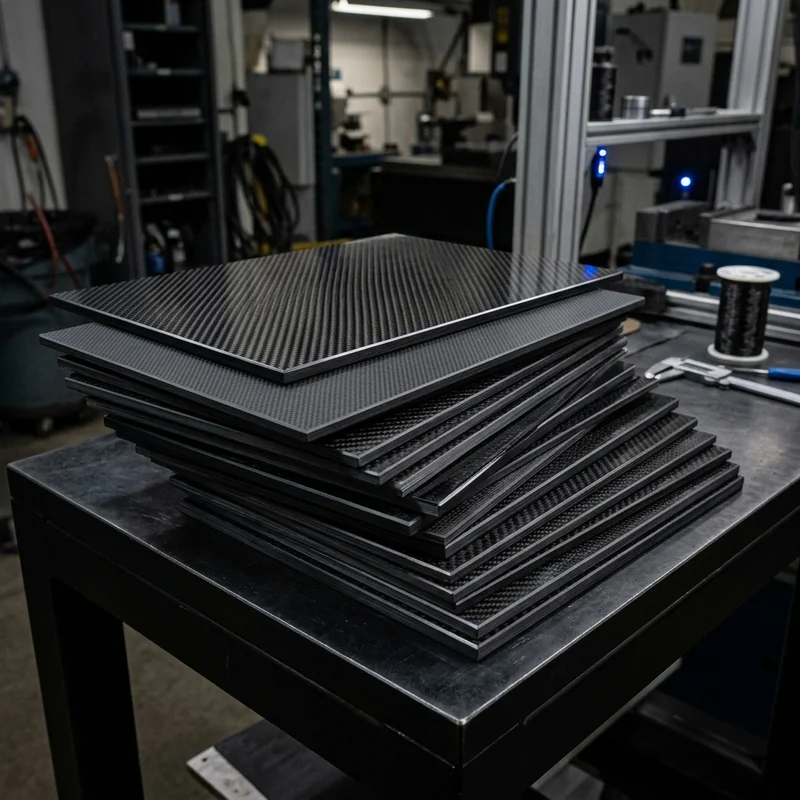
Carbon fiber standard plate-3k stripe
Lightweight, ultra-rigid standard sheets for drone fuselages, robot housings, facades and structural applications.
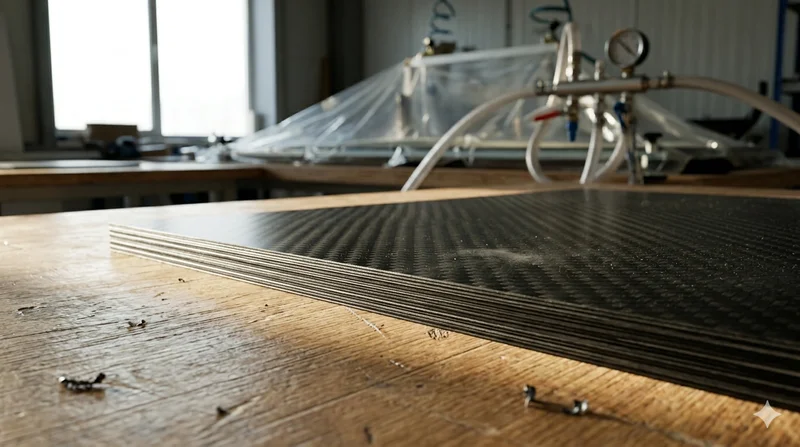
Carbon Fiber Plate — 3K Twill T700 3.0mm
Medium-thickness 3.0mm carbon fiber plate offering significantly higher load capacity while maintaining attractive 3K twill finish. Suitable for structural brackets, reinforcement plates, and load-bearing panels.

Carbon Fiber Plate — 3K Twill T700 1.5mm
Thin 1.5mm carbon fiber plate with 3K twill weave surface. Lightweight and stiff, commonly used for covers, panels, drone bodies, and applications requiring a premium aesthetic appearance.
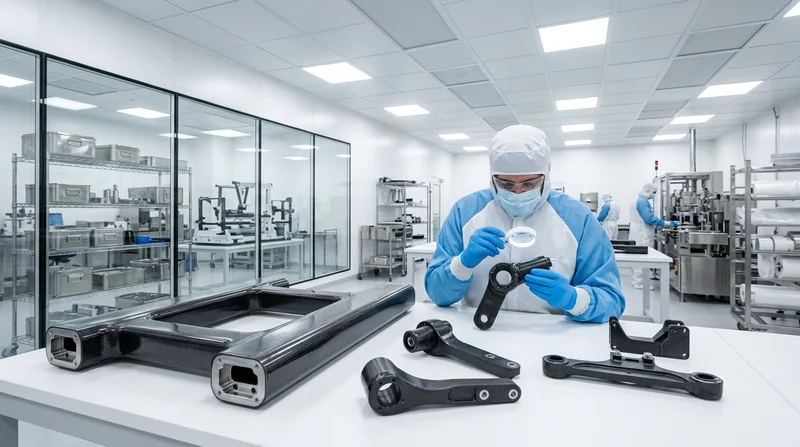
Custom Carbon Fiber Medical Device Components
Medical-grade carbon fiber components manufactured for imaging equipment, surgical instruments, and patient support systems. Carbon fiber's radiolucency (X-ray transparency) and high strength-to-weight ratio make it ideal for CT scanner beds, wheelchair frames, surgical robot arms, and MRI-compatible accessories. Biocompatible resin systems available.
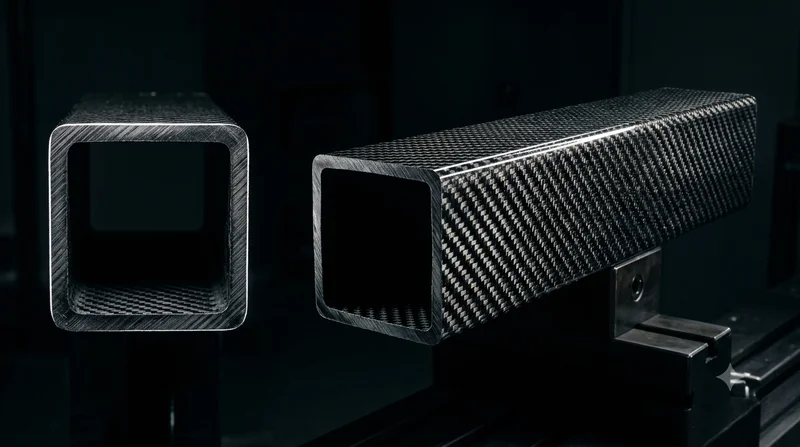
Square Carbon Fiber Tube — 3K Twill T700
Square cross-section carbon fiber tube manufactured with 3K twill weave for torsional strength. Preferred for structural frames, trusses, and support columns where rectangular geometry offers design flexibility.