
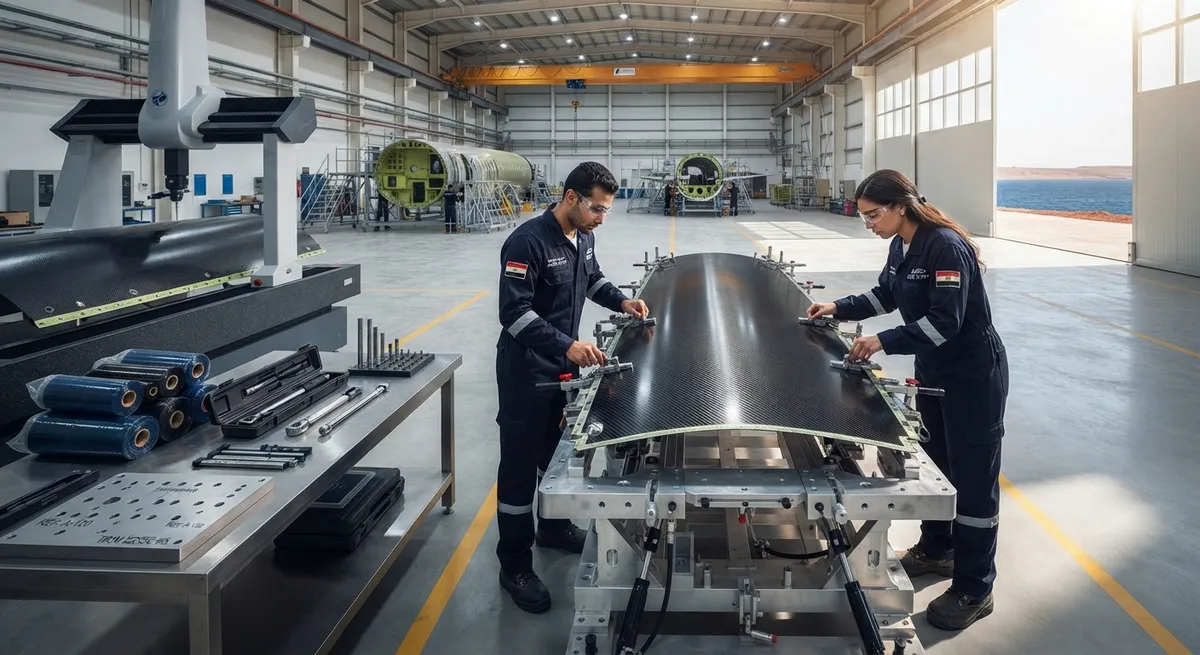
Egypt's carbon fiber market is one of the most strategically positioned growth stories in the broader Middle East and North Africa (MENA) region in 2026. The country combines a continental manufacturing base, a government that has turned infrastructure megaprojects into a national brand
Introduction
Egypt's carbon fiber market is one of the most strategically positioned growth stories in the broader Middle East and North Africa (MENA) region in 2026. The country combines a continental manufacturing base, a government that has turned infrastructure megaprojects into a national brand, and the Suez Canal — the single most important maritime chokepoint on the planet. For carbon fiber producers and component suppliers, Egypt is no longer a peripheral market to monitor; it is a demand node with compounding growth, a deep-water logistics corridor that reaches Europe in days, and a cost structure that makes it an attractive nearshoring partner for European OEMs.
Egypt's gross domestic product grew 4.2% in 2025 and the IMF projects 4.6-5.0% growth through 2027 as investment programs mature. The country has deliberately pushed industrial policy toward aerospace, water, energy, and automotive manufacturing. This article examines the three pillars most likely to convert into carbon fiber demand — aerospace assembly, desalination-driven water infrastructure, and Suez Canal-adjacent logistics and manufacturing — then outlines a practical sourcing strategy for B2B buyers.
The Aerospace Assembly Cluster: A Continental Gate
Egypt has actively built an aerospace cluster that serves as the airframe assembly entry point for the Arab world. National programs have centered on light military transport and training aircraft, advanced composite rotorcraft, and increasingly civil aviation subassembly. The country hosts aerospace engineering schools, maintenance and overhaul facilities, and a growing cadre of composite layout technicians.
- Aircraft structural subassemblies: Carbon fiber composite flight surfaces, control surface skins, and interior panels specified for regional and military aircraft programs serve both local assembly and distributed manufacture across the Gulf.
- Rotorcraft and UAV structures: Light helicopter tail booms and fixed-wing drone structures that rely on carbon fiber's low weight and stiffness-to-strength for endurance and ferry range.
- Aerospace interiors and seats: Composite seat frames, overhead bin structures, and galley components for regional carriers and aftermarket refurbishment programs.
- Tooling and jigs: Dimensionally stable carbon fiber tooling plates and drill jigs used in aerospace assembly, where coefficient of thermal expansion (CTE) performance matters more than cost.
Because Egypt does not yet produce PAN precursor or carbon fiber at scale, virtually all aerospace-grade carbon fiber and prepreg is imported. This creates the same dynamic seen across the Gulf region: assembly and subassembly expertise is growing locally while raw materials are sourced from overseas manufacturers. Suppliers that can offer aerospace-grade, documented material typologies and fast logistics to the Mediterranean become preferred partners.
Desalination Infrastructure: The Hidden Water Composites Engine
Egypt runs a national water strategy built on desalination. Low rainfall and heavy reliance on the Nile place the country among the world's most water-stressed states, and successive phases of desalination plants are being built along the Mediterranean and Red Sea and in coastal industrial zones. This infrastructure consumes carbon fiber in ways that are easy to underestimate because water equipment is not the most obvious home of advanced composites.
| Water Infrastructure Segment | Egypt Deployment | Carbon Fiber/Composite Applications | Est. Composite Content (US$ M) |
|---|---|---|---|
| Seawater desalination (SWRO) | Multiple plants feeding new industrial cities | Pressure vessel shell wraps, high-pressure pump bodies, membranes pressure housings | 60-130 |
| Water distribution & conveyance | National pipeline renewal program | CFRP pipes, large-diameter composite couplings, trenchless liners | 25-60 |
| Wastewater treatment expansion | Coastal cities and tourism zones | Grating, tank lids, corrosion-resistant covers | 8-20 |
| Industrial process water | Petrochemical and new cement plants | CFRP pressure vessels and sacrificial structural parts | 5-15 |
Reverse osmosis desalination is the single most concrete buyer of carbon fiber composites in the water space. Pressure vessels in high-pressure SWRO racks are frequently manufactured as glass or carbon fiber reinforced filament-wound structures because they must contain feed pressures in excess of 60 bar without corrosion and while maintaining fatigue life over decades of operation. Egypt's buildout will not merely continue — as new industrial cities are dry-tested and seeded with population, the number of in-service vessels grows, and the aftermarket drivers demand from upgrades to high-rejection carbon composite vessels.
Suez Canal and Logistics Hub
The Suez Canal is a demand multiplier for carbon fiber in two indirect ways: the first is the volume of maritime-adjacent components, and the second is the attractiveness of the corridor as a manufacturing location. Ships passing through need repair parts, and the canal's unique positioning between Europe and Asia makes it an ideal point to consolidate carbon fiber distribution for the whole region.
- Marine structures and ferry replacement: Roof and deck composite panels for the canal's own ferry fleet — carbon fiber produces maintenance-free, corrosion-free decks that survive humid marine air without repainting.
- Crane and port equipment: Counterweight-free composite crane sections, port equipment covers, and lightweight superstructure elements that reduce energy consumption in a logistics corridor operating at maximum throughput.
- Anchored equipment frames: Energy industry structural frames and offshore wind support components in the port zones clustering Suez logistics and energy handling.
- Channel maintenance finds and survey tools: Lightweight towed sensor frames and maintenance vehicles that benefit from reduced weight at the logistics ports.
Beyond the water itself, the Suez corridor touches the carbon fiber value chain through import aggregation. Because canal traffic is dense, Egypt can become a regional warehouse for CFRP materials and components with a short lead-time reroute to Europe, the Levant, and the Gulf. This logic belies the assumption that a landlocked desert state has nothing to do with sea transit: the Canal is exactly why Egypt matters in the global chest of carbon fiber.
Supply Chain Structure and Sourcing Strategy
Egypt has no domestic PAN precursor capacity and no commercial-scale carbon fiber production as of 2026. All advanced fiber comes from overseas — Japan (Toray, Teijin, Mitsubishi), South Korea (Hyosung), China, and increasingly wider Gulf sourcing and European recyclers for secondary grades. Trade agreements including Egypt's relationships within the pan-Arab and common market build favorable tariffs for member-country and continental partners.
Two practical patterns define the B2B sourcing approach:
- Import finished components for local assembly: Because Egypt's base of specialized laminating, prepreg, dispensing, and autoclave conversion is still emerging, most buyers source advanced composite parts directly from overseas manufacturers and then perform secondary machining, assembly, and finishing near the Suez logistics corridor.
- Water-grade materials bypass a separate supply curve: Since desalination vessels and water infrastructure consume large amount of industrial-grade fiber at competitive price points, ESSA and EU-MENA suppliers with proven filament and pressure-vessel grades and CE/EU approvals do best.
Aerospace-grade, marine-grade, and industrial desalination-grade material offers a tri-sector portfolio for any could-be supplier — Egypt loads a balance of high-margin-mid-volume aerospace, weight-margin water, and a steady logistics backfill.
Frequently Asked Questions
Why is Egypt's carbon fiber market underdeveloped relative to the Gulf states?
Egypt's history concentrated government investment in food and water security rather than luxury and aerospace. The Gulf states attracted private investment into imaging and aviation more quickly because of buoyant energy export revenue. Now Egypt is compressing that path: aerospace assembly and desalination push are being built to create a cheaper, geographically larger production base in the Mediterranean basin than most Gulf locations, with a logistics canal advantage the Gulf does not have. The direction of travel will be toward a more distributed, cheaper, larger-volume market.
Which carbon fiber applications offer the most sustainable and fastest generation demand in Egypt?
Not the aerospace sector, which is small. The most durable and growing driver is water infrastructure — specifically pressure vessels and composite pipes for desalination and national pipeline work. This is recurring demand; every plant built becomes an aftermarket for vessel liners, comparison lives, and component spares. The logistics-motivated industrial (port equipment, marine deck plating) adds a steady second- and third-tier load. Aerospace is the brand gateway but water and logistics supply the volume.
What are Europe's and MENA-scale requirements if I want to supply carbon fiber to Egypt?
The gating requirements are typical for the region: certified grade documentation (aerospace if a is aerospace), traceability of raw PAN fiber that differentiates virgin from recycled, and EU and common-market import declarations in the correct form so the destination clears. Water-grade carbon fiber for desalination pressure vessels is fast-growing and currently holds the least sovereign structural constraint, so it is the fastest corridor for a new B2B supplier. For aerospace, expect quality certification from regional aerospace agencies — not prescriptive product licensing necessarily, but good traceability and material ANC that satisfies the technical target customers.
Conclusion
Egypt's carbon fiber market sits at the convergence of three structural strategies: a rising aerospace assembly cluster that brands its maritime manufacturing, a water desalination program that turns into a steady industrial engine of advanced composite vessels and pipelines, and a Suez logistics advantage that makes it an efficient corridor to Europe, Gulf and Africa. With no domestic fiber production, essentially every kilogram consumed is imported, opening a continuous and accessible market for disciplined suppliers.
For buyers qualifying Egyptian sourcing or suppliers mapping the MENA demand, the strategic play is to combine imported certified carbon fiber materials with local subassembly in the Suez logistics corridor. Browse our carbon fiber product range for components that fit Egypt's aerospace, desalination, and marine demand, or contact our engineering team for a market entry assessment with pricing and lead-time projections for the Egyptian and wider MENA market.
Part of topic
Related Articles
- Carbon Fibre Sheet Supplier UK: Sourcing Options and Specification Checklist
- Carbon Fiber Sheets Near Me Suppliers: Local Stock vs Factory Direct
- Filament Wound Epoxy Tubes: Industry Standards and Compliance Requirements
- Carbon Fiber Dealers Near Me: What a Good Dealer Actually Adds
- Carbon Fiber Supplies Near Me: Local Sourcing Without Compromising Spec
- Carbon Fiber for Sale: Online Platforms and Direct Sales Channel Comparison
Interested in Our Products?
Contact our team for competitive pricing and technical specifications.
Get a QuoteRelated Products
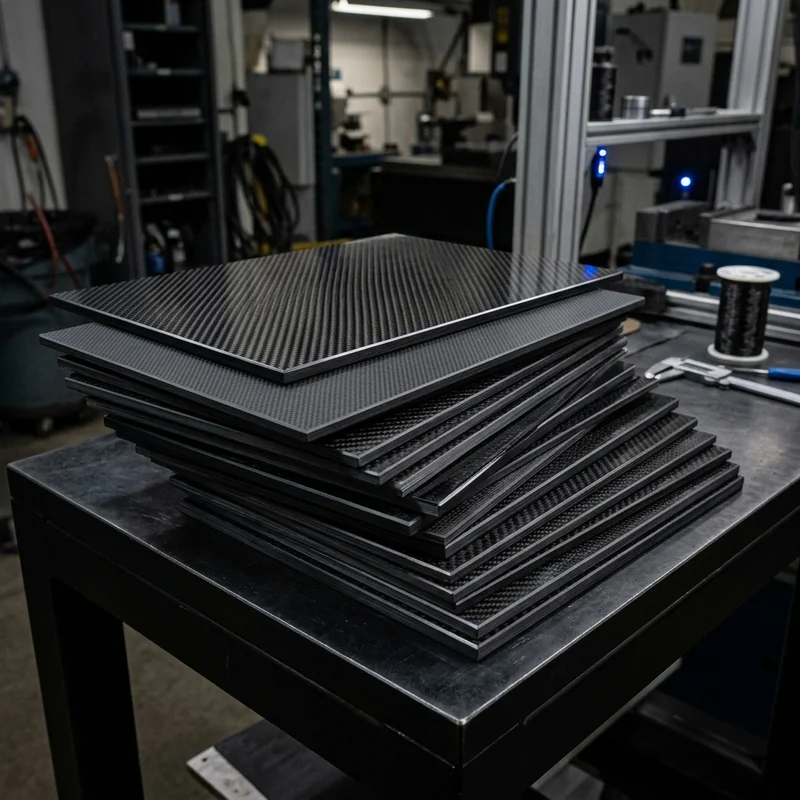
Carbon fiber standard plate-3k stripe
Lightweight, ultra-rigid standard sheets for drone fuselages, robot housings, facades and structural applications.

Carbon Fiber Plate — 3K Twill T700 3.0mm
Medium-thickness 3.0mm carbon fiber plate offering significantly higher load capacity while maintaining attractive 3K twill finish. Suitable for structural brackets, reinforcement plates, and load-bearing panels.

Carbon Fiber Plate — 3K Twill T700 1.5mm
Thin 1.5mm carbon fiber plate with 3K twill weave surface. Lightweight and stiff, commonly used for covers, panels, drone bodies, and applications requiring a premium aesthetic appearance.
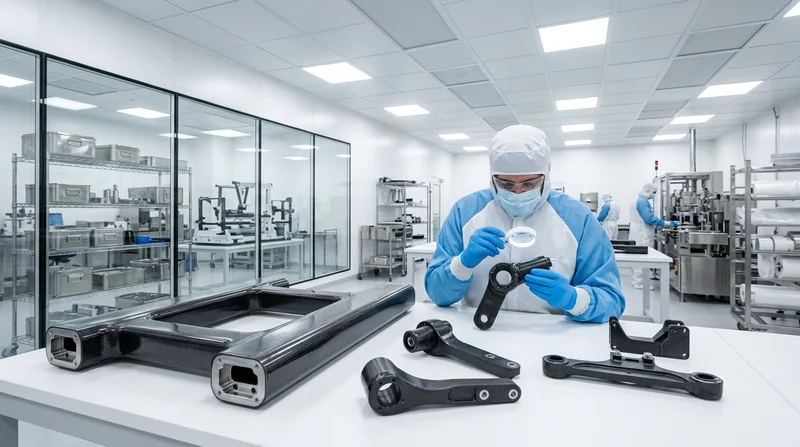
Custom Carbon Fiber Medical Device Components
Medical-grade carbon fiber components manufactured for imaging equipment, surgical instruments, and patient support systems. Carbon fiber's radiolucency (X-ray transparency) and high strength-to-weight ratio make it ideal for CT scanner beds, wheelchair frames, surgical robot arms, and MRI-compatible accessories. Biocompatible resin systems available.

Square Carbon Fiber Tube — 3K Twill T700
Square cross-section carbon fiber tube manufactured with 3K twill weave for torsional strength. Preferred for structural frames, trusses, and support columns where rectangular geometry offers design flexibility.