
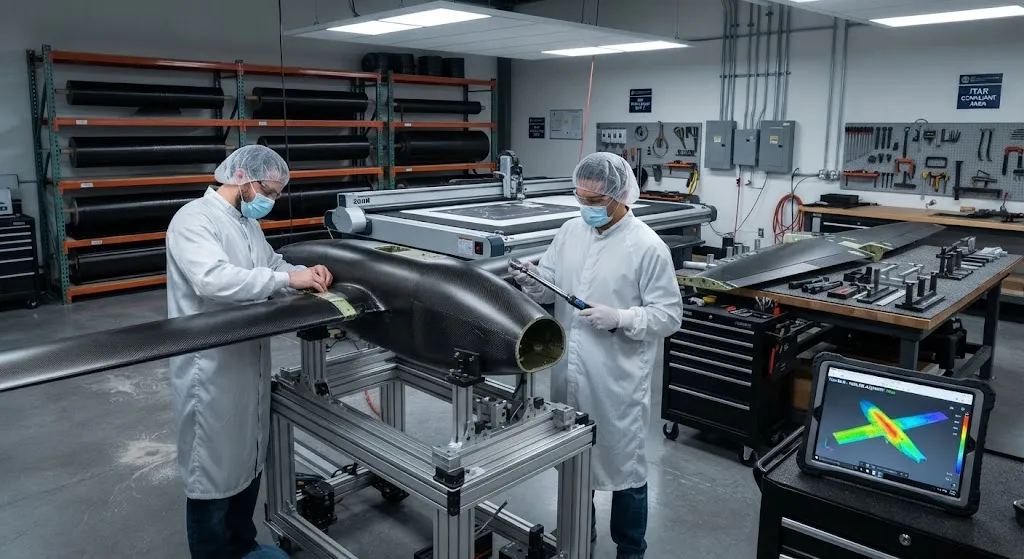
The United States Army has spent the past two years turning a phrase into a procurement doctrine. "Drone dominance" — the idea that the Army should field large numbers of low-cost uncrewed aircraft rather than a small number of expensive ones — has moved from congressional task-force re
Introduction
The United States Army has spent the past two years turning a phrase into a procurement doctrine. "Drone dominance" — the idea that the Army should field large numbers of low-cost uncrewed aircraft rather than a small number of expensive ones — has moved from congressional task-force reports to program-of-record planning, and with it the industrial base that builds such aircraft has started to restructure. Carbon fiber composites sit at the center of that restructuring, because an expendable drone is, above all, a weight and cost problem in structural terms.
This article examines the composite supply chain taking shape for the Drone Dominance program, anchored by the August 2026 announcement that Toray Advanced Composites, IGCS, and Lacks Enterprises will supply prepreg and production components for Army drone programs. It covers what the program actually demands, how the three companies divide the work, and what high-rate manufacturing and qualification mean for composites suppliers and buyers alike.
What the Drone Dominance Program Demands
The Army's uncrewed aircraft strategy rests on a simple economic logic: if a drone costs more than the munition it carries, commanders will not waste it, and expendability is the point. Program documents and task-force recommendations consistently emphasize three requirements that shape every materials decision:
- Low unit cost: target prices for attritable systems sit in the hundreds of thousands of dollars, an order of magnitude below the manned-aircraft prices the defense industry is used to.
- High production rate: annual quantities in the thousands, not dozens, with surge capacity written into the requirement.
- Multi-source supply: no single vendor or single material may become a bottleneck, which pushes the program toward qualified second sources from day one.
These requirements explain why the program leans on composites rather than the aluminum and titanium fabrications typical of legacy defense airframes. A carbon fiber structure can hit the weight budget with far less labor content per part, and labor — not material cost — is what drives price when you scale to thousands of units a year.
A Three-Company Supply Chain for Prepreg to Production
The August 2026 arrangement between Toray Advanced Composites, IGCS, and Lacks Enterprises is a working model of how the program intends to buy. Toray Advanced Composites supplies the prepreg — the carbon fiber and resin system that becomes the structural material — drawing on its suite of fast-curing, out-of-autoclave capable materials designed for serial production. IGCS brings intermediate manufacturing capability, turning prepreg into skins, spars, and assemblies under controlled process conditions. Lacks Enterprises contributes high-rate industrial assembly, applying the volume-manufacturing discipline of its automotive heritage to drone fuselages and wings.
| Step | Company | Role in the Chain | Critical Discipline |
|---|---|---|---|
| Materials | Toray Advanced Composites | Prepreg, resin systems, qualification data | Fast curing, out-of-autoclave processing, batch consistency |
| Intermediate parts | IGCS | Skins, spars, bonded assemblies | Process control, low defect rates, traceability |
| Final assembly | Lacks Enterprises | Fuselage and wing assembly at industrial rates | Cycle time, automation, cost per unit |
| Procurement | US Army | Program requirements, qualification, volume demand | Multi-source rules, attritable cost targets |
The division matters because each company operates at a different point on the cost curve. Materials companies make money on consistent, qualified material; intermediate fabricators on repeatable process quality; and large-scale assemblers on cycle time. The Army's role is to create demand large enough that all three economics work simultaneously — which is precisely what a program promising thousands of airframes does.
High-Rate Manufacturing with Composites
Rate is the unfamiliar word in defense composite manufacturing. A legacy fighter program justifies tooling and autoclaves for hundreds of aircraft over a decade; Drone Dominance asks for thousands of airframes per year, which changes the processing choices top to bottom:
- Out-of-autoclave cure: oven cure or press cure eliminates the autoclave bottleneck that caps throughput and adds cost per square meter of part.
- Automated cutting and kitting: prepreg is cut by software-driven cutters and kitted for each layup, removing hand-labor and variability from the start of the process.
- Compression molding: faster cycle times than vacuum-bag layup, suited to ribs, brackets, and smaller structural details.
- Bonding over fastening: adhesive and co-cured joints reduce fastener count, which is both a weight and a labor saving at volume.
- Continuous process monitoring: cure and bond cycles are tracked digitally so that thousands of parts meet the same evidence standard without individual inspection gates.
These choices interact. Out-of-autoclave materials allow presses and ovens to run in parallel rather than serializing through one autoclave. Automated kitting supports the material traceability that military buyers require. And molding-friendly part design keeps cycle times short enough that a single line can plausibly produce an airframe a day. None of this is exotic aerospace science — it is the application of composites the way the automotive and wind-energy industries already run them, which is exactly the source of the cost structure the program needs.
Qualification and the New Procurement Reality
Qualification is where the old defense aerospace culture meets the new one. Every material and every process in the chain must still satisfy military quality requirements — batch records, material property allowables, non-destructive inspection points, and supplier audits — but the program is applying those requirements to commercial-style production. That means suppliers must deliver qualification data packages that are complete yet generated quickly enough not to stall a production line.
The practical consequence for buyers and suppliers is that the partnership model matters as much as the material itself. A prepreg supplier that can pre-qualify its material for the Army, an intermediate fabricator with repeatable process evidence, and an assembler with automotive-grade cost controls together form a chain a procurement officer can approve with confidence. For composite suppliers looking to enter defense, the lesson is that rate capability and cost discipline are now qualification credentials in their own right, alongside the traditional mechanical test data. The companies that can prove both will find the Drone Dominance program — and the broader market for attritable aircraft it is seeding — open to them.
Frequently Asked Questions
Why does a drone program need carbon fiber at all?
Because expendable drones are a weight and cost problem. Carbon fiber composite structures achieve the strength and stiffness a drone needs at a fraction of the weight of metal, which directly extends range, endurance, and payload. Equally important, composite fabrication at volume can be cheaper per part than machining or riveting metal, because labor content is lower — and at thousands of units a year, labor is the dominant cost driver.
Is out-of-autoclave curing strong enough for military aircraft?
Yes, when the material system and process are properly qualified. Out-of-autoclave prepregs have lower porosity than their older reputation suggests and are now routinely used in certified aircraft structures, including primary structures on business jets. For the loads an attritable drone faces, oven- or press-cured composites deliver comfortable margins while removing the autoclave bottleneck that makes low-cost, high-rate production impossible.
How does the Drone Dominance supply chain differ from legacy defense aerospace?
The legacy model buys a small number of highly qualified parts from a small number of suppliers, with cost secondary to performance. Drone Dominance inverts that: cost and rate are primary, performance is bounded by what an expendable airframe needs, and the program actively wants multiple qualified suppliers per step to avoid single-point bottlenecks. It is closer to how commercial aviation and automotive buy at scale than to how fighter programs have historically bought.
Conclusion
The Drone Dominance program is not a technology program dressed up as procurement — it is a manufacturing program dressed up as a drone program. Success depends on producing thousands of inexpensive composite airframes a year, which in turn depends on prepreg suppliers, intermediate fabricators, and high-rate assemblers working from shared cost and quality assumptions. The Toray–IGCS–Lacks arrangement is a template for that cooperation, and the qualification regime the program is building will reward suppliers who can prove rate capability alongside material performance.
For composite manufacturers and engineering teams evaluating defense entry, the practical first step is material choice and process selection with rate in mind. Review our carbon fiber prepreg and composite material range or contact our technical team to discuss material systems suited to high-rate, attritable aircraft production.
Part of topic
Related Articles
- Recycled Carbon Fiber Market Forecast 2030: Technology Maturity and Commercialization Path
- South Korea Carbon Fiber Market 2026: Hydrogen Economy and Shipbuilding Innovation
- Wind Turbine Blade Leading Edge Protection 2026: Polyurethane, Tape, and Metallic Shield Solutions
- China Carbon Fiber Overcapacity 2026: Price War Impact and Industry Consolidation
- India Carbon Fiber Market 2026: Wind Energy, Aerospace, and Defense Expansion
- PAN Precursor Market 2026: Acrylonitrile Supply and Carbon Fiber Cost Structure
Interested in Our Products?
Contact our team for competitive pricing and technical specifications.
Get a QuoteRelated Products
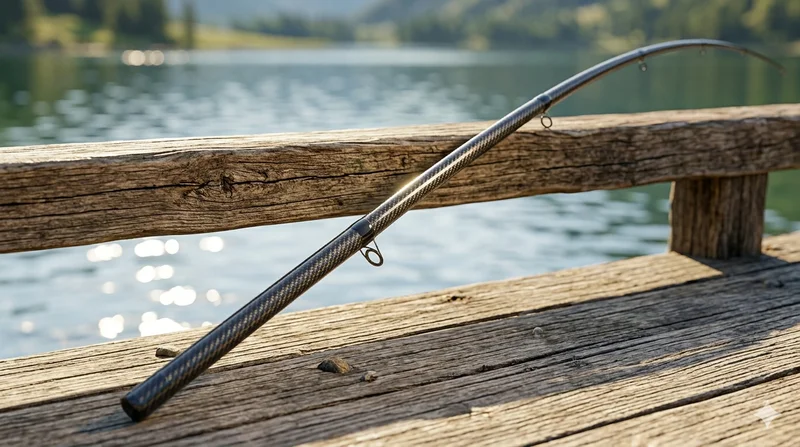
Carbon Fiber Fishing Rod Blank
High-quality carbon fiber fishing rod blank manufactured from multiple grades of Toray carbon fiber cloth. Available in a wide range of lengths, powers, and actions for freshwater and saltwater applications. Suitable for OEM rod building.
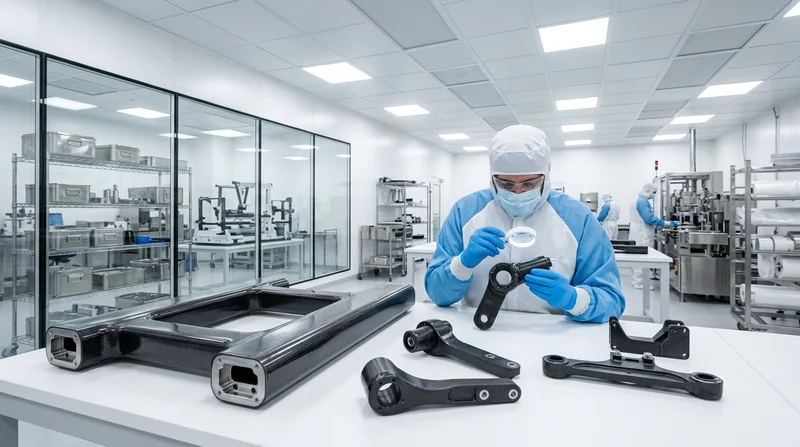
Custom Carbon Fiber Medical Device Components
Medical-grade carbon fiber components manufactured for imaging equipment, surgical instruments, and patient support systems. Carbon fiber's radiolucency (X-ray transparency) and high strength-to-weight ratio make it ideal for CT scanner beds, wheelchair frames, surgical robot arms, and MRI-compatible accessories. Biocompatible resin systems available.

Carbon Fiber Plate — 3K Twill T700 1.5mm
Thin 1.5mm carbon fiber plate with 3K twill weave surface. Lightweight and stiff, commonly used for covers, panels, drone bodies, and applications requiring a premium aesthetic appearance.
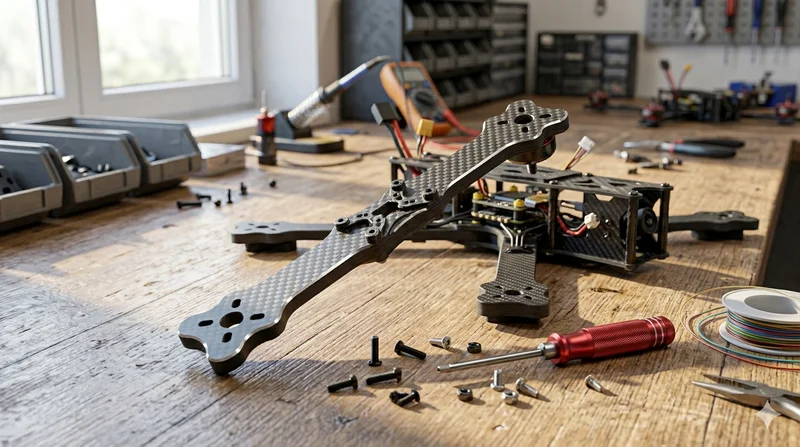
Carbon Fiber Drone Arm
Precision-molded carbon fiber drone arm combining unidirectional fiber for stiffness and woven layers for torsional strength. Designed for FPV, photography, and industrial drone platforms. Each arm is CNC-machined to exact specifications.
Carbon Fiber Pickleball Paddle
High-performance pickleball paddle with Toray T700 carbon fiber face and polypropylene honeycomb core. Delivers excellent power-to-weight ratio, spin generation, and vibration dampening for competitive play.