
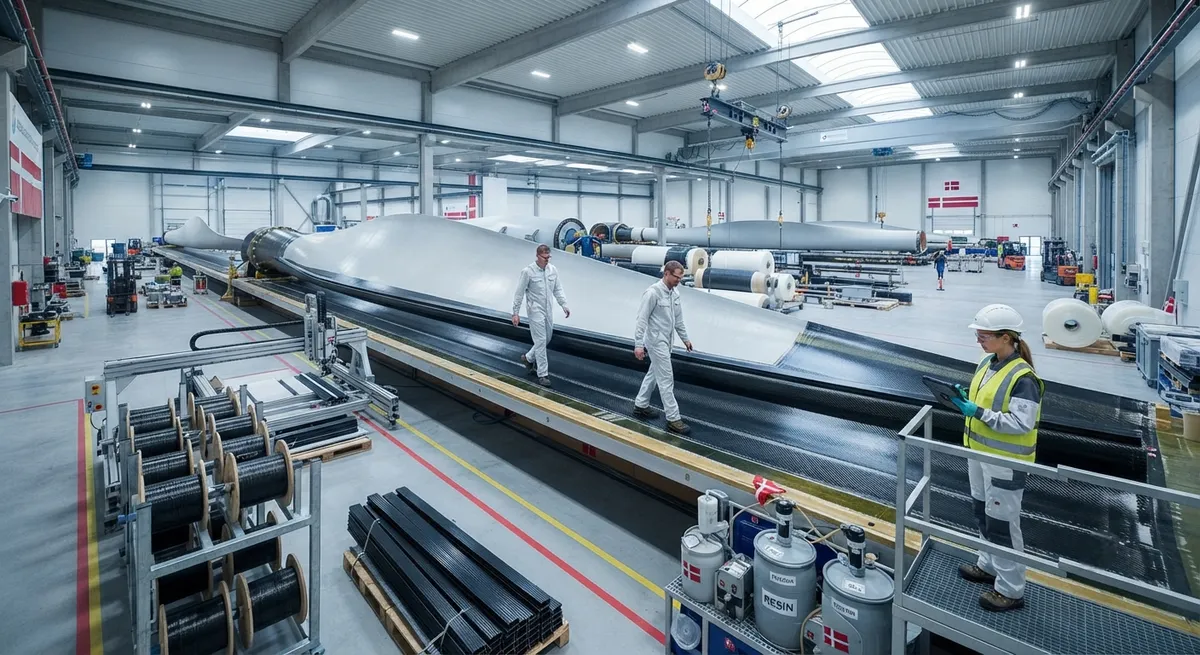
Denmark's carbon fiber market in 2026 is defined by two world-leading industries: wind energy and maritime shipping. Denmark is the headquarters of Vestas — the world's largest wind turbine manufacturer — and hosts one of Europe's densest clusters of wind component suppliers, test facil
Introduction
Denmark's carbon fiber market in 2026 is defined by two world-leading industries: wind energy and maritime shipping. Denmark is the headquarters of Vestas — the world's largest wind turbine manufacturer — and hosts one of Europe's densest clusters of wind component suppliers, test facilities, and engineering consultancies. It is also home to Maersk, the global benchmark for shipping decarbonization, and one of the world's largest merchant fleets measured per capita. Both industries are accelerating their adoption of carbon fiber, making Denmark a strategic bellwether for composite demand in Northern Europe.
This article examines the three demand pillars of the Danish market — the Vestas supply chain, the offshore wind scale-up across the North Sea and Baltic Sea, and the maritime transition — and closes with sourcing guidance for suppliers and buyers entering the Danish ecosystem.
The Vestas Supply Chain: Blade Carbon Fiber Demand
Vestas dominates the Danish market by volume. The company's flagship offshore platform, the V236-15.0 MW turbine with a 115.5-meter rotor, uses carbon fiber in its blade spar caps to achieve the stiffness-to-weight ratio that 100-meter-plus blades require. Each V236 blade set consumes an estimated 20-25 tonnes of carbon fiber, and as Vestas and its competitors push toward 20+ MW turbines, per-turbine carbon fiber content continues to climb.
Vestas's Danish footprint anchors a dense supplier ecosystem: blade manufacturers, mold makers, resin and adhesive suppliers, and the test and certification infrastructure that supports the industry. The key procurement dynamic for carbon fiber suppliers is Vestas's dual-sourcing strategy — maintaining multiple qualified fiber suppliers to de-risk supply while driving cost down as blade sizes grow. For component and material suppliers, winning a position in the Vestas ecosystem means meeting rigorous quality systems and supporting a global aftermarket that spans every continent with installed wind capacity.
- V236-15.0 MW platform: 115.5-meter rotor; carbon fiber spar caps; the reference point for offshore blade design.
- Onshore 6 MW platforms: Increasing carbon content as rotors grow past 160 meters.
- Blade recycling and circularity: Vestas's CETEC and ReBlade initiatives are creating demand for recyclable resin systems and reclaimed fiber — a nascent but growing segment.
- Service and repowering: The aging European fleet creates aftermarket demand for structural repair materials and replacement components.
Offshore Wind Scale-Up: North Sea and Baltic Momentum
Danish offshore wind is expanding on multiple fronts in 2026. The Danish Energy Agency has tendered new capacity in the North Sea — including the Hesselø project in Kattegat, positioned to supply green power to the Zealand region — and continues to advance the energy island concept that would cluster hundreds of turbines around a central hub. The 1 GW Thor wind farm, Denmark's largest, reached full operation in 2025 and established the delivery model for subsequent tenders.
| Project / Program | Status 2026 | Capacity | Carbon Fiber Relevance |
|---|---|---|---|
| Thor (North Sea) | Full operation since 2025 | 1 GW | Blade spar caps; baseline for next tenders |
| Hesselø (Kattegat) | Tender and permitting | 1.0-1.2 GW | New blade supply commitments |
| North Sea Energy Island | Feasibility and partner selection | 3+ GW cluster | Long-term structural demand driver |
| Baltics (Bornholm hub) | Cross-border planning | 2-3 GW | Extended regional supply chain |
Beyond Danish waters, Danish developers and suppliers are embedded in European projects from the North Sea to the Baltic, and Denmark's role as a test-bed and export platform means its composite demand is amplified well beyond domestic installations. Each gigawatt of offshore wind requires roughly 1,800-2,600 tonnes of carbon fiber for blades, so the 2026-2030 pipeline across Danish and adjacent European projects represents multi-thousand-tonne annual demand.
Maritime Transition: Decarbonizing the World's Fleet
Denmark's maritime sector is the third pillar. Maersk's orderbook of methanol-capable containerships — over 20 dual-fuel vessels delivered or on order — has made green fuel propulsion a commercial reality, and the Danish government's agreement to establish a green corridor in the North Sea and Baltic reinforces the transition. For carbon fiber, the maritime opportunity is in lightweighting and fuel efficiency:
- Composite propellers and appendages: Carbon fiber propellers and rudder fairings reduce fuel consumption by 5-10% on vessels where weight and hydrodynamic efficiency are paramount.
- Interior and structural panels: Lightweight composite panels in ro-pax ferries and cruise ships cut weight and improve stability margins.
- Methanol and ammonia tank systems: New-fuel containment systems and piping introduce composites where corrosion resistance and weight matter.
- Offshore support vessels: Crew transfer vessels and service operation vessels serving wind farms use carbon fiber for speed and seakeeping.
The maritime transition is slower than wind in volume terms, but it is strategically significant: as shipping faces tightening carbon intensity regulations from the International Maritime Organization, the economic case for lightweight composite components strengthens with every regulatory milestone.
R&D Ecosystem and Test Infrastructure
Denmark's composite ecosystem is underpinned by world-class test and research infrastructure. The Lindø Offshore Renewables Center (LORC) in Odense and the Blaest blade testing facility provide full-scale structural testing for blades up to 15 MW and beyond, while DTU Wind and Energy Systems at Risø drives research into blade aerodynamics, materials, and recycling. For carbon fiber suppliers and component manufacturers, this infrastructure means the Danish market demands documented, test-verified performance — a quality bar that rewards producers with strong data and certification credentials.
Frequently Asked Questions
How much carbon fiber does a modern offshore wind turbine use?
A 15 MW offshore turbine such as the Vestas V236 uses an estimated 20-25 tonnes of carbon fiber in its three blade spar caps. Larger 20 MW-class designs under development will push per-turbine content toward 30-35 tonnes. The carbon fiber is concentrated in the spar caps, where pultruded carbon profiles or carbon laminates provide the stiffness needed to keep 100-meter-plus blades from deflecting into the tower. As rotor diameters grow, carbon content per gigawatt of installed capacity rises — a trend that directly expands the addressable market for carbon fiber suppliers.
What is driving Denmark's offshore wind expansion in 2026?
Three forces. First, policy: Denmark's climate targets commit to major emissions cuts by 2030, and offshore wind is the primary electrification vehicle. Second, economics: the levelized cost of offshore wind has fallen to levels competitive with fossil generation in North Sea conditions. Third, industrial strategy: the energy island concept and the Baltic hub position Denmark as an exporter of green power and a test-bed for turbine technology. The 2026 tender pipeline — Hesselø, the North Sea energy island, and Baltic collaboration — reflects all three drivers converging.
Where does carbon fiber fit in the maritime decarbonization transition?
Carbon fiber's role in shipping is weight reduction, which directly cuts fuel consumption and emissions. Applications include composite propellers and rudder fairings (5-10% fuel savings in some vessel classes), lightweight interior and structural panels for ferries, and components for new-fuel systems where corrosion resistance matters. The regulatory driver is the International Maritime Organization's carbon intensity targets, which make every tonne of weight saved economically valuable. Adoption is accelerating as dual-fuel and methanol-capable vessels — pioneered by Danish operators like Maersk — enter the fleet.
Conclusion
Denmark's carbon fiber market in 2026 combines the world's most advanced wind industry with one of the most aggressive maritime decarbonization programs anywhere. The Vestas supply chain anchors sustained blade demand that grows with every rotor-size milestone; the offshore wind pipeline from Thor to Hesselø and the energy island secures multi-gigawatt scale; and the maritime transition opens a new, regulation-driven demand channel. For suppliers, Denmark is a demanding but rewarding market: it rewards documented performance, strong certification, and long-term partnership with a tightly integrated ecosystem.
For buyers and suppliers positioning in the Danish ecosystem, the fundamentals are clear: qualify early, verify performance with test data, and build relationships that span wind and maritime applications. Explore our carbon fiber product range suited to blade structures and marine components, or contact our team for specification support and supply planning for Northern European projects.
Part of topic
Related Articles
- Carbon Fibre Sheet Supplier UK: Sourcing Options and Specification Checklist
- Carbon Fiber Sheets Near Me Suppliers: Local Stock vs Factory Direct
- Filament Wound Epoxy Tubes: Industry Standards and Compliance Requirements
- Carbon Fiber Dealers Near Me: What a Good Dealer Actually Adds
- Carbon Fiber Supplies Near Me: Local Sourcing Without Compromising Spec
- Carbon Fiber for Sale: Online Platforms and Direct Sales Channel Comparison
Interested in Our Products?
Contact our team for competitive pricing and technical specifications.
Get a QuoteRelated Products
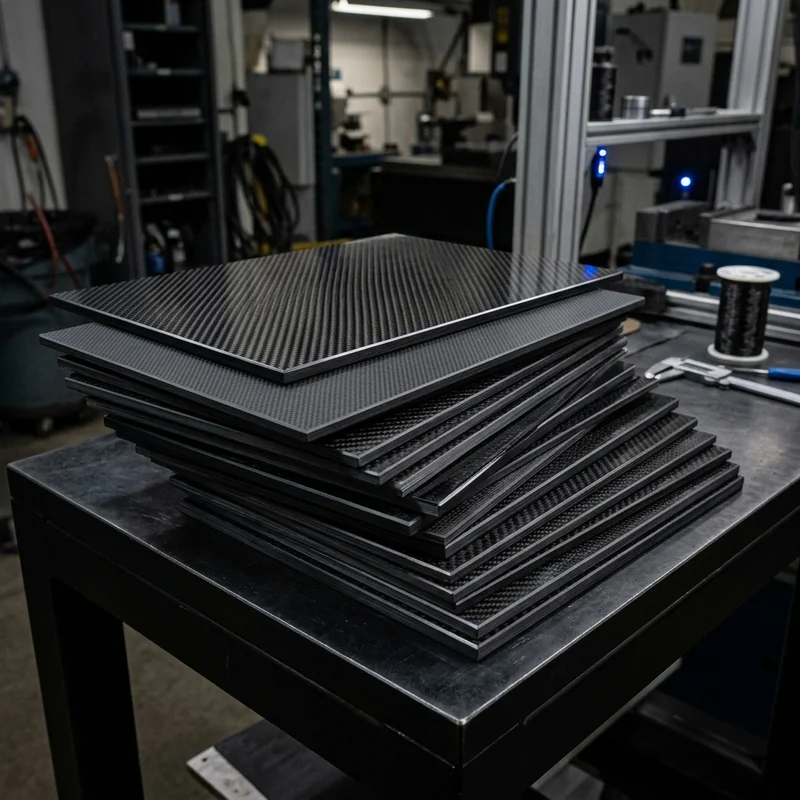
Carbon fiber standard plate-3k stripe
Lightweight, ultra-rigid standard sheets for drone fuselages, robot housings, facades and structural applications.

Carbon Fiber Plate — 3K Twill T700 3.0mm
Medium-thickness 3.0mm carbon fiber plate offering significantly higher load capacity while maintaining attractive 3K twill finish. Suitable for structural brackets, reinforcement plates, and load-bearing panels.

Carbon Fiber Plate — 3K Twill T700 1.5mm
Thin 1.5mm carbon fiber plate with 3K twill weave surface. Lightweight and stiff, commonly used for covers, panels, drone bodies, and applications requiring a premium aesthetic appearance.
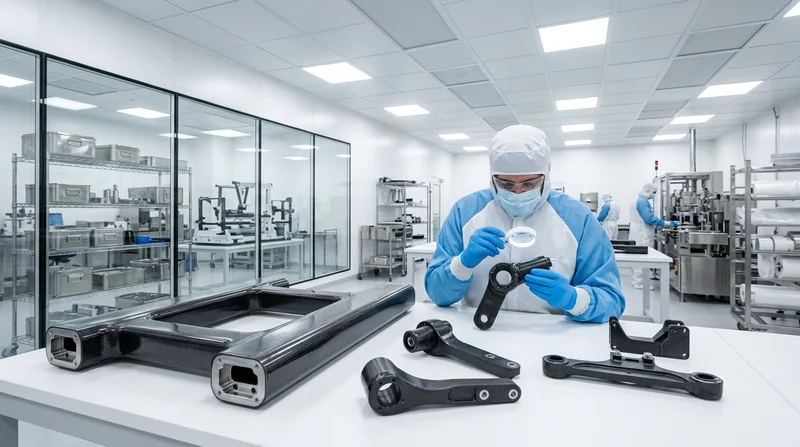
Custom Carbon Fiber Medical Device Components
Medical-grade carbon fiber components manufactured for imaging equipment, surgical instruments, and patient support systems. Carbon fiber's radiolucency (X-ray transparency) and high strength-to-weight ratio make it ideal for CT scanner beds, wheelchair frames, surgical robot arms, and MRI-compatible accessories. Biocompatible resin systems available.

Square Carbon Fiber Tube — 3K Twill T700
Square cross-section carbon fiber tube manufactured with 3K twill weave for torsional strength. Preferred for structural frames, trusses, and support columns where rectangular geometry offers design flexibility.