
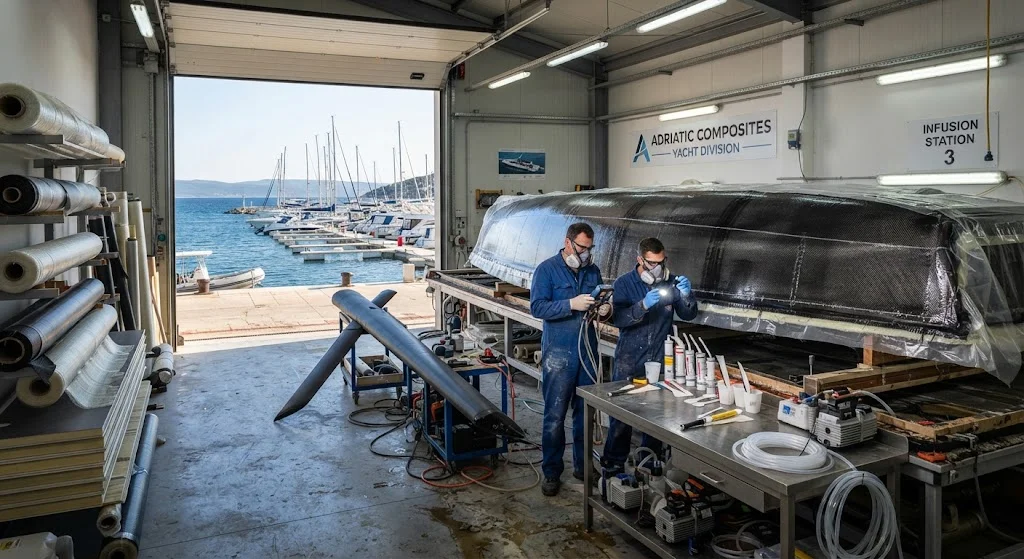
Croatia sits at the junction of three demand streams that together make it one of the more interesting small composite markets in Southeast Europe. The Adriatic coast and its islands host a shipbuilding industry with deep history, an onshore wind sector growing on the back of EU recover
Introduction
Croatia sits at the junction of three demand streams that together make it one of the more interesting small composite markets in Southeast Europe. The Adriatic coast and its islands host a shipbuilding industry with deep history, an onshore wind sector growing on the back of EU recovery funding, and a tourism economy that continuously upgrades marinas, boardwalks, and coastal facilities. For carbon fiber and composite suppliers, each stream consumes different products at different qualification levels, and the country's EU membership brings procurement rules that shape how buyers purchase. This article maps the three demand engines, quantifies their scale, and outlines what a supplier entering the Croatian market should prepare.
Croatia is not a volume market on the scale of Poland or Italy, but it is a consistent one. Its roughly 1,800 islands and 5,800 kilometers of coastline generate steady demand for marine-grade composites, while the onshore wind fleet — the largest in the Western Balkans — keeps blade and structural repair demand alive for decades to come. The combination of marine, energy, and infrastructure applications means a supplier can build a diversified portfolio within a single market.
Adriatic Shipbuilding and Marine Composites
Shipbuilding is the industrial backbone of the Croatian coast. The Brodosplit shipyard in Split remains the country's largest yard, with a history of building everything from tankers to ferries and naval vessels, while the Rijeka and Pula clusters provide repair and conversion capacity for commercial shipping on the Adriatic route. Alongside the large yards, a dense network of smaller boatbuilders produces motor yachts, sailing yachts, and workboats, and this is where composite consumption is most visible.
Marine composites in Croatia fall into three product families. Infusion-grade glass and carbon reinforcements feed hull and deck laminates for yachts up to 30 meters, where reduced weight improves fuel economy and range; carbon fiber prepreg is used for masts, rudders, and structural bulkheads on performance vessels; and sandwich core materials combine with FRP skins for decks, superstructures, and interior panels. The Adriatic's moderately aggressive marine environment, with strong bora wind gusts and heavy UV exposure, keeps demand for durable gelcoat and laminate systems consistently high. Marine suppliers who can document saltwater resistance and EN 13195-compatible practices find a receptive audience among both main yards and the yacht builder network.
Onshore Wind: EU-Funded Build-Out and Repair Demand
Wind power is Croatia's fastest-growing renewable segment. Installed onshore capacity passed roughly 1,200 megawatts in the past two years, concentrated in the Dalmatian hinterland and the northern Adriatic, with additional projects in permitting and construction. Renewables already supply close to a third of Croatian electricity, and EU funding under the Recovery and Resilience Facility — Croatia's plan runs to roughly six billion euros in grants and loans — explicitly earmarks money for wind and grid expansion.
For composite suppliers, the wind stream means three opportunities. Blade and structural component supply for projects under construction; repair, inspection, and material replacement for the installed fleet, where blade erosion and lightning damage drive recurring demand; and the less obvious factory floor: the Brodosplit yard has historically manufactured steel components for wind towers and foundations, and composite uptake in such works moves through industrial epoxy and structural bonding suppliers rather than prepreg channels. The repair segment is the most dependable — a fleet of several hundred turbines generates continuous work regardless of new-build cycles.
Tourism Infrastructure: Marinas, Boardwalks, and Lightweight Structures
Tourism contributes roughly a fifth of Croatian GDP, and the sector's investment cycle is heavily weighted toward coastal infrastructure. The ACI chain operates more than twenty marinas along the Adriatic, and public and private funds continue to upgrade berthing, floating docks, and waterfront promenades. These are natural applications for FRP: floating breakwaters and pontoon systems use fiberglass hull sections and core-filled decks; boardwalk and walkway systems use pultruded FRP profiles, which resist saltwater and require minimal maintenance; and utility accessories such as cable trays and inspection covers follow the same material logic.
EU cohesion and regional funds cover a large share of this infrastructure spend, which changes how suppliers sell. Public tenders favor documented standards compliance, domestic maintenance capability, and references from comparable coastal projects. A supplier entering the market should therefore lead with certification and case studies rather than price alone.
Comparing the Three Demand Streams
| Demand Stream | Key Applications | Composite Products | Primary Buyer Type | Growth Outlook |
|---|---|---|---|---|
| Adriatic shipbuilding | Yachts, workboats, masts, repair | Infusion glass/carbon, prepreg, sandwich cores | Commercial yards, yacht builders | Steady, repair-driven |
| Onshore wind | Blades, structures, fleet repair | Blade materials, bonding systems, epoxy | Developers, O&M contractors | Growing on EU funds |
| Tourism infrastructure | Marinas, boardwalks, pontoons | Pultruded FRP, flex hulls, floating docks | Municipalities, marina operators | Tied to EU project cycles |
The three streams also compound each other. Marine-grade materials used in yacht building are the same families specified for floating dock construction, and wind repair teams and marina contractors often draw from the same regional engineering base. For a supplier, establishing credibility in one stream opens the other two without restarting qualification from zero.
Sourcing Signals for Suppliers Entering the Market
- Standardize early: EN 13195 marine laminates, DNV or GL-accepted materials, and documented coastal testing data satisfy both public tenders and insurance underwriters.
- Serve the repair base: The installed wind fleet and aging marina inventory produce predictable demand that does not wait for new projects.
- Build local channels: Buyers prefer suppliers with agents or distributors in the region who can service, store, and support materials locally.
- Align with EU project cycles: Cohesion and RRF-funded tenders run on multi-year pipelines; tracking published procurement plans identifies the next windows early.
- Price for the small-efficient market: Consistent mid-volume orders, not giant contracts, are the realistic entry profile for most composite suppliers in Croatia.
Frequently Asked Questions
Is Croatia a meaningful market for carbon fiber rather than just glass fiber composites?
Yes, but the carbon share is concentrated. Carbon consumption clusters in performance yachting — masts, rudders, bulkheads, and race-level components — plus aerospace-adjacent and industrial niches served through the shipbuilding ecosystem. The bulk of Croatian composite demand is glass-based infusion and pultrusion, where carbon appears selectively where weight saving pays for itself. A supplier of aerospace-grade carbon prepreg will find a smaller but highly qualified set of customers; a supplier of industrial carbon and hybrid reinforcements will find broader, more price-sensitive demand. Both segments are real, and they buy through different channels.
How do EU funds shape the timing of Croatian infrastructure projects?
Croatia's Recovery and Resilience Facility allocation — roughly six billion euros in grants and loans, with a significant share directed to green transition — funds wind, grid, and renovation projects through 2026-2027, while cohesion funds run on longer programming periods. The practical effect is a pipeline of publicly tendered packages with defined submission windows. Suppliers who track the published annual procurement plans can align sales effort to the correct quarter, because the bulk of infrastructure composite demand arrives through tenders rather than direct private purchase.
What should a first-time supplier know about doing business in the Croatian market?
Three practical points matter most. First, procurement of infrastructure materials is highly standardized — lead with certifications and coastal references. Second, logistics favor serving the whole Adriatic region from one base, because Croatia, Slovenia, and Montenegro share the same coastal supply routes. Third, while the country uses the euro and follows EU rules, relationships matter: distributors and agents with existing marina and yard connections shorten sales cycles significantly. Entry cost is low compared with big Western markets, and a focused marine plus wind portfolio can reach meaningful volume within two years.
Conclusion
Croatia's composite market is modest in absolute size but unusually well balanced. Adriatic shipbuilding provides a continuous marine-grade demand base, EU-funded onshore wind adds a growth stream with long repair tails, and tourism infrastructure ties coastal FRP demand to a reliable public project pipeline. The three streams share material families and engineering bases, so market entry compounds: credibility earned in one stream transfers to the others.
For manufacturers and buyers evaluating the Adriatic market, explore our carbon fiber and composite product range for marine and industrial applications, or contact our export team to discuss supply arrangements for shipbuilding, wind, and infrastructure projects across Southeast Europe.
Part of topic
Related Articles
- Recycled Carbon Fiber Market Forecast 2030: Technology Maturity and Commercialization Path
- South Korea Carbon Fiber Market 2026: Hydrogen Economy and Shipbuilding Innovation
- Wind Turbine Blade Leading Edge Protection 2026: Polyurethane, Tape, and Metallic Shield Solutions
- China Carbon Fiber Overcapacity 2026: Price War Impact and Industry Consolidation
- India Carbon Fiber Market 2026: Wind Energy, Aerospace, and Defense Expansion
- PAN Precursor Market 2026: Acrylonitrile Supply and Carbon Fiber Cost Structure
Interested in Custom Carbon Fiber Products?
Contact our team for competitive pricing and technical specifications.
Get a QuoteRelated Products
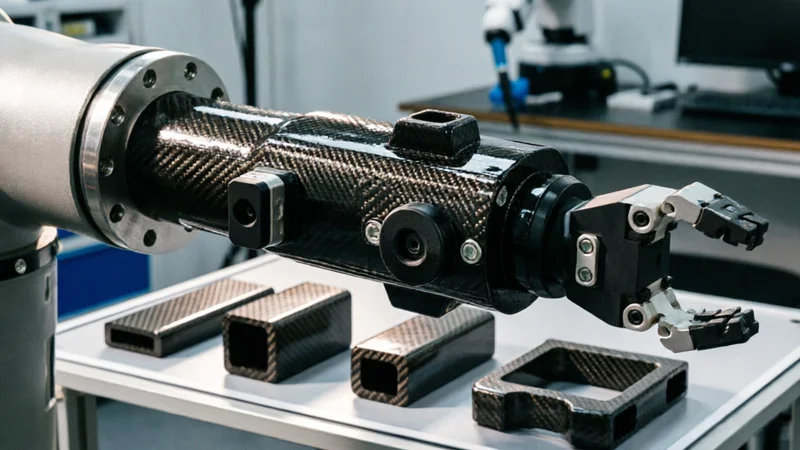
Carbon Fiber Robot End Effector Link — Custom Shape & Sensor Integration
Custom-shaped carbon fiber end effector links for robotic arms. Designed for automation integrators and research labs requiring lightweight, rigid connections between the robot wrist and gripper/tool. Can incorporate sensor mounting bosses, cable routing channels, and quick-change interfaces.

Custom Carbon Fiber Musical Instrument Parts
Carbon fiber components for musical instrument manufacturing offering superior dimensional stability, low weight, and consistent acoustic properties. We produce carbon fiber bows, guitar necks, violin chin rests, drum shells, and wind instrument bodies. Carbon fiber instruments are immune to humidity changes and temperature fluctuations that affect wooden instruments.
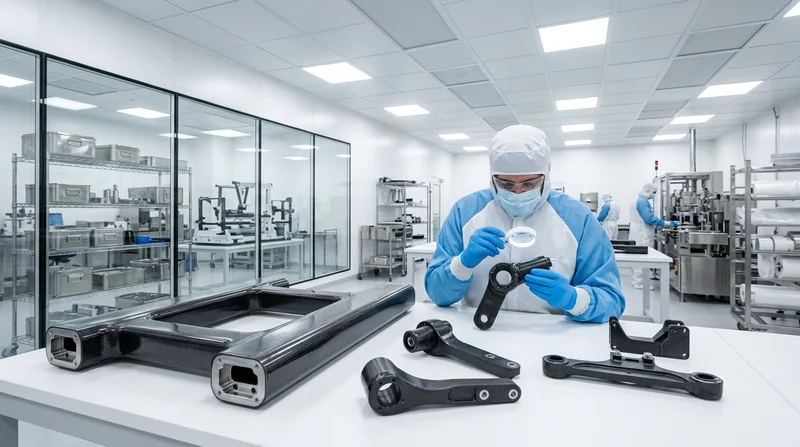
Custom Carbon Fiber Medical Device Components
Medical-grade carbon fiber components manufactured for imaging equipment, surgical instruments, and patient support systems. Carbon fiber's radiolucency (X-ray transparency) and high strength-to-weight ratio make it ideal for CT scanner beds, wheelchair frames, surgical robot arms, and MRI-compatible accessories. Biocompatible resin systems available.
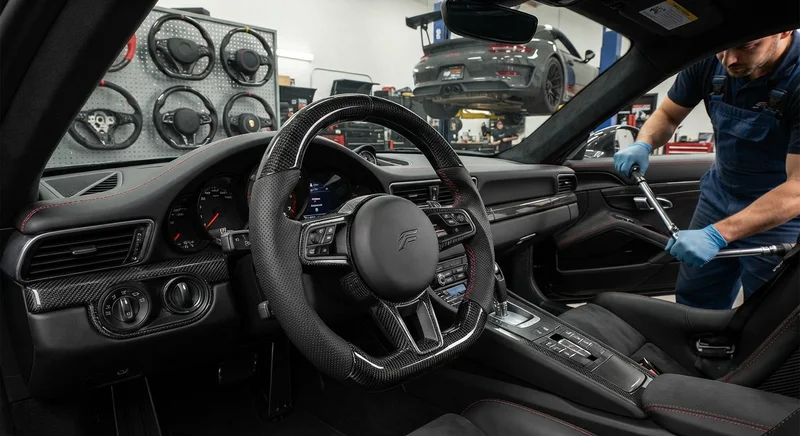
Carbon Fiber Steering Wheel — Custom Leather-Wrapped with CF Inlay
Custom carbon fiber steering wheel with genuine leather wrapping and carbon fiber inlay sections. Molded from T700 3K prepreg for maximum rigidity with a 30% weight reduction over OEM wheels. Available in D-shape (flat bottom) and round profiles. Direct bolt-on fitment for popular sports car and performance vehicle models. Custom stitching color and leather grade available.
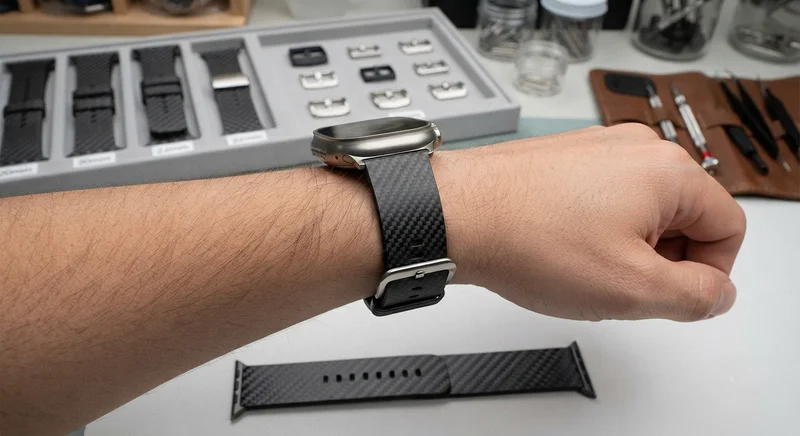
Carbon Fiber Watch Strap — 20mm/22mm Quick-Release
Premium carbon fiber watch strap with quick-release spring bars. Woven from T700 3K twill prepreg with a flexible resin system that conforms to the wrist. Available in 20mm and 22mm lug widths, compatible with Apple Watch, Samsung Galaxy Watch, Garmin, and traditional mechanical watches. Features a stainless steel buckle and carbon fiber keepers. The natural weave pattern makes each strap unique.