
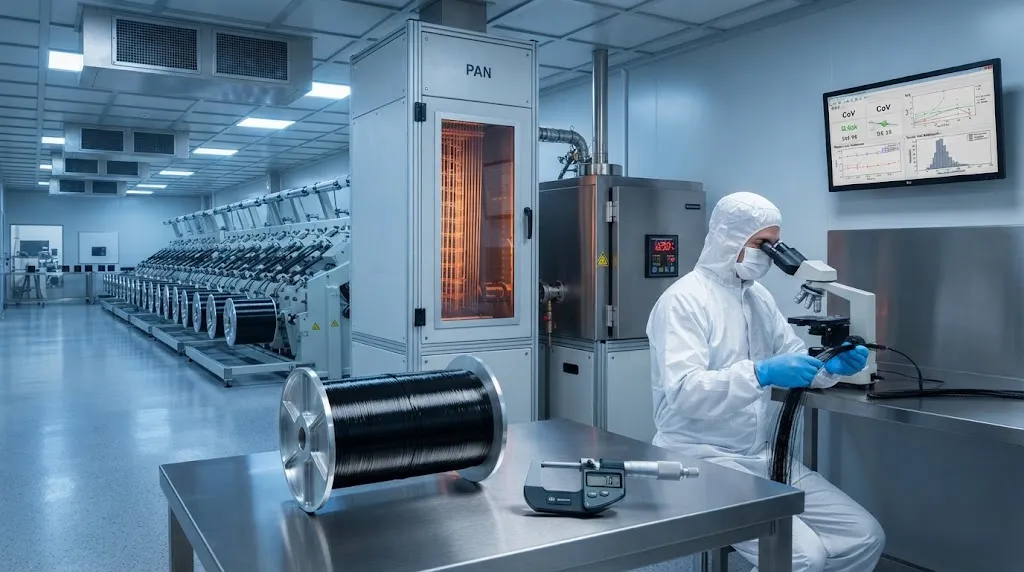
China's carbon fiber industry has achieved a critical milestone with Shanghai Petrochemical's successful mass production of T1000-grade carbon fiber in 12K tow format. This development represents the first domestically produced T1000-class fiber to reach consistent commercial-scale outp
Introduction
China's carbon fiber industry has achieved a critical milestone with Shanghai Petrochemical's successful mass production of T1000-grade carbon fiber in 12K tow format. This development represents the first domestically produced T1000-class fiber to reach consistent commercial-scale output, following the earlier breakthroughs of Zhongfu Shenying's SYT70 (T1100-equivalent) and Sinofibers' wet-spun T1100. The Shanghai Petrochemical achievement is significant not only for its technical specifications — tensile strength exceeding 6,370 MPa and modulus above 294 GPa — but for its 12K tow configuration, which directly addresses the format demanded by aerospace and defense applications worldwide.
The global high-end carbon fiber market has long been dominated by Japanese manufacturers, with Toray, Mitsubishi, and Toho collectively controlling approximately 70% of T800-and-above grade production. China's push into T1000 territory, driven by national strategic material independence requirements and supported by government funding programs, is reshaping supply chain dynamics and creating new sourcing options for OEMs in aerospace, defense, hydrogen storage, and high-performance industrial applications.
Technical Specifications and Process Innovation
Shanghai Petrochemical's T1000-grade carbon fiber achieves its performance through a combination of optimized precursor chemistry and advanced stabilization/carbonization process control. The key technical parameters demonstrate competitive performance against established international benchmarks:
| Parameter | Shanghai Petrochemical T1000 | Toray T1100G | Zhongfu Shenying SYT70 | Sinofibers T1100 |
|---|---|---|---|---|
| Tensile Strength | ≥6,370 MPa | 7,000 MPa | ≥7,000 MPa | ≥6,600 MPa |
| Tensile Modulus | ≥294 GPa | 324 GPa | ≥294 GPa | ≥335 GPa |
| Elongation at Break | ≥2.1% | 2.2% | ≥2.3% | ≥2.0% |
| Tow Size | 12K | 12K | 12K | 12K |
| Annual Capacity | ~500 tonnes | ~1,000 tonnes | 1,000 tonnes | 5,000 tonnes |
| Spinning Method | Dry-jet wet | Dry-jet wet | Dry-jet wet | Wet |
The 12K tow specification is particularly important for aerospace qualification. Most aerospace-grade carbon fiber is supplied in 12K or 24K tow formats, with 12K preferred for prepreg tape and fabric weaving applications where fiber placement precision and surface quality are critical. Shanghai Petrochemical's ability to produce consistent 12K T1000-grade fiber addresses a format gap that had previously limited Chinese high-end fiber to industrial applications.
The process innovation centers on PAN precursor purity control and multi-stage stabilization optimization. Shanghai Petrochemical has developed proprietary copolymer formulations that achieve the high carbon yield and crystal orientation necessary for T1000-level performance, while maintaining the spinning stability required for consistent 12K tow production at commercial throughput rates.
Market Impact and Supply Chain Implications
The commercialization of Chinese T1000-grade carbon fiber has immediate implications for global supply chain dynamics:
- Price pressure on incumbent suppliers: Shanghai Petrochemical's domestic production costs are estimated at 40–60% below Toray's Japan-based production, creating potential for significant price competition in the T800–T1000 grade segment. Initial pricing for the Chinese T1000 is projected at $35–45/kg, compared with $60–80/kg for imported T1100G.
- Import substitution acceleration: China's T800-and-above import substitution rate has risen from approximately 10% in 2023 to an estimated 35–40% in 2026, with the T1000 breakthrough expected to push this above 50% within two years for non-aerospace applications.
- Aerospace qualification pathway: While the T1000 fiber has demonstrated competitive mechanical properties, full aerospace qualification (including statistical allowables generation per CMH-17/MMPDS) requires 2–3 years of production validation. Shanghai Petrochemical is currently engaged in qualification programs with Chinese aerospace entities, with preliminary approvals expected by 2028.
- Defense sector implications: Chinese T1000 availability reduces defense procurement dependency on foreign suppliers subject to export control restrictions, supporting the strategic autonomy objectives of China's military modernization programs.
- Hydrogen storage applications: The 12K T1000 format is directly applicable to Type III and Type IV pressure vessel filament winding, where high tensile strength translates directly to vessel burst pressure ratings and weight efficiency.
Competitive Landscape: China vs Japan vs US
The high-end carbon fiber competitive landscape is undergoing rapid structural change. China's domestic production capacity for T800-and-above grade fiber has expanded from approximately 2,000 tonnes in 2022 to an estimated 8,000 tonnes in 2026, with further expansion plans targeting 15,000 tonnes by 2028. This growth is concentrated in three primary producers: Zhongfu Shenying (SYT70/SYT80), Sinofibers (wet-spun T1100), and Shanghai Petrochemical (T1000 12K).
Japan's Toray maintains its technology leadership with T1100G and the recently announced T1200 development program, but faces margin pressure as Chinese capacity expands. Toray's response has been to deepen aerospace OEM relationships through long-term supply agreements — the five-year Syensqo deal signed in January 2026 is representative of this strategy — while shifting production toward the highest-value aerospace and space applications.
US domestic production remains limited to Hexcel and Solvay operations, with the Hexcel Decatur expansion not expected to achieve qualification until 2028. This creates a window of opportunity for Chinese T1000 in applications where full Western aerospace certification is not immediately required, particularly in commercial drone, hydrogen storage, and industrial structural applications.
Quality Consistency and Batch-to-Batch Variability
The critical challenge for Shanghai Petrochemical — and for Chinese high-end carbon fiber producers generally — is demonstrating consistent batch-to-batch quality at production scale. Aerospace qualification requires coefficient of variation (CoV) for tensile strength below 5%, with most primes demanding below 3%. Early production batches from Shanghai Petrochemical have demonstrated CoV in the 4–6% range, which is acceptable for industrial and defense applications but requires further process optimization for commercial aerospace use.
The company has implemented statistical process control (SPC) systems across its production line, with real-time monitoring of precursor viscosity, stabilization temperature profiles, and carbonization furnace conditions. These systems generate the batch traceability data required for aerospace quality management system compliance per AS9100D.
Frequently Asked Questions
How does Shanghai Petrochemical's T1000 compare with Toray's T1100G?
Shanghai Petrochemical's T1000 achieves tensile strength above 6,370 MPa and modulus above 294 GPa in 12K tow format, compared with Toray T1100G's 7,000 MPa strength and 324 GPa modulus. While the Chinese fiber trails the Toray specification by approximately 9% in strength and 9% in modulus, it offers a significant cost advantage at an estimated $35–45/kg versus $60–80/kg for imported T1100G. For many non-aerospace applications, the performance differential is acceptable given the cost savings.
What is the significance of the 12K tow format?
The 12K tow format (12,000 filaments per tow) is the standard specification for aerospace-grade carbon fiber, preferred for prepreg tape manufacturing and precision fabric weaving. Shanghai Petrochemical's ability to produce T1000-grade fiber in 12K format addresses a critical format gap that had previously limited Chinese high-end fiber to industrial 24K and 48K applications. The 12K format is essential for aerospace, defense, and high-precision industrial applications.
When will Chinese T1000 achieve full aerospace certification?
Full aerospace certification requires statistical allowables generation per CMH-17/MMPDS standards, which involves extensive testing across multiple production batches over 2–3 years. Shanghai Petrochemical is engaged in qualification programs with Chinese aerospace entities, with preliminary design allowances expected by 2027–2028. International aerospace certification through FAA/EASA channels would require additional 3–5 years of qualification activity.
How does this affect global carbon fiber pricing?
Chinese T1000 production is expected to create downward price pressure in the T800–T1000 grade segment, particularly for non-aerospace applications. The projected Chinese T1000 pricing of $35–45/kg represents a 40–50% discount to imported equivalents, which will benefit hydrogen storage, industrial composite, and defense applications. Aerospace-grade pricing will remain more stable due to qualification barriers and long-term supply agreements.
Conclusion
Shanghai Petrochemical's T1000-grade 12K carbon fiber mass production achievement represents a significant step in China's high-end carbon fiber localization strategy. While the fiber does not yet match the absolute performance of Toray's T1100G, its combination of competitive mechanical properties, 12K aerospace format, and substantial cost advantage positions it as a viable alternative for a growing range of applications. The development accelerates China's import substitution trajectory and creates new sourcing options for global OEMs in hydrogen storage, industrial composites, and defense applications.
As Chinese high-end carbon fiber production capacity continues to expand and quality consistency improves, the global supply chain for T800-and-above grade fiber will become increasingly competitive. For manufacturers seeking carbon fiber materials for their programs, YongXian supplies both domestic and international grade carbon fiber products. Explore our carbon fiber product range or contact our engineering team to discuss material options for your application.
Part of topic
Related Articles
- Recycled Carbon Fiber Market Forecast 2030: Technology Maturity and Commercialization Path
- South Korea Carbon Fiber Market 2026: Hydrogen Economy and Shipbuilding Innovation
- Wind Turbine Blade Leading Edge Protection 2026: Polyurethane, Tape, and Metallic Shield Solutions
- China Carbon Fiber Overcapacity 2026: Price War Impact and Industry Consolidation
- India Carbon Fiber Market 2026: Wind Energy, Aerospace, and Defense Expansion
- PAN Precursor Market 2026: Acrylonitrile Supply and Carbon Fiber Cost Structure
Interested in Our Products?
Contact our team for competitive pricing and technical specifications.
Get a QuoteRelated Products
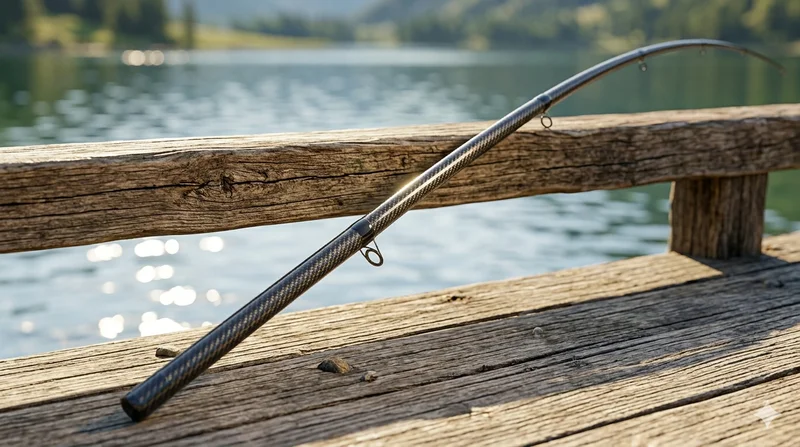
Carbon Fiber Fishing Rod Blank
High-quality carbon fiber fishing rod blank manufactured from multiple grades of Toray carbon fiber cloth. Available in a wide range of lengths, powers, and actions for freshwater and saltwater applications. Suitable for OEM rod building.
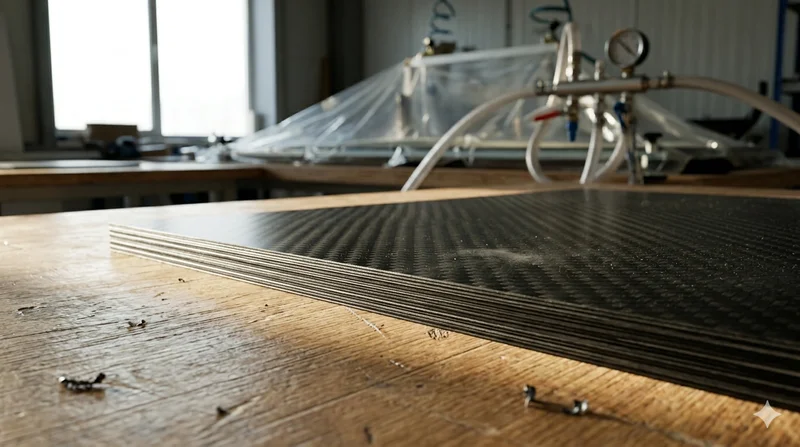
Carbon Fiber Plate — 3K Twill T700 3.0mm
Medium-thickness 3.0mm carbon fiber plate offering significantly higher load capacity while maintaining attractive 3K twill finish. Suitable for structural brackets, reinforcement plates, and load-bearing panels.
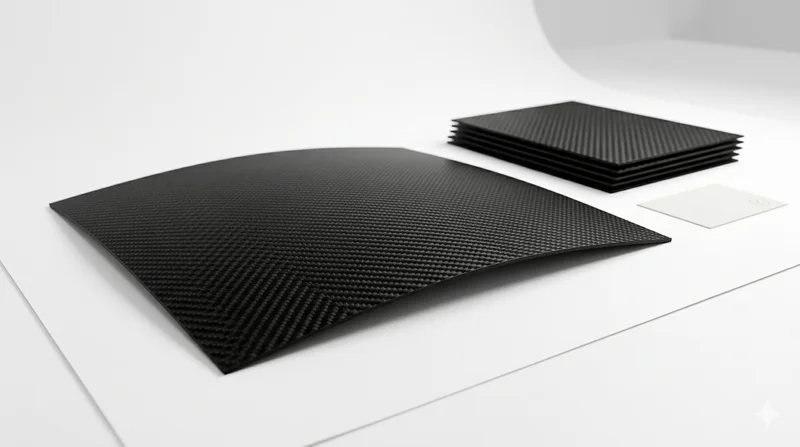
Carbon Fiber Plate — 3K Twill T700 1.5mm
Thin 1.5mm carbon fiber plate with 3K twill weave surface. Lightweight and stiff, commonly used for covers, panels, drone bodies, and applications requiring a premium aesthetic appearance.
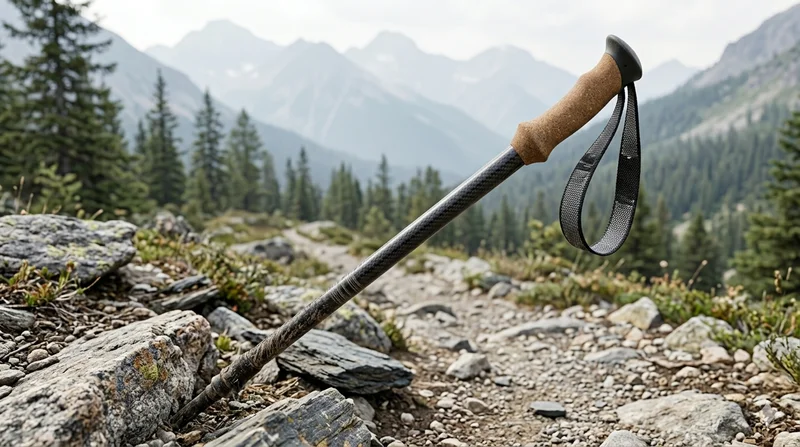
Carbon Fiber Trekking Pole
Lightweight carbon fiber trekking pole manufactured from high-grade carbon fiber tube. Weighs only 160g per pole while providing superior shock absorption and durability for hiking, trail running, and backpacking.
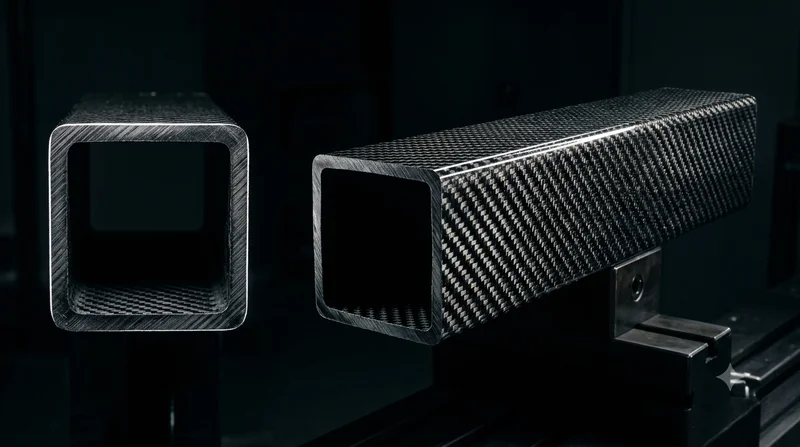
Square Carbon Fiber Tube — 3K Twill T700
Square cross-section carbon fiber tube manufactured with 3K twill weave for torsional strength. Preferred for structural frames, trusses, and support columns where rectangular geometry offers design flexibility.