
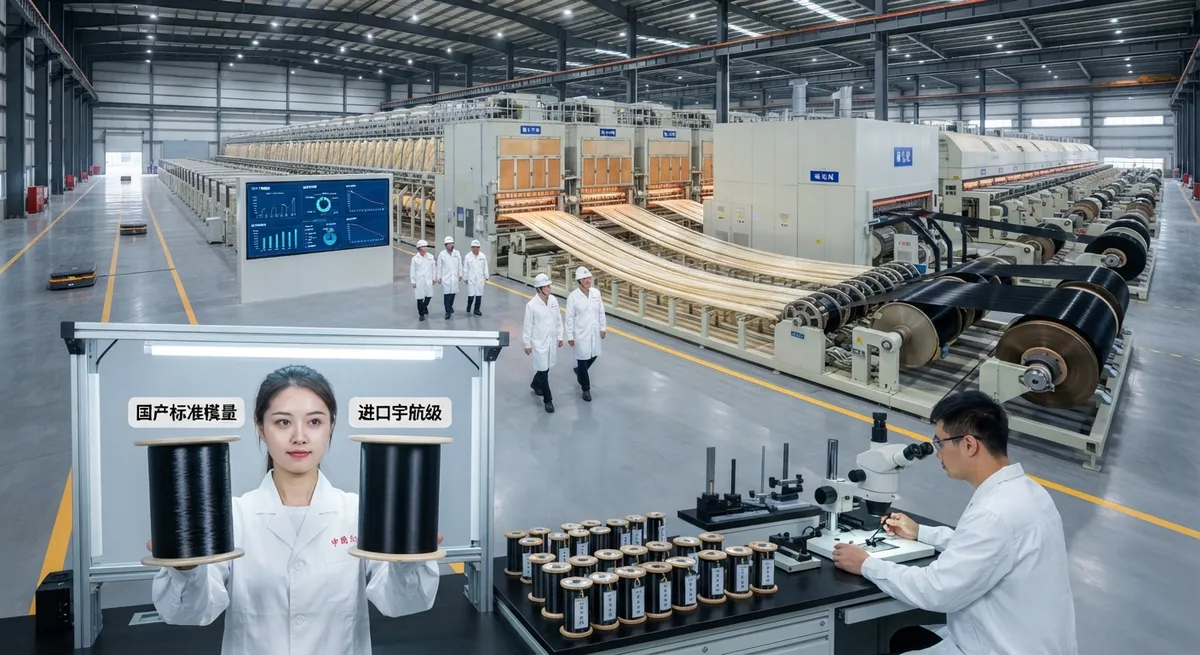
In 2025, China's carbon fiber localization rate crossed 80% — a milestone that would have seemed improbable a decade earlier, when domestic production covered only a small fraction of the country's consumption. The progress is real and visible in the supply chain: standard-modulus tow m
Introduction
In 2025, China's carbon fiber localization rate crossed 80% — a milestone that would have seemed improbable a decade earlier, when domestic production covered only a small fraction of the country's consumption. The progress is real and visible in the supply chain: standard-modulus tow made in China now displaces imported fiber from Toray, Hexcel, and SGL across wind energy, pressure vessels, and industrial applications, and Chinese producers are among the world's largest capacity holders.
Yet the localization story is deeply uneven, and treating "80% self-sufficiency" as a uniform success misses the structure of the market. The 80% is concentrated in standard and intermediate grades, where overcapacity has driven prices to historic lows. At the top of the grade ladder — high-strength T800 and above, and high-modulus grades such as T1000, M40J, and M55J — Chinese industry still depends substantially on imported fiber for critical applications. This article maps localization status by grade segment, explains why the market is simultaneously oversupplied and import-dependent, and translates that structure into sourcing guidance.
The Localization Numbers
China's carbon fiber industry went from a niche import-dependent sector to the world's largest production base in roughly a decade. Annual capacity grew from a few tens of thousands of tonnes in the mid-2010s to well over 100,000 tonnes by 2024, driven by a wave of investment from state-backed and private producers. Domestic consumption also grew strongly — wind energy, pressure vessel, and sports equipment demand expanded every year — but capacity growth ran ahead of demand, and the resulting overcapacity is the defining feature of the market.
The 80% localization rate measures self-sufficiency at the national level: roughly four of every five tonnes consumed in China are now supplied by domestic producers. The remaining 20% is the tell. It is not a random mix of grades — it concentrates precisely in the high-performance segments where domestic product still has gaps in consistency, qualification data, and ultra-high-performance properties.
Localization Status by Grade Segment
The table below maps the localization status of the main grade segments in 2026:
| Grade segment | Domestic supply status | Import reliance |
|---|---|---|
| Industrial T300-class (12K/24K/48K) | Fully localized, overcapacity | Negligible; reverse export of some grades |
| Standard modulus T700-class | Fully localized, high volume | Low |
| Intermediate modulus T800-class | Localized in part; capacity growing | Moderate for aerospace-grade consistency |
| High strength T1000-class | Domestic equivalents emerging | High for qualified aerospace supply |
| High modulus M40J/M55J-class | Early-stage domestic supply | High |
The pattern is clear: the further up the grade ladder, the thinner the domestic supply and the heavier the reliance on Toray, Hexcel, and SGL for qualified material. The grades with the highest price and margin — aerospace and high-modulus segments — remain the ones most dependent on imports.
The Low-End Problem: Oversupply and Price Erosion
Localization succeeded first at the bottom of the market, and that success created a new problem. With T300 and T700-class capacity far exceeding domestic demand, Chinese producers competed aggressively on price, driving industrial-grade fiber to historic lows — the same dynamic that pushed global T300 prices below $13/kg. The consequences ripple through the whole value chain:
- Utilization pressure: Nameplate capacity runs far below utilization because demand cannot absorb output; several producers operate at partial load, and expansion plans announced during the boom have been shelved.
- Margin compression: At oversupplied grades, Chinese fiber sells at prices where thin margins barely cover production cost, which constrains the reinvestment that funds high-end development.
- Quality differentiation becomes the battleground: When price competition reaches the floor, producers differentiate on consistency, batch traceability, and application support — the same attributes that matter for import substitution in demanding applications.
For buyers, the surplus at the bottom is an opportunity: industrial and standard-modulus fiber is widely available at competitive prices from multiple qualified domestic sources, and switching from imported standard-modulus tow to domestic fiber carries little technical risk in most applications.
The High-End Gap: T800+, T1000, M40J, M55J
The import dependence at the top of the market is structural rather than temporary. High-strength grades above T800 and high-modulus grades require combinations of properties — tensile strength above 6 GPa for T1000-class, modulus above 350 GPa for M55J-class — that demand mature process control and long qualification cycles. Aerospace-grade supply, in particular, is gated by qualification programs that take years: a fiber qualified into a structural program cannot be casually switched, and the qualification data package for a new source is expensive to generate.
The gap shows up in consumption data: China's imports of carbon fiber remain concentrated in premium grades, and the import value share is far higher than the import tonnage share — the mirror image of the 13.4% volume / 44.1% revenue split seen globally. Domestic producers are closing the gap — T800-class capacity is growing, and T1000-class equivalents are emerging from several producers — but for the most demanding aerospace and high-modulus applications, qualified domestic supply is still in early development, and foreign fiber retains the qualification advantage.
Reverse Import Substitution: What the Shift Looks Like
Import substitution has gone beyond "replacing imports" and now includes reverse flows — domestic standard-modulus fiber displacing imported fiber in products that themselves serve export markets:
- Wind energy: Chinese-made blade and pultrusion fiber serves both the world's largest domestic wind market and exported blades, replacing imported standard-modulus tow at scale.
- Pressure vessels: Type IV hydrogen storage vessels produced in China use domestic T700-class fiber in volume, with qualification data now spanning millions of vessel units.
- Industrial and sports: Carbon fiber for automotive parts, sporting goods, and general engineering increasingly sources domestic tow, with imported grades reserved for premium performance requirements.
The shift is not simply protectionist pressure — it is competitive: domestic standard-modulus fiber matches the mechanical requirements of most non-aerospace applications at lower cost and with shorter lead times. Imported fiber now competes mainly on qualification data, premium properties, and brand preference at the high end.
What This Structure Means for Buyers
Three practical conclusions follow from the localization map:
- Standard-modulus buyers should evaluate domestic sources seriously: For wind, pressure vessel, automotive, and industrial applications, Chinese T300/T700-class fiber is qualified, available, and price-competitive; a dual-source strategy with one domestic supplier reduces cost and supply risk.
- High-end buyers need qualification planning, not spot sourcing: Aerospace-grade and high-modulus requirements cannot be met by switching suppliers casually; qualification timelines, data packages, and long-term allocation agreements dominate the sourcing decision.
- Expect continued tightening at the top and competition at the bottom: Domestic producers investing in T800/T1000-class capacity will gradually narrow the high-end gap, while the low end remains a buyer's market — the balance between the two determines where prices move next.
Frequently Asked Questions
If China is 80% self-sufficient, why does it still import carbon fiber?
The 80% rate is a volume-weighted average that masks the grade structure. Standard and intermediate grades — T300 through T700, and part of T800 — are fully or largely localized, and these grades dominate tonnage. The remaining imports concentrate in premium segments: T800+ aerospace-grade fiber with qualified data packages, T1000-class high-strength fiber, and high-modulus grades like M40J and M55J. For these segments, domestic supply is still early-stage, qualification cycles are long, and buyers of critical applications continue to source from Toray, Hexcel, SGL, and other established suppliers. So China imports less carbon fiber than ever by volume, but the imports it still makes are the most valuable grades on the market.
Which Chinese producers are leading the localization push?
The leading domestic producers span state-backed and private groups. Zhongfu Shenying is among the largest capacity holders and a reference for standard and intermediate modulus fiber, with a broad T300-T800 class portfolio. Guangwei Composites and Hengshen are major producers serving wind, industrial, and aerospace-related programs. Jilin-based producers such as Jilin Chemical Fiber supply high-volume standard-modulus fiber for industrial use. All of them are expanding into higher-grade segments, and several have announced T1000-class and high-modulus development programs. For a buyer, the practical step is to evaluate the qualification data and batch consistency of each candidate against the actual application, rather than relying on brand reputation alone.
Is domestic Chinese carbon fiber good enough for aerospace applications?
For the highest-performance structural aerospace applications, qualified domestic supply is still in early development. T800-class fiber with aerospace-grade consistency is emerging and has entered some programs, but T1000-class and high-modulus grades for flight-critical structures still rely substantially on imported fiber, because aerospace qualification requires years of testing, traceability, and statistical allowables data that new producers are only beginning to accumulate. For non-flight-critical and industrial-composite uses, domestic fiber already meets the requirements of most applications. The gap is closing — driven by sustained investment and qualification programs — but as of 2026, the highest tiers of the aerospace grade ladder remain import-dependent.
Conclusion
China's carbon fiber localization has transformed the global supply map: an 80% self-sufficiency rate, fully localized standard and intermediate grades, and reverse import substitution in wind energy, pressure vessels, and industrial applications. But the structure is two-sided — oversupply and price erosion at the bottom, qualification-gated import dependence at the top, where T800+, T1000, M40J, and M55J grades still lean on Toray, Hexcel, and SGL. For buyers, the market offers real cost advantages for standard-modulus sourcing and real constraints for high-end supply. The winning strategy is to match the sourcing approach to the grade segment: dual-source domestic standard-modulus fiber, and plan qualification and allocation early for premium grades.
To evaluate domestic and imported fiber options for your application, explore our carbon fiber range across standard and intermediate modulus grades, or contact our engineering team for grade selection and sourcing guidance.
Part of topic
Related Articles
- Carbon Fibre Sheet Supplier UK: Sourcing Options and Specification Checklist
- Carbon Fiber Sheets Near Me Suppliers: Local Stock vs Factory Direct
- Filament Wound Epoxy Tubes: Industry Standards and Compliance Requirements
- Carbon Fiber Dealers Near Me: What a Good Dealer Actually Adds
- Carbon Fiber Supplies Near Me: Local Sourcing Without Compromising Spec
- Carbon Fiber for Sale: Online Platforms and Direct Sales Channel Comparison
Interested in Our Products?
Contact our team for competitive pricing and technical specifications.
Get a QuoteRelated Products

Carbon Fiber Fishing Rod Blank
High-quality carbon fiber fishing rod blank manufactured from multiple grades of Toray carbon fiber cloth. Available in a wide range of lengths, powers, and actions for freshwater and saltwater applications. Suitable for OEM rod building.
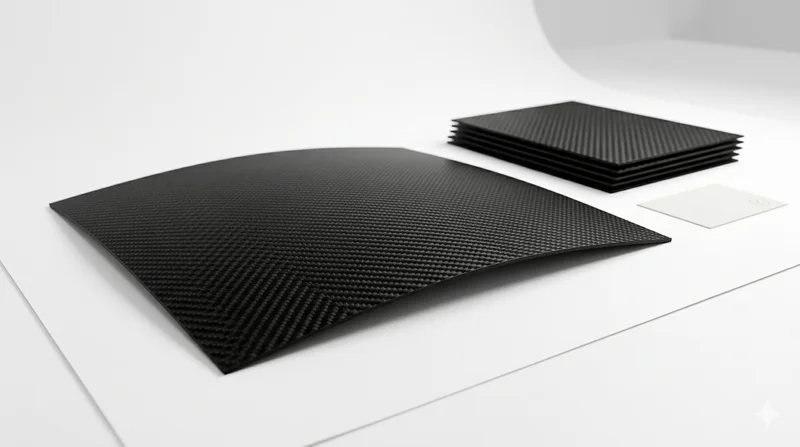
Carbon Fiber Plate — 3K Twill T700 1.5mm
Thin 1.5mm carbon fiber plate with 3K twill weave surface. Lightweight and stiff, commonly used for covers, panels, drone bodies, and applications requiring a premium aesthetic appearance.
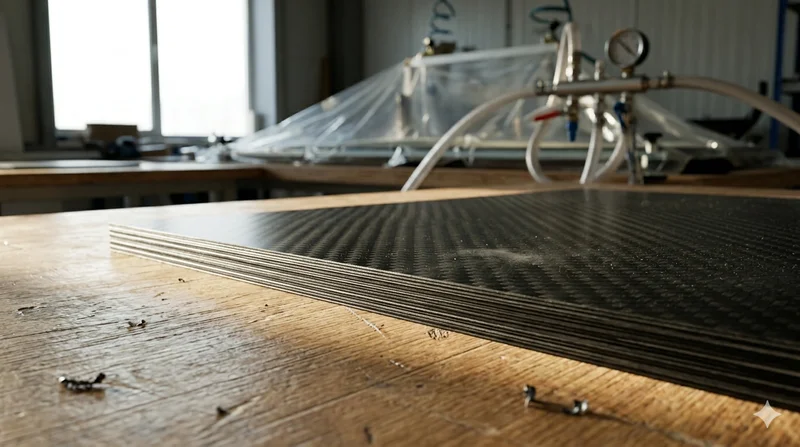
Carbon Fiber Plate — 3K Twill T700 3.0mm
Medium-thickness 3.0mm carbon fiber plate offering significantly higher load capacity while maintaining attractive 3K twill finish. Suitable for structural brackets, reinforcement plates, and load-bearing panels.
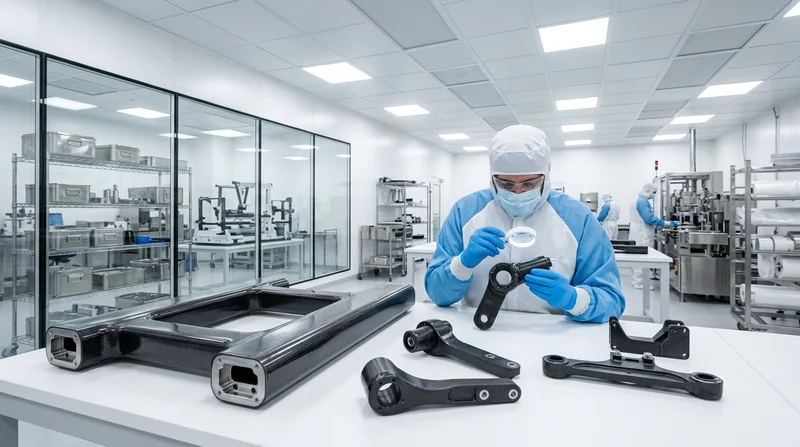
Custom Carbon Fiber Medical Device Components
Medical-grade carbon fiber components manufactured for imaging equipment, surgical instruments, and patient support systems. Carbon fiber's radiolucency (X-ray transparency) and high strength-to-weight ratio make it ideal for CT scanner beds, wheelchair frames, surgical robot arms, and MRI-compatible accessories. Biocompatible resin systems available.
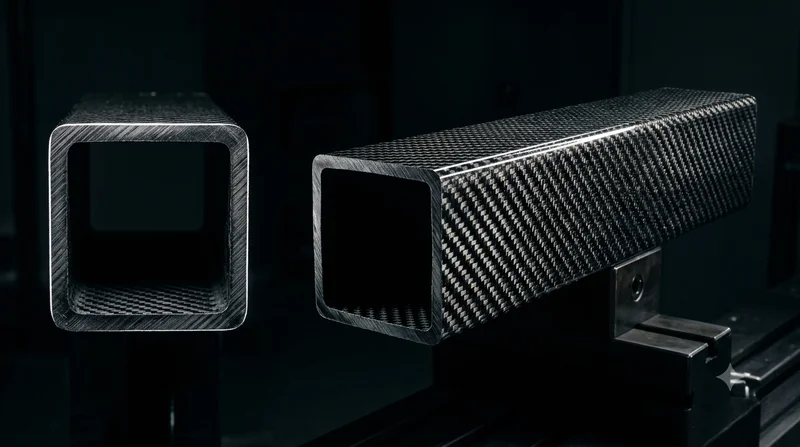
Square Carbon Fiber Tube — 3K Twill T700
Square cross-section carbon fiber tube manufactured with 3K twill weave for torsional strength. Preferred for structural frames, trusses, and support columns where rectangular geometry offers design flexibility.