
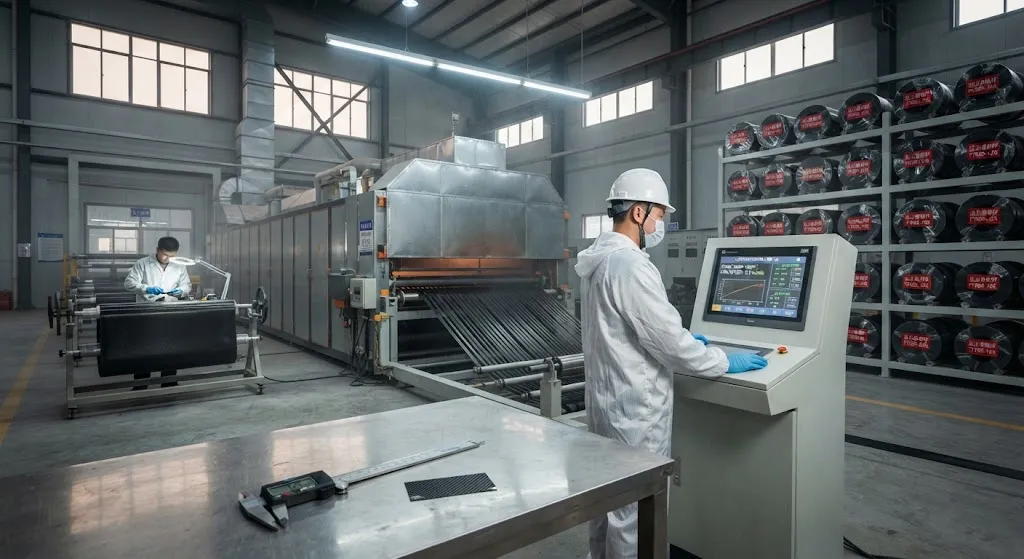
On 28 June 2026, China's largest PAN-based carbon fiber producer, Zhongfu Shenying, started up three new production lines at its Lianyungang base in Jiangsu Province, in a single commissioning event that compressed years of conventional capacity growth into one morning. The three lines
Introduction
On 28 June 2026, China's largest PAN-based carbon fiber producer, Zhongfu Shenying, started up three new production lines at its Lianyungang base in Jiangsu Province, in a single commissioning event that compressed years of conventional capacity growth into one morning. The three lines target three different corners of the carbon fiber market: the SYT70 line pushes into T1100-grade fiber on a four-meter-wide carbonization line rated at one thousand tons per year, the SYT45S-48K line adds five thousand tons of large-tow fiber aimed squarely at wind blade spar caps, and the SYM4+ line raises high-modulus capacity. Together they lift the design capacity of the Lianyungang site toward 31,000 tons, and the company has stated an ambition of 60,000 tons of total annual capacity.
The commissioning matters far beyond one company's balance sheet. Chinese producers have already transformed the standard-modulus segment of the global market with aggressive pricing, and every expansion into T1100-grade and high-modulus territory tests the assumption that the premium grades belong to Japanese and American leaders. For buyers of carbon fiber, this article examines what each new line actually produces, how the technology compares with global benchmarks, and what the scale-up means for supply security, pricing, and qualification choices in 2026 and beyond.
The Three New Lines at Lianyungang
The three lines commissioned on 28 June are deliberately complementary, covering high-performance, high-volume, and high-stiffness demand in a single base. Their parameters are summarized below:
| Line | Grade Position | Nominal Capacity | Key Attribute | Target Application |
|---|---|---|---|---|
| SYT70 line | T1100-grade | 1,000 t/year | Four-meter-wide carbonization, high tensile strength | Aerospace, premium industrial |
| SYT45S-48K line | Standard modulus, 48K tow | 5,000 t/year | Large-tow economics for mass-market blades | Wind blade spar caps |
| SYM4+ line | High modulus | Multi-thousand-ton class | Elevated modulus for stiffness-critical parts | Mold tooling, robotics, aerospace |
The four-meter width of the SYT70 line deserves attention. Wide carbonization lines allow wider fabric weaving and more efficient large-part layup, and they are rare outside the top global producers; the width itself signals that the line was engineered for structural aerospace and industrial formats rather than narrow sporting-goods widths. The SYT45S-48K line, in contrast, is a volume play: 48K large-tow fiber competes directly on cost per kilogram with the wind-grade fiber that blade makers now consume in thousands of tons, and five thousand tons of new capacity is a meaningful share of the regional wind demand pool.
The Technology Push into T1100-Grade Fiber
T1100-grade fiber is the current commercial frontier of tensile strength, a territory where the mechanical data sheet becomes a marketing document. Zhongfu Shenying's SYT70 sits in this class, and its higher-grade sibling made headlines earlier in the year: in March 2026 the company unveiled SYT80, a T1200-grade fiber, simultaneously in Beijing and at the JEC World composites show in Paris, claiming the world's first hundred-ton-class mass production of that grade. The published specifications for SYT80 are 8,000 MPa tensile strength, 324 GPa tensile modulus, 2.5% elongation at break, and a density of 1.79 g/cm³, which places it in direct competition with the strongest commercial fibers in the world.
| Property | Zhongfu SYT80 (T1200 grade) | Toray T1100G | Significance |
|---|---|---|---|
| Tensile strength (MPa) | 8,000 | 7,000 | Strength ceiling for structural design |
| Tensile modulus (GPa) | 324 | 324 | Stiffness parity with leading IM fiber |
| Elongation at break (%) | 2.5 | 2.2 | Toughness and processing window |
| Density (g/cm³) | 1.79 | 1.80 | Specific properties in laminate design |
The strategic significance is not the spec sheet itself but the capability it demonstrates. Producing T1100-grade and above commercially requires control of precursor quality, carbonization temperature profiles, and defect management at a level only a handful of producers worldwide have reached. With SYT70 now in thousand-ton production and SYT80 in hundred-ton-class production, Zhongfu Shenying has moved from following the Japanese leader Toray to standing beside it in the premium segment, which changes the qualification landscape for aerospace programs that have historically relied on a narrow supply base.
What the 60 kt Ambition Means for the Global Market
The company has stated a goal of 60,000 tons of total annual capacity, a figure that would make it one of the largest carbon fiber producers in the world by volume. The implications ripple across the market:
- Price pressure in premium grades: Chinese standard-modulus capacity already reset global pricing; T1100-grade and high-modulus expansion threatens to do the same for premium grades, compressing margins at Japanese and American producers.
- Wind supply security: Large-tow capacity in the five-thousand-ton class gives blade makers a second major supply base for spar caps, reducing dependence on a single chain and stabilizing wind-grade pricing.
- Qualification dynamics: Aerospace programs qualify materials over 12-24 months; the availability of domestically produced high-grade fiber for Chinese and international airframers accelerates dual-sourcing strategies.
- Cost learning curve: Scale drives cost; each additional ten-thousand-ton tranche of Chinese capacity lowers the global cost curve, expanding the applications where carbon fiber beats steel and aluminum on total cost.
- Export behavior: The maturity of domestic high-end grades may redirect Chinese exports from commodity fiber toward engineered formats such as prepreg, fabric, and pultruded profiles.
The realistic view is that 60,000 tons will take years and will be built in phases; the company's existing bases in Xining and Lianyungang and the new Lianyungang tranche together form a credible runway, but commissioning and ramp-up of each phase will pace the actual trajectory. Even so, the direction is unambiguous: China's high-end carbon fiber capacity is scaling at a pace that reshapes supply expectations through 2030.
Supply Chain Implications for Buyers
For industrial buyers the immediate consequences are positive but not automatic. The new large-tow and high-modulus capacity broadens the qualified supply base and puts downward pressure on prices in grades that were previously tight, particularly wind-grade 48K fiber and high-modulus grades for tooling and robotics. The caveat is that availability does not equal qualification: buyers in aerospace and safety-critical industries still need to validate the new material against their own specifications, and the SYT70 and SYM4+ outputs will require standard qualification work over the coming 12-24 months. Buyers with flexible qualification chains can capture the cost benefit earliest, while programs locked to legacy material approvals will see the benefit only when requalification cycles arrive.
Frequently Asked Questions
What are the three new lines Zhongfu Shenying commissioned in June 2026?
The company started up three lines at its Lianyungang base on 28 June 2026: the SYT70 line, a T1100-grade line with a four-meter-wide carbonization section rated at 1,000 tons per year; the SYT45S-48K line, a five-thousand-ton large-tow line aimed at wind blade spar caps; and the SYM4+ high-modulus line for stiffness-critical applications. The three lines together bring the Lianyungang site's design capacity toward 31,000 tons, part of the company's stated ambition of 60,000 tons of total annual capacity.
How does Zhongfu Shenying's SYT80 compare with Toray's T1100G?
Published specifications for SYT80, a T1200-grade fiber unveiled in March 2026, list 8,000 MPa tensile strength, 324 GPa tensile modulus, 2.5% elongation at break, and 1.79 g/cm³ density. The reference Toray T1100G datasheet lists approximately 7,000 MPa strength, 324 GPa modulus, 2.2% elongation, and 1.80 g/cm³ density. SYT80 therefore matches the stiffness of the leading Japanese intermediate-modulus fiber while posting a higher headline strength; in practice, both materials require qualification against the end user's specific design allowables, and datasheet comparisons alone do not determine material selection.
What does the Chinese high-end expansion mean for carbon fiber prices?
History suggests it will put downward pressure on the affected grades. When Chinese standard-modulus capacity scaled up, global pricing in that segment fell sharply, and the same dynamic is now emerging in T1100-grade, high-modulus, and large-tow grades. Wind-grade 48K and high-modulus fiber for tooling are the most immediate beneficiaries. The effect is not immediate for aerospace buyers, however, because qualification cycles of 12-24 months delay the point at which new capacity can be substituted into certified programs; the pricing benefit arrives first for buyers with flexible, non-certified supply chains.
Conclusion
Zhongfu Shenying's three new Lianyungang lines mark a structural shift in the global carbon fiber industry: the largest Chinese producer now operates T1100-grade, high-volume large-tow, and high-modulus capacity under one roof, with a stated path toward 60,000 tons of annual capacity. For buyers, the scale-up broadens the supply base, presses prices in premium and wind grades, and changes the qualification calculus for regional programs. For the industry, it confirms that high-end carbon fiber is no longer a two-country game, and that cost reduction through scale will continue reshaping which applications can afford carbon fiber at all.
Whether you are sourcing wind-grade large-tow fiber, high-modulus grades for tooling, or T1100-class material for structural programs, understanding the new supply landscape is the first step. Explore our carbon fiber product range across wind, industrial, and high-performance applications, or contact our team to discuss sourcing and qualification strategy in the changing market.
Part of topic
Related Articles
- Recycled Carbon Fiber Market Forecast 2030: Technology Maturity and Commercialization Path
- South Korea Carbon Fiber Market 2026: Hydrogen Economy and Shipbuilding Innovation
- Wind Turbine Blade Leading Edge Protection 2026: Polyurethane, Tape, and Metallic Shield Solutions
- China Carbon Fiber Overcapacity 2026: Price War Impact and Industry Consolidation
- India Carbon Fiber Market 2026: Wind Energy, Aerospace, and Defense Expansion
- PAN Precursor Market 2026: Acrylonitrile Supply and Carbon Fiber Cost Structure
Interested in Our Products?
Contact our team for competitive pricing and technical specifications.
Get a QuoteRelated Products
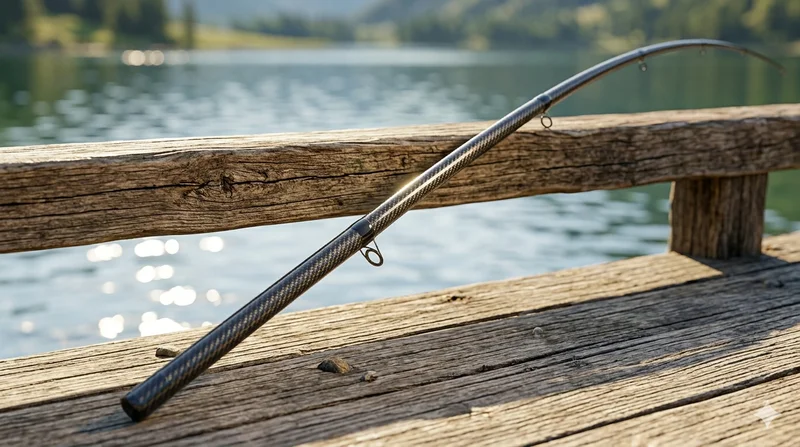
Carbon Fiber Fishing Rod Blank
High-quality carbon fiber fishing rod blank manufactured from multiple grades of Toray carbon fiber cloth. Available in a wide range of lengths, powers, and actions for freshwater and saltwater applications. Suitable for OEM rod building.
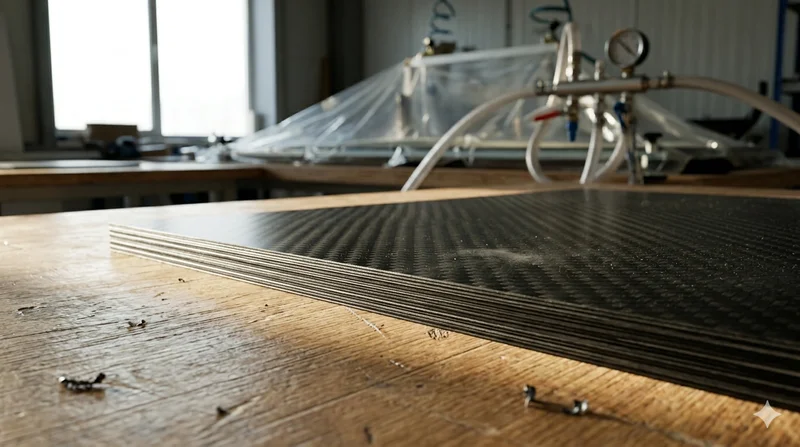
Carbon Fiber Plate — 3K Twill T700 3.0mm
Medium-thickness 3.0mm carbon fiber plate offering significantly higher load capacity while maintaining attractive 3K twill finish. Suitable for structural brackets, reinforcement plates, and load-bearing panels.

Carbon Fiber Plate — 3K Twill T700 1.5mm
Thin 1.5mm carbon fiber plate with 3K twill weave surface. Lightweight and stiff, commonly used for covers, panels, drone bodies, and applications requiring a premium aesthetic appearance.

Square Carbon Fiber Tube — 3K Twill T700
Square cross-section carbon fiber tube manufactured with 3K twill weave for torsional strength. Preferred for structural frames, trusses, and support columns where rectangular geometry offers design flexibility.
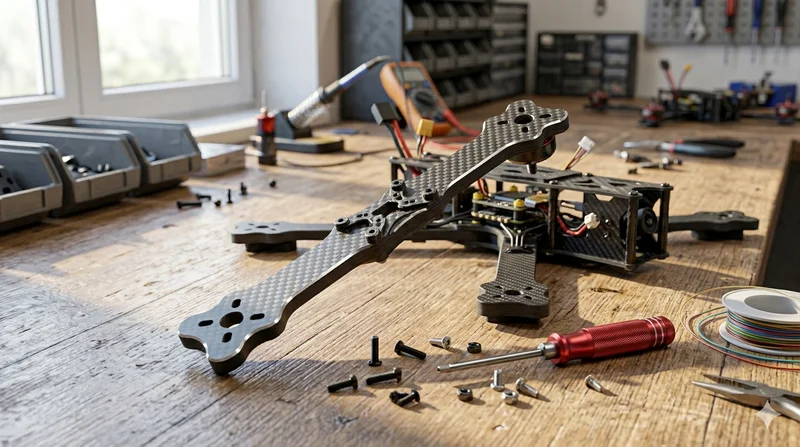
Carbon Fiber Drone Arm
Precision-molded carbon fiber drone arm combining unidirectional fiber for stiffness and woven layers for torsional strength. Designed for FPV, photography, and industrial drone platforms. Each arm is CNC-machined to exact specifications.