
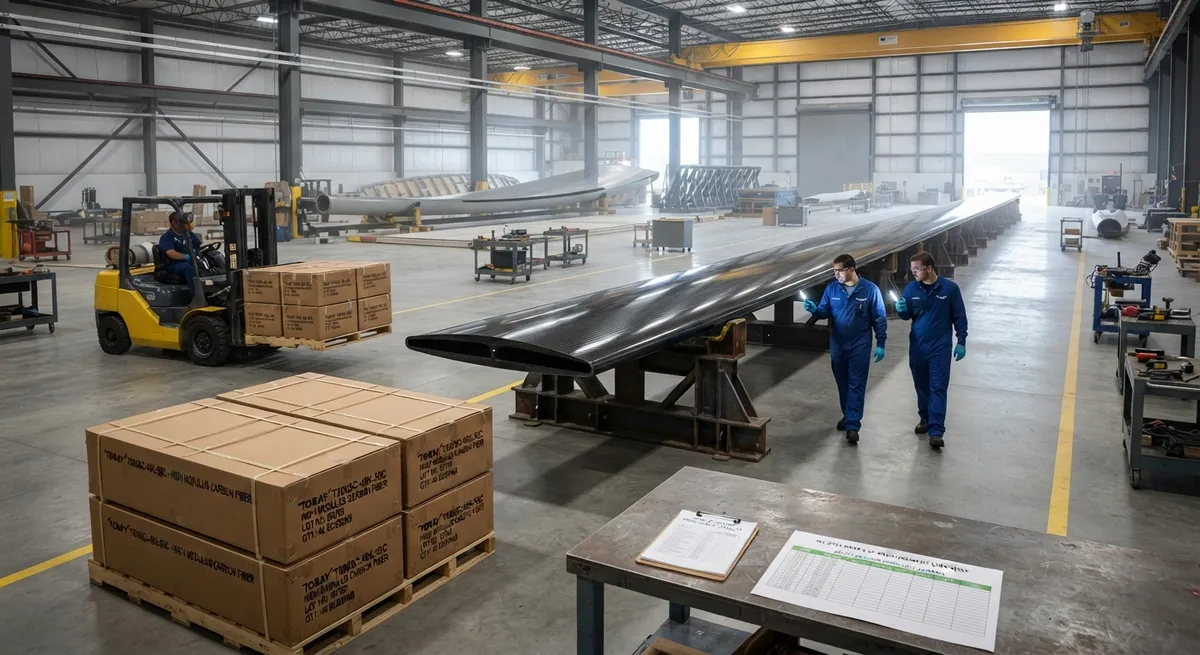
The wind industry's cost crisis and its carbon fiber supply outlook are colliding on the same timeline. Turbine OEMs entered 2026 with blade prices under pressure, commodity input costs high, and several major players reporting negative margin quarters, while the large-tow carbon fiber
Introduction
The wind industry's cost crisis and its carbon fiber supply outlook are colliding on the same timeline. Turbine OEMs entered 2026 with blade prices under pressure, commodity input costs high, and several major players reporting negative margin quarters, while the large-tow carbon fiber that enables the longest blades is simultaneously moving from a buyer's market to a supply-constrained one. Large-tow — the 48K and 50K fiber classes — is the cost-efficient carbon fiber grade used in pultruded spar caps for blades above approximately 80-90 meters, and it has been the fastest-growing segment of carbon fiber demand for a decade. The question for OEM procurement teams is no longer whether to secure supply, but how to do it without further compressing already-thin margins.
This article examines the two forces — the OEM margin squeeze and the projected 2028 large-tow shortage — and translates them into a practical sourcing strategy. The central tension is structural: the blades that relieve margin pressure through longer, lighter, more efficient rotors are precisely the blades that consume the most large-tow carbon fiber, at prices that are now rising.
The Margin Squeeze on Turbine OEMs
Turbine OEM profitability deteriorated through 2024-2025 and remained under pressure into 2026. The causes are well documented: raw material and logistics cost inflation, warranty and quality-related provisions, price competition in a market with abundant turbine supply, and the high fixed cost of new platform launches. For a period in 2025, one of the world's largest wind OEMs was reporting negative operating margins, and industry consensus held that several producers were selling turbines at or below manufacturing cost for parts of the year.
The blade is the single most material-intensive component of a modern turbine, and carbon fiber is the highest-value input in the blade bill of materials once spar cap lengths push into the range where glass alone cannot meet stiffness and weight requirements. Early-2026 pricing for blade-grade carbon pultrusion products sat at roughly $160-320 per square meter, with wide variation by tow class, volume commitment, and contract structure. Against a backdrop of OEM margin compression, that price range is not a line item — it is a strategic variable with direct impact on whether a blade program is profitable.
Why Large-Tow Turns Acute by 2028
The supply-side story is less about today's availability than about how fast demand is growing relative to capacity. Large-tow carbon fiber demand is being pulled by three forces simultaneously:
- Larger rotor diameters: The push toward 15-20+ MW offshore turbines and low-wind-speed onshore platforms raises the average spar cap length and carbon content per blade, increasing large-tow intensity per turbine.
- Non-wind industrial demand: Pressure vessels for hydrogen and CNG transport, automotive structural components, and industrial applications are all scaling up large-tow consumption, competing with wind for the same fiber families.
- Capacity discipline: After the overcapacity-driven price collapse of the early 2020s, large-tow producers have been cautious about commissioning new lines; announced expansions are real but lag demand projections by years.
When the dynamics above are combined, market assessments converge on a supply tightening that turns acute around 2028: available large-tow volume falls short of demand at current pricing, with lead times lengthening and prices firming. For wind OEMs, the risk is not a single catastrophic shortage but a multi-year period in which volume is allocated, not readily available — the classic environment in which buyers without long-term agreements find themselves last in line.
Sourcing Strategy for the Tightening Window
The procurement playbook for large-tow in a tightening market balances cost, security, and exposure. The table below summarizes the main options and their trade-offs:
| Strategy | Cost Impact | Supply Security | Key Trade-off |
|---|---|---|---|
| Long-term fixed-volume contracts | Locks current price levels | High — guaranteed allocation | Volume commitment risk if turbine demand slips |
| Multi-source qualification | Moderate — qualification cost | High — no single point of failure | Qualification time and engineering effort |
| Regional supplier diversification | Varies by region | High — reduces trade-risk exposure | Logistics and certification complexity |
| Short-term spot buying | Lowest upfront commitment | Low — last in line in a shortage | Price and availability volatility |
| In-house pultrusion/processing | Higher capital, lower unit cost | Medium — still needs fiber | Capital intensity and process know-how |
For most OEMs, the realistic answer is a portfolio: fixed-volume contracts covering a core share of demand, a qualified second source for a portion of volume, and spot purchasing only at the margin. The exact split depends on each OEM's rate forecast, tolerance for volume-commitment risk, and appetite for qualification engineering spend.
Managing the China-Source Exposure
A distinct dimension of the 2028 problem is geographic. A large share of the world's new large-tow capacity — announced and under construction — is in China, where producers have scaled aggressively to serve both domestic wind demand and export markets. That creates an opportunity and a risk: Chinese large-tow is often cost-competitive and available on shorter lead times, but buyers must weigh trade policy, transportation, payment terms, and quality-system certification against the price advantage.
The OEMs that manage this exposure best are treating it as a portfolio decision rather than an either/or. They are qualifying Chinese large-tow for programs where cost pressure is acute, maintaining non-Chinese sources for programs with stricter certification or geographic requirements, and structuring contracts to allow volume shifts between sources as conditions evolve. The 2028 shortage does not have to be a crisis for wind OEMs — but it will be for OEMs that have neither long-term agreements nor a qualified second source when allocation begins.
Frequently Asked Questions
Why is large-tow carbon fiber expected to be in shortage around 2028?
The shortage is a demand-versus-capacity timing problem. Large-tow demand is growing on three fronts at once: wind rotors are getting bigger and more carbon-intensive per blade; hydrogen pressure vessels, automotive parts, and other industrial applications are scaling their large-tow consumption; and producers, burned by the early-2020s overcapacity price collapse, have been conservative about commissioning new lines. Public capacity expansions are real but take years to commission, and demand projections overtake them around 2028. The result is a tightening market where volume is allocated by contracts rather than freely available, with longer lead times and firmer pricing for buyers without long-term agreements.
What is the typical cost of carbon fiber in a large wind turbine blade?
Carbon fiber is the highest-value input in a blade once spar cap lengths exceed the point where glass reinforcement alone can meet stiffness and weight targets — roughly the 80-90 meter blade class and above. In early 2026, blade-grade carbon pultrusion products were priced at roughly $160-320 per square meter, varying with tow class, order volume, and contract structure. For a 100+ meter blade, the carbon content can represent a significant share of the total blade bill of materials, which is why small percentage movements in large-tow pricing have an outsized effect on OEM margins — and why the sourcing decision is strategic rather than transactional.
How can a wind OEM secure large-tow supply without locking in excessive volume risk?
The standard approach is a portfolio of instruments. Cover a core share of projected demand with fixed-volume, multi-year contracts that lock current pricing and guarantee allocation. Qualify a second source for a meaningful portion of volume so a single supplier disruption does not stop production, accepting the engineering and certification cost of dual qualification. Keep a small spot-purchasing margin for flexibility. And where cost pressure is acute, qualify cost-competitive Chinese large-tow for selected programs while maintaining non-Chinese sources elsewhere, treating geographic exposure as a portfolio decision. Volume-commitment risk is managed by sizing contract bands conservatively and including volume-flex clauses where suppliers accept them.
Conclusion
The wind industry is entering a period where the two pressures — OEM margins and large-tow availability — move in opposite directions for procurement teams. Blade carbon prices, already at $160-320 per square meter, are firming as demand growth outpaces capacity. The OEMs that navigate this best will be those that treat large-tow sourcing as a strategic portfolio: fixed-volume agreements for the core, a qualified second source for security, regional diversification to manage exposure, and disciplined spot purchasing at the margin. The 2028 shortage is a planning problem, not a fatal one — for those who plan now.
For procurement and engineering teams evaluating spar cap materials, the practical next step is a structured evaluation of large-tow suppliers against your blade program's certification and cost requirements. Explore our range of carbon fiber products for wind energy applications, or contact our engineering team to discuss large-tow sourcing, pultrusion feedstock, and qualification support for your blade program.
Part of topic
Related Articles
- Carbon Fibre Sheet Supplier UK: Sourcing Options and Specification Checklist
- Carbon Fiber Sheets Near Me Suppliers: Local Stock vs Factory Direct
- Filament Wound Epoxy Tubes: Industry Standards and Compliance Requirements
- Carbon Fiber Dealers Near Me: What a Good Dealer Actually Adds
- Carbon Fiber Supplies Near Me: Local Sourcing Without Compromising Spec
- Carbon Fiber for Sale: Online Platforms and Direct Sales Channel Comparison
Interested in Our Products?
Contact our team for competitive pricing and technical specifications.
Get a QuoteRelated Products
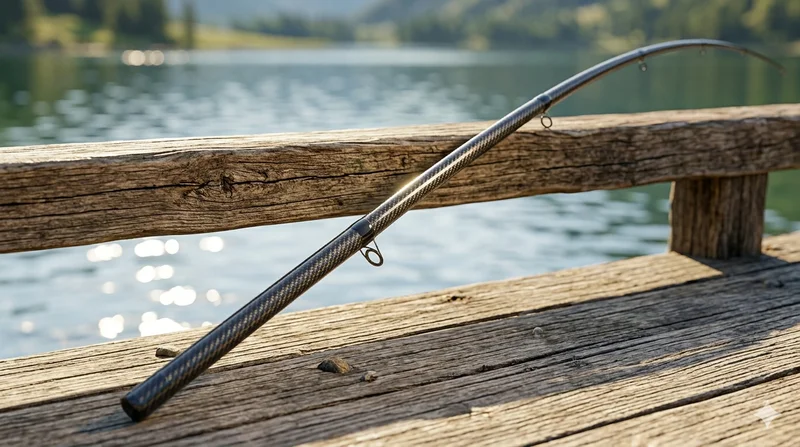
Carbon Fiber Fishing Rod Blank
High-quality carbon fiber fishing rod blank manufactured from multiple grades of Toray carbon fiber cloth. Available in a wide range of lengths, powers, and actions for freshwater and saltwater applications. Suitable for OEM rod building.

Carbon Fiber Plate — 3K Twill T700 1.5mm
Thin 1.5mm carbon fiber plate with 3K twill weave surface. Lightweight and stiff, commonly used for covers, panels, drone bodies, and applications requiring a premium aesthetic appearance.
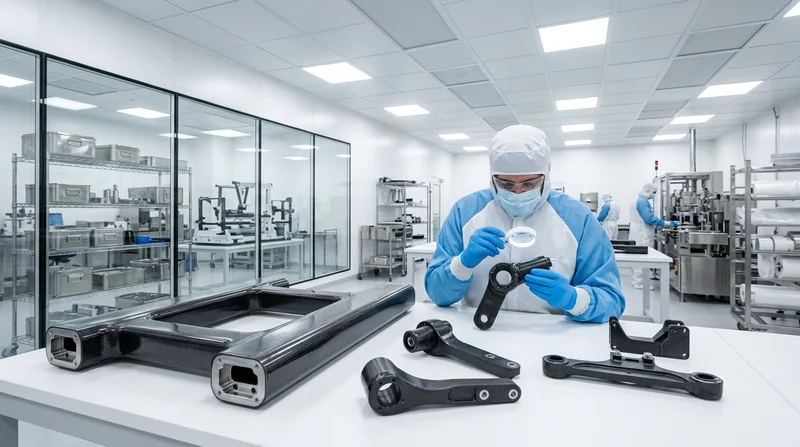
Custom Carbon Fiber Medical Device Components
Medical-grade carbon fiber components manufactured for imaging equipment, surgical instruments, and patient support systems. Carbon fiber's radiolucency (X-ray transparency) and high strength-to-weight ratio make it ideal for CT scanner beds, wheelchair frames, surgical robot arms, and MRI-compatible accessories. Biocompatible resin systems available.

Square Carbon Fiber Tube — 3K Twill T700
Square cross-section carbon fiber tube manufactured with 3K twill weave for torsional strength. Preferred for structural frames, trusses, and support columns where rectangular geometry offers design flexibility.
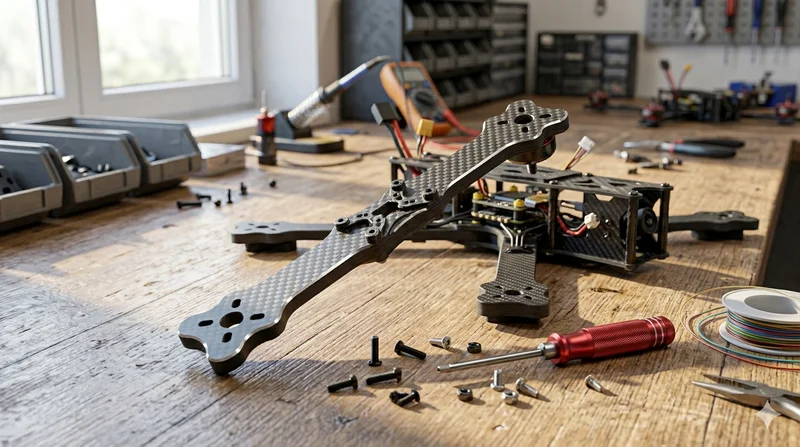
Carbon Fiber Drone Arm
Precision-molded carbon fiber drone arm combining unidirectional fiber for stiffness and woven layers for torsional strength. Designed for FPV, photography, and industrial drone platforms. Each arm is CNC-machined to exact specifications.