
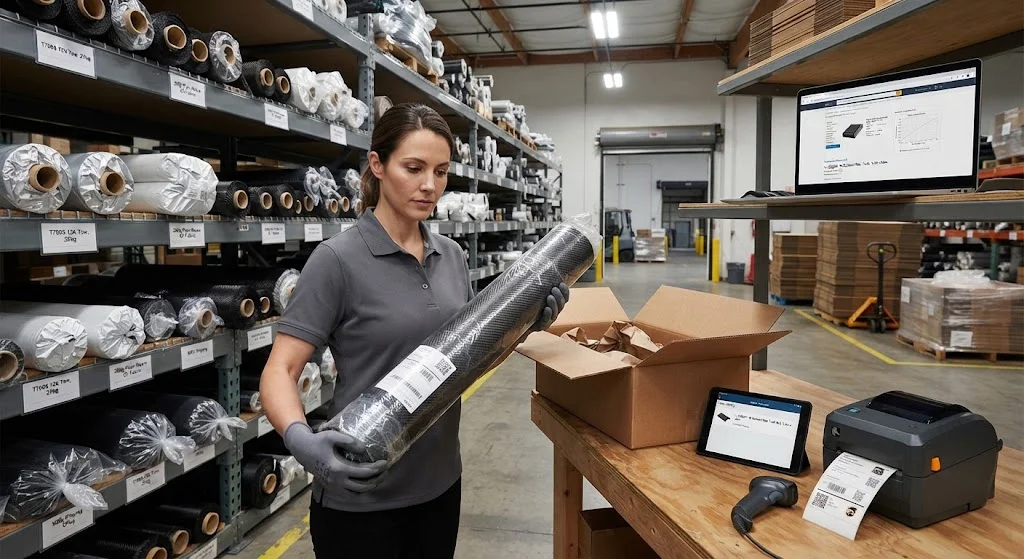
Searching for carbon fiber for sale today returns thousands of listings across very different channel types, and the channel you choose determines more about your buying outcome than the price per kilogram. Carbon fiber is an engineered material: the same-looking tow can be T300 commodity grade or a
Introduction
Searching for carbon fiber for sale today returns thousands of listings across very different channel types, and the channel you choose determines more about your buying outcome than the price per kilogram. Carbon fiber is an engineered material: the same-looking tow can be T300 commodity grade or aerospace-qualified T800, and the difference is invisible in a product photo. A global B2B marketplace listing can offer a very attractive unit price, but specification verification, certification and consistent quality are exactly where marketplace sellers are weakest. A specialized composite materials shop usually holds smaller stock but provides reliable specification data and technical support. A direct manufacturer sale offers the lowest cost and the deepest product knowledge, but often demands high minimum orders and longer lead times. This article compares the main channels for buying carbon fiber online, the risks attached to each, and the practical selection criteria for matching purchases to the right platform.
The Main Channels for Carbon Fiber for Sale
Buyers looking for carbon fiber for sale will encounter four channel types, each with a distinct trade-off between price, verification and convenience:
- Global B2B marketplaces: platforms such as Alibaba and Made-in-China aggregate thousands of composite sellers, offering the lowest unit prices and huge grade variety, but with uneven documentation and variable quality control.
- General e-commerce platforms: Amazon and similar consumer marketplaces stock carbon fiber sheet, tube and fabric for hobbyist and small-batch use, convenient for small quantities but rarely providing material certificates or traceability.
- Specialized composite materials shops: dedicated distributors that publish detailed datasheets, hold technical stock and answer engineering questions, priced higher but reliable for specification-critical purchases.
- Direct manufacturer sales: buying from the producer or its authorized trading arm, the lowest-cost channel with the best product knowledge, typically requiring larger minimum orders and longer lead times.
Most professional procurement teams use a combination of these channels: direct or specialized channels for specification-critical material, and marketplace channels for non-critical commodity grades where price dominates.
How Channels Compare on the Metrics That Matter
The table below summarizes how the main channels for carbon fiber for sale compare on the factors that determine buying risk. Values reflect typical conditions in the current market rather than any single platform.
| Factor | B2B marketplace | Composite materials shop | Direct manufacturer |
|---|---|---|---|
| Unit price level | Lowest | Highest | Low, volume dependent |
| Specification documentation | Variable, often thin | Detailed datasheets | Full technical data |
| Material certificate availability | Inconsistent | Usually available | Standard |
| Typical minimum order | Low to medium | Low, cut-to-order | High |
| Technical support | Limited | Good | Excellent |
| Delivery reliability | Variable | Good | Good on schedule |
Unit price is the only metric where marketplaces consistently win, and it is the metric least able to tell you what you are actually buying. When carbon fiber for sale is priced well below market norms, the gap usually means lower grade fiber, unspecified resin, or a seller that cannot document what it ships.
Verifying Listings When You Buy Carbon Fiber Online
Whatever channel you choose, four verification steps protect you from the most common failure modes when buying carbon fiber online. First, request the material certificate before ordering: fiber grade, tow size, areal weight for fabrics, resin system for prepreg, and lot traceability. A seller who cannot produce a certificate for a listed grade cannot prove that the listing is accurate — the certificate is the only reliable evidence of what the material actually is, whether the listing appears on a marketplace or in a composite materials shop offering CFRP for sale from stock. Second, check the specification data against known reference values. T300 tow has a nominal tensile strength around 3,530 MPa and modulus around 230 GPa; if a listing claims T300-level performance at numbers well outside those ranges, the data has been copied from an incompatible source. Third, verify the seller's business credentials — registration, export history and quality certifications such as ISO 9001 — rather than relying on platform badges. Fourth, start with a small sample order to test consistency, delivery and documentation before committing to production volume.
For specialized composite materials shops, the equivalent check is whether the shop publishes datasheets and holds the grades in stock rather than drop-shipping from an unidentified source. A shop that publishes batch numbers and test data is behaving like an engineering supplier; one that only publishes prices is behaving like a reseller.
Choosing the Right Channel for Carbon Fiber for Sale
Matching the purchase to the channel depends on the application's criticality and volume. For aerospace, medical and safety-critical parts, specification certainty is non-negotiable, and the premium of a specialized composite materials shop or a direct manufacturer relationship is easily justified by the cost of a single rejected batch. For prototype and tooling work, a composite materials shop offers the flexibility of cut-to-order quantities and fast delivery. For high-volume commodity applications where the grade is not critical and the specification is stable, a marketplace channel with a verified and qualified seller can deliver genuine cost savings. The most expensive mistake is buying specification-critical material from a channel that cannot verify it, because the saving per kilogram is small compared with the cost of field failure, rework or certification loss.
Buyers should also consider total landed cost rather than unit price. Marketplace listings often quote ex-works or FOB prices that exclude freight, insurance and customs, and carbon fiber shipments are heavy enough that freight can add significantly to the final cost. A composite materials shop with local stock may quote a higher unit price but deliver next day with the full cost known in advance.
Frequently Asked Questions
Is it safe to buy carbon fiber from B2B marketplaces?
It can be safe if you apply the right verification discipline, but it is riskier than buying from a specialized composite materials shop or direct manufacturer. The key protections are requesting a material certificate before ordering, checking the listed specification against reference values for the claimed grade, verifying the seller's business credentials, and ordering a sample before committing to volume. The risk is not that marketplace sellers are dishonest — it is that the material is an engineered product and documentation gaps are common. Treat low prices as a signal to verify more, not less.
Why does carbon fiber for sale vary so much in price between channels?
Price differences reflect several real factors. Fiber grade is the largest: T300 commodity tow is significantly cheaper than intermediate-modulus or aerospace-qualified grades. Resin system matters for prepreg, tow size affects conversion costs, and areal weight changes how much material you actually receive per meter of fabric. Channel costs also differ — a composite materials shop carries technical stock, datasheets and support staff, and those costs appear in the price. Finally, documentation and certification have value: traceable, certified material costs more to produce. Comparing prices without comparing these factors produces misleading conclusions.
What should a sample order include before buying in volume?
A useful sample order tests three things: the material itself, the seller's documentation discipline, and delivery reliability. Ask for a certificate covering the specific lot, check the physical material against the datasheet — count the tow, weigh a fabric sample and check the surface — and measure the actual lead time. Keep a small retained sample from the production order for comparison. If the sample batch matches the certificate and the delivery matches the promise, the seller has earned a larger order; if either fails, the information was worth far less than the cost of a full production batch that fails later.
Conclusion
The market for carbon fiber for sale has never been more accessible, but accessibility has not reduced the importance of specification verification. The channel determines your exposure: marketplaces offer the lowest prices and the thinnest documentation, composite materials shops offer verified specification data at a premium, and direct manufacturer sales offer the best cost and knowledge at higher minimum orders. The reliable buying pattern is to match the channel to the criticality of the application, verify every purchase with a material certificate and reference checks, and include a sample order in your qualification process. That discipline costs little and protects everything downstream of the material.
Browse our carbon fiber tows, fabrics, sheets and prepregs with full specification data, or contact our sales team for certificates, samples and volume pricing for your projects.
Part of topic
Related Articles
- Carbon Fiber Supplies Near Me: Local Sourcing Without Compromising Spec
- Carbon Fibre Suppliers UK: Post-Brexit Supply Chain Reorganization
- Carbon Fiber Suppliers Canada: North American Supply Chain Diversification Options
- Carbon Fiber Car Parts Manufacturers: IATF 16949 Certification and Mass Production Capability
- Filament Wound Epoxy Tubes Suppliers: Specifications, Certification and Bulk Purchasing
- Carbon Fiber Tube Manufacturers: Procurement Guide for Engineering Buyers
Interested in Our Products?
Contact our team for competitive pricing and technical specifications.
Get a QuoteRelated Products
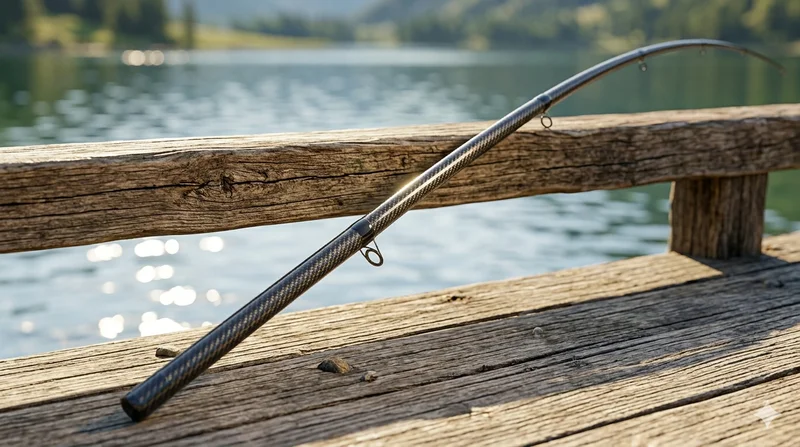
Carbon Fiber Fishing Rod Blank
High-quality carbon fiber fishing rod blank manufactured from multiple grades of Toray carbon fiber cloth. Available in a wide range of lengths, powers, and actions for freshwater and saltwater applications. Suitable for OEM rod building.
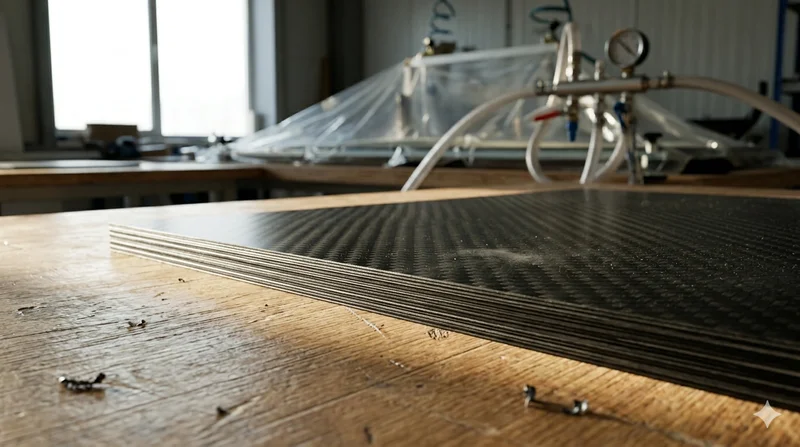
Carbon Fiber Plate — 3K Twill T700 3.0mm
Medium-thickness 3.0mm carbon fiber plate offering significantly higher load capacity while maintaining attractive 3K twill finish. Suitable for structural brackets, reinforcement plates, and load-bearing panels.
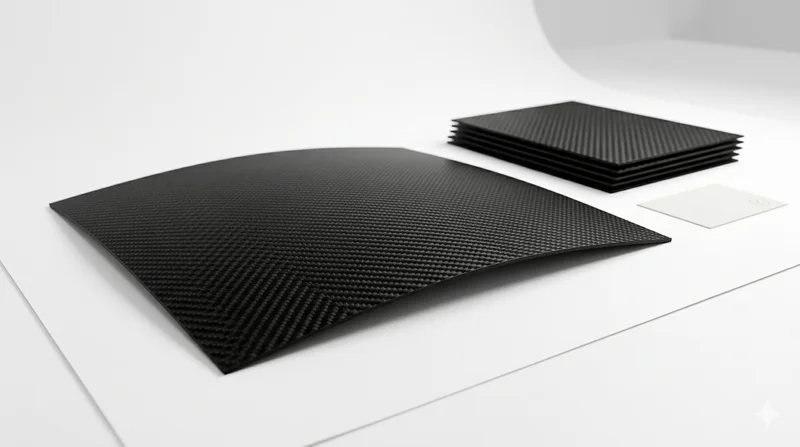
Carbon Fiber Plate — 3K Twill T700 1.5mm
Thin 1.5mm carbon fiber plate with 3K twill weave surface. Lightweight and stiff, commonly used for covers, panels, drone bodies, and applications requiring a premium aesthetic appearance.

Carbon Fiber Trekking Pole
Lightweight carbon fiber trekking pole manufactured from high-grade carbon fiber tube. Weighs only 160g per pole while providing superior shock absorption and durability for hiking, trail running, and backpacking.
Square Carbon Fiber Tube — 3K Twill T700
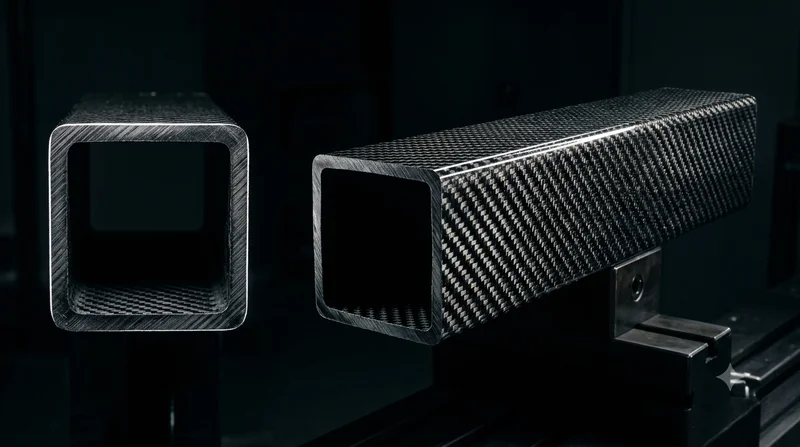
Square cross-section carbon fiber tube manufactured with 3K twill weave for torsional strength. Preferred for structural frames, trusses, and support columns where rectangular geometry offers design flexibility.