
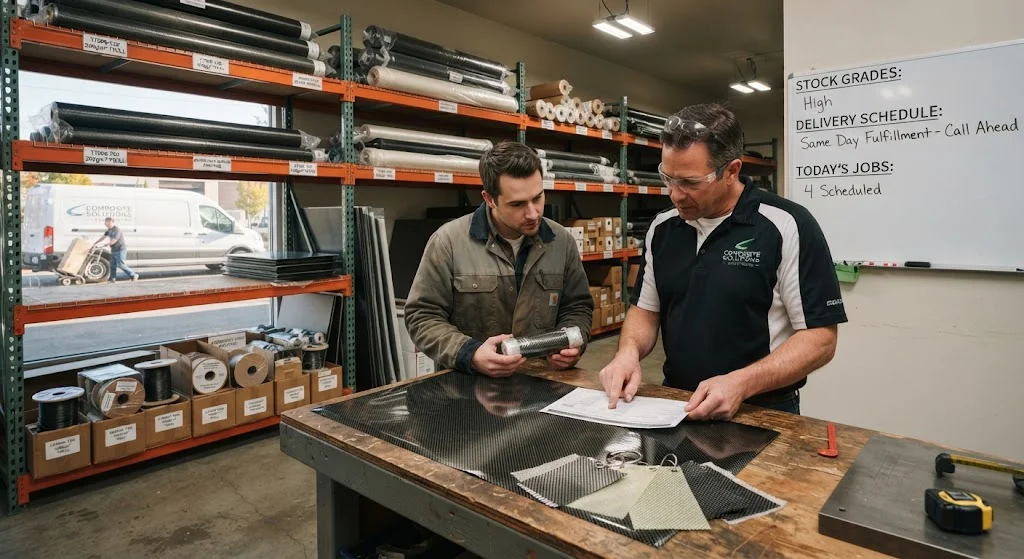
Searching for carbon fiber supplies near me is one of the most common ways buyers start their sourcing, and it is a reasonable instinct: local carbon fiber suppliers can deliver faster, cut freight cost, simplify customs and make inspection practical. But carbon fiber is an engineered material with
Introduction
Searching for carbon fiber supplies near me is one of the most common ways buyers start their sourcing, and it is a reasonable instinct: local carbon fiber suppliers can deliver faster, cut freight cost, simplify customs and make inspection practical. But carbon fiber is an engineered material with a wide specification range, and the nearest supplier is rarely the one holding the exact grade, form and certification you need. A local distributor may stock commodity tow and standard weave fabric, while your project needs aerospace-qualified prepreg or a specific intermediate-modulus grade that no local supplier carries. The practical approach is not to choose between local and remote sourcing, but to build a hybrid strategy: identify what local carbon fiber suppliers can genuinely provide at equal specification, and route everything else through direct or specialist channels that can document it. This article explains how to evaluate nearby suppliers, when local sourcing pays, and how to structure the hybrid model.
What Local Carbon Fiber Suppliers Actually Stock
Understanding the typical inventory profile of local distributors prevents wasted trips and wrong assumptions. Most regional carbon fiber suppliers carry a narrow set of fast-moving grades:
- Commodity tow: T300 and T700 grades in 3K, 6K and 12K sizes, sold by the spool or kilogram.
- Standard weave fabrics: plain and twill weaves at common areal weights such as 200 gsm and 245 gsm, cut to length.
- Laminating materials: epoxy resin systems, release films, peel ply and vacuum consumables for wet layup.
- Sheets and tubes: common thicknesses of carbon fiber sheet and tube for machining and repair work.
What local suppliers rarely stock is the specialty end of the range: aerospace-qualified prepreg with controlled out-time, intermediate-modulus and high-modulus fibers, certified material with full traceability lots, and custom slit widths. If your requirement is in that second group, the local supplier will almost always have to order it in, at which point the local advantage disappears and you are paying a local markup for an import lead time.
When Local Sourcing Genuinely Pays
The table below compares local and remote sourcing across the factors that drive total cost, to make the trade-off concrete.
| Factor | Local supplier | Direct or remote sourcing |
|---|---|---|
| Lead time | Same day to 2-3 days | 1-6 weeks depending on origin |
| Freight cost | Minimal or none | Significant for heavy rolls |
| Customs complexity | None | Declaration and origin checks |
| Inspection practicality | Visit and inspect in person | Sample and certificate verification |
| Unit price | Higher, local markup | Lower, volume dependent |
| Specification range | Narrow, commodity focused | Full range with documentation |
Local sourcing pays when three conditions hold together: the required grade is one the supplier stocks, the quantity is small enough that freight would dominate the cost, and the project schedule is short. Prototype work, urgent repairs and small production runs are the classic cases. Local sourcing stops paying when the quantity grows, because the unit price gap widens, or when the required specification is not stocked, because you inherit the import lead time while paying the local price.
How to Evaluate a Local Carbon Fiber Supplier
Evaluating carbon fiber suppliers near you follows the same discipline as evaluating any engineering supplier, with a few location-specific additions. Start by confirming the specification: ask the supplier to state the exact grade, fiber source, areal weight and lot traceability for the material you need, and compare it against the reference data for that grade. A local supplier that cannot name the fiber producer behind its commodity tow is a reseller of unknown origin material. Second, verify documentation capability — ask for a material certificate and check whether it covers the specific lot or is a generic datasheet. Third, check stock in person if the quantity matters: visit the warehouse, look at the actual rolls, and confirm the condition of the material rather than relying on a catalog. Fourth, compare on total delivered cost including any local markup, not on the headline price.
One additional check matters locally: ask what happens when the grade you need is not in stock. A supplier with a reliable import channel and transparent lead times is far more useful than one that silently substitutes a different grade to close a sale. Grade substitution is the most dangerous failure mode in local composite buying, because it is invisible until the part fails.
Building the Hybrid Sourcing Strategy
The strongest approach for most buyers is to split the portfolio rather than choose a single channel. Commodity grades and consumables that turn over quickly should be sourced from local carbon fiber suppliers to capture speed and low freight, ideally under a standing order that locks the price and stock. Specification-critical material — certified prepreg, aerospace grades, full-traceability lots — should be sourced direct from the manufacturer or through specialist channels that provide documentation, with the longer lead time planned into the schedule. The split creates two benefits: routine material costs less and arrives faster, while critical material keeps its specification integrity and audit trail. Review the split quarterly, because as volumes grow, grades that were once bought locally often justify moving to direct sourcing, and the cost saving pays for the planning effort.
When you need a specification that no local supplier carries, the practical middle ground is a local distributor with a direct relationship to the manufacturer: the distributor imports the documented material on a scheduled basis, holds it locally for the grades it moves regularly, and gives you the local invoice, local support and local lead time for those grades. That arrangement captures most of the local advantage without sacrificing specification.
Frequently Asked Questions
Is buying carbon fiber from a local supplier more expensive than importing?
For small quantities, usually yes in unit price, but often cheaper in total delivered cost once freight, customs and minimum order sizes are included. For large quantities, the local markup on commodity grades typically exceeds the freight saving, and direct sourcing becomes cheaper. The reliable method is to compare total delivered cost per kilogram for the specific quantity and grade, rather than comparing unit prices alone. Local suppliers also add value through speed and the ability to inspect material before purchase, which has real financial value for schedule-critical work.
How do I know if a local supplier's material meets the claimed specification?
Apply the same verification you would use for any supplier. Request a material certificate covering the specific lot and compare the stated values with reference data for the claimed grade. For commodity tow, check that the seller can name the fiber producer and the tow size matches the certificate. If practical, inspect the material in person — check roll labels, condition and packaging. For specification-critical applications, do not rely on local convenience as a substitute for certification: if the material must be qualified, the documentation must be complete regardless of where the supplier is located.
What should I do if no local supplier carries the grade I need?
Do not accept an undocumented substitute. Ask the local supplier whether they can import the exact grade on a scheduled basis with the required documentation, and get the true lead time in writing. In parallel, evaluate direct manufacturer sourcing for the specification-critical material. The hybrid approach keeps the local channel for routine grades and routes the critical material through a channel that can document it, planning the longer lead time into the schedule. If delivery timing is the real constraint, consider whether a close-equivalent grade with existing local stock can be qualified for the application instead.
Conclusion
Searching for carbon fiber supplies near me is a good starting point, but the decision should be driven by specification and total cost rather than geography alone. Local carbon fiber suppliers deliver speed, low freight and practical inspection for the commodity grades they stock, while specification-critical material usually belongs in a documented direct or specialist channel. The hybrid strategy — local standing orders for routine grades, documented sourcing for critical grades, and quarterly review of the split — captures the advantages of both without compromising specification integrity. Apply the same verification discipline to a local supplier as to a remote one, and you will rarely be surprised by what arrives.
Explore our carbon fiber tows, fabrics, sheets and prepregs with full specification data and documentation, or contact our team to discuss local distribution options, certificates and volume sourcing for your region.
Part of topic
Related Articles
- Carbon Fiber for Sale: Online Platforms and Direct Sales Channel Comparison
- Carbon Fibre Suppliers UK: Post-Brexit Supply Chain Reorganization
- Carbon Fiber Suppliers Canada: North American Supply Chain Diversification Options
- Carbon Fiber Car Parts Manufacturers: IATF 16949 Certification and Mass Production Capability
- Filament Wound Epoxy Tubes Suppliers: Specifications, Certification and Bulk Purchasing
- Carbon Fiber Tube Manufacturers: Procurement Guide for Engineering Buyers
Interested in Our Products?
Contact our team for competitive pricing and technical specifications.
Get a QuoteRelated Products
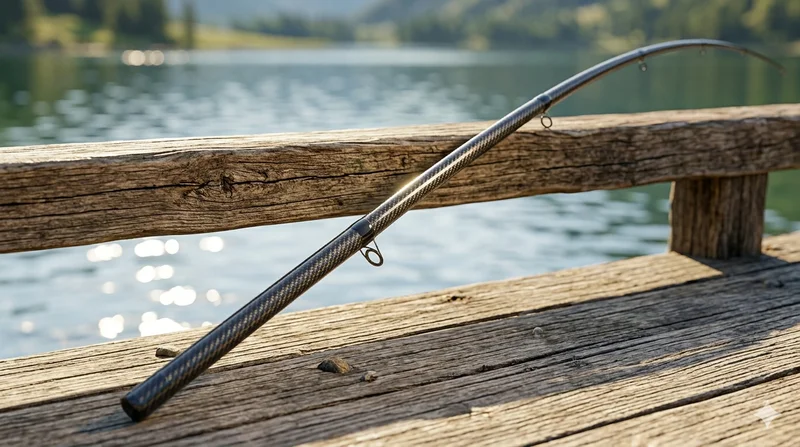
Carbon Fiber Fishing Rod Blank
High-quality carbon fiber fishing rod blank manufactured from multiple grades of Toray carbon fiber cloth. Available in a wide range of lengths, powers, and actions for freshwater and saltwater applications. Suitable for OEM rod building.

Carbon Fiber Plate — 3K Twill T700 3.0mm
Medium-thickness 3.0mm carbon fiber plate offering significantly higher load capacity while maintaining attractive 3K twill finish. Suitable for structural brackets, reinforcement plates, and load-bearing panels.

Carbon Fiber Plate — 3K Twill T700 1.5mm
Thin 1.5mm carbon fiber plate with 3K twill weave surface. Lightweight and stiff, commonly used for covers, panels, drone bodies, and applications requiring a premium aesthetic appearance.
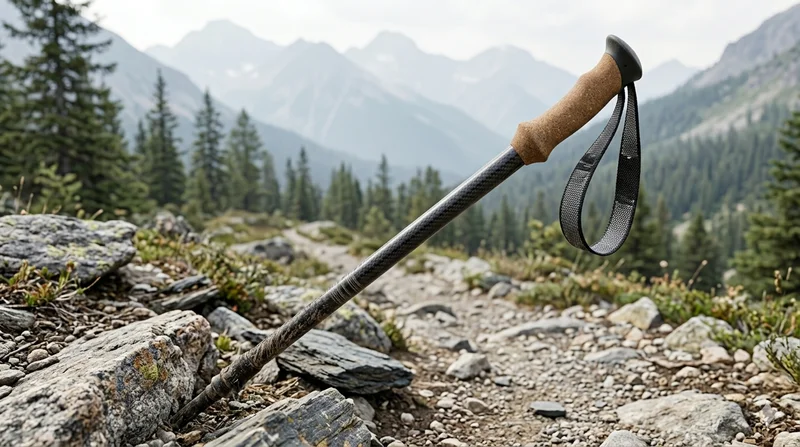
Carbon Fiber Trekking Pole
Lightweight carbon fiber trekking pole manufactured from high-grade carbon fiber tube. Weighs only 160g per pole while providing superior shock absorption and durability for hiking, trail running, and backpacking.

Square Carbon Fiber Tube — 3K Twill T700
Square cross-section carbon fiber tube manufactured with 3K twill weave for torsional strength. Preferred for structural frames, trusses, and support columns where rectangular geometry offers design flexibility.