
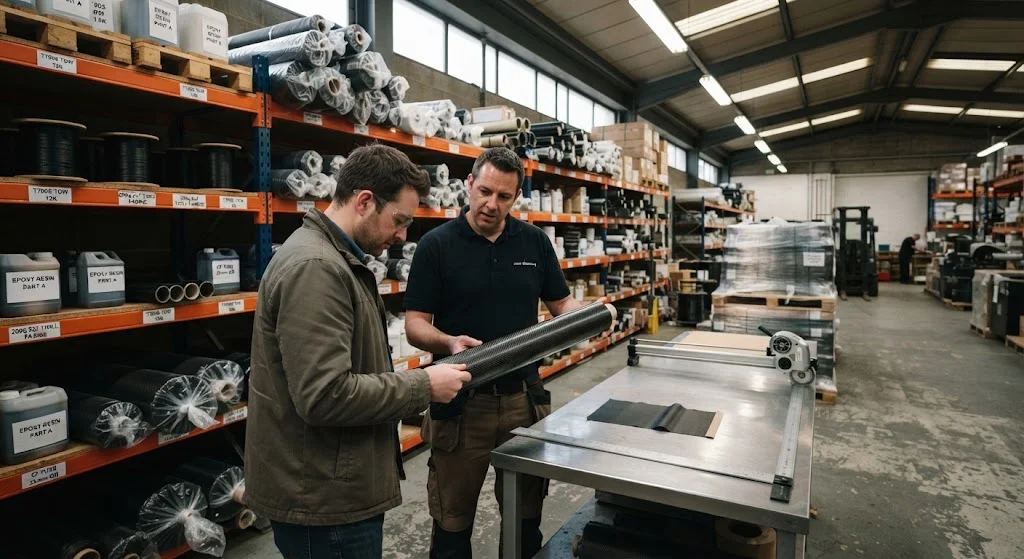
Searching for carbon fiber dealers near me often produces a list of suppliers that look identical online: same product photos, same grade names, similar prices. The difference between a reseller and a genuinely useful carbon fiber dealer appears only when you need something beyond a box of tow — a t
Introduction
Searching for carbon fiber dealers near me often produces a list of suppliers that look identical online: same product photos, same grade names, similar prices. The difference between a reseller and a genuinely useful carbon fiber dealer appears only when you need something beyond a box of tow — a tolerance you cannot machine yourself, a grade substitution question, a small order that needs credit terms, or a delivery date that cannot slip. A good dealer is a working partner that carries the inventory you need, understands the material well enough to answer engineering questions, and has enough relationship with manufacturers to get you what is not in stock. This article explains the value a good carbon fiber distributor actually adds, the specific services that separate dealers from pure resellers, and how to audit a local carbon fiber dealer near me before you commit your supply to one.
The Five Functions a Good Carbon Fiber Dealer Performs
Strip away the marketing and a valuable carbon fiber dealer performs five concrete functions that a direct-from-factory purchase cannot easily replace:
- Stock depth for the items you actually buy: fast-moving commodity grades held in real inventory — tow in 3K/6K/12K, standard weave fabrics, common rod and tube sizes, resin and consumables. This is the core function, and the depth of it is what makes local delivery possible.
- Technical application knowledge: the ability to answer whether a grade suits a process, what fiber volume fraction a fabric delivers, or which resin pairs with a tow. This requires people who have worked with the material, not just a catalog.
- Cutting, kitting and light fabrication: cutting fabric to width, slitting tow, cutting rods to length, kitting a complete layup package. These services save hours of in-house work and are the most overlooked source of dealer value.
- Credit and commercial flexibility: net terms on accounts, smaller minimums than the factory, consolidated invoicing, and the ability to hold stock against a scheduled release. For small and medium buyers this is often the deciding factor.
- Factory access for the rest of the range: a relationship with manufacturers that lets the dealer order non-stock grades, custom slitting or documented lots on a schedule, with the dealer absorbing the coordination.
A dealer that performs all five is worth a markup on every order. A dealer that performs only the first is a warehouse with a website — and should be priced and treated accordingly.
Dealer vs Distributor vs Factory Direct
The buying channel decision is clearer when the three options are compared directly. The table below summarizes the trade-offs for a small-to-medium composite buyer.
| Channel | Strengths | Weaknesses | Best for |
|---|---|---|---|
| Local carbon fiber dealer | Speed, small minimums, technical advice, credit, kitting | Higher unit price, limited range | Prototypes, repairs, small runs, urgent supply |
| Regional or national distributor | Wider range, volume pricing, documentation, larger stock | Less personal service, higher minimums | Established production with volume |
| Factory direct | Lowest price, full spec control, lot documentation | Long lead times, large minimums, no local support | High-volume, spec-critical programs |
The pragmatic pattern for most buyers is a hybrid: a local carbon fiber dealer near me for urgent and routine items, a distributor or factory channel for the specification-critical and high-volume material. The dealer relationship is worth developing even when the factory price is lower, because the dealer carries the risk and inventory that keeps your line running.
Red Flags When Evaluating Carbon Fiber Dealers
Auditing a carbon fiber distributor before committing is fast if you know what to look for. The following patterns are reliable warning signs:
- Cannot name the fiber producer: a dealer selling commodity tow who cannot say whether it is Toray, Mitsubishi or a Chinese producer is selling material of unknown origin. The grade name alone is not a specification.
- No lot traceability: no lot numbers, no material certificates, or certificates that are generic datasheets rather than lot-specific documents.
- Silent grade substitution: a history of delivering "equivalent" grades without disclosure. Grade substitution is the most dangerous failure mode in composite buying because it is invisible until the part fails.
- No technical staff: the only questions they can answer are price and delivery. For engineered material, that is a reseller, not a dealer.
- No test data: cannot produce flexural, tensile or fiber volume data for the products they sell, or cannot connect you with the manufacturer for it.
None of these checks require expensive testing. A phone call asking for the fiber producer, a lot certificate and the fiber volume fraction of the fabric filters out the weakest candidates immediately.
How to Audit a Carbon Fiber Dealer Before Committing
A practical audit follows five steps and takes less than a day:
- Check the physical stock: visit the warehouse or ask for photos of the actual inventory. Real dealers hold real stock; the rest drops off fast.
- Request a lot certificate: for one product you are actually buying, ask for a material certificate covering the specific lot, and check that the stated values match reference data for the grade.
- Ask a technical question: a process question relevant to your work, such as the out-time of a prepreg or the fiber volume fraction of a fabric. Evaluate the depth of the answer.
- Test the cutting and kitting: place a small order that requires cutting to width or kitting, and measure the accuracy and turnaround.
- Verify the credit and lead time promises: ask for net terms and a written lead time for a non-stock grade, then check whether the dealer meets its own commitment on a trial order.
The audit is worth doing because the switching cost is real: once a production line is calibrated to a specific material, changing dealers means re-qualifying material. Selecting the right carbon fiber dealer near me on the first pass avoids that disruption.
Frequently Asked Questions
Why should I buy from a local carbon fiber dealer instead of importing directly?
For small and medium volumes, a local dealer usually wins on total delivered cost once freight, customs, minimum order sizes and lead time risk are included, even though the unit price is higher. The dealer also provides speed for urgent orders, credit terms, cutting and kitting services, and local technical support that a factory channel cannot match. For large volumes with spec-critical requirements, factory direct becomes more attractive on price and documentation. The reliable method is to compare total delivered cost for your specific quantities and grades, then factor in the value of speed, support and flexibility for your operation.
How do I know a carbon fiber dealer's material meets the claimed specification?
Apply the same verification discipline you would use for any supplier. Ask for a material certificate covering the specific lot, and compare the stated values with reference data for the claimed grade. For tow, confirm the fiber producer and the tow size. For fabrics, confirm the areal weight and fiber volume fraction. If practical, inspect the material in person — check labels, condition and packaging. A dealer that provides lot-specific documentation and can name the manufacturer behind each product is selling traceable material; one that cannot is not.
What services should a carbon fiber dealer offer beyond selling material?
A genuinely useful dealer offers cutting and kitting (slitting tow, cutting fabric to width, cutting rods to length, assembling a complete layup kit), technical application support, credit terms with reasonable minimums, and factory access for non-stock grades with transparent lead times. Some dealers also provide light fabrication, test sample preparation and application prototyping support. The value test is simple: does the dealer save you time and reduce risk beyond the price of the material? If the answer is only the material, the markup is harder to justify.
Conclusion
Searching for carbon fiber dealers near me is the right starting point, but the value is in the dealer, not the address. A good carbon fiber dealer adds stock depth, technical knowledge, cutting and kitting, credit terms and factory access — functions that make it worth a markup on every order. Audit candidates on stock, documentation, technical depth and service before committing, and build the relationship like any engineering partnership: the right carbon fiber distributor carries the risk and inventory that keeps your production running, and that is worth more than the difference in unit price.
Explore our carbon fiber tows, fabrics, sheets and profiles with full specification data and lot documentation, or contact our team to discuss dealer and distributor programs, stock support and volume pricing for your region.
Related Articles
- Carbon Fiber Supplies Near Me: Local Sourcing Without Compromising Spec
- Carbon Fiber for Sale: Online Platforms and Direct Sales Channel Comparison
- Carbon Fibre Suppliers UK: Post-Brexit Supply Chain Reorganization
- Carbon Fiber Suppliers Canada: North American Supply Chain Diversification Options
- Carbon Fiber Car Parts Manufacturers: IATF 16949 Certification and Mass Production Capability
- Filament Wound Epoxy Tubes Suppliers: Specifications, Certification and Bulk Purchasing
Interested in Our Products?
Contact our team for competitive pricing and technical specifications.
Get a QuoteRelated Products
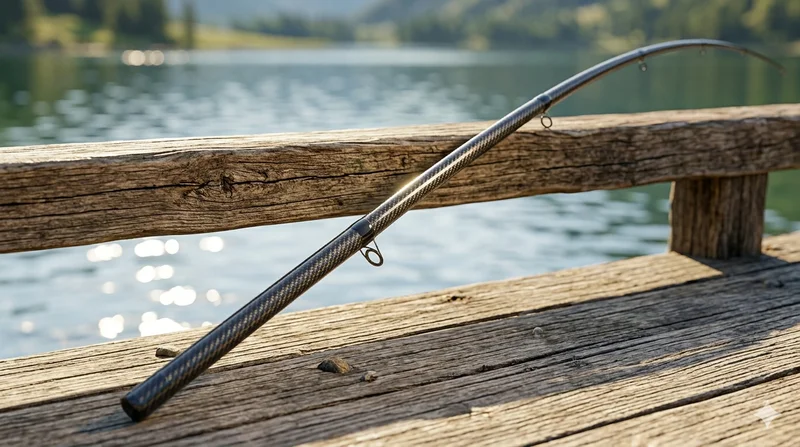
Carbon Fiber Fishing Rod Blank
High-quality carbon fiber fishing rod blank manufactured from multiple grades of Toray carbon fiber cloth. Available in a wide range of lengths, powers, and actions for freshwater and saltwater applications. Suitable for OEM rod building.
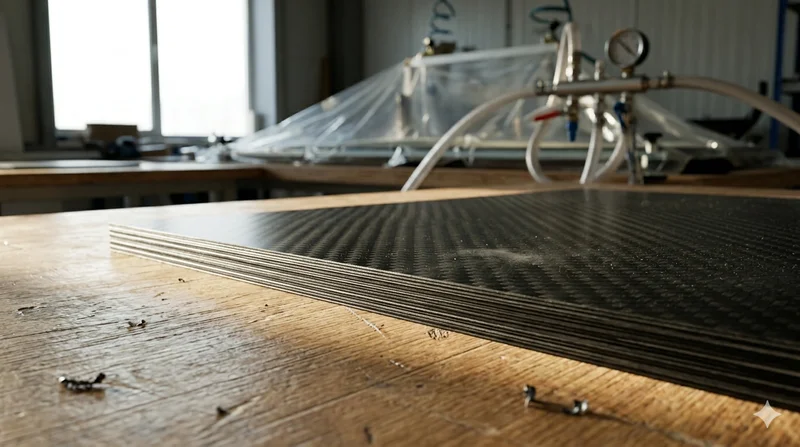
Carbon Fiber Plate — 3K Twill T700 3.0mm
Medium-thickness 3.0mm carbon fiber plate offering significantly higher load capacity while maintaining attractive 3K twill finish. Suitable for structural brackets, reinforcement plates, and load-bearing panels.

Carbon Fiber Plate — 3K Twill T700 1.5mm
Thin 1.5mm carbon fiber plate with 3K twill weave surface. Lightweight and stiff, commonly used for covers, panels, drone bodies, and applications requiring a premium aesthetic appearance.
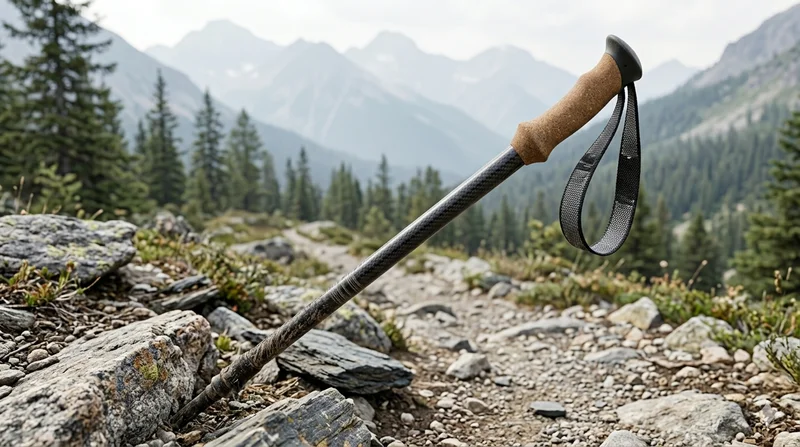
Carbon Fiber Trekking Pole
Lightweight carbon fiber trekking pole manufactured from high-grade carbon fiber tube. Weighs only 160g per pole while providing superior shock absorption and durability for hiking, trail running, and backpacking.

Square Carbon Fiber Tube — 3K Twill T700
Square cross-section carbon fiber tube manufactured with 3K twill weave for torsional strength. Preferred for structural frames, trusses, and support columns where rectangular geometry offers design flexibility.