
Carbon fiber tube manufacturers serve a wide range of engineering programs, from drone arms and robotics structures to aerospace brackets, sports equipment, and industrial shafts. The tubes look simple, but the manufacturing process determines everything that matters: dimensional tolerance, straight
Introduction
Carbon fiber tube manufacturers serve a wide range of engineering programs, from drone arms and robotics structures to aerospace brackets, sports equipment, and industrial shafts. The tubes look simple, but the manufacturing process determines everything that matters: dimensional tolerance, straightness, mechanical properties, and price. For engineering buyers, the practical question is not simply who makes carbon fiber tubes, but which manufacturing process, material grade, and quality system sit behind a quotation. This guide covers the four main production routes, the specifications a serious buyer should put in an RFQ, and the evidence a supplier should provide to prove repeatable quality.
The core principle: a carbon fiber tube is defined by its fiber architecture and process. A pultruded tube and a filament-wound tube with the same outer diameter are different products with different mechanical behavior and different prices, and the buying decision starts with knowing which one the application needs. Tubes are also a repeat purchase in most programs, which means the supplier relationship, not the single order, is what ultimately determines cost and schedule stability.
How Carbon Fiber Tube Manufacturers Produce Tubes
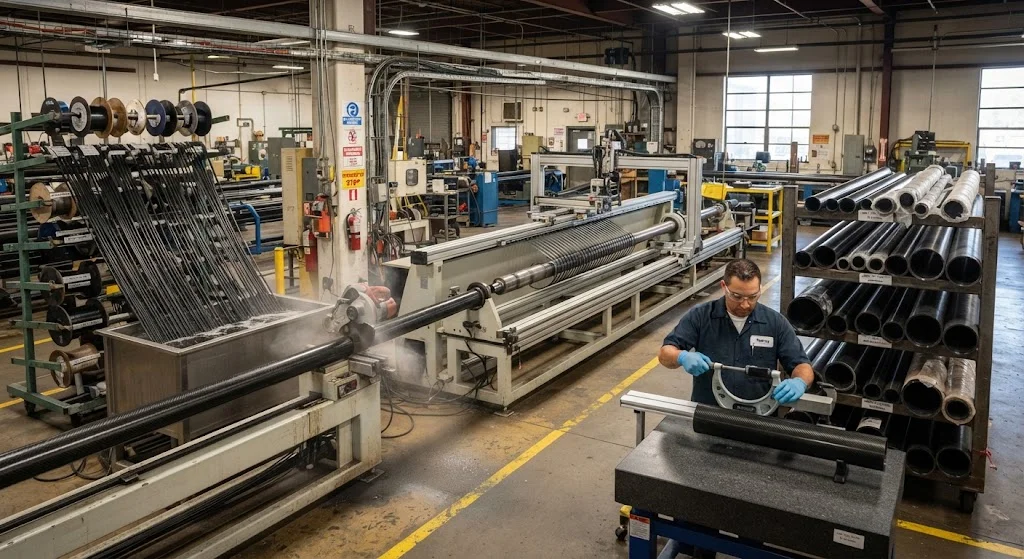
Four processes dominate carbon fiber tube production, and each produces a different balance of cost, mechanical properties, and dimensional control. The table below summarizes the differences:
| Process | Fiber Architecture | Typical Properties | Typical Use |
|---|---|---|---|
| Pultrusion | Unidirectional fibers along the length | High axial stiffness and strength, low cost | Drone arms, shafts, industrial profiles |
| Filament winding | Helical and hoop windings | Good hoop strength, tailored angles, hollow sections | Pressure vessels, tanks, tubular structures |
| Roll wrapping | Woven or unidirectional fabric rolled around a mandrel | Balanced properties, good surface, medium cost | Hobby and sports tubes, small series |
| Bladder molding | Braided or fabric sleeves consolidated by internal pressure | High fiber volume, good dimensional accuracy | Aerospace and high-performance tubes |
For a buyer, the process determines which properties are strong. Pultruded tubes are stiff along their length but weaker in hoop and shear; filament-wound tubes can be optimized for internal pressure; roll-wrapped and bladder-molded tubes offer more balanced or more customized layups. The quotation should always state the process.
Specifications Every Carbon Fiber Tube RFQ Should Include
A complete RFQ prevents the most common sourcing failures. Beyond the obvious outer diameter, wall thickness, and length, engineering buyers should specify the following, because each one changes the manufacturing route and the price:
- Fiber grade and modulus: standard modulus (T300 class) or intermediate modulus (T700 class), which affects stiffness and cost.
- Fiber architecture: unidirectional, woven, braided, or a specific layup sequence for multi-directional loading.
- Dimensional tolerances: inner and outer diameter tolerances, wall thickness tolerance, and straightness per meter.
- Surface finish: cosmetic (clear-coated) or structural (unfinished), which drives finishing cost.
- Mechanical test data: axial compressive and tensile modulus, or the test method used to generate datasheet values.
- End treatment: cut square, machined to length, drilled, or bonded to a fitting.
Two tolerances deserve special attention. Straightness is the most commonly violated specification in long tubes, and buyers should state it in millimeters per meter rather than leaving it implied. Wall-thickness tolerance is the second, because it directly controls weight and mechanical margin and is expensive to correct after the fact.
Reading a Quotation from Carbon Fiber Tube Manufacturers
Quotations from carbon fiber tube manufacturers vary widely in what they include, and the differences are where cost surprises hide. A disciplined buyer should check four items. First, whether the price is per meter or per piece, and what length the per-piece price assumes. Second, whether tooling or mandrel costs are included, since a new diameter can require a dedicated mandrel with a non-recurring charge. Third, whether the quoted tolerance matches the RFQ, since looser tolerances are cheaper and some suppliers quote on their standard range rather than the requested one. Fourth, whether mechanical properties are guaranteed with test data or only stated from a typical datasheet.
Lead time is the fifth check. For carbon fiber tubes, the non-recurring items are mandrel production and first-article approval, and the recurring items are pultrusion or winding time, curing, cutting, and inspection. A quotation that separates non-recurring and recurring costs, and states the lead time for each, is far easier to compare than a single lump-sum number.
Stock and semi-standard ranges deserve attention before a custom order is placed. Many carbon fiber tube suppliers carry a standard range of diameters, wall thicknesses, and lengths, and a pultruded carbon fiber tube from that range is dramatically cheaper than a custom tooling program, because the mandrel already exists and the line is already set up. Engineering buyers should therefore check whether an off-the-shelf or near-standard size satisfies the design before commissioning a dedicated diameter. When a custom size is genuinely required, the pultruded carbon fiber tube manufacturers with the most flexible tooling programs can switch mandrel diameters quickly, but buyers should still expect a minimum quantity that reflects the setup change, and should treat the custom range as a two-stage decision: first qualify the material, then qualify the geometry.
Qualifying a Supplier for Repeatable Quality
Repeatable quality is what separates a capable carbon fiber tube manufacturer from a machine shop with a pultruder. For industrial programs, ISO 9001 certification and consistent batch documentation are the baseline. For aerospace work, expect AS9100 and Nadcap approval for the relevant composite processes. Batch records should include the fiber lot, resin system and lot, cure cycle data, dimensional inspection results, and straightness measurements. Buyers should also request a first-article inspection report before production release and, for structural applications, mechanical test data from the same batch that ships.
A practical qualification step is to order a small development batch before committing to production volume. This verifies the supplier's process control against the actual drawing and tolerance, produces the straightness and dimensional data the buyer can audit, and establishes the communication pattern for the rest of the program. The cost of a development batch is small compared with discovering a tolerance or quality problem after full-rate production has started.
Frequently Asked Questions
Which process is best for carbon fiber tubes?
It depends on the application. Pultrusion gives the best axial stiffness at the lowest cost and suits drone arms, shafts, and profiles. Filament winding suits hollow sections under internal pressure. Roll wrapping and bladder molding suit balanced or high-performance tubes, with bladder molding offering the best dimensional accuracy and fiber volume for aerospace work.
What tolerance should I specify for carbon fiber tubes?
State outer diameter, wall thickness, and straightness explicitly. Straightness is the most commonly violated specification on long tubes and should be given in millimeters per meter. Wall-thickness tolerance controls weight and mechanical margin, so specify it rather than relying on a generic range.
Why do quotations for carbon fiber tubes vary so much?
Quotations differ in what they include: per-meter versus per-piece pricing, tooling and mandrel charges, quoted tolerance versus requested tolerance, and whether mechanical properties are guaranteed with test data. Comparing like for like requires breaking the quote into non-recurring costs, recurring costs, and lead times.
How do I verify the quality of a carbon fiber tube supplier?
Request ISO 9001 certification for industrial work or AS9100 plus Nadcap for aerospace, and require batch records covering fiber lot, resin lot, cure data, dimensional inspection, and straightness. Order a small development batch and audit the first-article inspection report before committing to production volume.
Conclusion
Procuring from carbon fiber tube manufacturers becomes manageable when the buying decision is structured around process, specification, and evidence. The process determines which mechanical properties are strong and what the tube costs; the specification prevents tolerance and straightness failures; and the evidence, from batch records to first-article inspection, proves that quality will repeat beyond the first shipment. Engineering buyers who structure their RFQ around these three pillars consistently avoid the expensive surprises that follow underspecified tube sourcing.
YongXian supplies pultruded and wound carbon fiber tubes in standard and custom diameters, with full engineering support and batch documentation. Explore our carbon fiber tube range or contact our engineering team to review your tube specification and receive a quotation.
Part of topic
Related Articles
- Carbon Fibre Manufacturers UK: NCC Research Hub and Supply Chain Layout
- Carbon Fiber Manufacturers USA: Aerospace-Grade Capacity and Certification Status
- Carbon Fiber Supplier Philippines: Southeast Asian Manufacturing Hub Emergence
- US Carbon Fiber Manufacturers: Hexcel, MAGNA and Emerging Domestic Capacity
- Carbon Fiber Pultrusion Suppliers USA: Domestic Capacity and Lead Time Comparison
- Carbon Fiber Products Manufacturer Guide: Evaluating Certification, Capacity, and Delivery Capabilities
Interested in Our Products?
Contact our team for competitive pricing and technical specifications.
Get a QuoteRelated Products
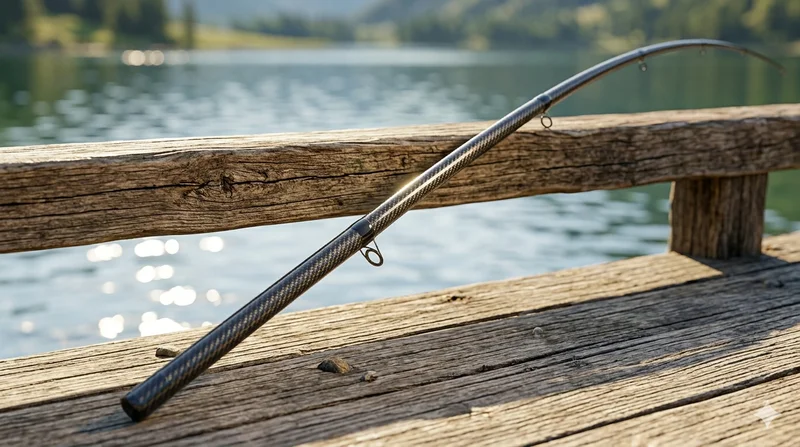
Carbon Fiber Fishing Rod Blank
High-quality carbon fiber fishing rod blank manufactured from multiple grades of Toray carbon fiber cloth. Available in a wide range of lengths, powers, and actions for freshwater and saltwater applications. Suitable for OEM rod building.

Carbon Fiber Plate — 3K Twill T700 1.5mm
Thin 1.5mm carbon fiber plate with 3K twill weave surface. Lightweight and stiff, commonly used for covers, panels, drone bodies, and applications requiring a premium aesthetic appearance.

Carbon Fiber Plate — 3K Twill T700 3.0mm
Medium-thickness 3.0mm carbon fiber plate offering significantly higher load capacity while maintaining attractive 3K twill finish. Suitable for structural brackets, reinforcement plates, and load-bearing panels.
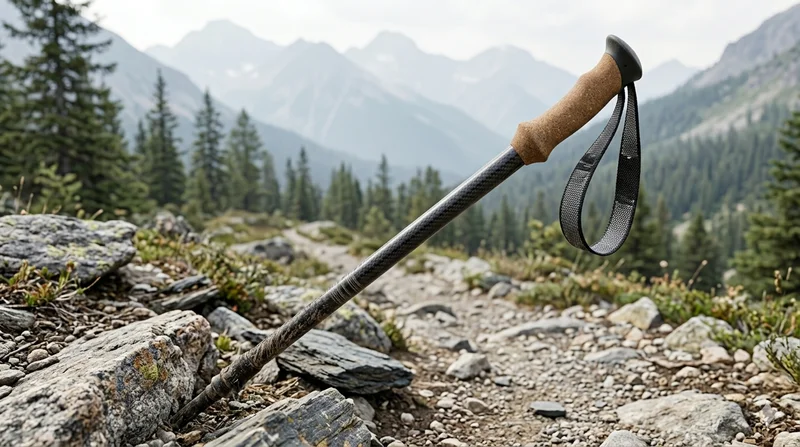
Carbon Fiber Trekking Pole
Lightweight carbon fiber trekking pole manufactured from high-grade carbon fiber tube. Weighs only 160g per pole while providing superior shock absorption and durability for hiking, trail running, and backpacking.

Square Carbon Fiber Tube — 3K Twill T700
Square cross-section carbon fiber tube manufactured with 3K twill weave for torsional strength. Preferred for structural frames, trusses, and support columns where rectangular geometry offers design flexibility.