
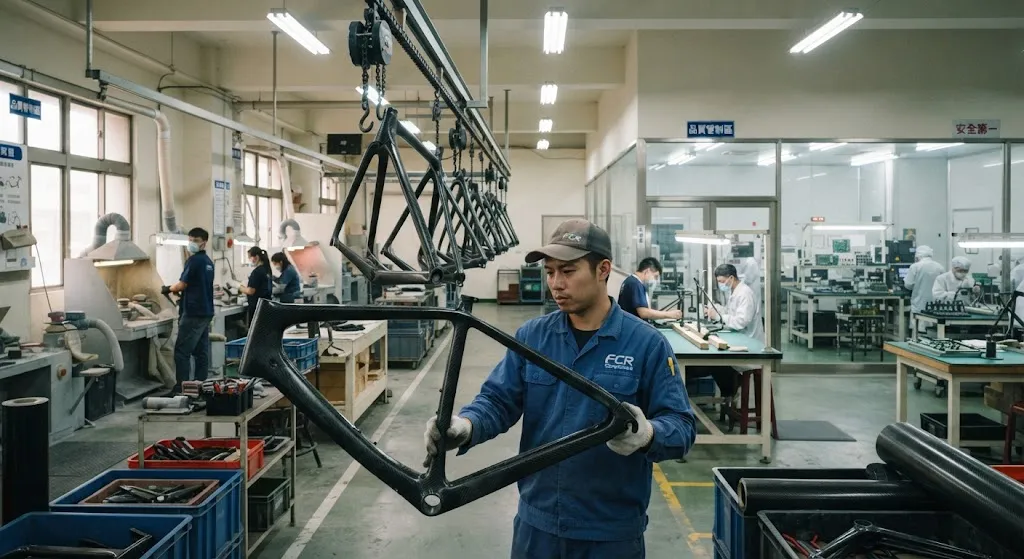
Introduction The Taiwan carbon fiber market occupies a unique position in the global carbon fiber value chain. The island is not a major carbon fiber producer — it imports nearly all of its raw tow and prepreg from Japanese and mainland Chinese suppliers — but it is a dominant converter, transformin
Introduction
The Taiwan carbon fiber market occupies a unique position in the global carbon fiber value chain. The island is not a major carbon fiber producer — it imports nearly all of its raw tow and prepreg from Japanese and mainland Chinese suppliers — but it is a dominant converter, transforming raw carbon fiber into high-value finished products that compete at the top of global markets. Two sectors define this conversion strength: performance bicycle manufacturing and semiconductor equipment components. Together, these industries consume an estimated 8,000-12,000 metric tons of carbon fiber annually, making Taiwan one of the highest per-capita consumers of carbon fiber in Asia.
The bicycle industry has been Taiwan's carbon fiber flagship for over two decades. Giant Manufacturing, Merida Industries, and a constellation of specialist frame builders in the Taichung corridor have made Taiwan the world's largest source of high-end carbon fiber bicycles, with annual production exceeding 600,000 carbon fiber frames. More recently, Taiwan's semiconductor equipment ecosystem — built around TSMC's fabrication dominance and the supporting supply chain of precision tooling, wafer handling, and metrology companies — has created growing demand for carbon fiber components that offer high stiffness, low thermal expansion, and vibration damping in a lightweight package. This article analyzes both sectors, their supply chain dynamics, and the market outlook for 2026 and beyond.
Taiwan Carbon Fiber Bicycle Industry: Export Leadership
Taiwan's dominance in carbon fiber bicycles is structural, not accidental. The concentration of frame builders, component suppliers, and testing laboratories in the Taichung-Changhua corridor has created an ecosystem that is difficult for competitors to replicate. Key characteristics of the Taiwan bicycle carbon fiber supply chain include:
- Frame manufacturing scale: Taiwan produces approximately 60-65% of the world's high-end carbon fiber bicycle frames, with annual output valued at over 2 billion US dollars. Giant and Merida alone account for roughly 40% of global carbon fiber bike production, with the remainder distributed among 30-40 specialist builders.
- Material sourcing: Taiwanese frame builders consume primarily Toray T700 and T800 class carbon fiber, with increasing adoption of intermediate-modulus fibers (T900/T1000 class) for premium race frames. Annual tow consumption is estimated at 4,000-6,000 metric tons, sourced predominantly from Toray, Mitsubishi Chemical, and increasingly from mainland Chinese producers such as Zhongfu Shenying and Guangwei Composites.
- Process technology: Taiwanese manufacturers have pioneered bladder molding, EPS (expanded polystyrene) internal mandrel, and monocoque construction techniques that optimize the strength-to-weight ratio of bicycle frames. These process innovations have driven frame weights below 800 grams for road race frames while maintaining the stiffness required for power transfer and handling precision.
- Testing and certification: Taiwan hosts ISO 17025-accredited testing laboratories that perform fatigue cycling, impact testing, and dimensional verification to EN, ISO, and ASTM standards. This in-house testing capability reduces time-to-market and provides the quality documentation required by European and North American distributors.
The bicycle industry's carbon fiber demand is mature but continues to grow at 5-8% annually, driven by the shift from aluminum to carbon fiber in mid-range bikes (the 2,000-5,000 US dollar segment), the expansion of electric-assist carbon fiber bikes, and growing demand from Southeast Asian and Indian markets. Taiwan's frame builders are responding by investing in automated layup robots and resin infusion systems that reduce cycle times and labor costs, enabling competitive pricing against emerging mainland Chinese competitors.
Semiconductor Equipment: Precision Composites for Sub-Nanometer Accuracy
Taiwan's semiconductor equipment industry is a less visible but faster-growing consumer of carbon fiber. The fabrication of advanced logic chips at 3-nanometer and below requires equipment that achieves positioning accuracy measured in nanometers, thermal stability within millikelvin ranges, and vibration isolation that prevents sub-nanometer motion from degrading pattern overlay. Carbon fiber composites meet these requirements better than any metallic material:
| Requirement | Carbon Fiber Composite | Aluminum Alloy 6061 | Invar 36 |
|---|---|---|---|
| Specific stiffness (E/rho) | 75-120 GPa / 1.55 g/cm3 = 48-77 GPa-cm3/g | 69 / 2.70 = 26 | 145 / 8.10 = 18 |
| CTE (linear) | 0.5 to 2.0 ppm/K (tunable by layup) | 23.6 ppm/K | 1.2 ppm/K |
| Damping ratio | 0.02-0.05 | 0.001-0.003 | 0.002-0.005 |
| Dimensional stability (creep) | Negligible at room temperature | Low but measurable | Very low |
Taiwan's semiconductor equipment companies — including TSMC's internal tooling division,AUO's display equipment arm, and precision motion stage manufacturers such as HIWIN and PMI — consume carbon fiber for wafer stage structures, reticle pods, inspection tool frames, and linear motor components. The annual consumption is estimated at 1,500-2,500 metric tons, growing at 12-18% annually as fabs invest in next-generation EUV lithography and advanced packaging equipment.
The key technical challenge for semiconductor-grade carbon fiber is not mechanical strength but dimensional stability under thermal and mechanical loads. Components must maintain sub-micron positional accuracy across temperature cycles of plus or minus 1-2 degrees Celsius, which requires precisely tailored fiber orientations and resin systems with matched coefficients of thermal expansion. This specification-driven demand favors Taiwanese manufacturers with advanced simulation and quality control capabilities.
Taiwan Carbon Fiber Market Supply Chain Structure and Import Dependencies
Taiwan's carbon fiber conversion industry has a critical vulnerability: it depends almost entirely on imported raw materials. The supply chain structure reveals both strengths and risks:
- Carbon fiber tow and prepreg: Approximately 70% of Taiwan's carbon fiber tow is sourced from Japanese suppliers (Toray, Mitsubishi Chemical, Toho Tenax), with 20-25% from mainland Chinese producers and the remainder from US and Korean sources. Prepreg is similarly dominated by Japanese suppliers, though local prepreg capacity from companies like Formosa Plastics and Chin Poon Industrial has been expanding.
- Resin systems: Epoxy resin systems for bicycle and semiconductor applications are sourced from Japanese (Mitsubishi Chemical, Nan Ya Plastics) and US (Hexion, Huntsman) suppliers. Local resin development is limited, though Formosa Plastics Group has been investing in specialty epoxy formulations for high-temperature semiconductor applications.
- Finished goods export: Over 80% of Taiwan's carbon fiber bicycle frames are exported, with Europe (35%), North America (30%), and Japan (15%) as primary destinations. Semiconductor equipment components are consumed locally by TSMC and other fabs, with some exports to equipment assemblers in Japan, South Korea, and the Netherlands.
The import dependency creates exposure to supply disruptions, currency fluctuations, and geopolitical risks. The 2025-2026 tightening of carbon fiber export controls from Japan and the US has prompted Taiwanese manufacturers to diversify sourcing toward mainland Chinese suppliers, particularly for lower-grade tow used in non-structural bicycle components. This diversification introduces quality management challenges but reduces single-source risk.
Taiwan Carbon Fiber Market Outlook for 2026 and Beyond
Taiwan's carbon fiber market is projected to reach 15,000-18,000 metric tons of annual consumption by 2028, growing at a compound annual rate of 7-10%. Three trends will shape this growth:
- Mid-range bicycle market expansion: The price point at which carbon fiber frames become competitive with aluminum continues to drop, driven by mainland Chinese tow supply and automated manufacturing. Taiwan's frame builders are positioned to capture this growth by supplying branded mid-range bikes to global markets.
- Semiconductor equipment demand surge: TSMC's 2-nanometer fab construction in Kaohsiung and expansion of advanced packaging capacity in Chiayi will drive demand for precision composite structures. The equipment installed in these fabs requires carbon fiber components that meet the most demanding dimensional stability specifications in the industry.
- Regional supply chain restructuring: The US CHIPS Act and EU Chips Act incentives for domestic semiconductor manufacturing will create new demand for precision equipment components in North America and Europe. Taiwanese equipment component manufacturers with proven quality records are well-positioned to capture this demand through local partnerships or direct export.
For international buyers, Taiwan's carbon fiber conversion industry offers a compelling combination of technical capability, quality systems, and competitive pricing. The bicycle sector demonstrates Taiwan's ability to manufacture carbon fiber products at scale with consistent quality, while the semiconductor equipment sector showcases the precision engineering capabilities that are increasingly relevant across aerospace, medical, and industrial applications.
Frequently Asked Questions
Why does Taiwan import most of its carbon fiber instead of producing it domestically?
Carbon fiber production requires massive capital investment in carbonization furnaces, oxidation ovens, and surface treatment lines, with a minimum economic scale of approximately 1,000-2,000 metric tons per year for standard modulus fiber. Taiwan's domestic demand, while significant in conversion volume, has historically been fragmented among many small-to-medium frame builders and equipment manufacturers, making large-scale fiber production uneconomic. Additionally, the intellectual property and process know-how for high-quality carbon fiber production is concentrated among a handful of Japanese, US, and mainland Chinese producers with decades of development investment. Taiwan's competitive advantage lies in conversion — transforming imported raw materials into high-value finished products — rather than in primary fiber production.
How do Taiwanese carbon fiber bicycle frames compare to mainland Chinese frames in quality?
At the premium end (frames above 3,000 US dollars), Taiwanese-made frames generally maintain a quality advantage through tighter process control, more rigorous testing protocols, and established quality management systems (ISO 9001, IATF 16949). However, the gap is narrowing as mainland Chinese manufacturers invest in automated layup, autoclave curing, and testing infrastructure. For mid-range frames (1,000-3,000 US dollars), the quality difference is increasingly marginal, and mainland Chinese producers often offer more competitive pricing due to lower labor costs and proximity to raw material supply. The key differentiator for Taiwanese builders remains their established relationships with global bicycle brands, their testing and certification capabilities, and their ability to manage complex, multi-material frame designs.
What is the growth potential for carbon fiber in Taiwan's semiconductor equipment sector?
Growth potential is strong, driven by three factors. First, the ongoing shrink in semiconductor feature sizes requires equipment with progressively tighter dimensional stability, which carbon fiber composites deliver more effectively than metal alternatives. Second, TSMC's continued expansion of fabrication capacity in Taiwan creates direct demand for equipment components. Third, the development of advanced packaging technologies (chiplet integration, 3D stacking) introduces new equipment requirements where carbon fiber's combination of stiffness, low CTE, and damping is advantageous. The semiconductor equipment carbon fiber segment is expected to grow at 12-18% annually through 2028, outpacing the bicycle sector and becoming an increasingly important revenue stream for Taiwan's composite manufacturers.
Conclusion
Taiwan's carbon fiber market in 2026 is defined by its dual strengths in bicycle manufacturing and semiconductor equipment conversion. The island's frame builders have established a global leadership position in high-end carbon fiber bicycles through process innovation, quality systems, and ecosystem concentration in the Taichung corridor. Simultaneously, the semiconductor equipment sector is creating fast-growing demand for precision composite components that leverage carbon fiber's unique combination of high specific stiffness, tunable CTE, and vibration damping. While Taiwan remains dependent on imported raw materials, its conversion capabilities and technical expertise position it well for continued growth in both sectors.
For international buyers evaluating Taiwan as a carbon fiber supply source, the value proposition is clear: proven manufacturing scale and quality in bicycles, precision engineering capability in semiconductor equipment, and competitive pricing enabled by efficient conversion processes. Explore our carbon fiber products for high-performance applications, or contact our engineering team to discuss sourcing strategies and technical specifications for your applications.
Part of topic
Related Articles
- Brazil Carbon Fiber Market 2026: Embraer Aerospace and Bioenergy Demand
- Global Carbon Fiber Demand Forecast 2030: 159,000+ Tonnes for Wind Energy Alone
- Mexico Carbon Fiber Market 2026: Aerospace Nearshoring and USMCA Benefits
- Japan Carbon Fiber Market 2026: Toray, Teijin, and Mitsubishi Chemical Global Strategy
- Europe Carbon Fiber Market Share 2026: Aerospace Leadership and Wind Energy Transition
- Türkiye Carbon Fiber Market 2026: Defense Aviation and KAAN Fighter Program
Interested in Our Products?
Contact our team for competitive pricing and technical specifications.
Get a QuoteRelated Products
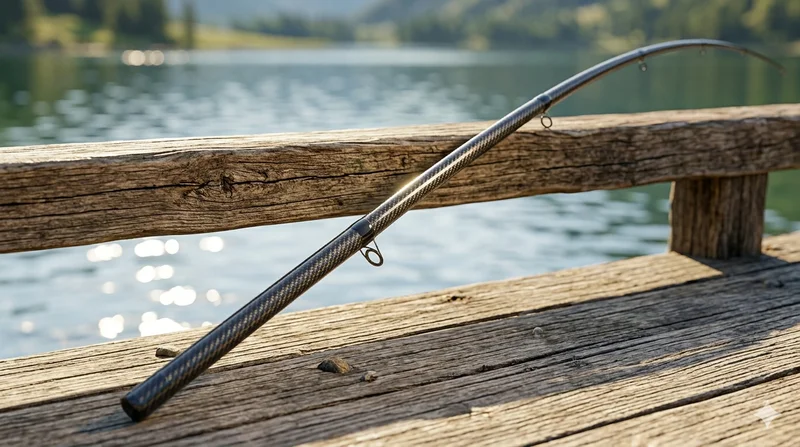
Carbon Fiber Fishing Rod Blank
High-quality carbon fiber fishing rod blank manufactured from multiple grades of Toray carbon fiber cloth. Available in a wide range of lengths, powers, and actions for freshwater and saltwater applications. Suitable for OEM rod building.

Carbon Fiber Plate — 3K Twill T700 1.5mm
Thin 1.5mm carbon fiber plate with 3K twill weave surface. Lightweight and stiff, commonly used for covers, panels, drone bodies, and applications requiring a premium aesthetic appearance.

Carbon Fiber Plate — 3K Twill T700 3.0mm
Medium-thickness 3.0mm carbon fiber plate offering significantly higher load capacity while maintaining attractive 3K twill finish. Suitable for structural brackets, reinforcement plates, and load-bearing panels.
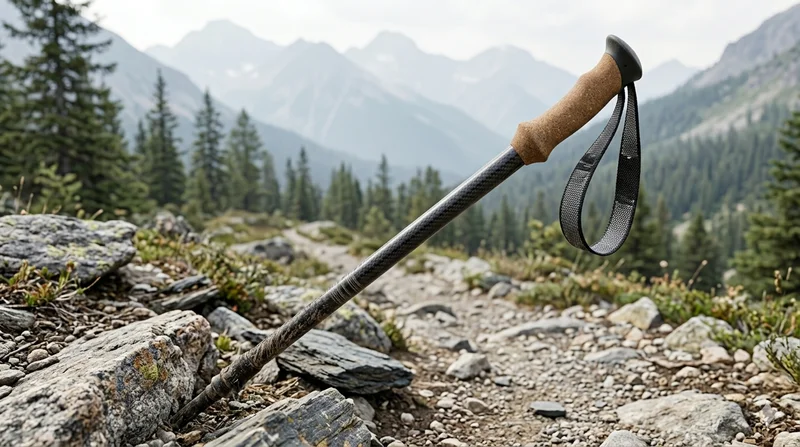
Carbon Fiber Trekking Pole
Lightweight carbon fiber trekking pole manufactured from high-grade carbon fiber tube. Weighs only 160g per pole while providing superior shock absorption and durability for hiking, trail running, and backpacking.

Square Carbon Fiber Tube — 3K Twill T700
Square cross-section carbon fiber tube manufactured with 3K twill weave for torsional strength. Preferred for structural frames, trusses, and support columns where rectangular geometry offers design flexibility.