
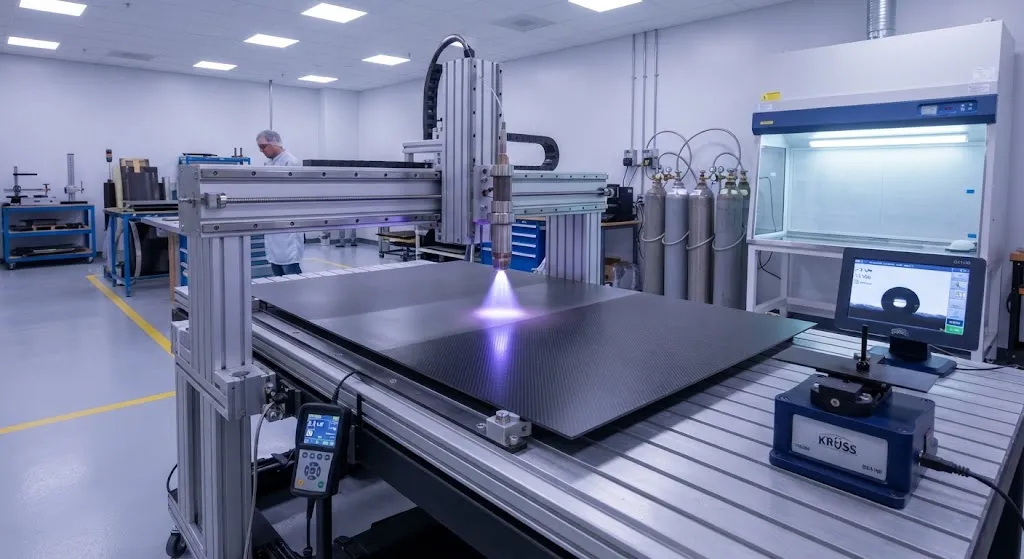
Adhesive bonding of carbon fiber reinforced polymer (CFRP) joints requires reliable surface preparation to achieve consistent bond strength. Mechanical abrasion, peel ply removal, and chemical primers have served this purpose for decades, but each introduces process variability, contami
Introduction
Adhesive bonding of carbon fiber reinforced polymer (CFRP) joints requires reliable surface preparation to achieve consistent bond strength. Mechanical abrasion, peel ply removal, and chemical primers have served this purpose for decades, but each introduces process variability, contamination risk, or labor overhead. Plasma surface treatment offers a fundamentally different approach: it modifies the composite surface chemistry at the molecular level without removing material or leaving residues, creating optimal conditions for adhesive wetting and chemical bonding.
For aerospace and automotive manufacturers, plasma activation addresses three persistent challenges. First, it eliminates the variability of manual abrasion — bond strength depends on surface energy, not sandpaper grit or operator technique. Second, it enables bonding of complex geometries where mechanical access is limited. Third, it produces a clean, activated surface with controlled shelf life, simplifying production scheduling. This article explains the plasma activation mechanisms, compares atmospheric and low-pressure systems, quantifies bond strength improvements, and reviews the aerospace qualification pathways now validating plasma-treated CFRP joints.
Plasma Activation Mechanisms
Plasma treatment modifies the CFRP surface through four synergistic mechanisms:
- Surface cleaning: Energetic plasma species remove organic contaminants — release agents, fingerprints, machining oils — without mechanical contact. Cleaning efficiency exceeds solvent wipe methods because plasma reaches micro-scale surface features.
- Chemical functionalization: Plasma introduces polar functional groups (hydroxyl, carboxyl, amine) onto the composite surface, increasing surface energy from 30-40 mN/m (untreated) to 55-70 mN/m. Higher surface energy improves adhesive wetting and chemical bond formation.
- Micro-roughening: Controlled plasma etching creates nano-scale surface topography (Ra 0.1-0.5 μm) that enhances mechanical interlocking without the fiber damage caused by grit blasting or sandpaper abrasion.
- Crosslinking of the near-surface layer: Plasma-induced crosslinking strengthens the weak boundary layer that forms during composite cure, preventing cohesive failure within the resin-rich surface zone.
The net result is a surface optimized for adhesive bonding: chemically active, micro-textured, and free of weak boundary layers. Bond strength improvements of 40-80% over untreated surfaces are routinely achieved.
Atmospheric vs Low-Pressure Plasma Systems
Two plasma technologies dominate CFRP surface treatment:
| Parameter | Atmospheric Plasma | Low-Pressure Plasma |
|---|---|---|
| Operating pressure | 760 Torr (ambient) | 0.1-10 Torr |
| Treatment width | 10-100 mm (single nozzle) | Full chamber width (up to 2 m) |
| Line speed | 5-50 m/min | Batch (5-30 min cycle) |
| Equipment cost | $50-200K | $200-800K |
| Gases | Air, O2, N2, Ar | O2, Ar, N2, CF4 |
| Surface energy gain | +20-30 mN/m | +25-35 mN/m |
| Activated surface shelf life | 2-8 hours | 24-72 hours |
| Best application | In-line, continuous parts | Complex 3D parts, batch |
Atmospheric plasma suits high-speed, in-line production where parts move continuously under the treatment head. Low-pressure plasma provides more uniform treatment of complex three-dimensional parts and longer activated surface shelf life, preferred for aerospace structural components.
Bond Strength Improvements
Quantitative bond strength data validates plasma activation across CFRP joint types:
- Single-lap shear: Plasma-treated CFRP/CFRP joints achieve 25-35 MPa versus 15-20 MPa for abraded surfaces — a 60-75% improvement.
- Double-lap shear: Bonded joints show 30-40 MPa with plasma treatment, approaching design allowables for structural adhesives.
- T-peel: Peel strength increases from 1-2 N/mm (untreated) to 4-6 N/mm (plasma-treated), a 3-4x improvement.
- Crash performance: Plasma-treated joints maintain 85-90% of static strength under dynamic crash loading versus 60-70% for abraded joints.
The consistency advantage is equally important: plasma-treated joints show 15-20% lower coefficient of variation in bond strength compared to manual abrasion, reducing statistical scatter that drives design knockdown factors.
Aerospace Qualification Pathways
Aerospace adoption of plasma surface treatment has accelerated through several qualification programs:
- Airbus qualification: Airbus has qualified atmospheric plasma for A350 XWB secondary structure bonding, with approved equipment from Plasmatreat and Velox.
- Boeing BMS 8-220: Boeing Material Specification 8-220 now includes plasma treatment as an approved surface preparation method for CFRP bonding.
- SAE ARP 5523: The SAE Aerospace Recommended Practice provides qualification guidelines for plasma treatment of composite structures, standardizing process parameters and acceptance criteria.
- Nadcap accreditation: Composite bonding suppliers with Nadcap accreditation increasingly offer plasma-treated bond surfaces with documented process specifications.
These qualifications remove the regulatory barriers that previously limited plasma treatment to non-structural applications.
Process Control and Quality Assurance
Plasma treatment quality depends on controlled process parameters:
- Surface energy measurement: Contact angle goniometry verifies surface energy ≥55 mN/m immediately after treatment. Production systems integrate automated surface energy probes.
- Plasma power density: Treatment effectiveness correlates with power density (W/cm²) rather than total power; atmospheric systems typically operate at 1-5 W/cm².
- Treatment speed: Over-treatment can damage fibers; under-treatment leaves insufficient activation. Process windows are typically ±10% of nominal speed.
- Shelf life tracking: Activated surfaces must be bonded within the validated shelf life window (2-8 hours atmospheric, 24-72 hours low-pressure).
- Environmental contamination: Post-treatment handling must avoid re-contamination; gloves, clean rooms, and ionized air blowers are standard controls.
Frequently Asked Questions
How does plasma treatment compare to peel ply removal for CFRP surface preparation?
Peel ply removal creates a textured surface through mechanical separation, achieving moderate surface energy (45-55 mN/m) and consistent roughness. Plasma treatment achieves higher surface energy (55-70 mN/m) with chemical functionalization, producing stronger bonds and lower scatter. However, peel ply is simpler to implement and does not require equipment investment. Many aerospace programs now specify peel ply followed by plasma activation for critical joints, combining both methods for maximum bond reliability.
What is the typical return on investment for plasma treatment equipment?
Atmospheric plasma systems ($50-200K) typically achieve payback within 12-18 months through reduced scrap from bond failures ($5,000-50,000 per occurrence in aerospace), elimination of consumable abrasives and solvents ($10-30K/year), and 40-60% time savings for surface preparation. Low-pressure systems ($200-800K) have longer payback (24-36 months) but provide superior treatment uniformity. The ROI should also include the statistical value: lower bond strength scatter allows tighter design knockdown factors, potentially reducing adhesive bond area and overall part weight.
Can plasma treatment be applied after adhesive application?
No — plasma treatment must be applied to the bare composite surface before adhesive application. The activated surface has a limited shelf life during which polar functional groups remain active for chemical bonding. After adhesive application, the treatment has no effect. In production, plasma treatment and adhesive application must be sequenced within the validated shelf life window. Some systems integrate plasma treatment heads directly into robotic adhesive dispensing cells, treating and bonding in a single pass.
Conclusion
Plasma surface treatment transforms CFRP bonding from a variable, labor-intensive process into a controlled, repeatable manufacturing step. The 40-80% bond strength improvements, 15-20% lower scatter, and elimination of mechanical abrasion contamination address the core challenges of composite joint reliability. With Airbus, Boeing, and SAE now qualifying plasma-treated surfaces for structural applications, the technology has cleared the regulatory pathway for mainstream aerospace adoption.
For engineers evaluating surface preparation options, plasma activation offers the best combination of bond performance and process consistency for structural CFRP joints. Explore our carbon fiber composite portfolio designed for adhesive bonding applications, or contact our engineering team to discuss surface preparation specifications for your bonding program.
Part of topic
Related Articles
- Bio-Based Carbon Fiber Precursors: Lignin and Polyethylene for Low-Cost Production
- Large-Tow Carbon Fiber Cost Analysis: 48K vs 60K Price-Performance Comparison
- Carbon Fiber-Resin Interface Bonding: Surface Treatment and Coupling Agent Optimization
- Digital Twin for Carbon Fiber Manufacturing: Real-Time Process Monitoring and Defect Prevention
- Thermoplastic Carbon Fiber Welding for Automotive: Ultrasonic and Induction Welding Process Windows
- Large-Tow Carbon Fiber Wet Spinning: Process Optimization for 48K/60K Production Efficiency
Interested in Our Products?
Contact our team for competitive pricing and technical specifications.
Get a QuoteRelated Products
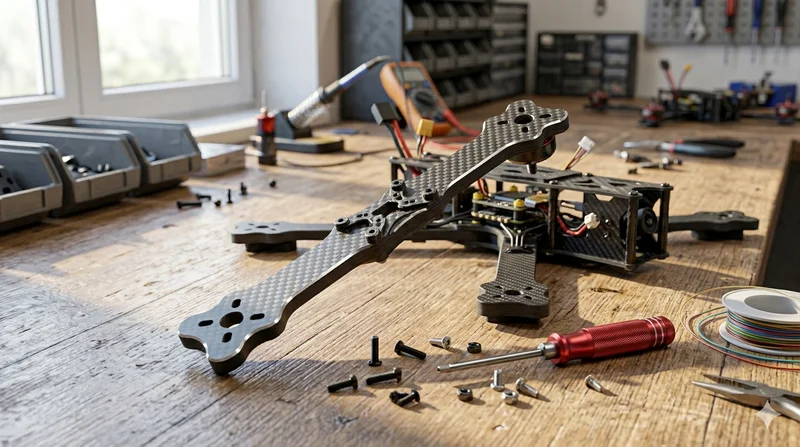
Carbon Fiber Drone Arm
Precision-molded carbon fiber drone arm combining unidirectional fiber for stiffness and woven layers for torsional strength. Designed for FPV, photography, and industrial drone platforms. Each arm is CNC-machined to exact specifications.
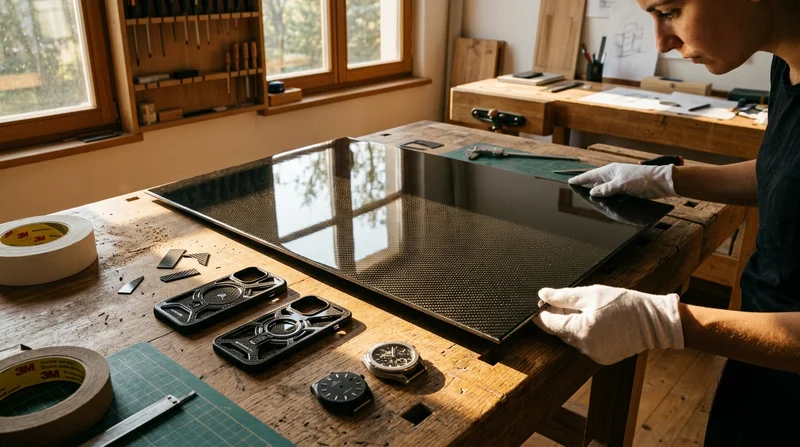
Carbon Fiber Plate — High-Gloss Decorative
High-gloss decorative carbon fiber plate with a mirror-like surface finish. The glossy coating enhances the visible 3K twill weave, creating a premium aesthetic for consumer-facing applications. Lightweight yet stiff, available in thin gauges for easy cutting and forming.
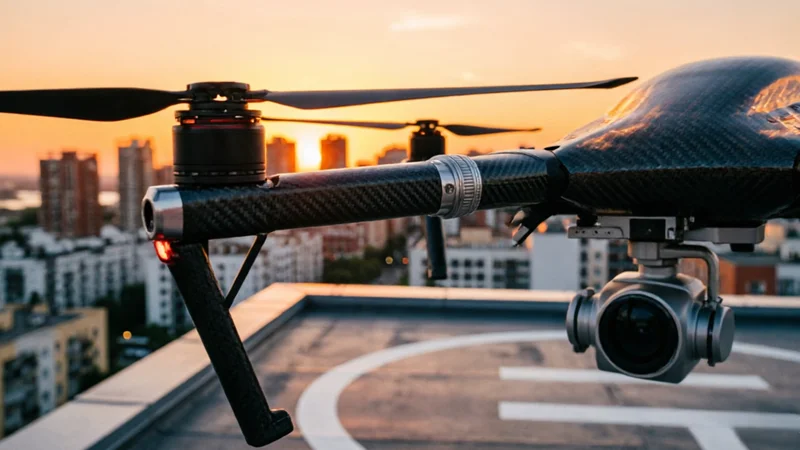
Custom Carbon Fiber Drone Arm — Lightweight & Vibration-Damping
High-modulus carbon fiber drone arms designed for industrial, agricultural, and surveying UAVs. Replace heavy aluminum arms with our custom-molded CFRP arms — 40-60% lighter with superior vibration damping for stable flight and sharper imaging.