
Geopolitical risks affecting the carbon fiber supply chain in 2026 — US-China tariffs, Japan export controls, EU CBAM, and diversification strategies for B2B buyers sourcing carbon fiber globally.
The New Reality of Carbon Fiber Supply Chains
The carbon fiber supply chain in 2026 is more fragmented and geopolitically complex than at any point in the last decade. Three major shifts — US-China trade decoupling, Japan's tightened export controls on high-modulus fibre, and the EU's Carbon Border Adjustment Mechanism (CBAM) — have created a landscape where B2B buyers cannot rely on a single country of origin. This article examines each risk factor and provides actionable diversification strategies.
Risk 1: US-China Tariff Escalation and Export Controls
| Policy | Effective Date | Impact on Carbon Fiber | Effective Rate (2026) |
|---|---|---|---|
| Section 301 Tariffs (China-origin) | 2025 expansion (Aug) | All carbon fiber and prepreg from China subject to additional 25% tariff | Base 7.5% + 25% = 32.5% |
| Section 232 National Security | 2026 review ongoing | Potential extension to carbon fiber as "advanced structural material" | Possible additional 25% |
| BIS Export Controls (Entity List) | Expanded May 2026 | Chinese entities added to Entity List; US-origin carbon fiber equipment and precursor restricted | Licensing required |
| China Export Licensing (MOFCOM) | Dec 2025 | China requires export license for high-modulus carbon fiber (> 400 GPa modulus) and aerospace-grade prepreg | Licensing delay 4–8 weeks |
The combined effect: carbon fiber shipped from China to the US faces a total tariff burden of 32.5 % (Section 301 + MFN base rate), plus potential anti-dumping duties. Chinese high-modulus fibre shipments to the US have declined by approximately 60 % year-over-year as of Q2 2026. European buyers face lower tariffs (7.7 % MFN + 8.2–18.6 % anti-dumping) but must navigate CBAM carbon costs (€1.50–2.40 per kg).
Risk 2: Japan's Export Controls on High-Modulus Fibre
Japan controls approximately 55 % of global high-modulus carbon fibre capacity (grades > 350 GPa tensile modulus) through Toray, Teijin, and Mitsubishi Chemical. In April 2026, Japan's Ministry of Economy, Trade and Industry (METI) tightened export licensing requirements for high-modulus carbon fibre destined for China and Russia, citing national security concerns under the Foreign Exchange and Foreign Trade Act.
- Licensing timeline: Standard applications 30–45 days; sensitive-end-use applications 60–90 days.
- Grades affected: M40J, M46J, M50J, M55J, M60J (all > 350 GPa). Standard modulus (T700, T800, 240–295 GPa) remains largely unrestricted.
- Supply impact: Lead times for high-modulus fibre have extended from 8–12 weeks to 16–24 weeks for non-Japanese buyers outside approved programmes.
- Price impact: Spot prices for M40J grade have increased 22 % year-over-year (Q2 2026), reaching approximately €185–220 per kg.
Risk 3: EU CBAM and Regulatory Costs
The EU's CBAM entered its enforcement phase for carbon fibre (HS 6815) in October 2025. By June 2026, importers must purchase CBAM certificates covering embedded emissions. For Chinese-origin carbon fibre (grid emission factor 0.65–0.75 tCO₂/MWh), embedded carbon is approximately 22–28 kg CO₂ per kg of fibre. At a CBAM certificate price of €68–85/tCO₂ in 2026, this adds €1.50–2.40 per kg — a 6–10 % cost increase on standard-modulus fibre.
Combined with anti-dumping duties (8.2–18.6 %), the total regulatory cost premium for Chinese-origin carbon fibre entering the EU is approximately 15–28 % above the base material price. This has driven some European buyers to shift sourcing to South Korean (Hyosung, SK) and Turkish (DowAksa) suppliers, which benefit from lower tariff rates and preferential CBAM treatment.
Diversification Strategies for B2B Buyers
Based on our assessment of the current risk landscape, we recommend the following supply chain strategies for B2B buyers:
- Multi-source qualification: Qualify at least two independent carbon fibre suppliers from different regions. Typical qualification timeline: 4–8 months for standard-modulus, 8–14 months for high-modulus grades.
- Buffer inventory: Maintain 12–16 weeks of safety stock for high-modulus and aerospace-grade materials. For standard-modulus fibre, 8–10 weeks is adequate given more diversified supply.
- Contract flexibility: Include geopolitical risk clauses in supply agreements — force majeure for export license delays, cost-sharing for tariff increases beyond a threshold (e.g., 10 %), and optional volume adjustments with 60-day notice.
- Regional alternatives: Consider Korean (Hyosung H2550, 240 GPa), Turkish (DowAksa A-42, 242 GPa), or domestic (US-based Hexcel, EU-based SGL Carbon) sources to reduce geopolitical exposure.
- Grade substitution: Where design allows, substitute high-modulus fibre (M40J, M46J) with advanced standard-modulus fibre (T800-grade, 295 GPa) through laminate redesign. The modulus gap can often be closed by adding 1–2 plies.
Q: How long does it typically take to qualify a new carbon fibre supplier?
A: For standard-modulus fibre (T700/T800 grade), qualification typically takes 4–8 months including material testing (tensile, compression, shear per ASTM or ISO standards), process trials, and part-level validation. For high-modulus grades, expect 8–14 months because end-user certification (OEM or regulatory body) may be required. We recommend starting the qualification process for at least one backup supplier immediately, even if you have no current supply issue.
Q: Are Chinese carbon fibre suppliers still viable for export to Western markets?
A: Yes, but with caveats. Chinese carbon fibre remains competitive for standard-modulus grades (T700 equivalent, 240 GPa) destined for non-US markets. Export to the US carries a 32.5 % tariff burden, making it uneconomical except for specialty grades not produced domestically. Export to the EU is viable but requires managing CBAM compliance and anti-dumping duties (combined 15–28 % premium). For high-modulus grades (> 350 GPa), Chinese export licensing adds 4–8 weeks to lead times. At YongXian, we serve customers in Europe, Southeast Asia, the Middle East, and South America with standard-modulus and intermediate-modulus grades.
Q: What is the outlook for carbon fibre supply chain stability in the next 12 months?
A: We expect continued volatility through H1 2027. Key factors: (1) US presidential trade policy direction post-2026 midterms, (2) potential EU expansion of CBAM to include carbon fibre intermediate products (prepreg, pultruded profiles), (3) Japanese METI further tightening high-modulus export controls, and (4) capacity expansion in China (expected +15,000 tonnes by 2027) which may lower standard-modulus prices but also trigger additional trade measures. B2B buyers should budget for 8–15 % year-over-year price increases on high-modulus fibre and 3–7 % on standard-modulus fibre.
Part of topic
Related Articles
- Recycled Carbon Fiber Market Forecast 2030: Technology Maturity and Commercialization Path
- South Korea Carbon Fiber Market 2026: Hydrogen Economy and Shipbuilding Innovation
- Wind Turbine Blade Leading Edge Protection 2026: Polyurethane, Tape, and Metallic Shield Solutions
- China Carbon Fiber Overcapacity 2026: Price War Impact and Industry Consolidation
- India Carbon Fiber Market 2026: Wind Energy, Aerospace, and Defense Expansion
- PAN Precursor Market 2026: Acrylonitrile Supply and Carbon Fiber Cost Structure
Interested in Our Products?
Contact our team for competitive pricing and technical specifications.
Get a QuoteRelated Products
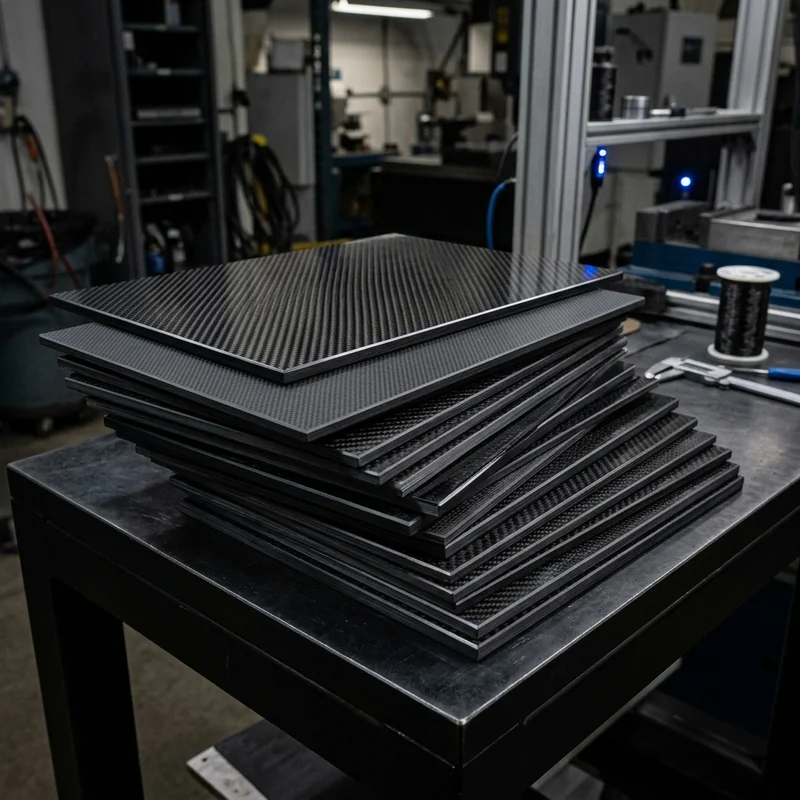
Carbon fiber standard plate-3k stripe
Lightweight, ultra-rigid standard sheets for drone fuselages, robot housings, facades and structural applications.
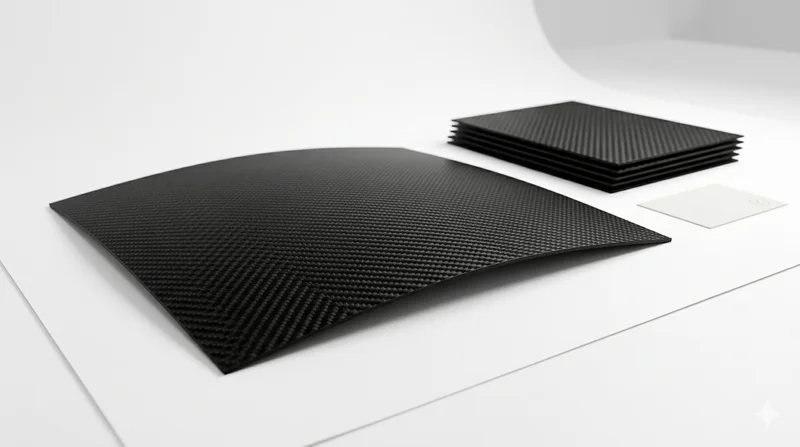
Carbon Fiber Plate — 3K Twill T700 1.5mm
Thin 1.5mm carbon fiber plate with 3K twill weave surface. Lightweight and stiff, commonly used for covers, panels, drone bodies, and applications requiring a premium aesthetic appearance.
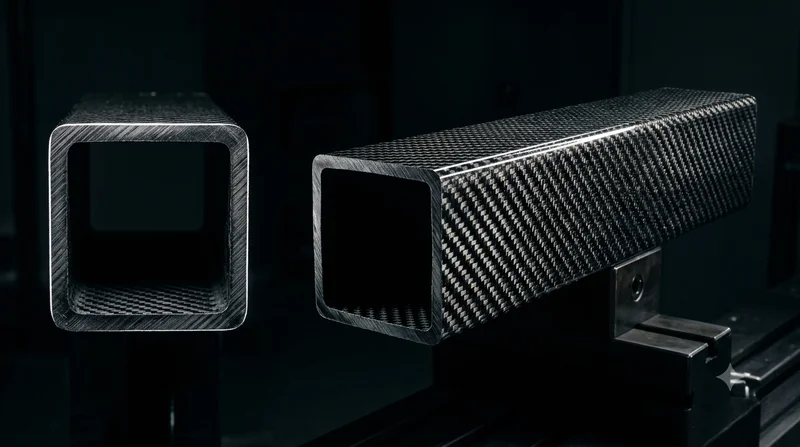
Square Carbon Fiber Tube — 3K Twill T700
Square cross-section carbon fiber tube manufactured with 3K twill weave for torsional strength. Preferred for structural frames, trusses, and support columns where rectangular geometry offers design flexibility.
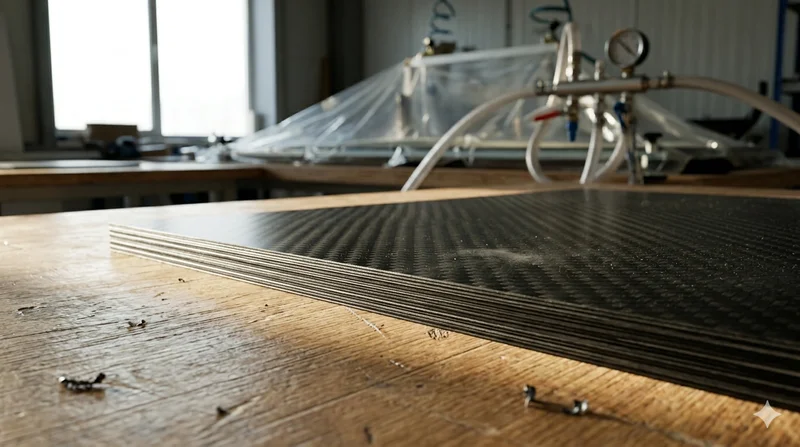
Carbon Fiber Plate — 3K Twill T700 3.0mm
Medium-thickness 3.0mm carbon fiber plate offering significantly higher load capacity while maintaining attractive 3K twill finish. Suitable for structural brackets, reinforcement plates, and load-bearing panels.
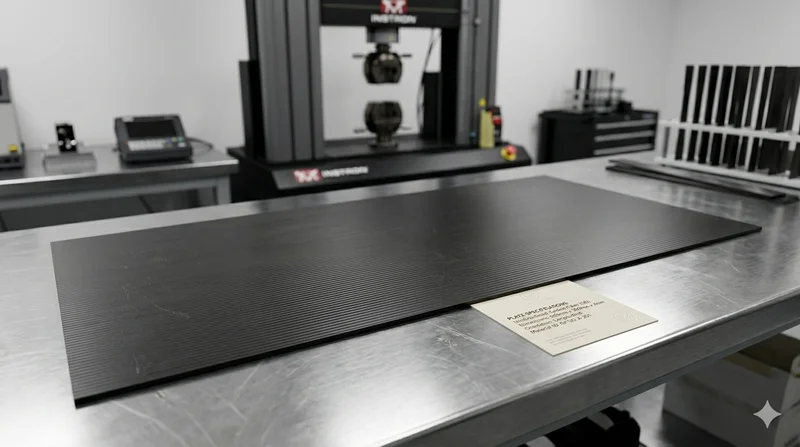
Carbon Fiber Plate — UD Unidirectional T700
Unidirectional carbon fiber plate with all fibers oriented in a single direction for maximum strength along the fiber axis. Essential for structural reinforcements, splints, and applications where load direction is predictable.