
When the LME nickel contract settled at USD 22,840 per tonne on 11 July 2026 and Chinese export suppliers stretched blade component delivery to around 20 weeks, the immediate reaction in the market was price risk. The structural reaction, which is the more important one, was a wave of f
Introduction
When the LME nickel contract settled at USD 22,840 per tonne on 11 July 2026 and Chinese export suppliers stretched blade component delivery to around 20 weeks, the immediate reaction in the market was price risk. The structural reaction, which is the more important one, was a wave of formal qualification audits. European and U.S. turbine OEMs, watching their alloy-bearing components and their single-region sourcing exposure at the same time, began reviewing non-Chinese second sources with a depth that the industry has not seen in a routine cycle. The shift is being driven by procurement logic, not politics: when one supply corridor tightens, the suppliers who can step in are those whose qualification evidence is already complete.
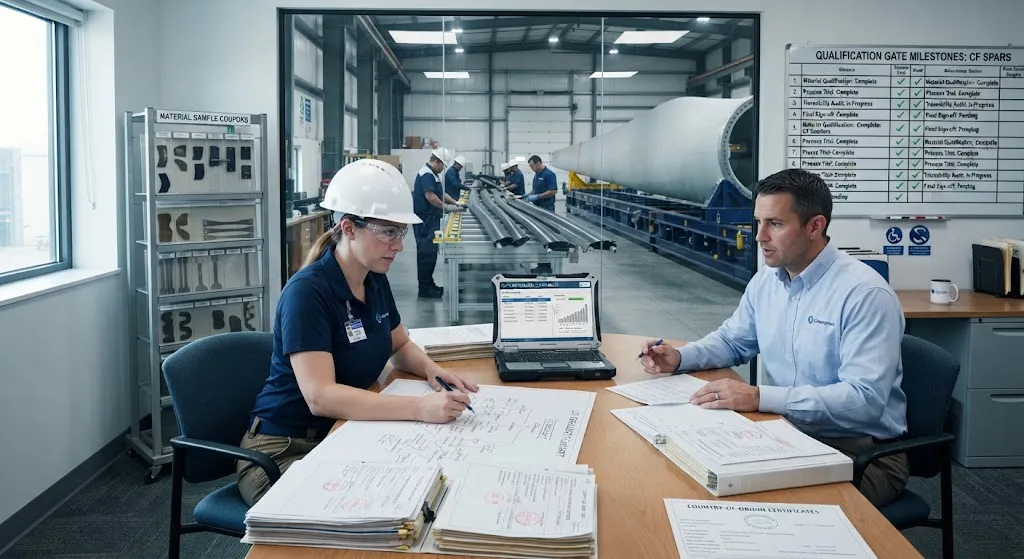
This article walks through what a blade-sourcing qualification audit actually demands today. We look at the five evidence categories that the new audits verify, the traceability pack that decides whether a supplier can even bid, and the test records and origin exposure checks that turn a paper review into a real technical decision. The practical message for suppliers is blunt: in the current environment, the audit is not a sales exercise, and a missing record is a disqualification, not a clarification item.
Why the Nickel Shock Triggered Audits, Not Just Price Talks
The 2026 nickel episode pinched blade sourcing at two points at once. Upstream, alloy surcharges moved the cost of bearings, fasteners, mold frames and installation tooling in a single quarter. Downstream, the 20-week delivery quotes from Chinese exporters made availability, not price, the binding constraint for turbine OEMs planning 2027 installation campaigns. An OEM cannot negotiate its way out of a delivery queue; it can only buy from a different queue. That is what turned dormant second-source lists into active audit workloads.
The timing also matters. Blade and component capacity outside China exists — in Europe, Southeast Asia and the Americas — but most of it was qualified years ago, often to an older standard, and some of the best-positioned plants have never been through a full OEM audit at all. The audits launched in the second half of 2026 are therefore catching up on two generations of skipped verification: they are re-checking legacy approvals against current design allowables, and they are qualifying new suppliers from a cold start. Both paths run through the same evidence standard, which is where the discipline of the qualification pack enters.
The Five Evidence Categories in the New Audit
The practical content of a blade-component audit has converged on five categories, each with a defined evidence set and each acting as a gate on the next. The table below summarizes what auditors actually open, and what the absence of each item implies:
| Audit category | Evidence the auditor checks | What missing evidence means |
|---|---|---|
| Technical qualification pack | Approved datasheets, processing window, design allowables, deviation history | Audit stops before the plant visit |
| Production process records | Batch records, cure and consolidation logs, statistical process control data | No proof of repeatability |
| Test records and release data | Coupon matrices, DSC and DMA curves, tensile, ILSS and fatigue results | Allowables are unverified |
| Traceability pack | Lot genealogy, fiber grade and tow source, blade-to-batch mapping | Recall and rework are impossible |
| Supply-chain and origin dossier | Precursor source, country-of-origin certificates, sub-tier supplier map | Origin exposure is unknown |
The category order is not accidental: each gate must close before the next opens. An OEM will not spend airline budget on a plant visit until the technical pack is complete, and the traceability pack is checked against the production records to make sure the paper trail matches the floor reality, not the other way around.
The Traceability Pack: From Tow to Blade
The traceability pack is the category that has grown the most since the previous audit cycle, because it is the layer that turns the other four categories into an auditable system. A complete pack maps every fiber grade, fiber lot, resin batch and cure cycle to the serial number of the blade it entered — the genealogy that makes a recall, a rework decision or a warranty investigation technically possible. In blade sourcing the chain runs from the carbon fiber tow through the pultruded spar, the fabric, the infusion, the curing and the final blade assembly, and any break in that chain converts a small defect into an unmanageable mystery.
Auditors test the pack rather than trust it. They pull a random historical batch, follow it from the purchase order to the delivery note, and compare the documented cure records with the machine logs and the date stamps. They check that the country-of-origin certificates cover both the final component and its raw material, because tariff and export-control exposure travels through the sub-tier suppliers that the OEM never contracts with directly. In the 2026 environment, a supplier whose traceability only covers its own factory gates is effectively unqualified for blade-critical components, however strong its mechanical test data looks.
Test Records, Origin Exposure and the New Selection Logic
The selection logic itself has changed, and the audit reflects it. Historically, blade component supply was chosen on price and capacity, with quality verified at acceptance. The nickel episode pushed the market toward what this article describes as a continuity-and-origin logic: the buyer now asks whether the supplier can deliver next year and the year after, and whether the material can keep crossing borders and clearing export controls. Test records feed the continuity question — a supplier with a nine-year test history can prove it has held allowables across resin reformulations and fiber grade changes, while a new entrant starts from zero. Origin exposure feeds the security question — the country of the precursor, the country of the carbonization line and the country of assembly each carry their own risk profile, and the audit maps all three.
- Geographic diversification: OEMs are weighting supplier pools toward two or more independent regions, making the origin dossier a bid-shaping document rather than a compliance form.
- Delta qualification: suppliers with an existing qualification can earn a faster path for new grades by demonstrating the delta test matrix, which rewards suppliers who kept their records current.
- Long-term test continuity: the ability to show the same test method and the same technicians across a decade of batch records is now a differentiator, not a paperwork artifact.
- Contractual readiness: qualification packs that include validated commercial terms — volume commitments, indexation clauses and force-majeure definitions — move to the front of the queue when allocation tightens.
Read together, the five categories and the new selection logic describe a market where the audit is the competitive event. The suppliers who win the second-source wave will not be the cheapest or the closest; they will be the ones whose qualification pack survived contact with an auditor's curiosity.
Frequently Asked Questions
Why did the nickel price shock trigger supplier qualification audits?
The nickel spike of July 2026 pushed alloy-bearing blade components toward 20-week delivery from Chinese exporters while also raising their cost. Turbine OEMs cannot negotiate around a delivery queue, so they began qualifying non-Chinese second sources who could supply on an independent timeline. Because most of that capacity had not been fully audited to current standards, the OEMs launched formal qualification reviews with a stricter evidence standard than the price-and-capacity checks of previous cycles. The audit wave is the structural response: build a second queue you can actually use.
What makes a supplier fail a blade sourcing audit?
Failure is almost always a missing record rather than a poor test result. Incomplete technical dossiers, unrepeatable production logs, test matrices that do not cover the required allowables, broken traceability from fiber lot to blade serial number, and an origin dossier that fails to cover sub-tier suppliers are all disqualifying. The audits are designed to stop early: a supplier whose qualification pack is incomplete is rejected before the plant visit budget is spent. Suppliers with complete, current records pass quickly; suppliers who treat documentation as secondary are now outside the conversation.
How can a second supplier prepare for a qualification audit?
Preparation is a records exercise with a site-visit element. The supplier should assemble the five evidence categories — technical pack, production records, test records, traceability and origin dossier — and verify internally that each gate closes before inviting the auditor. Tracing a few historical batches end to end is the fastest way to find gaps. Keeping records current matters more than age: an audit that finds a two-year-old qualification with no delta testing will fail on continuity. Finally, the commercial framework should be ready early, because volume commitments and indexation terms are being treated as part of the qualification decision, not downstream negotiation.
Conclusion
The 2026 nickel shock converted supplier qualification from a compliance ritual into the primary competitive arena in blade sourcing. The audits now run on a strict five-category evidence standard, the traceability pack has become the deciding layer between a paper approval and a usable supplier, and origin exposure sits alongside mechanical allowables as a first-class criterion. For OEMs the value is a usable second queue; for suppliers the message is unambiguous — the qualification dossier is the product, and the records decide who gets the business.
If your blade or aerospace program needs qualified composite supply with complete traceability, review our carbon fiber material and component capabilities or contact our engineering team to discuss qualification packs, test records and sourcing continuity.
Part of topic
Related Articles
- Recycled Carbon Fiber Market Forecast 2030: Technology Maturity and Commercialization Path
- South Korea Carbon Fiber Market 2026: Hydrogen Economy and Shipbuilding Innovation
- Wind Turbine Blade Leading Edge Protection 2026: Polyurethane, Tape, and Metallic Shield Solutions
- China Carbon Fiber Overcapacity 2026: Price War Impact and Industry Consolidation
- India Carbon Fiber Market 2026: Wind Energy, Aerospace, and Defense Expansion
- PAN Precursor Market 2026: Acrylonitrile Supply and Carbon Fiber Cost Structure
Interested in Custom Carbon Fiber Products?
Contact our team for competitive pricing and technical specifications.
Get a QuoteRelated Products
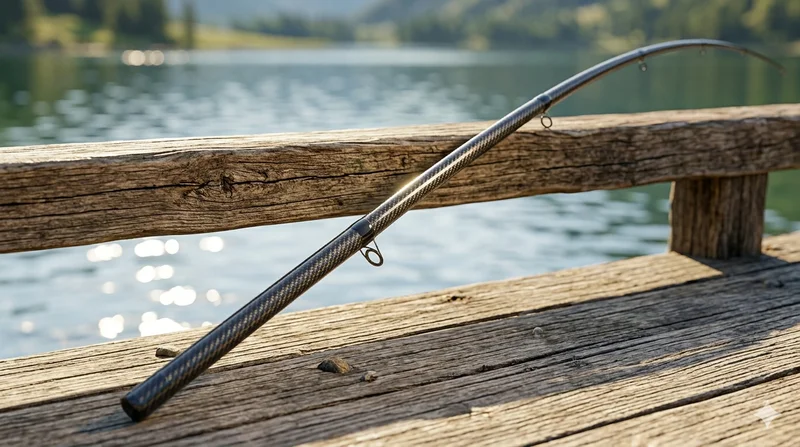
Carbon Fiber Fishing Rod Blank
High-quality carbon fiber fishing rod blank manufactured from multiple grades of Toray carbon fiber cloth. Available in a wide range of lengths, powers, and actions for freshwater and saltwater applications. Suitable for OEM rod building.
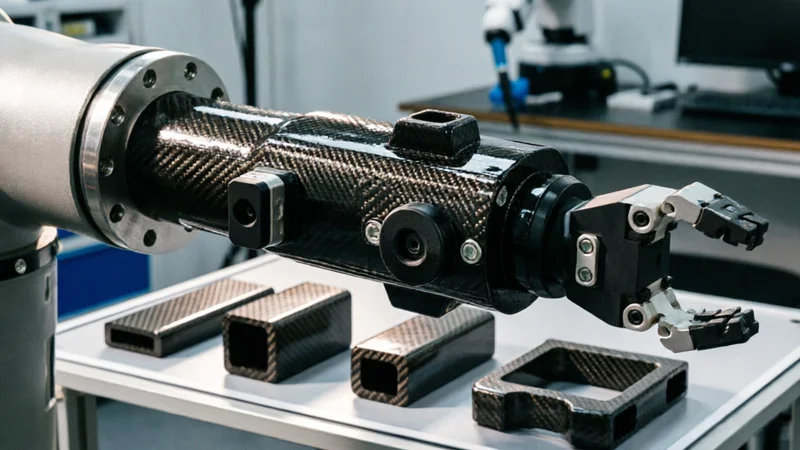
Carbon Fiber Robot End Effector Link — Custom Shape & Sensor Integration
Custom-shaped carbon fiber end effector links for robotic arms. Designed for automation integrators and research labs requiring lightweight, rigid connections between the robot wrist and gripper/tool. Can incorporate sensor mounting bosses, cable routing channels, and quick-change interfaces.

Custom Carbon Fiber Musical Instrument Parts
Carbon fiber components for musical instrument manufacturing offering superior dimensional stability, low weight, and consistent acoustic properties. We produce carbon fiber bows, guitar necks, violin chin rests, drum shells, and wind instrument bodies. Carbon fiber instruments are immune to humidity changes and temperature fluctuations that affect wooden instruments.
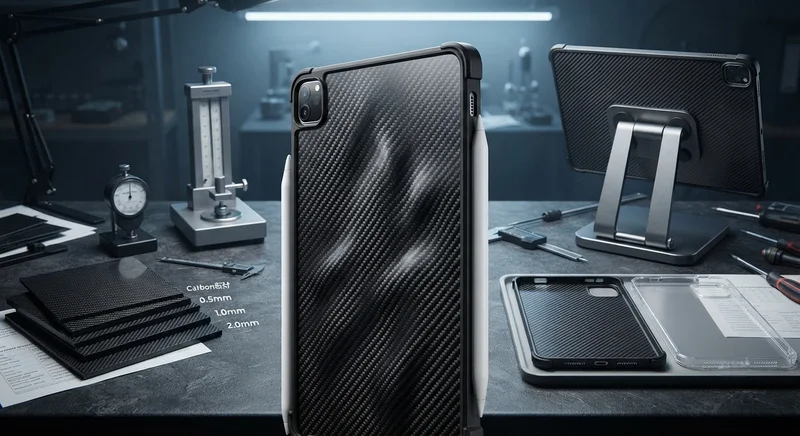
Carbon Fiber Tablet Case — Ultra-Light Protective Shell
Lightweight carbon fiber protective case for tablets and iPads. Molded from T700 3K prepreg with reinforced corner protection. Adds minimal weight while providing superior rigidity and drop protection compared to polycarbonate or silicone cases. Ideal for field workers, enterprise deployments, and professionals requiring durable tablet protection.

Custom Carbon Fiber Medical Device Components
Medical-grade carbon fiber components manufactured for imaging equipment, surgical instruments, and patient support systems. Carbon fiber's radiolucency (X-ray transparency) and high strength-to-weight ratio make it ideal for CT scanner beds, wheelchair frames, surgical robot arms, and MRI-compatible accessories. Biocompatible resin systems available.