
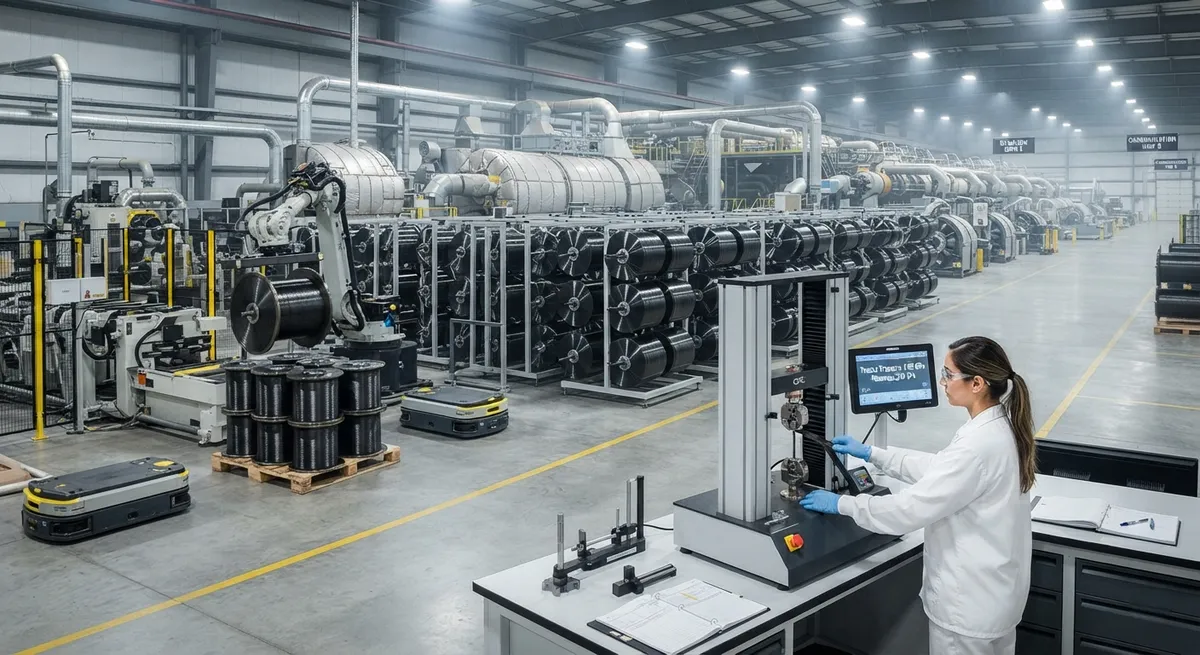
T1100-grade carbon fiber sits at the top of the commercial strength range: fibers with tensile strength in the 6,500-7,000 MPa band have historically been supplied by a very small number of producers, and global volume has been modest. On August 4, 2026, Sinofibers announced that it had
Introduction
T1100-grade carbon fiber sits at the top of the commercial strength range: fibers with tensile strength in the 6,500-7,000 MPa band have historically been supplied by a very small number of producers, and global volume has been modest. On August 4, 2026, Sinofibers announced that it had completed the technical appraisal of a T1100-grade fiber produced on a wet-spinning route, with declared properties of 6,600 MPa tensile strength and 335 GPa tensile modulus, and a target of 5,000 tonnes per year of stable capacity. The result places Sinofibers alongside a handful of producers worldwide that can claim a production route at this performance level.
For engineers and procurement teams that specify high-strength fiber, the significance is twofold: the emergence of a second Chinese T1100-class source, and the scale — 5,000 tonnes per year is an order of magnitude larger than the volumes normally associated with premium high-strength lines. This article looks at what was verified, how the supply landscape is changing, and what it means for buyers over the next two to three years.
Who Is Sinofibers
Sinofibers is a Changzhou-based producer in the Jiangsu region, an area that has become one of China's densest clusters of carbon fiber and composite manufacturing. The company has been building an integrated PAN-based production chain, from precursor through carbonization to downstream composites, and its position in the regional supply base has been a foundation for the move into higher-performance grades. Changzhou's ecosystem — including fiber producers, prepreg processors, and machinery suppliers — gives local lines unusually fast access to process expertise and equipment support.
The wet-spun T1100 achievement should be read in that context. China's high-end fiber push has moved up the strength ladder rapidly over the past decade, from T300-class to T700 and T800 equivalents, and now to the T1100 band. Sinofibers' appraisal is a step in that national progression, and its scale ambitions reflect both the company's capacity strategy and the demand pull from Chinese downstream industries.
What the August 2026 Appraisal Verified
A technical appraisal of this kind is a formal review by an expert panel of the production process, testing methodology, and result data, rather than a single sample test. The declared properties — 6,600 MPa tensile strength and 335 GPa modulus — establish the fiber in the T1100 band, above every T800-class grade and below only the strongest reference grades such as Toray's T1100G. The 335 GPa modulus is notable: it is stiffer than the typical 294 GPa of T800S-class fiber and above the 324 GPa of T1100G, a combination that matters for stiffness-critical structures.
The distinctive feature of the route is wet spinning, the older coagulation method that was long considered to cap out well below T1100-level strength. The appraisal's significance is therefore not only the properties achieved but the process economics: wet spinning supports higher throughput per line and lower capital intensity than the dry-jet route, which is what makes a 5,000-tonne plan credible on a single family of lines. Whether the properties hold across hundreds of tonnes with acceptable yield is the question that full-scale validation will answer in the coming year.
The New High-End Supply Landscape
The T1100-class segment has been one of the most concentrated in the carbon fiber industry. The table below summarizes the supply landscape as it stands after the Sinofibers appraisal:
| Producer | Process route | Strength (MPa) | Modulus (GPa) | Commercial status |
|---|---|---|---|---|
| Toray (T1100G) | Dry-jet wet spinning | 7,000 | 324 | Established commercial |
| Zhongfu Shenying (T1100-class) | Dry-jet | T1100-class | — | Mass production, China's first T1100 route |
| Sinofibers (2026) | Wet spinning | 6,600 | 335 | Appraisal completed; 5,000 tpa planned |
Two features stand out. First, the segment now has three credible supply routes rather than a near-monopoly, and two of them are in China. Second, the new entrant's planned scale is far larger than anything the segment has seen: global volumes of true T1100-class fiber today are estimated in the hundreds of tonnes annually, so a 5,000-tonne line, if realized, would transform the cost and availability of high-strength fiber.
What 5,000 Tonnes Really Means
To put the number in context, consider what 5,000 tonnes of high-strength fiber could absorb:
- Aerospace and defense programs consume T800 and T1100-class fiber in volumes measured in tonnes per program, and qualification cycles take three to ten years — new supply will enter these programs slowly.
- Industrial applications such as pressure vessels and rotating machinery adopt new grades faster, limited mainly by qualification testing and price.
- Sports and consumer goods are the most flexible: high-strength fiber in golf shafts, bicycles, and premium equipment can switch grades on much shorter qualification horizons.
- Price pressure is the near-term certainty: a domestic high-strength line of this scale, combined with existing T800-class overcapacity in China, will pull premium pricing down well before aerospace volumes materialize.
The realistic timeline is a ramp, not an event. Appraisal is followed by pilot-scale production, customer qualification, and staged full-scale start-up, typically over one to three years. But the planning signal is immediate: buyers of high-strength fiber should be re-benchmarking prices, lead times, and supplier options now.
Implications for Buyers and Designers
For engineering teams, the new supply landscape changes two calculations. The first is specification: with a second and third T1100-class route available, designers gain negotiating leverage and redundancy, and can revisit applications previously costed only with premium imported fiber. The second is validation strategy: the properties of wet-spun fiber differ in detail — higher modulus here, potentially different surface and sizing behavior — so substituting it into an existing design requires re-characterization, not just a datasheet swap.
For procurement, the implication is to begin qualification conversations early rather than waiting for full commercial availability. Suppliers prefer to qualify customers in during the pilot phase, and early qualification positions buyers to capture the pricing benefits of the new capacity as it ramps.
From Appraisal to Full Scale: What to Track
The appraisal is a milestone, not a conclusion. Between the August 2026 result and a commercial product flowing at planned volumes, buyers can expect a sequence of verifiable steps, and tracking them is the practical way to time sourcing decisions:
| Milestone | Typical timing after appraisal | Signal for buyers |
|---|---|---|
| Pilot-scale production | 3-12 months | Sample availability, datasheet updates |
| Customer qualification | 6-24 months | Approved supplier lists, test data packages |
| Staged full-scale ramp | 12-36 months | Volume allocations, price schedules |
Each stage is a confirmation point. Pilot output tests the consistency claims; customer qualification tests the fiber in real processes; and the full-scale ramp tests economics at volume. Buyers who engage at the pilot stage — supplying feedback, running trials, and locking early specifications — are typically the first to benefit from the pricing and supply changes that follow.
Frequently Asked Questions
How does Sinofibers' wet-spun T1100 compare with Toray's T1100G?
The declared tensile strength of 6,600 MPa sits below T1100G's 7,000 MPa, but the modulus of 335 GPa is higher than T1100G's 324 GPa, making the fiber particularly attractive for stiffness-critical structures. The bigger practical differences are maturity and data: T1100G has years of aerospace and industrial qualification data behind it, while the wet-spun fiber's properties are appraisal-stage and will need full-scale validation and customer testing before they can be specified with confidence.
When will the 5,000-tonne capacity actually reach the market?
The appraisal was completed in August 2026; full-scale production typically follows a staged ramp over one to three years, with pilot-scale quantities available to qualified customers earlier. The 5,000-tonne figure is a planned target rather than today's output, and the realistic pattern is progressive ramp-up as downstream qualification and yields are established.
Which applications will benefit first from a second Chinese T1100 source?
Industrial applications with shorter qualification cycles — pressure vessels, rotating components, and advanced equipment — will adopt the new fiber first, followed by sports and premium consumer goods. Aerospace and defense will move last, constrained by multi-year program qualification. In every case, the near-term benefit is price pressure on the high-strength segment and improved supply security for buyers.
Conclusion
Sinofibers' completion of a wet-spun T1100 technical appraisal at 6,600 MPa and 335 GPa, with 5,000 tonnes of planned capacity, is a meaningful step in the restructuring of the high-end carbon fiber supply landscape. A T1100-class segment that was once a near-monopoly is becoming a competitive market with two Chinese routes, and the scale of the planned capacity points to structural changes in high-strength fiber pricing over the next several years.
Whether you are qualifying a new grade or re-benchmarking an existing supply chain, the new options merit a structured review. Explore our carbon fiber and composite material range, or contact our engineering team to compare grades, pricing, and qualification paths for your application.
Part of topic
Related Articles
- Carbon Fibre Sheet Supplier UK: Sourcing Options and Specification Checklist
- Carbon Fiber Sheets Near Me Suppliers: Local Stock vs Factory Direct
- Filament Wound Epoxy Tubes: Industry Standards and Compliance Requirements
- Carbon Fiber Dealers Near Me: What a Good Dealer Actually Adds
- Carbon Fiber Supplies Near Me: Local Sourcing Without Compromising Spec
- Carbon Fiber for Sale: Online Platforms and Direct Sales Channel Comparison
Interested in Our Products?
Contact our team for competitive pricing and technical specifications.
Get a QuoteRelated Products
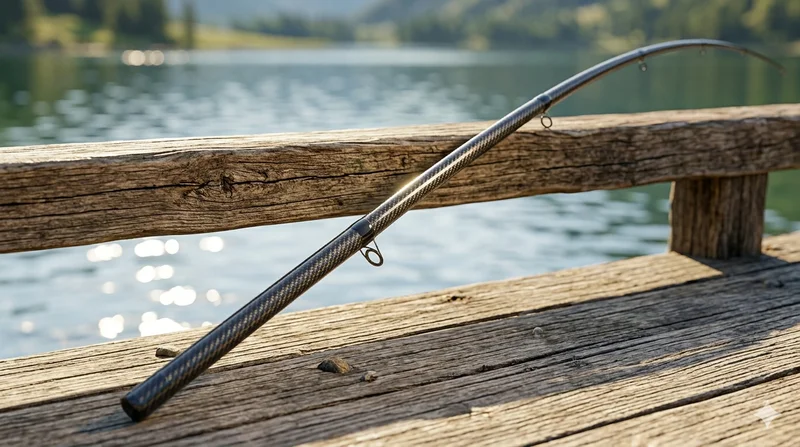
Carbon Fiber Fishing Rod Blank
High-quality carbon fiber fishing rod blank manufactured from multiple grades of Toray carbon fiber cloth. Available in a wide range of lengths, powers, and actions for freshwater and saltwater applications. Suitable for OEM rod building.

Carbon Fiber Plate — 3K Twill T700 1.5mm
Thin 1.5mm carbon fiber plate with 3K twill weave surface. Lightweight and stiff, commonly used for covers, panels, drone bodies, and applications requiring a premium aesthetic appearance.

Carbon Fiber Plate — 3K Twill T700 3.0mm
Medium-thickness 3.0mm carbon fiber plate offering significantly higher load capacity while maintaining attractive 3K twill finish. Suitable for structural brackets, reinforcement plates, and load-bearing panels.
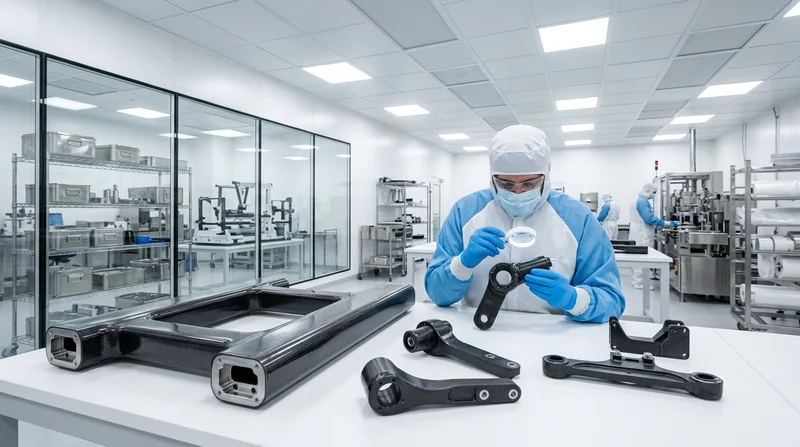
Custom Carbon Fiber Medical Device Components
Medical-grade carbon fiber components manufactured for imaging equipment, surgical instruments, and patient support systems. Carbon fiber's radiolucency (X-ray transparency) and high strength-to-weight ratio make it ideal for CT scanner beds, wheelchair frames, surgical robot arms, and MRI-compatible accessories. Biocompatible resin systems available.

Square Carbon Fiber Tube — 3K Twill T700
Square cross-section carbon fiber tube manufactured with 3K twill weave for torsional strength. Preferred for structural frames, trusses, and support columns where rectangular geometry offers design flexibility.