
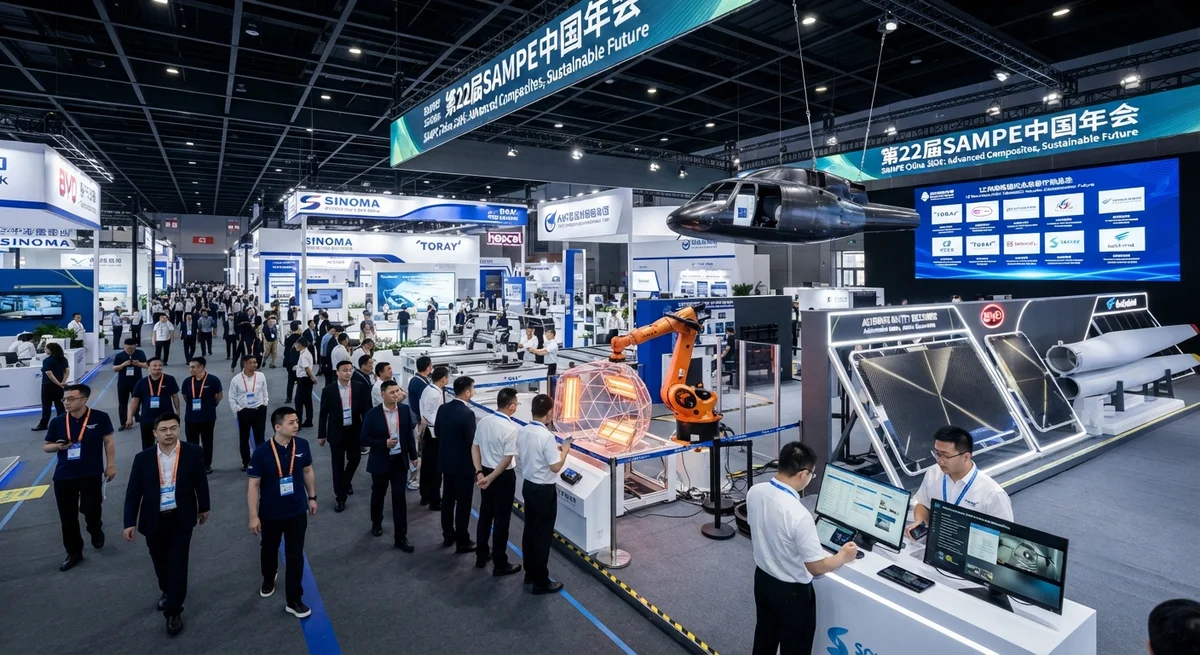
The 2026 SAMPE China conference and exhibition in Beijing showcased 47 award entries across aerospace, automotive, wind energy, and emerging applications — with thermoset-thermoplastic hybrid moulding, automated fibre placement for hydrogen storage vessels, and bio-based carbon fibre precursors emerging as the dominant technology themes.
Overview of SAMPE China 2026
The Society for the Advancement of Material and Process Engineering (SAMPE) China 2026 conference and exhibition, held from July 8–10 at the China National Convention Center in Beijing, brought together over 3,800 delegates and 215 exhibitors from 28 countries. The event's centrepiece was the Advanced Composites Product Innovation Awards — now in their fourth year — recognising breakthrough technologies in design, materials, manufacturing processes, and applications across the full composites value chain. This year's award programme received 47 entries from 39 organisations spanning aerospace OEMs, material suppliers, university research groups, and start-ups, with 12 finalists selected by an international jury chaired by Professor Li Yizhou of Beihang University.
This article provides a detailed overview of the grand-prize and category-winning entries, extracts the dominant technology trends evident at the exhibition, and offers practical implications for B2B composites buyers and R&D planners evaluating technology partnerships and investment priorities for 2027–2029.
Grand Prize Winner: AVIC Manufacturing Technology Institute
Award: SAMPE China 2026 Grand Prize for Product Innovation
Entry: "Integrated Thermoset-Thermoplastic Hybrid Moulding for Aerospace Primary Structures"
Technology TRL: 7 (system prototype demonstrated in operational environment)
The AVIC Manufacturing Technology Institute (MTI) entry demonstrated a multi-material hybrid moulding process that co-consolidates a thermoset CFRP skin (Hexcel 8552/IM7 prepreg) with selectively placed thermoplastic PEKK stiffeners and riblets in a single autoclave cycle, eliminating the secondary bonding and fastener-intensive assembly steps that account for 30–50% of aerospace structural manufacturing cost. The process uses a differential thermal expansion (DTE) tooling concept: the PEKK stiffeners are precision-machined and positioned in the mould tool, the thermoset prepreg is laid up over them, and during the autoclave cure cycle at 180°C/0.7 MPa the PEKK stiffeners soften and conform to the prepreg surface while the thermoset cures. The jury noted that the co-consolidated interface achieved interlaminar shear strength (ILSS) values of 68–72 MPa — exceeding the 55 MPa minimum required for primary aerospace structures per Airbus AIPS 03-02-002 — while reducing total part count by 40% (from 57 individual stiffeners, clips, and brackets to a single co-consolidated stiffener grid) and assembly labour by 55%.
Category Winners
| Category | Winner | Entry Title | TRL |
|---|---|---|---|
| Aerospace Structures | COMAC Shanghai Aircraft Manufacturing Co. | Out-of-Autoclave AFP-Cured Composite Fuselage Panel with In-Situ Process Monitoring | 6 |
| Automotive & Transportation | BYD Composite Technology Centre | High-Rate Compression Moulding of CFRP Battery Enclosure with Integrated Crash Structures | 8 |
| Wind Energy & Renewable | Goldwind Science & Technology / CRRC Zhuzhou | Carbon-Glass Hybrid Spar Cap for 16 MW Offshore Wind Turbine Blade with Embedded Structural Health Monitoring | 7 |
| Materials & Precursors | Sinopec Shanghai Petrochemical / Donghua University | Lignin-Based Carbon Fibre Precursor: Pilot Production at 200 Tonnes/Year | 6 |
| Manufacturing Process | Nanjing University of Aeronautics and Astronautics | Dual-Robot Automated Fibre Placement with Real-Time Tension Control for Type V Hydrogen Storage Vessels | 6 |
| Secondary Bonding & Joining | Shanghai Jiao Tong University / Zhejiang Geely Holding Group | Induction Welding of Carbon Fibre PAEK Composites for Automotive Body-in-White | 6 |
| Sustainability & Recycling | Jushi Group / Zhejiang University | Closed-Loop Recycling of CFRP Wind Blade Scrap: Solvolysis Process at 150 Tonnes/Year Pilot Scale | 6 |
Technology Trend 1: Thermoset-Thermoplastic Hybridisation
The most prominent technology trend at SAMPE China 2026 was the convergence of thermoset and thermoplastic processing into hybrid manufacturing solutions. Beyond the AVIC MTI grand prize entry, at least eight other exhibitors and award entries featured co-consolidation, overmoulding, or co-curing approaches that combine the surface finish and dimensional stability of thermoset composites with the weldability, toughness, and recyclability of thermoplastics. Key enablers include: (1) low-melt PAEK (LM-PAEK) formulations that process at 280–310°C, compatible with existing thermoset tooling and autoclave infrastructure; (2) automated tape placement (ATP) heads capable of alternating between thermoset prepreg and thermoplastic tape within a single layup programme; and (3) predictive process simulation tools (Ansys Composite PrepPost 2026, Abaqus 2027) with validated material models for co-consolidation thermal-mechanical coupling.
Technology Trend 2: AFP for Pressure Vessel Manufacturing
The Nanjing University of Aeronautics and Astronautics (NUAA) dual-robot AFP system for Type V hydrogen storage vessels exemplifies a surge of innovation in filament-winding and fibre-placement technologies for high-pressure gas storage. The system uses two synchronised KUKA KR-210 R2700 robots: the first robot carries the AFP head (12-tow, 25 mm tape width) and follows a geodesic winding trajectory on a cylindrical-conical mandrel; the second robot carries an infrared heating lamp array and consolidation roller that maintains the laminate at 320–350°C during deposition. The real-time tension control system — using six load cells distributed between the creel and the AFP head — maintains tow tension at 3.5 ± 0.2 N per tow, reducing fibre waviness from the industry-standard 3–5° to 0.8–1.2°. This reduction in waviness translates directly to improved burst pressure performance (2,350 bar vs 1,980 bar for conventionally wound Type V vessels of identical laminate thickness) and reduced weight (27.5 kg versus 32.0 kg for a 450-litre vessel).
Technology Trend 3: Bio-Based Carbon Fibre Precursors
Sinopec Shanghai Petrochemical's lignin-based carbon fibre precursor pilot plant — producing 200 tonnes per year of precursor fibre at its Shanghai Chemical Industry Park facility — represents a significant step toward reducing the carbon footprint of carbon fibre manufacturing. Lignin, a byproduct of the pulp and paper industry, replaces polyacrylonitrile (PAN) as the precursor material. The process involves: (1) purification and fractionation of Kraft lignin to remove ash and high-molecular-weight fractions; (2) melt-spinning at 200–240°C to produce green fibres with diameters of 12–18 µm; (3) oxidative stabilisation at 200–280°C for 60 minutes; (4) carbonisation at 1,000–1,400°C under nitrogen atmosphere. The resulting carbon fibre achieves tensile strength of 2.1–2.8 GPa and tensile modulus of 185–220 GPa — approximately 65–75% of the performance of standard PAN-based T300-grade carbon fibre, but at an estimated 40–50% lower raw material cost and a 55–65% reduction in cradle-to-gate CO₂ emissions (8.5 kg CO₂e per kg of carbon fibre versus 22–28 kg CO₂e for PAN-based fibre). The jury noted that the technology is not yet at commercial scale for aerospace-grade fibre but is immediately applicable for non-structural and semi-structural applications in automotive, wind energy, and construction.
Exhibition Floor Highlights
- Toray Industries (Japan): Demonstrated T1200S ultra-high-tensile carbon fibre (7,100 MPa tensile strength, 324 GPa modulus) in commercial production at its Ehime plant. The fibre is being evaluated by COMAC for the C929 wing spar programme. Sampled prepreg exhibited a 0° tensile strength of 3,950 MPa and 0° compressive strength of 1,820 MPa in test laminates.
- Hengshen Co. (China): Launched the HM65 high-modulus carbon fibre (460 GPa modulus, 3,800 MPa tensile strength) at a price point 18% below comparable Mitsubishi HS40 fibre. The company announced a capacity expansion from 5,000 to 12,000 tonnes/year at its Danyang facility, with production scheduled to begin in Q2 2027.
- Zhongfu Shenying (China): Showcased a continuous carbon fibre production line powered entirely by renewable energy (hydro and solar), claiming a 72% reduction in Scope 1 and 2 emissions versus industry average, with 2.1% lower product cost. The line produces SYT45 (T700-class) and SYT49 (T800-class) fibres.
- Hexcel Corporation (USA): Announced a joint development agreement with COMAC for qualification of HexPly M21E/IMA epoxy prepreg on the C919 and C929 programmes. The JDA includes a technology transfer component for local production of M21E resin at a Hexcel-Hengshen joint venture facility in Tianjin, expected to be operational by mid-2028.
- Cygnet Texkimp (UK): Launched the NP-500 automated creel system capable of handling 500 individual carbon fibre bobbins simultaneously with active tension control (±0.1 N per tow). Designed for high-volume AFP and filament-winding applications, the NP-500 was demonstrated winding a 2.5-metre-diameter Type V vessel liner.
Implications for B2B Composites Buyers
- Thermoplastic hybrid processing is transitioning from lab to production. The co-consolidation technology demonstrated by AVIC MTI and the induction welding production cell from Shanghai Jiao Tong University/Geely indicate that hybrid thermoset-thermoplastic manufacturing is approaching commercial readiness for high-value aerospace and automotive applications. B2B buyers evaluating new part programmes should request co-consolidation or overmoulding quotes alongside traditional prepreg-layup-autoclave pricing — the 40–55% assembly labour savings may offset higher tooling costs at annual volumes above 1,000 parts.
- Chinese carbon fibre capacity is expanding rapidly with a focus on cost reduction. The combined capacity expansion announcements from Hengshen (+7,000 t/yr), Zhongfu Shenying (+3,000 t/yr by renewable line), and emerging producers (Weihai Guangwei, Jilin Carbon Valley) add approximately 18,000 tonnes/year of new capacity by 2028. This supply growth, combined with bio-based precursor development, is expected to push standard-modulus carbon fibre prices below $15/kg in the China domestic market by 2029, with ripple effects on global pricing.
- Sustainability claims are moving from marketing to verifiable data. At least 14 exhibitors at SAMPE China 2026 displayed cradle-to-gate LCA data for their products. B2B buyers should expect to receive product carbon footprint (PCF) declarations with every carbon fibre purchase starting in 2027, consistent with the EU Battery Regulation and the upcoming EU Product Environmental Footprint (PEF) category rules for composite materials. Lack of verifiable PCF data may become a market access barrier for non-EU producers by 2028.
- Domestic AFP and ATW (automated tape winding) equipment is gaining capability. Chinese AFP equipment manufacturers including Shanghai Aerospace Equipment Manufacturer (SAEM) and Nanjing Fiberglass R&D Institute exhibited multi-axis AFP heads with 16–24 tow capability, active tension control to ±0.2 N, and in-situ process monitoring via infrared thermography. Previously dominated by European (MF Tech, Coriolis, Electroimpact) and Japanese (Mitsubishi Heavy Industries) suppliers, the AFP equipment market is becoming more competitive, with 25–35% lower capital costs for comparable capability levels.
Frequently Asked Questions
How does SAMPE China compare to major European and US composites events?
SAMPE China 2026 had 3,800 attendees and 215 exhibitors, comparable to JEC World 2026 (Paris, ~5,200 attendees, ~350 exhibitors) and CAMX 2025 (Dallas, ~2,800 attendees, ~180 exhibitors). However, SAMPE China distinguished itself this year by the breadth of domestic manufacturing equipment exhibition — 65% of the 215 exhibitors were Chinese, showcasing indigenous AFP machines, autoclaves, NDT systems, and material testing equipment, compared to approximately 25–30% domestic exhibitor share at European events. The technical programme had a stronger emphasis on applied manufacturing (63% of oral presentations focused on production-scale processes) versus the more materials-science-oriented programmes at JEC and CAMX.
What is the significance of the lignin-based carbon fibre precursor from Sinopec/Donghua?
Lignin-based precursors address the fundamental cost and environmental bottleneck of carbon fibre production: PAN precursor accounts for 40–50% of the total manufacturing cost of standard-modulus carbon fibre and approximately 60–70% of its cradle-to-gate carbon footprint. Lignin is an abundant, low-cost byproduct (approximately $200–400/tonne versus $2,500–4,000/tonne for textile-grade PAN) from the pulp and paper industry. The Sinopec/Donghua pilot line at 200 tonnes/year marks the largest lignin-based carbon fibre facility globally and serves as a proof-of-concept for scaling to commercial volumes (2,000–5,000 tonnes/year). If the technology achieves commercial scale at 2,000 tonnes/year with ≥90% of T300-grade mechanical properties, it would represent a step-change in carbon fibre accessibility for cost-sensitive applications in automotive, construction, and wind energy.
Which award entries are closest to commercial production?
Based on the TRL assessments published by the SAMPE China jury, the entries closest to commercial production (TRL 7–8) are: (1) BYD's CFRP battery enclosure with integrated crash structures — already in pre-production testing for a 2027 model-year BYD Han EV variant; (2) Goldwind/CRRC's carbon-glass hybrid spar cap — undergoing blade certification testing for a 16 MW offshore turbine scheduled for 2028 installation; (3) AVIC MTI's co-consolidation process — a technology transfer programme to a production facility is underway with first flight-test components expected in 2027 on the COMAC C919 experimental programme. Entries at TRL 6 (system/subsystem model or prototype demonstrated in a relevant environment) are expected to require 2–4 additional years of development before reaching serial production readiness.
What emerging application areas were visible at SAMPE China 2026?
Three emerging application areas stood out: (1) Hydrogen storage — over 12 exhibitors showed Type IV and Type V pressure vessels, AFP winding systems, or liner materials for 35/70 MPa hydrogen storage, driven by China's hydrogen vehicle deployment target of 1 million fuel-cell vehicles by 2035. (2) eVTOL and urban air mobility — six start-ups (including EHang affiliate companies and XPeng AeroHT suppliers) exhibited composite airframe structures, rotor blade designs, and battery enclosure concepts for electric vertical takeoff and landing aircraft. (3) Subsea composites — three exhibitors presented carbon fibre composite components for deep-sea oil and gas equipment (risers, bend stiffeners, ROV frames), reflecting growing Chinese investment in deep-water offshore drilling (the "Deep Sea Strategy" announced in early 2026).
How should B2B buyers use the SAMPE China innovation awards to identify partners?
The SAMPE China award entries provide a curated shortlist of organisations that have demonstrated measurable technical progress with independent third-party evaluation. B2B buyers seeking technology partners should: (1) review the full award programme booklet (published on the SAMPE China website) which includes technical summaries and TRL assessments for all 47 entries; (2) identify entries in the buyer's target application category and contact the submitting organisation for a capability briefing (most exhibitors offer non-disclosure agreement discussions following a SAMPE introduction); (3) use the entry's TRL and the jury comments as a due diligence starting point — entries at TRL 6 or above with positive jury feedback have typically undergone preliminary scalability analysis and peer review. A technology partnership initiated through a SAMPE award entry typically takes 12–18 months from initial contact to joint development agreement.
Related Articles
- Recycled Carbon Fiber Market Forecast 2030: Technology Maturity and Commercialization Path
- South Korea Carbon Fiber Market 2026: Hydrogen Economy and Shipbuilding Innovation
- Wind Turbine Blade Leading Edge Protection 2026: Polyurethane, Tape, and Metallic Shield Solutions
- China Carbon Fiber Overcapacity 2026: Price War Impact and Industry Consolidation
- India Carbon Fiber Market 2026: Wind Energy, Aerospace, and Defense Expansion
- PAN Precursor Market 2026: Acrylonitrile Supply and Carbon Fiber Cost Structure
Interested in Custom Carbon Fiber Products?
Contact our team for competitive pricing and technical specifications.
Get a QuoteRelated Products
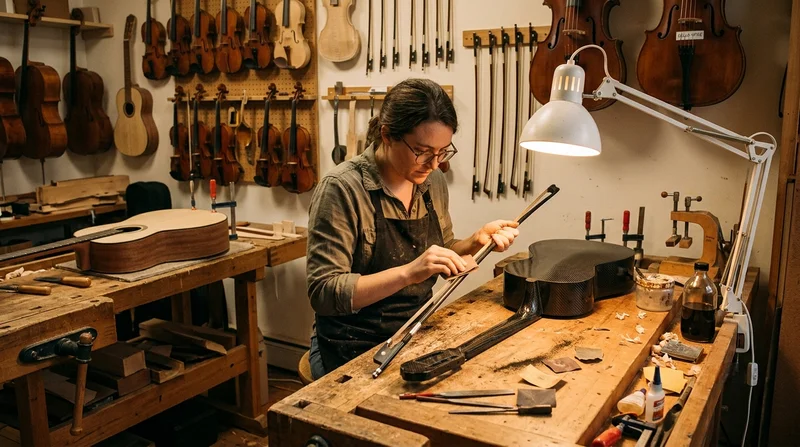
Custom Carbon Fiber Musical Instrument Parts
Carbon fiber components for musical instrument manufacturing offering superior dimensional stability, low weight, and consistent acoustic properties. We produce carbon fiber bows, guitar necks, violin chin rests, drum shells, and wind instrument bodies. Carbon fiber instruments are immune to humidity changes and temperature fluctuations that affect wooden instruments.
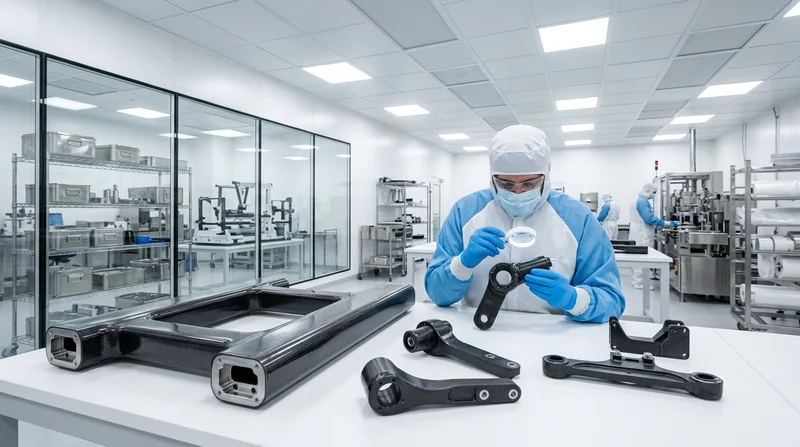
Custom Carbon Fiber Medical Device Components
Medical-grade carbon fiber components manufactured for imaging equipment, surgical instruments, and patient support systems. Carbon fiber's radiolucency (X-ray transparency) and high strength-to-weight ratio make it ideal for CT scanner beds, wheelchair frames, surgical robot arms, and MRI-compatible accessories. Biocompatible resin systems available.
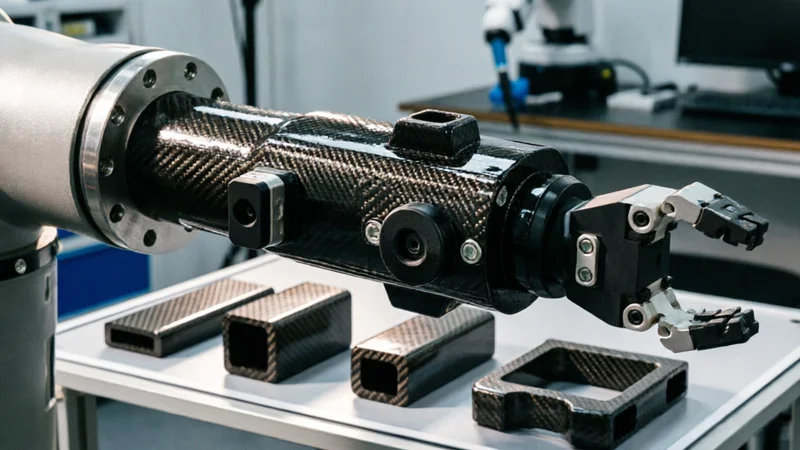
Carbon Fiber Robot End Effector Link — Custom Shape & Sensor Integration
Custom-shaped carbon fiber end effector links for robotic arms. Designed for automation integrators and research labs requiring lightweight, rigid connections between the robot wrist and gripper/tool. Can incorporate sensor mounting bosses, cable routing channels, and quick-change interfaces.
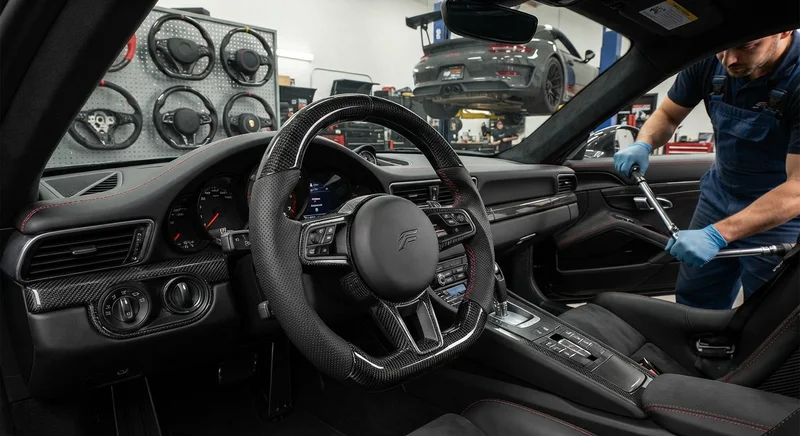
Carbon Fiber Steering Wheel — Custom Leather-Wrapped with CF Inlay
Custom carbon fiber steering wheel with genuine leather wrapping and carbon fiber inlay sections. Molded from T700 3K prepreg for maximum rigidity with a 30% weight reduction over OEM wheels. Available in D-shape (flat bottom) and round profiles. Direct bolt-on fitment for popular sports car and performance vehicle models. Custom stitching color and leather grade available.
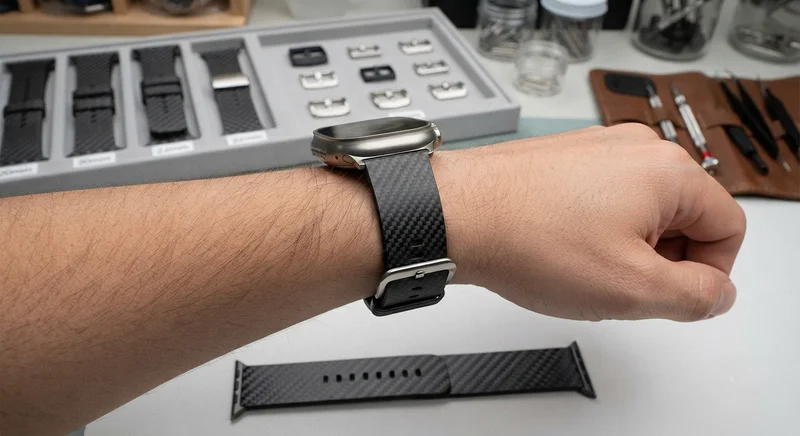
Carbon Fiber Watch Strap — 20mm/22mm Quick-Release
Premium carbon fiber watch strap with quick-release spring bars. Woven from T700 3K twill prepreg with a flexible resin system that conforms to the wrist. Available in 20mm and 22mm lug widths, compatible with Apple Watch, Samsung Galaxy Watch, Garmin, and traditional mechanical watches. Features a stainless steel buckle and carbon fiber keepers. The natural weave pattern makes each strap unique.