
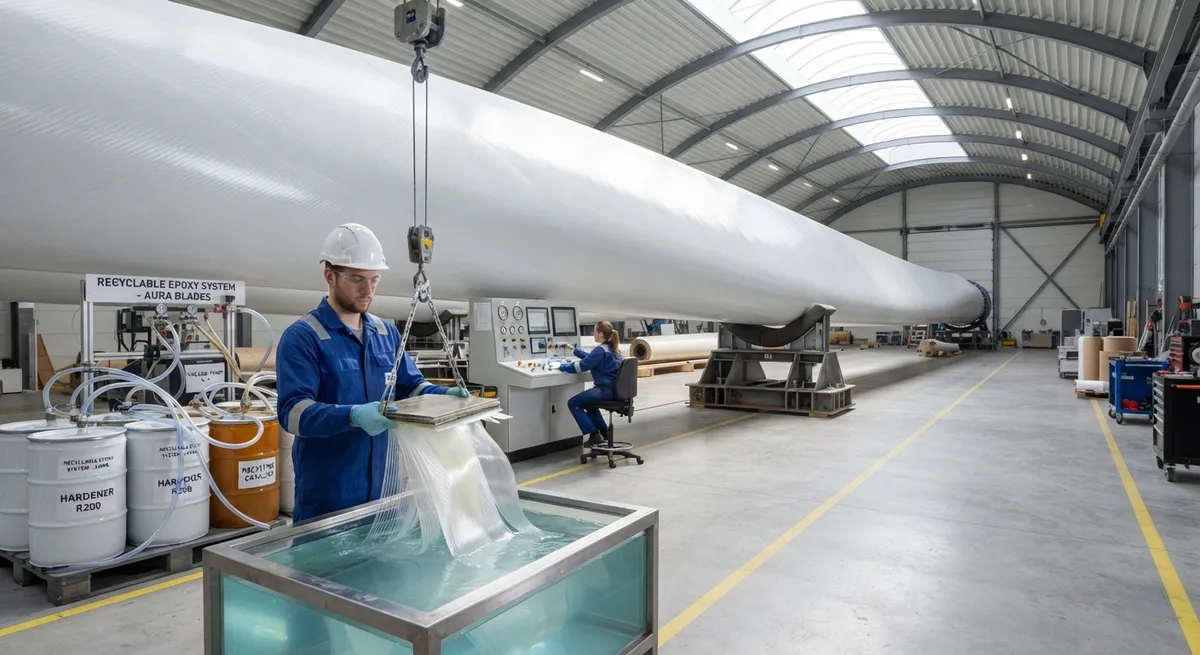
Wind turbine blades are the largest composite structures in serial production, and for three decades they have shared one inconvenient trait: the thermoset resin that gives them their stiffness cannot be re-melted or re-formed. When a blade reaches end of life, its 15-25 tonnes of glass
Introduction
Wind turbine blades are the largest composite structures in serial production, and for three decades they have shared one inconvenient trait: the thermoset resin that gives them their stiffness cannot be re-melted or re-formed. When a blade reaches end of life, its 15-25 tonnes of glass and carbon fiber composite has historically faced landfill or incineration. That picture is changing at industrial scale. The Swancor EzCiclo recyclable epoxy system, paired with the CleaVER hardener, now forms the backbone of a blade that can be dissolved back into its constituent materials. After proving the concept on six blades at RWE's Kaskasi wind farm in 2022, the same technology has been specified for all 100 blades of the 1.4 GW Sofia offshore wind farm — the first full commercial-scale deployment of recyclable blade resin.
This article explains how the chemistry works, why Sofia marks a structural shift from pilot to supply chain, and what engineering and procurement teams should evaluate before specifying recyclable resin systems in new blade programs.
How Recyclable Thermoset Blades Work
The innovation sits in the resin network architecture. Conventional epoxy forms permanent cross-links that cannot be undone without destroying the polymer. The EzCiclo system introduces reversible bonds into the thermoset network, so the cured resin retains the mechanical performance of a conventional epoxy during service but can be broken down when exposed to a mild recycling agent — a dilute acidic solution — at moderate temperatures. The composite delaminates cleanly: glass and carbon fiber are recovered intact, the resin is depolymerized, and fillers are separated for re-use.
From a manufacturing standpoint, the recyclable epoxy behaves like any other blade infusion resin. It is processed by the same vacuum-assisted resin transfer molding (VARTM) lines, cures on the same cycle, and meets the same structural requirements for 100-plus-meter blades. The difference appears only at end of life, when the blade is immersed in the recycling solution and its materials are recovered in hours rather than being shredded into low-value dust.
The Road from Kaskasi Pilot to Sofia Commercial Scale
Commercial deployment followed a deliberate two-step path. In 2022, six Siemens Gamesa RecyclableBlade rotor blades entered service at RWE's Kaskasi offshore wind farm in the German North Sea. The blades operated under real offshore loading while Siemens Gamesa and Swancor validated the recycling process on the ground, dissolving the returned blades and recovering glass fiber and resin for re-use.
In 2023, RWE and Siemens Gamesa extended the program to the 1.4 GW Sofia wind farm, approximately 195 kilometers off the northeast coast of England. All 100 SG 14-236 DD turbines will be fitted with RecyclableBlades, each around 108 meters long — the first time recyclable blade resin has been specified as the default for an entire commercial wind farm. The scale shift is significant: Sofia's blades contain thousands of tonnes of composite material that will return to the supply chain instead of entering the waste stream.
Scale also changes the validation burden. A pilot program must prove that six blades survive offshore service and dissolve in a recycling bath; a gigawatt deployment must prove the same across thousands of tonnes of composite, year after year, with the same dissolution chemistry, the same recovered-material quality, and the same certification documentation. That is why RWE and Siemens Gamesa ran the Kaskasi blades through full end-of-life recovery before committing to Sofia: the recycling process itself had to be de-risked at industrial scale, not just the blade manufacturing. The result is a model that other operators can replicate.
Conventional Epoxy vs Recyclable Epoxy at a Glance
The table below compares conventional blade epoxy and recyclable epoxy systems on the criteria that matter across the blade lifecycle:
| Criterion | Conventional Epoxy Blade | Recyclable Epoxy Blade (EzCiclo-class) |
|---|---|---|
| Manufacturing process | Standard VARTM infusion | Standard VARTM infusion, no line change |
| Cure cycle | Standard thermal cure | Equivalent thermal cure |
| In-service mechanical properties | Proven baseline | Equivalent for 100 m+ blade loads |
| Blade cost premium | — | Low single-digit percent |
| End-of-life route | Landfill, incineration, or shredding | Dissolution in mild recycling agent |
| Material recovery | Low-value short fiber, energy only | Intact glass fiber, resin, and fillers |
| Recovery temperature | Not applicable | Moderate, solution-based process |
| Commercial maturity | Established for decades | Full-scale at Sofia, scaling globally |
The defining trade-off is a modest blade cost premium against a fundamentally different end-of-life outcome: intact, re-usable materials instead of unrecoverable waste.
What Commercial-Scale Deployment Changes for the Supply Chain
Specifying recyclable resin as the default for an entire wind farm shifts pressure across the whole value chain:
- Resin qualification: Recyclable epoxies must now pass the same full blade certification programs as conventional resins — static, fatigue, and extreme-load testing — and the Sofia deployment demonstrates that they do.
- Blade manufacturing: Blade factories can adopt recyclable resin without new infusion capital, but material suppliers must guarantee consistent supply and batch quality at multi-gigawatt volumes.
- Recycling infrastructure: Commercial-scale blades require industrial dissolution facilities, not laboratory batches. The economics depend on collection logistics and the resale value of recovered glass fiber and resin chemicals.
- OEM procurement: With EU Regulation 2026/718 requiring 70% blade recycling by mass, recyclable resin moves from a sustainability option to a compliance instrument that reduces the cost and complexity of meeting recycling targets.
- Second-life markets: Recovered glass fiber from dissolvable blades feeds the same nonwoven, molding compound, and construction markets as pyrolysis output, but with higher retained length and cleaner surfaces.
For tier-one suppliers and blade OEMs, the practical implication is that resin selection now carries an end-of-life cost line, and recyclable systems are becoming the default answer in markets with strong recycling regulation.
Frequently Asked Questions
How is a recyclable wind turbine blade recycled at end of life?
A recyclable blade is immersed in a mild acidic recycling solution at moderate temperature. The solution breaks the reversible bonds in the resin network, causing the composite to delaminate and separate into its components: glass fiber, resin, and fillers are recovered intact and can be re-used in new products. The process takes hours rather than days, and it does not rely on high-temperature pyrolysis, so fiber length and surface quality are preserved far better than in thermal recycling.
Does recyclable blade resin sacrifice structural performance compared to conventional epoxy?
No. The EzCiclo system is designed to match conventional epoxy in the properties that govern blade design — static strength, fatigue behavior, and stiffness — and the blades manufactured with it have completed the same certification testing as conventional blades. The reversible bonds in the resin network are stable under service conditions and only activate in the presence of the specific recycling agent at end of life. The primary trade-off is a modest blade cost premium rather than a structural performance penalty.
Why is the Sofia wind farm considered a milestone for recyclable blades?
Sofia is the first wind farm where recyclable blade resin was specified as the default for an entire commercial project: all 100 Siemens Gamesa turbines are equipped with RecyclableBlades, each approximately 108 meters long. Earlier deployments, such as the six blades at Kaskasi in 2022, were pilots that validated the technology and the recycling process. Sofia demonstrates that the resin system, the blade manufacturing process, and the end-of-life dissolution route are all viable at gigawatt scale, moving recyclable blades from demonstration to standard supply-chain practice.
Conclusion
Recyclable thermoset blade resin has crossed the threshold that separates interesting technology from supply-chain standard. The Swancor EzCiclo system, qualified through Siemens Gamesa's RecyclableBlade program and deployed across all 100 blades of RWE's 1.4 GW Sofia wind farm, proves that dissolvable blades can meet the structural demands of modern turbines while converting end-of-life composite from a liability into a recoverable material stream. With EU Regulation 2026/718 mandating 70% blade recycling by mass, recyclable resin is now a compliance decision as much as a materials decision.
For blade OEMs, resin suppliers, and recycling operators, the evaluation criteria are clear: qualification data, blade cost premium, recycling infrastructure economics, and recovered-material markets. Explore our range of carbon and glass fiber reinforcements for blade and industrial applications, or contact our engineering team to discuss reinforcement formats optimized for recyclable resin infusion processes.
Part of topic
Related Articles
- Carbon Fiber Drone Blades and Propellers: Stiffness, Balance and Noise Reduction
- Fiberglass Filament Wound Tubes: Cost-Effective Alternative to Carbon Fiber
- Filament Wound Epoxy Tube Design: Wall Thickness, Fiber Angle and Load Optimization
- Filament Wound Epoxy Tubes: Testing Standards and Quality Assurance
- Filament Wound Epoxy Tubes Manufacturing: Process and Quality Control
- Filament Wound Fiberglass Tube: Process Parameters and Performance vs Carbon Fiber
Interested in Custom Carbon Fiber Products?
Contact our team for competitive pricing and technical specifications.
Get a QuoteRelated Products
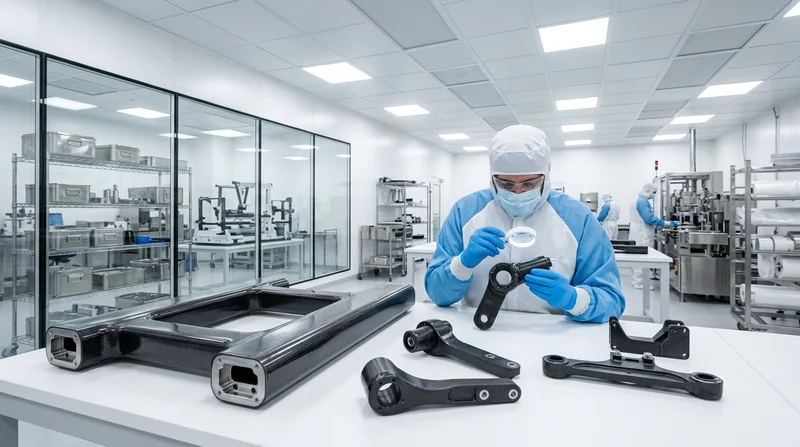
Custom Carbon Fiber Medical Device Components
Medical-grade carbon fiber components manufactured for imaging equipment, surgical instruments, and patient support systems. Carbon fiber's radiolucency (X-ray transparency) and high strength-to-weight ratio make it ideal for CT scanner beds, wheelchair frames, surgical robot arms, and MRI-compatible accessories. Biocompatible resin systems available.
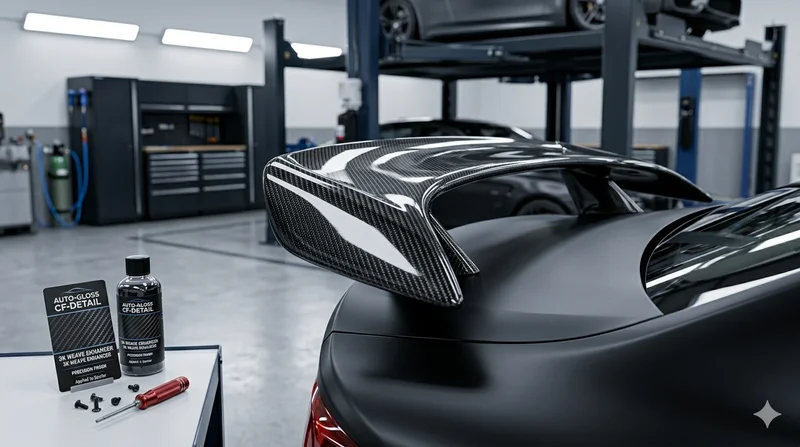
Carbon Fiber Automotive Spoiler
Automotive-grade carbon fiber spoiler manufactured using autoclave-cured pre-preg technology. Each spoiler is vacuum-bagged and oven-cured for optimal fiber-to-resin ratio, strength, and a flawless cosmetic finish.
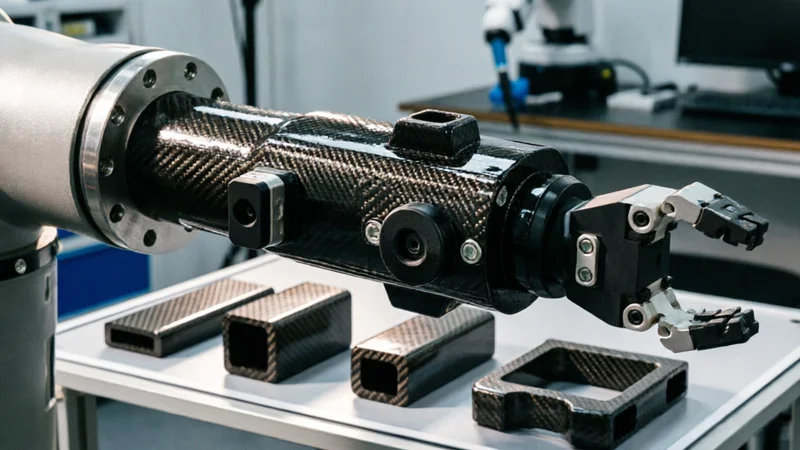
Carbon Fiber Robot End Effector Link — Custom Shape & Sensor Integration
Custom-shaped carbon fiber end effector links for robotic arms. Designed for automation integrators and research labs requiring lightweight, rigid connections between the robot wrist and gripper/tool. Can incorporate sensor mounting bosses, cable routing channels, and quick-change interfaces.

Custom Carbon Fiber Musical Instrument Parts
Carbon fiber components for musical instrument manufacturing offering superior dimensional stability, low weight, and consistent acoustic properties. We produce carbon fiber bows, guitar necks, violin chin rests, drum shells, and wind instrument bodies. Carbon fiber instruments are immune to humidity changes and temperature fluctuations that affect wooden instruments.
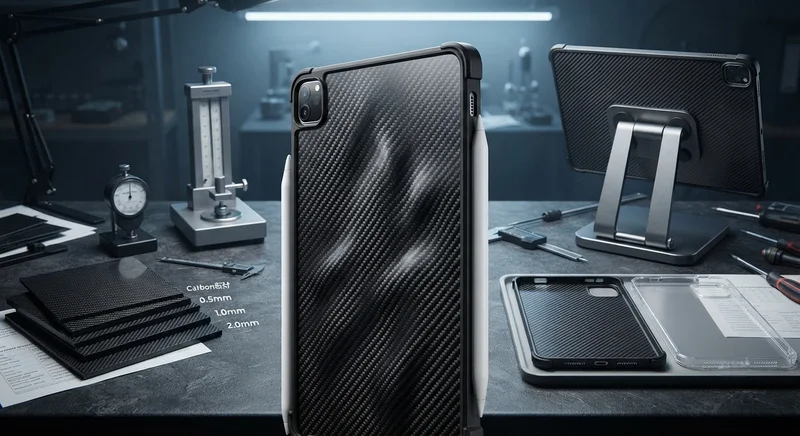
Carbon Fiber Tablet Case — Ultra-Light Protective Shell
Lightweight carbon fiber protective case for tablets and iPads. Molded from T700 3K prepreg with reinforced corner protection. Adds minimal weight while providing superior rigidity and drop protection compared to polycarbonate or silicone cases. Ideal for field workers, enterprise deployments, and professionals requiring durable tablet protection.