
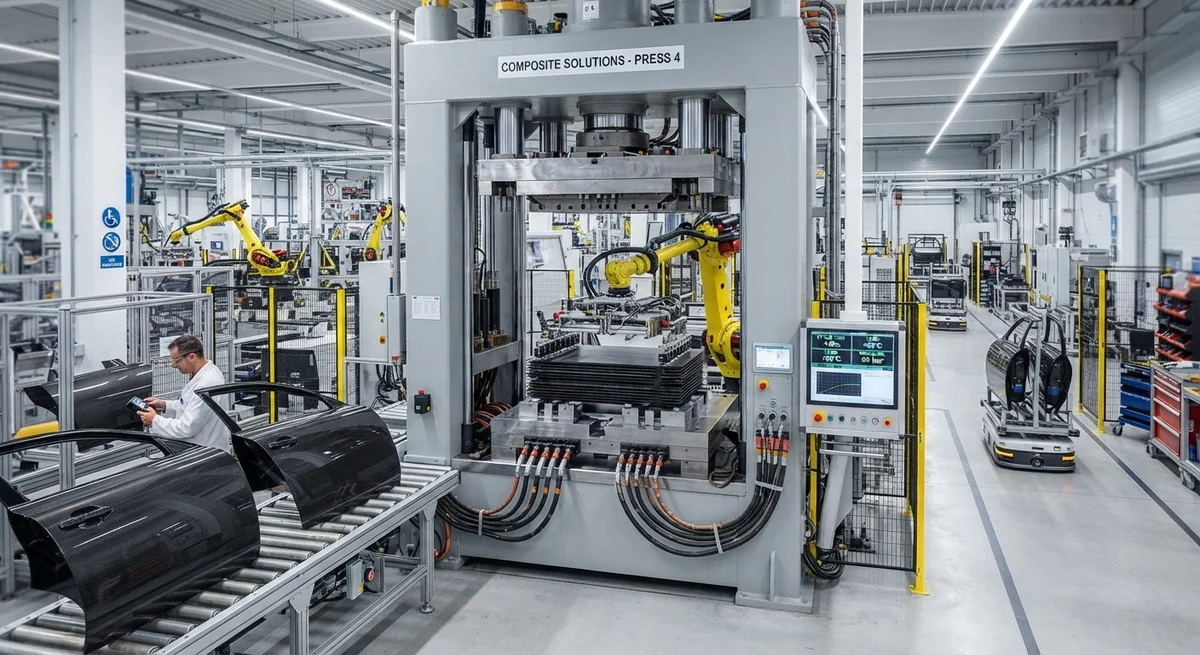
Rapid curing prepreg systems with cycle times of 3–10 minutes are enabling automotive CFRP production at 50,000–100,000 units per year. This article covers material formulations, process parameters, tooling, and production economics.
Introduction
The automotive industry's transition to lightweight carbon fiber reinforced polymer (CFRP) structures has long been constrained by one critical barrier: cycle time. While aerospace can accept 60–120 minute autoclave cure cycles for aircraft structures, automotive production demands component cycle times of 3–10 minutes to achieve the production volumes required for mainstream vehicle platforms. Rapid curing prepreg systems, combined with optimised process parameters, are now bridging this gap, enabling automotive OEMs and Tier 1 suppliers to produce CFRP components at rates approaching 50,000–100,000 units per year per production line.
This article examines the material formulations, process parameters, and equipment configurations that enable rapid curing prepregs to meet the demanding cycle time, quality, and cost requirements of high-volume automotive production.
Rapid Cure Prepreg Systems: Formulation and Performance
| Parameter | Standard Aerospace Prepreg | Rapid Cure Automotive Prepreg | Improvement |
|---|---|---|---|
| Cure time at 150°C (minutes) | 60–120 | 3–10 | 10–20× faster |
| Cure temperature (°C) | 175–200 | 130–160 | Lower energy |
| Out-life at 21°C (days) | 15–30 | 10–21 | Comparable |
| Tg (dry, DMA, °C) | 190–220 | 120–180 | Lower but adequate |
| Tensile strength 0° (MPa, UD laminate) | 2,400–2,850 | 1,800–2,300 | ~20% reduction |
| Fibre volume fraction (%) | 58–64 | 52–58 | Slightly lower |
| Surface finish (class A capable) | No — requires painting | Yes — in-mould coating | Process integration |
| Shelf life at −18°C (months) | 12–24 | 6–12 | Shorter |
| Cost premium vs standard prepreg | Baseline | +15–35% | Higher |
Process Parameter Optimisation
Heat-up Rate and Temperature Uniformity
Rapid curing prepregs achieve their fast cycle times through highly reactive catalytic curing systems. The heat-up rate must be carefully controlled: too slow and the resin advances before achieving full flow, resulting in porosity; too fast and exothermic runaway can cause thermal degradation. Optimal heat-up rates for automotive-grade rapid cure prepregs are 5–15°C/min, compared with 1–3°C/min for aerospace prepregs.
Pressure Application Timing
For compression moulding, the timing of pressure application is critical. The three-phase cycle consists of:
- Phase 1 — Dwell (0–60 seconds): Mould closed with minimal pressure (0.1–0.3 MPa) to allow the prepreg to soften and begin flowing. The resin viscosity drops from >10,000 Pa·s to 200–800 Pa·s as the temperature rises through the minimum viscosity window (typically 80–110°C).
- Phase 2 — Flow and compaction (30–120 seconds): Full mould pressure (3–10 MPa) applied. The resin flows through the fibre bed, air and volatiles are expelled, and the laminate achieves full compaction. Optimum pressure hold duration correlates with the resin gel point.
- Phase 3 — Cure hold (120–300 seconds): Pressure maintained at the cure temperature (130–160°C) until the resin reaches 95% degree of cure. Post-cure is generally not required for automotive-grade systems.
Tooling Considerations
- Matched-die compression moulding: High-pressure (3–10 MPa) matched metal tooling produces class-A surface finish on both sides. Tool steel (H13 or P20) is standard for production volumes above 50,000 components; aluminium tools suffice for lower volumes.
- Rapid heating/cooling: Cartridge heaters or induction heating for fast temperature ramps; conformal cooling channels in the tool maintain temperature uniformity within ±3°C across the part surface.
- In-mould coating: A separate paint film insert is placed in the tool before charging with prepreg, curing simultaneously and producing a class-A painted surface without post-mould painting operations.
Production Economics
| Cost Element | Steel Stamping (per part) | Standard Prepreg Autoclave | Rapid Cure Compression Moulding |
|---|---|---|---|
| Material cost | $2–5 | $18–35 | $22–42 |
| Cycle time | 6–15 seconds | 60–120 minutes | 5–10 minutes |
| Labour cost per part | $1–3 | $8–15 | $3–6 |
| Tooling amortisation (per part) | $0.50–1.50 | $2–5 | $1.50–3.00 |
| Energy cost per part | $0.10–0.30 | $4–10 | $1–3 |
| Total cost per part (high volume) | $3.60–9.80 | $32–65 | $27.50–54.00 |
FAQ
Q: What is the minimum cycle time achievable with current rapid cure prepreg technology?
The fastest commercially available systems achieve cure times of 3 minutes at 150°C (e.g., Hexcel HexPly® M77, Solvay CYCOM® EP2750). Laboratory developments have demonstrated 1-minute cure cycles using microwave-assisted heating, but these are not yet commercially proven for production environments.Q: How does the mechanical performance of rapid cure CFRP compare to steel for structural automotive applications?
A rapid cure CFRP component with 52–55% fibre volume fraction and quasi-isotropic layup typically achieves a specific tensile strength of 800–1,200 MPa·cm³/g, compared to approximately 60–80 MPa·cm³/g for high-strength steel (DP980). For equivalent bending stiffness, the CFRP component weighs 55–65% less. However, the absolute strength per unit area is lower, requiring thicker sections or higher fibre volume fractions for direct load-path substitution.Q: Is post-cure necessary for rapid cure automotive prepregs?
No — one of the key differentiators of rapid cure prepregs is that they achieve full cure (≥95% degree of cure) within the moulding cycle. Post-cure in a separate oven is not required, which is essential for maintaining the 5–10 minute cycle time target.Q: Can rapid cure prepregs be recycled or reclaimed?
Yes, but the options are more limited than for thermoplastic composites. Current recycling methods for rapid cure CFRP include: (1) mechanical grinding for filler applications (20–40% retained mechanical properties); (2) pyrolysis for fibre recovery (85–95% retained fibre strength, but at 50–70% of the original fibre cost); and (3) solvolysis for high-quality fibre recovery (evolving technology, not yet commercial at scale).Q: What quality inspection methods are used for rapid cure CFRP components?
In-line quality control uses: (1) dielectric cure monitoring for real-time degree-of-cure tracking; (2) pulse-echo ultrasound for void detection (acceptance criterion typically <2% void content); (3) automated thermography for delamination detection at 50–100 parts per hour; and (4) coordinate measuring machine (CMM) for dimensional verification every 10th part in a statistical process control scheme.Part of topic
Related Articles
- Bio-Based Carbon Fiber Precursors: Lignin and Polyethylene for Low-Cost Production
- Large-Tow Carbon Fiber Cost Analysis: 48K vs 60K Price-Performance Comparison
- Carbon Fiber-Resin Interface Bonding: Surface Treatment and Coupling Agent Optimization
- Digital Twin for Carbon Fiber Manufacturing: Real-Time Process Monitoring and Defect Prevention
- Thermoplastic Carbon Fiber Welding for Automotive: Ultrasonic and Induction Welding Process Windows
- Large-Tow Carbon Fiber Wet Spinning: Process Optimization for 48K/60K Production Efficiency
Interested in Our Products?
Contact our team for competitive pricing and technical specifications.
Get a QuoteRelated Products
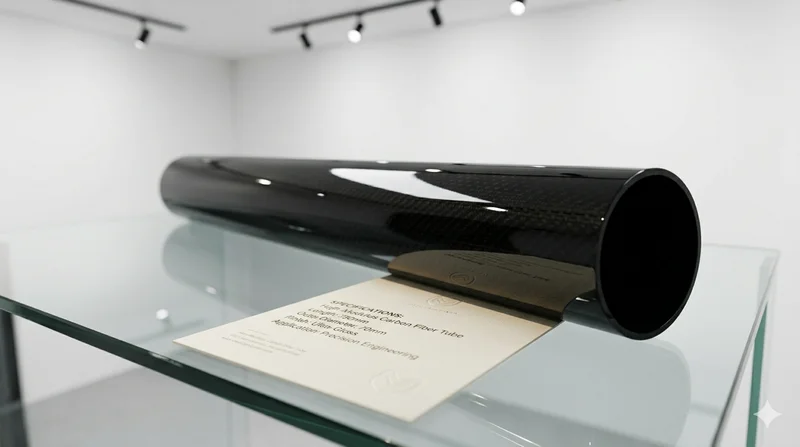
High Modulus Round Carbon Fiber Tube — M40
High modulus round tube manufactured with M40 grade fiber (tensile modulus 400 GPa). Designed for applications where maximum stiffness-to-weight ratio is critical, such as optical systems, precision machinery, and aerospace structures.
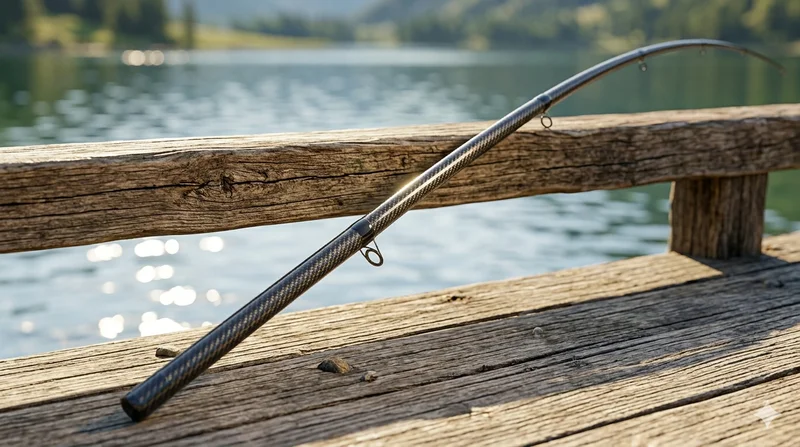
Carbon Fiber Fishing Rod Blank
High-quality carbon fiber fishing rod blank manufactured from multiple grades of Toray carbon fiber cloth. Available in a wide range of lengths, powers, and actions for freshwater and saltwater applications. Suitable for OEM rod building.
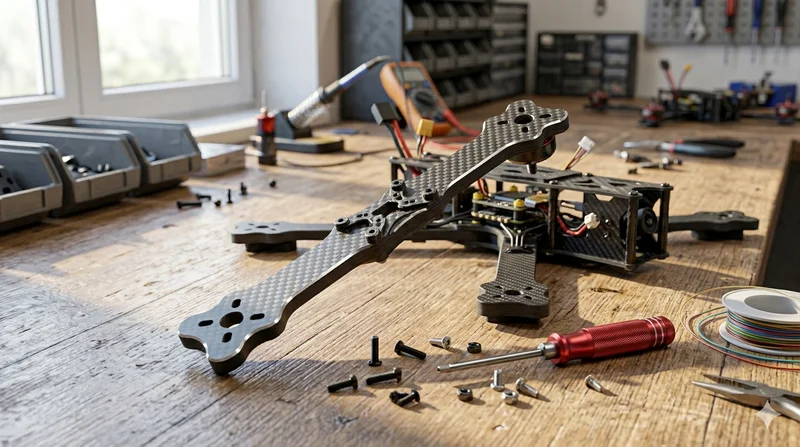
Carbon Fiber Drone Arm
Precision-molded carbon fiber drone arm combining unidirectional fiber for stiffness and woven layers for torsional strength. Designed for FPV, photography, and industrial drone platforms. Each arm is CNC-machined to exact specifications.
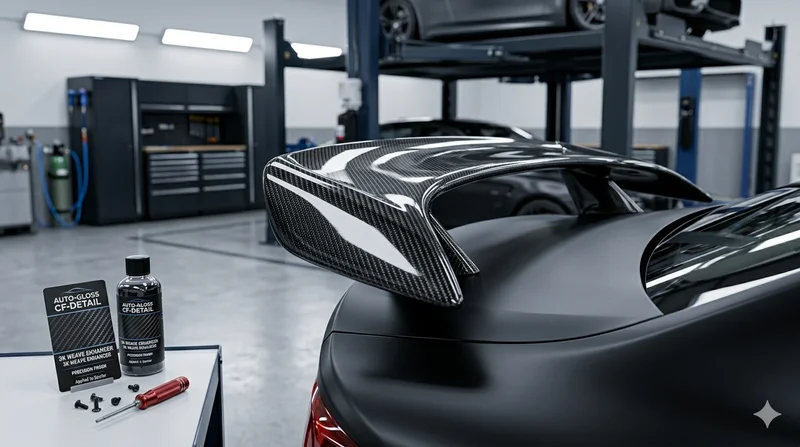
Carbon Fiber Automotive Spoiler
Automotive-grade carbon fiber spoiler manufactured using autoclave-cured pre-preg technology. Each spoiler is vacuum-bagged and oven-cured for optimal fiber-to-resin ratio, strength, and a flawless cosmetic finish.
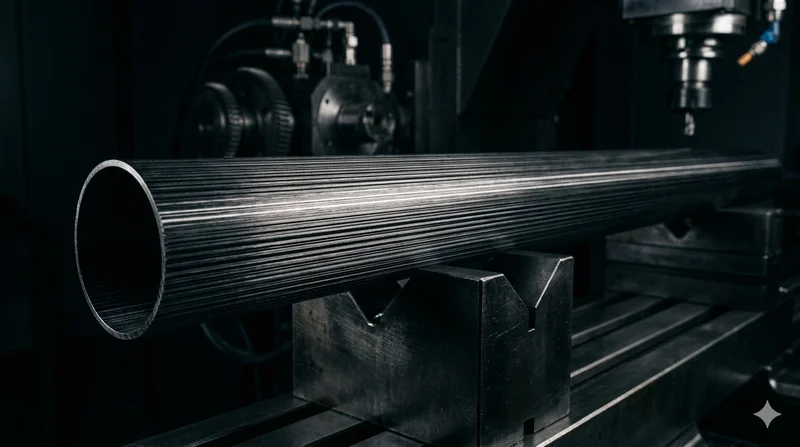
Round Carbon Fiber Tube — UD Unidirectional T700
Unidirectional (UD) round tube with all fibers aligned axially for maximum longitudinal stiffness. Ideal for applications requiring high bending rigidity with minimal weight, such as shafts, struts, and structural reinforcements.