
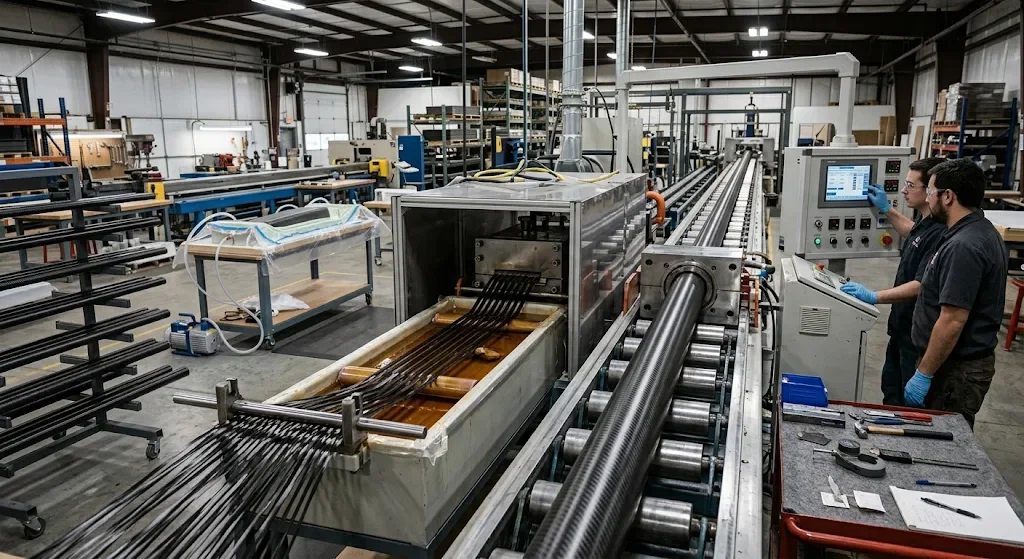
A pultruded carbon fiber tube is produced by pulling continuous carbon fibers and reinforcement fabrics through a resin bath and a heated die to form a constant cross-section profile. The process is well suited to straight tubes where consistent geometry, repeatable fiber alignment, and efficient pr
What Is a Pultruded Carbon Fiber Tube
A pultruded carbon fiber tube is produced by pulling continuous carbon fibers and reinforcement fabrics through a resin bath and a heated die to form a constant cross-section profile. The process is well suited to straight tubes where consistent geometry, repeatable fiber alignment, and efficient production matter. Compared with some other composite forming methods, pultrusion is often selected for profiles that need stable axial properties and practical volume manufacturing. For engineers and buyers, a pultruded carbon fiber tube can offer a useful balance of stiffness, weight reduction, corrosion resistance, and dimensional consistency. However, performance depends on fiber orientation, resin system, wall thickness, and how loads are introduced at joints and fittings.
Key Properties of Pultruded Carbon Fiber Tube
The properties of a pultruded carbon fiber tube are strongly influenced by the longitudinal alignment of fibers. This makes pultruded tubes attractive for applications where axial stiffness, straightness, and predictable behavior along the tube length are important. At the same time, designers should evaluate transverse loads, impact risk, and connection details, because composite tubes do not behave like isotropic metal tubes.
| Property Area | Typical Advantage | Design Consideration |
|---|---|---|
| Stiffness-to-weight ratio | High stiffness with lower mass than many metals | Check deflection under real span and support conditions |
| Axial performance | Good for straight members and push/pull elements | Confirm fiber orientation and end load introduction |
| Corrosion resistance | Useful in wet or chemically exposed environments | Verify resin compatibility with the service environment |
| Dimensional repeatability | Consistent profiles for series production | Review tolerances for fit, bonding, and assembly |
| Fatigue and vibration behavior | Can perform well in dynamic systems when designed correctly | Avoid stress concentrations at holes and clamps |
Manufacturing Advantages and Limits
Pultrusion is efficient for constant cross-sections, which is why a pultruded carbon fiber tube is common in structural frames, booms, supports, and equipment members. The process can deliver good throughput and consistent quality once tooling and material controls are established. The main limitation is geometry: pultrusion is best for straight profiles. Complex curvature, major local thickness changes, or highly customized local reinforcement usually require a different composite process or secondary fabrication steps.
Another practical point is that catalog values do not replace application testing. A pultruded carbon fiber tube may meet stiffness targets on paper, but joint design, surface finish, cut quality, and assembly tolerances can determine whether the final structure performs as intended. Buyers should request clear specifications for outer diameter, inner diameter or wall thickness, straightness, length tolerance, and recommended machining practices.
Typical Uses
Pultruded carbon fiber tubes are used where lightweight stiffness and stable geometry provide value. Typical applications include automation frames, inspection poles, camera booms, robotic arms, sporting and recreational structures, antenna supports, and lightweight transport or equipment components. In corrosive or outdoor environments, the composite tube can also reduce maintenance compared with materials that rust, provided the resin system and surface protection match the exposure conditions.
- Industrial equipment: lightweight beams, guides, and support members.
- Automation and robotics: stiff moving elements where reduced mass improves response.
- Inspection and access tools: extendable or fixed poles requiring straightness and handling comfort.
- Transportation and mobility: structural members where weight reduction supports efficiency.
- Custom assemblies: bonded or mechanically joined frames with repeatable tube dimensions.
Selection Checklist
To select the right pultruded carbon fiber tube, start with the structural role of the tube and the way it will be loaded. Then confirm the details that most often cause field issues:
- Outer diameter, wall thickness, and acceptable tolerance range.
- Required straightness over the full length.
- Surface condition needed for bonding, coating, or sliding interfaces.
- End fittings, hole patterns, and clamp areas that may create stress concentrations.
- Cutting and drilling method, including dust control and edge finishing.
- Environmental exposure such as UV, moisture, chemicals, or temperature cycles.
When comparing suppliers, ask how quality is controlled from batch to batch. A lower-cost tube can become expensive if assembly fit varies or if premature failures appear at joints. For critical uses, sample testing in the actual assembly is the most reliable way to validate a pultruded carbon fiber tube choice.
Frequently Asked Questions
When should I choose a pultruded carbon fiber tube instead of a metal tube?
A pultruded carbon fiber tube is often a good choice when weight reduction, corrosion resistance, or specific stiffness targets matter and the geometry is straight. Metal tubes may still be preferable when impact toughness, high-temperature metal compatibility, or low-cost local fabrication is the main priority. The best choice depends on the full assembly, not only the tube material.
Are pultruded carbon fiber tubes easy to machine?
They can be cut and drilled with appropriate abrasive tools, but machining requires care. Support the tube to prevent splintering, use sharp tooling, and control carbon dust. Hole placement and edge finishing are important because poor machining can introduce damage that reduces performance at loaded connection points.
What information should I provide when requesting a quote?
Provide outer diameter, inner diameter or wall thickness, length, quantity, tolerance expectations, straightness needs, surface requirements, and the intended application. If the pultruded carbon fiber tube will be bonded, clamped, or drilled, share those details so the supplier can recommend a suitable specification and reduce risk during assembly.
Conclusion
A pultruded carbon fiber tube is a practical solution for straight, lightweight structural members that need consistent geometry and good stiffness. The best results come from matching tube specifications to the real load path, environment, and joint design. For standard or custom composite profiles, explore YongXian products or contact our team to discuss your requirements.
Part of topic
Related Articles
- Prusament PETG Carbon Fiber: Print Settings and Mechanical Behavior
- Small Carbon Fiber Rods: Diameters, Stock Lengths, and Uses
- How to Create Carbon Fiber Parts: Tooling Choices Compared
- A sheet of carbon fiber: Anatomy of Cloth, Resin, and Cure
- Full Carbon Fiber Plates: 100% Laminate vs Hybrid Layups
- How to Make Carbon Fiber Parts: Wet Layup to Autoclave
Interested in Our Products?
Contact our team for competitive pricing and technical specifications.
Get a QuoteRelated Products

Custom Carbon Fiber Bicycle Frame
Full-custom carbon fiber bicycle frame manufactured to your geometry specifications. We produce road, gravel, mountain, and track frames using high-modulus carbon fiber layups optimized for each riding discipline. Monocoque construction with internal cable routing, available with disc or rim brake mounts.

Round Carbon Fiber Tube — 3K Plain Weave T700
Standard round carbon fiber tube manufactured from Toray T700 grade fiber with 3K plain weave. Offers balanced strength and stiffness for general industrial applications including robotics, automation, sports equipment, and aerospace structures.
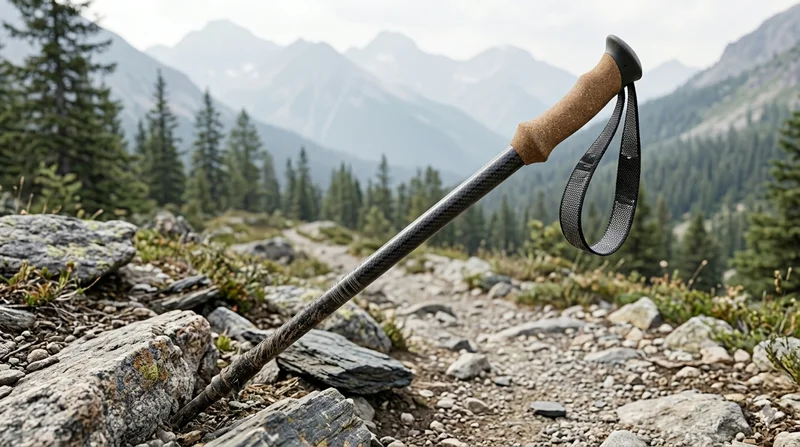
Carbon Fiber Trekking Pole
Lightweight carbon fiber trekking pole manufactured from high-grade carbon fiber tube. Weighs only 160g per pole while providing superior shock absorption and durability for hiking, trail running, and backpacking.

Carbon Fiber Pickleball Paddle
High-performance pickleball paddle with Toray T700 carbon fiber face and polypropylene honeycomb core. Delivers excellent power-to-weight ratio, spin generation, and vibration dampening for competitive play.

Square Carbon Fiber Tube — 3K Twill T700
Square cross-section carbon fiber tube manufactured with 3K twill weave for torsional strength. Preferred for structural frames, trusses, and support columns where rectangular geometry offers design flexibility.