
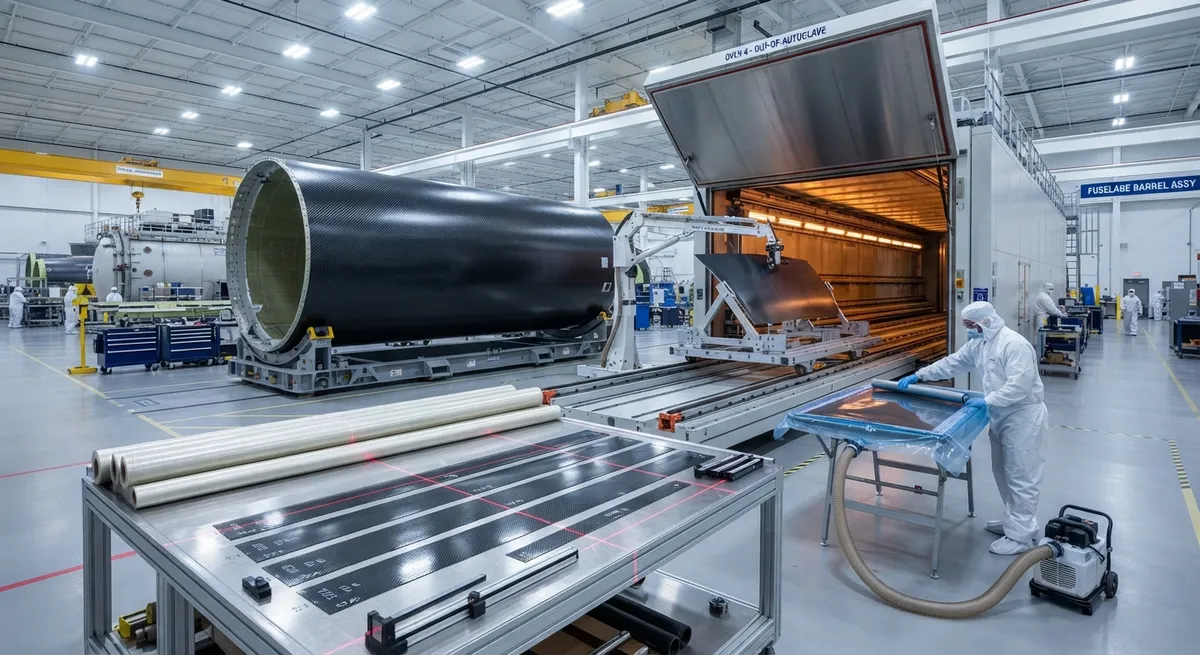
Wide-body aircraft fuselage barrels are the largest composite structures in commercial aviation, and they are built around a single piece of infrastructure: the autoclave. The Boeing 787 fuselage measures 5.77 meters in diameter, the Airbus A350 approximately 5.96 meters, and each barre
Introduction
Wide-body aircraft fuselage barrels are the largest composite structures in commercial aviation, and they are built around a single piece of infrastructure: the autoclave. The Boeing 787 fuselage measures 5.77 meters in diameter, the Airbus A350 approximately 5.96 meters, and each barrel must cure inside a pressure vessel with a diameter larger than the part itself. That means autoclaves of six meters and beyond — a category that is scarce, slow, and enormously expensive. As production rate ramps collide with this fixed capacity, the industry is taking a serious second look at out-of-autoclave (OoA) resin systems, which cure under vacuum bag alone in a standard oven and bypass the pressure vessel entirely.
OoA prepregs are not new — the A400M outer wing box, the largest OoA primary structure in production, has been flying for years — but their application to wide-body-scale barrels is the frontier. This article explains the autoclave bottleneck, how OoA systems achieve autoclave-quality porosity, and what engineering and program teams should evaluate before committing a wide-body structure to OoA processing.
The 6-Meter Autoclave Bottleneck
An autoclave for wide-body fuselage work is a pressure vessel 6-8 meters in diameter and 15-25 meters long, rated for 7-10 bar and 200°C or more. The economics are unforgiving: capital cost runs from tens of millions of dollars per vessel, each cure cycle takes 6-8 hours plus heat-up and cool-down, and energy demand is substantial because the entire vessel volume is pressurized and heated. Only a handful of facilities worldwide operate autoclaves in this size class, and their capacity is already committed to rate ramp programs.
For a wide-body program, the autoclave constraint has three consequences: the build plan is limited by autoclave availability rather than demand, barrel size is capped by vessel dimensions, and new capacity requires years of lead time and hundreds of millions in capital. OoA processing removes all three limits at once — an oven costs a fraction of an autoclave, can be sized to any barrel length, and can be duplicated quickly across a distributed supply chain.
How OoA Prepregs Work
The obstacle that kept OoA prepregs out of primary structure for decades is porosity. In an autoclave, the external pressure of 7-10 bar crushes residual air and volatiles out of the laminate during cure. Without that pressure, air trapped between plies expands and leaves voids. Modern OoA prepregs solve this at the material level: engineered resin formulations create micro-channels that evacuate air during the vacuum hold, and a bleed ply system removes volatiles during cure. With disciplined layup, debulking, and vacuum integrity, OoA laminates routinely achieve porosity below 1% — the accepted threshold for aerospace primary structure — at fiber volumes comparable to autoclave parts.
The qualification barrier is real but well understood. OoA materials have now accumulated extensive B-basis allowables through programs such as the A400M wing box, giving designers the same statistical confidence they have in autoclave systems. Cure temperatures of 130-180°C in an oven produce parts with glass transition temperatures in the 150-225°C range, covering the operating envelope of modern wide-body structures.
Qualified OoA Systems and Their Cure Windows
Four OoA prepreg families dominate current aerospace qualification programs:
| System | Cure Temperature | Cured Glass Transition Temp | Typical Applications |
|---|---|---|---|
| Solvay CYCOM 5320-1 | 177°C | ~199°C | Primary structures, large panels, stiffened skins |
| Hexcel HexPly M56 | 180°C | ~225°C | Primary structures, high-temperature operating envelope |
| Solvay MTM45-1 | 180°C | ~210°C | Wing covers and spars (A400M outer wing box) |
| Toray 2510 | 130°C | ~150°C | Secondary structures, fast-cure lower-cost applications |
The systems span a deliberate trade-space: higher-cure systems deliver the hot-wet performance needed for wing and fuselage primary structure, while the low-cure system trades some temperature capability for faster cycles and simpler tooling. All four are qualified or in qualification for OoA processing at aircraft scale.
OoA vs Autoclave: Processing Comparison
The table below compares the two processing routes on the parameters that drive program cost and schedule:
| Parameter | Autoclave Cure | Out-of-Autoclave Cure |
|---|---|---|
| Cure pressure | 7-10 bar | Vacuum bag only (1 bar max) |
| Capital cost | $30M+ per vessel, 6-8 m class | Oven a fraction of autoclave cost |
| Maximum part size | Limited by vessel diameter | Limited by oven length, not diameter |
| Typical cure cycle | 6-8 hours + heat/cool | Comparable time, no pressure ramp |
| Porosity | <1% | <1% with disciplined process control |
| Design allowables | Mature B-basis data | B-basis data established (A400M et al.) |
| Throughput flexibility | Constrained by shared vessel capacity | Multiple ovens, parallel cure |
The mechanical gap between OoA and autoclave parts has narrowed to a few percent in most properties, while the capacity and capital advantages have grown as rate ramp programs stretch autoclave availability.
What OoA Changes for Wide-Body Programs
Committing a wide-body structure to OoA processing reshapes the program in several ways:
- Fuselage barrels: Barrel segments can be cured in ovens sized to the barrel length, removing the vessel-diameter ceiling that currently caps part geometry.
- Distributed manufacturing: Because ovens are cheap and mobile, OoA enables co-manufacturing across multiple sites instead of routing every barrel through a single autoclave hall.
- Tooling: OoA tooling sees lower pressure and can be built from lower-cost materials, shortening tooling lead times and reducing program capital.
- Rate ramp: Capacity is added by purchasing additional ovens — a months-long, low-cost lead item — rather than committing to a years-long autoclave build.
- Certification: OoA materials carry mature allowables and established NDI and process-control practices, but porosity control requires rigorous layup discipline that must be proven in first-article qualification.
None of this replaces the autoclave for parts that genuinely need it — thick laminates and highly contoured geometries remain sensitive to void formation. But for barrel-scale structures, OoA turns the 6-meter autoclave from a gate into an option.
Frequently Asked Questions
Can out-of-autoclave prepregs really match autoclave-cured quality for primary structure?
Yes, within a few percent on most mechanical properties. Modern OoA prepregs are engineered with micro-channel resin systems and bleed plies that evacuate air and volatiles during the vacuum hold, achieving porosity below 1% and fiber volumes comparable to autoclave laminates. The qualification record — most notably the A400M outer wing box, the largest OoA primary structure in production — has produced mature B-basis allowables. The caveat is process discipline: OoA is more sensitive to layup quality, debulking, and vacuum integrity than autoclave processing, so first-article qualification and rigorous process control are essential.
What are the main limitations of out-of-autoclave processing?
Three limitations matter most. First, thick laminates and steeply contoured geometries are prone to porosity because air removal becomes harder through thick stacks, which is why OoA adoption has led with large flat and gently curved panels. Second, mechanical properties are typically a few percent below equivalent autoclave parts, which must be accounted for in design allowables and weight estimates. Third, process sensitivity means higher labor and inspection discipline per part, and any vacuum leak or skipped debulk step can generate voids that autoclave pressure would have suppressed. These factors favor OoA where capacity, capital, and part-size constraints dominate, rather than for every composite part.
Why is the 6-meter autoclave considered a bottleneck for wide-body programs?
Wide-body fuselage barrels are 5.8-6.0 meters in diameter, so they require autoclaves with even larger internal dimensions — a class of vessel only a handful of facilities own. Each such autoclave costs tens of millions of dollars, cures in 6-8 hour cycles, and consumes large amounts of energy, so usable capacity is fixed and expensive. As rate ramp programs scale up, barrel production is capped by autoclave availability rather than demand, part size is capped by vessel diameter, and adding capacity requires years of lead time. OoA processing bypasses the vessel entirely: an oven is a fraction of the cost, can be sized to the barrel, and can be duplicated quickly, removing the bottleneck at the source.
Conclusion
The 6-meter autoclave has shaped wide-body composite manufacturing for two decades, but its scarcity, cost, and fixed capacity are now the binding constraint on rate ramp. Out-of-autoclave prepreg systems offer a credible alternative: vacuum-bag-only cure in an oven, porosity below 1% with disciplined process control, B-basis allowables established by programs such as the A400M wing box, and a capital and capacity model that scales with ovens rather than pressure vessels. For wide-body barrels, OoA converts the autoclave from a gate into an option.
For program teams evaluating the switch, the decision criteria are part geometry, hot-wet performance requirements, rate targets, and the cost of autoclave capacity itself. Explore our range of aerospace-grade carbon fiber fabrics and prepreg-compatible reinforcements, or contact our engineering team to discuss material formats and qualification support for your out-of-autoclave program.
Part of topic
Related Articles
- Carbon Fiber Drone Blades and Propellers: Stiffness, Balance and Noise Reduction
- Fiberglass Filament Wound Tubes: Cost-Effective Alternative to Carbon Fiber
- Filament Wound Epoxy Tube Design: Wall Thickness, Fiber Angle and Load Optimization
- Filament Wound Epoxy Tubes: Testing Standards and Quality Assurance
- Filament Wound Epoxy Tubes Manufacturing: Process and Quality Control
- Filament Wound Fiberglass Tube: Process Parameters and Performance vs Carbon Fiber
Interested in Custom Carbon Fiber Products?
Contact our team for competitive pricing and technical specifications.
Get a QuoteRelated Products
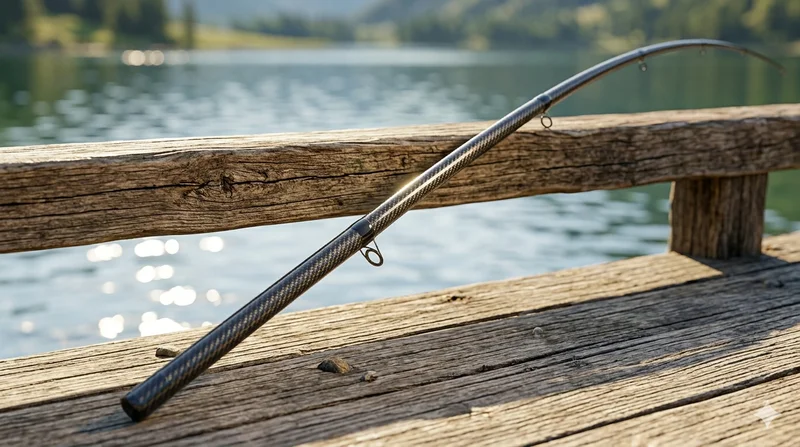
Carbon Fiber Fishing Rod Blank
High-quality carbon fiber fishing rod blank manufactured from multiple grades of Toray carbon fiber cloth. Available in a wide range of lengths, powers, and actions for freshwater and saltwater applications. Suitable for OEM rod building.
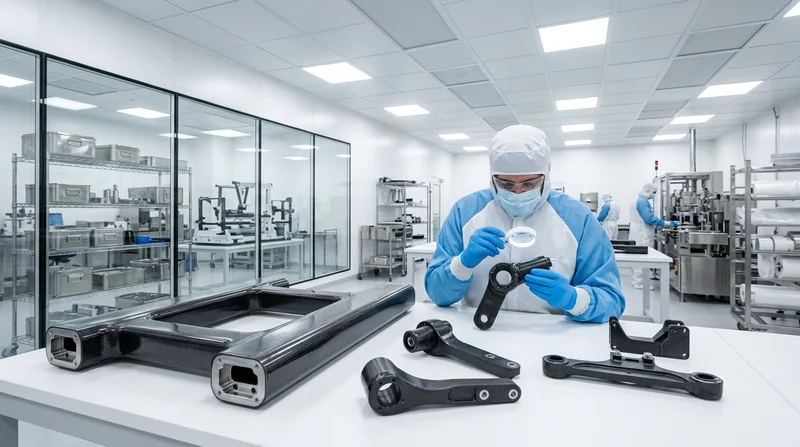
Custom Carbon Fiber Medical Device Components
Medical-grade carbon fiber components manufactured for imaging equipment, surgical instruments, and patient support systems. Carbon fiber's radiolucency (X-ray transparency) and high strength-to-weight ratio make it ideal for CT scanner beds, wheelchair frames, surgical robot arms, and MRI-compatible accessories. Biocompatible resin systems available.
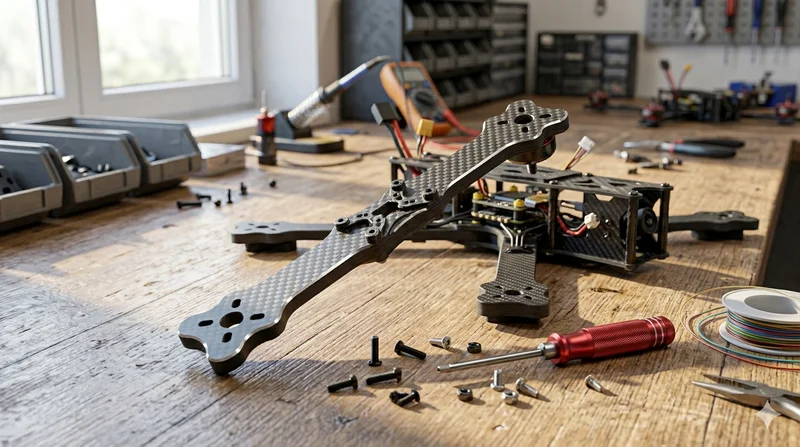
Carbon Fiber Drone Arm
Precision-molded carbon fiber drone arm combining unidirectional fiber for stiffness and woven layers for torsional strength. Designed for FPV, photography, and industrial drone platforms. Each arm is CNC-machined to exact specifications.
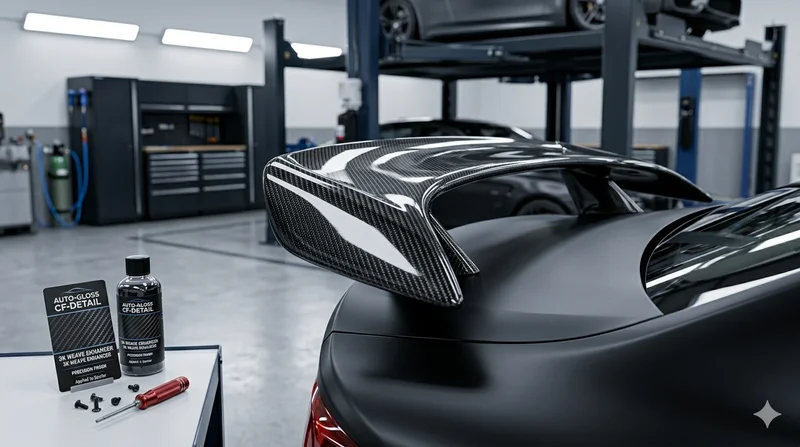
Carbon Fiber Automotive Spoiler
Automotive-grade carbon fiber spoiler manufactured using autoclave-cured pre-preg technology. Each spoiler is vacuum-bagged and oven-cured for optimal fiber-to-resin ratio, strength, and a flawless cosmetic finish.
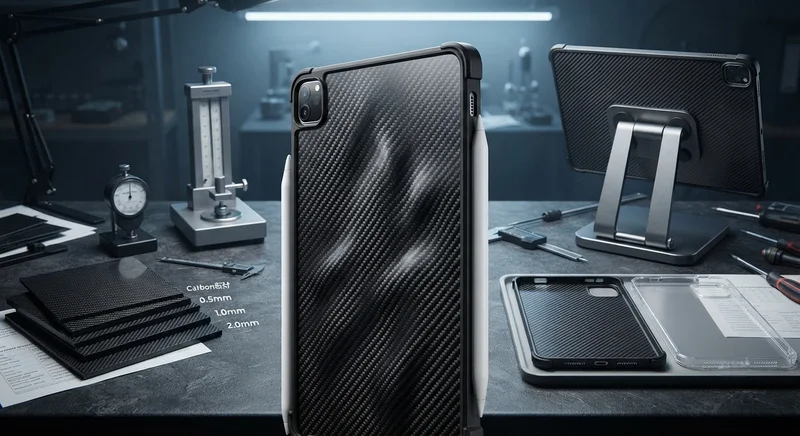
Carbon Fiber Tablet Case — Ultra-Light Protective Shell
Lightweight carbon fiber protective case for tablets and iPads. Molded from T700 3K prepreg with reinforced corner protection. Adds minimal weight while providing superior rigidity and drop protection compared to polycarbonate or silicone cases. Ideal for field workers, enterprise deployments, and professionals requiring durable tablet protection.