
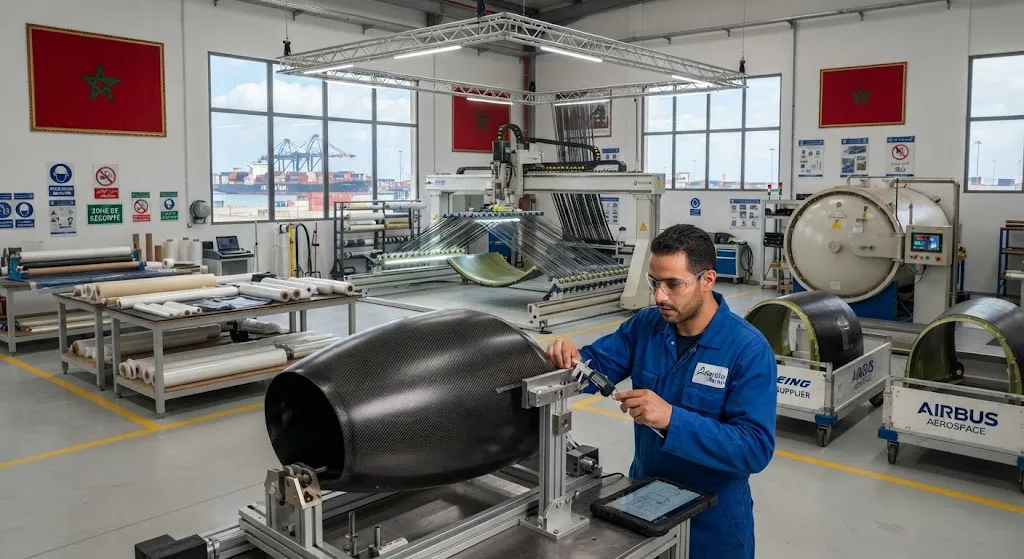
Morocco has positioned itself as North Africa's premier carbon fiber composite manufacturing hub, leveraging geographic proximity to European markets, competitive labor costs, and strategic government investment in industrial infrastructure. The country's aerospace and automotive sector
Introduction
Morocco has positioned itself as North Africa's premier carbon fiber composite manufacturing hub, leveraging geographic proximity to European markets, competitive labor costs, and strategic government investment in industrial infrastructure. The country's aerospace and automotive sectors are experiencing rapid growth, driven by European OEMs seeking nearshoring alternatives that reduce supply chain risk while maintaining proximity to end markets.
For carbon fiber suppliers and composite manufacturers, Morocco represents a compelling growth market. Boeing and Airbus have established supply chain operations in the Tangier and Casablanca aerospace zones, while automotive OEMs including Renault, PSA, and Ford operate production facilities that increasingly specify composite components. This article examines Morocco's carbon fiber demand drivers across automotive, aerospace, and renewable energy sectors, reviews the country's manufacturing infrastructure and logistics advantages, and evaluates the supply chain opportunities for international B2B partners.
Automotive Manufacturing Expansion
Morocco's automotive sector is the largest contributor to national carbon fiber demand:
- Renault-Nissan Tangier: Renault's Tangier plant produces over 340,000 vehicles annually, with increasing specification of composite interior trim, underbody shields, and structural reinforcements. The plant's expansion to 400,000 units by 2027 will drive additional composite content per vehicle.
- PSA Kenitra: PSA's Kenitra facility produces compact vehicles with growing composite usage in body panels and lightweight structures, targeting European emissions regulations.
- Ford facilities: Ford's operations produce commercial vehicles with composite body components, targeting African and Middle Eastern markets.
- Tier 1 supplier ecosystem: Faurecia, Plastic Omnium, and Martinrea are establishing local composite molding operations to serve OEM plants.
Composite content per vehicle is projected to increase from 12-15 kg (2025) to 20-25 kg by 2030, driven by lightweighting mandates and electrification trends.
Aerospace Supply Chain Development
Morocco's aerospace sector is growing rapidly with government incentives and OEM nearshoring:
| Indicator | 2024 | 2025 | 2026 (Projected) |
|---|---|---|---|
| Aerospace revenue (M USD) | 1,850 | 2,100 | 2,400 |
| Aerospace exports (M USD) | 1,400 | 1,650 | 1,950 |
| Active aerospace companies | 140 | 165 | 190 |
| Aerospace workforce | 20,000 | 24,000 | 28,000 |
| Boeing/Airbus qualified suppliers | 45 | 55 | 65 |
| Composite content share (%) | 18% | 20% | 22% |
The Tangier Automotive City and Casablanca aerospace zone host Safran, Collins Aerospace, Michelin Aerospace, and Sonaca. Government incentives include 8-year tax holidays, subsidized land, and workforce training through AMDIA.
Renewable Energy Infrastructure
Morocco targets 52% renewable energy by 2030, creating carbon fiber demand in wind and solar sectors:
- Wind energy: 10 GW target requiring carbon fiber spar caps and structural reinforcements — same supply chain as European wind programs.
- Noor-Ouarzazate Solar: CSP plant requiring lightweight composite structures for heliostat frames.
- Green hydrogen: 4 GW electrolyzer target requiring composite pressure vessels and pipeline infrastructure.
Logistics and EU Proximity Advantages
Morocco's competitive position rests on logistics advantages:
- Geographic proximity: Casablanca-Marseille: 24-hour sailing; Tangier-Barcelona: 8-hour sailing. Transit times 3-5 days shorter than Turkey or India.
- Free trade agreements: EU-Morocco Association Agreement (zero tariffs), US-Morocco FTA, and AfCFTA provide multi-market duty-free access.
- Port infrastructure: Tanger Med is Africa's largest port, handling 7.5 million TEU with direct European shipping routes.
- Air freight: Casablanca Mohammed V airport has dedicated aerospace logistics zones with 4-hour customs clearance.
Challenges and Risk Factors
Market constraints B2B partners should evaluate:
- Limited domestic production: Morocco imports nearly 100% of carbon fiber and precursors, creating supply chain dependency.
- Workforce skills gap: Advanced composite skills (AFP, autoclave, RTM) are still developing with 3-5 year training timelines.
- Infrastructure constraints: Inland transportation and cold chain logistics for temperature-sensitive precursors require development.
- Competition: Turkey and India compete for European nearshoring contracts on cost and scale.
Frequently Asked Questions
What advantages does Morocco offer versus Turkey or India for composite sourcing?
Three advantages: (1) Proximity — Casablanca-Marseille in 24 hours vs 3-5 days from Turkish ports; (2) Duty-free — EU-Morocco Association Agreement eliminates 6.5% EU import duty; (3) Multi-market access — US-Morocco FTA and AfCFTA provide duty-free entry to US and African markets. Morocco's Nadcap and AS9100 aerospace infrastructure aligns with European standards.
Which carbon fiber applications have highest growth potential?
Three areas: (1) Automotive lightweight structures — composite content increasing to 20-25 kg/vehicle by 2030; (2) Aerospace structural components — Boeing/Airbus supply chain expansion to 22% composite share; (3) Wind turbine spar caps — 10 GW target creating carbon fiber pultrusion demand. Green hydrogen vessels represent emerging opportunity.
How developed is Morocco's composite recycling infrastructure?
Current recycling is limited to mechanical grinding for filler applications. EU ELV directive compliance is driving interest in pyrolysis and solvolysis capabilities. European recycling technology providers are exploring partnerships with Moroccan automotive recyclers to establish regional capacity.
Conclusion
Morocco's combination of automotive production scale, aerospace supply chain growth, renewable energy investment, and EU proximity creates a compelling carbon fiber market opportunity. Revenue projected to reach $2,400M by 2026 and composite content increasing from 12-15 kg to 20-25 kg per vehicle by 2030 demonstrate sustained growth across multiple demand vectors. For carbon fiber suppliers, establishing local partnerships in Morocco provides access to a market bridging European quality standards with North African cost competitiveness.
Ready to explore supply opportunities? Browse our carbon fiber portfolio, or contact our team to discuss partnerships in the North African region.
Part of topic
Related Articles
- Recycled Carbon Fiber Market Forecast 2030: Technology Maturity and Commercialization Path
- South Korea Carbon Fiber Market 2026: Hydrogen Economy and Shipbuilding Innovation
- Wind Turbine Blade Leading Edge Protection 2026: Polyurethane, Tape, and Metallic Shield Solutions
- China Carbon Fiber Overcapacity 2026: Price War Impact and Industry Consolidation
- India Carbon Fiber Market 2026: Wind Energy, Aerospace, and Defense Expansion
- PAN Precursor Market 2026: Acrylonitrile Supply and Carbon Fiber Cost Structure
Interested in Our Products?
Contact our team for competitive pricing and technical specifications.
Get a QuoteRelated Products
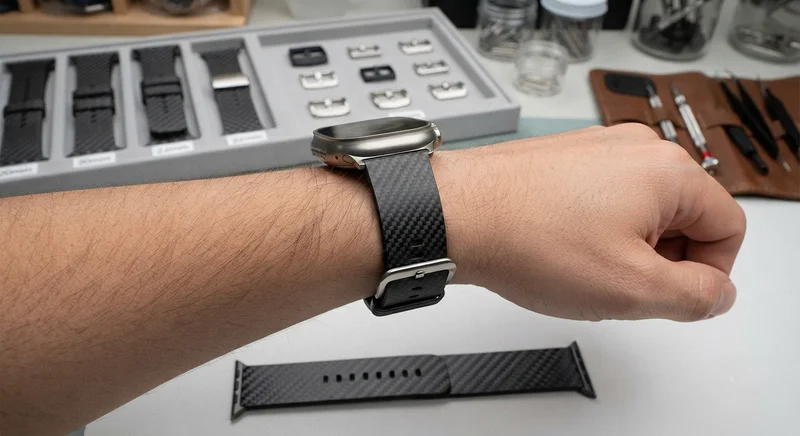
Carbon Fiber Watch Strap — 20mm/22mm Quick-Release
Premium carbon fiber watch strap with quick-release spring bars. Woven from T700 3K twill prepreg with a flexible resin system that conforms to the wrist. Available in 20mm and 22mm lug widths, compatible with Apple Watch, Samsung Galaxy Watch, Garmin, and traditional mechanical watches. Features a stainless steel buckle and carbon fiber keepers. The natural weave pattern makes each strap unique.

Carbon Fiber Fishing Rod Blank
High-quality carbon fiber fishing rod blank manufactured from multiple grades of Toray carbon fiber cloth. Available in a wide range of lengths, powers, and actions for freshwater and saltwater applications. Suitable for OEM rod building.

Carbon Fiber Plate — 3K Twill T700 1.5mm
Thin 1.5mm carbon fiber plate with 3K twill weave surface. Lightweight and stiff, commonly used for covers, panels, drone bodies, and applications requiring a premium aesthetic appearance.

Carbon Fiber Plate — 3K Twill T700 3.0mm
Medium-thickness 3.0mm carbon fiber plate offering significantly higher load capacity while maintaining attractive 3K twill finish. Suitable for structural brackets, reinforcement plates, and load-bearing panels.

Carbon Fiber Trekking Pole
Lightweight carbon fiber trekking pole manufactured from high-grade carbon fiber tube. Weighs only 160g per pole while providing superior shock absorption and durability for hiking, trail running, and backpacking.