
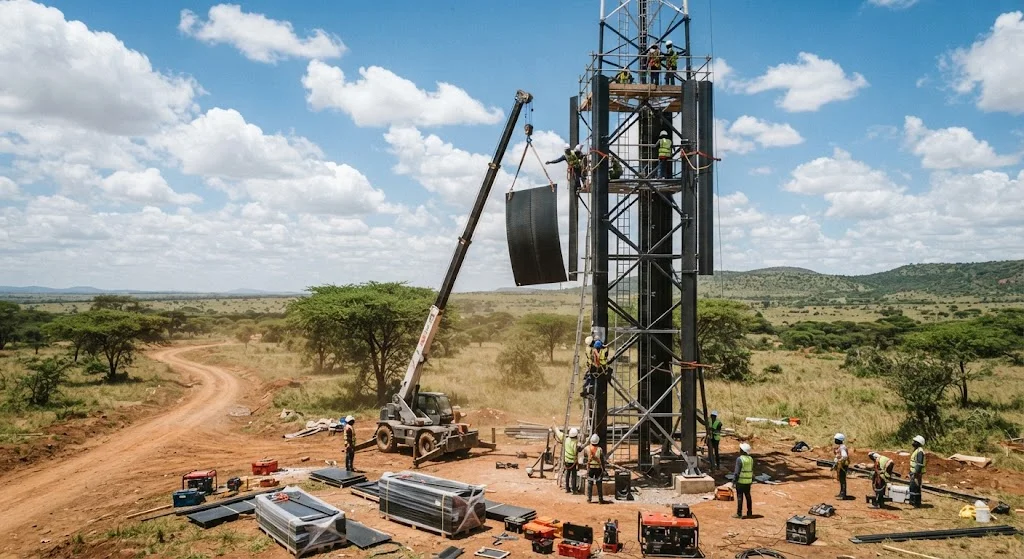
Kenya represents an emerging but strategically significant market for carbon fiber composite materials in East Africa. With a GDP growth rate of 5.0-5.5% (2025-2026), Kenya is investing heavily in infrastructure modernization — including the Nairobi Expressway extension, Standard Gauge
Introduction
Kenya represents an emerging but strategically significant market for carbon fiber composite materials in East Africa. With a GDP growth rate of 5.0-5.5% (2025-2026), Kenya is investing heavily in infrastructure modernization — including the Nairobi Expressway extension, Standard Gauge Railway (SGR) Phase 2B, and nationwide telecommunications tower upgrades — creating demand for advanced materials that outperform traditional steel and concrete in corrosive tropical environments.
The carbon fiber opportunity in Kenya is driven by three converging factors. First, Kenya's tropical coastal climate accelerates corrosion of steel reinforcement in bridges, marine structures, and telecommunications towers, making CFRP's corrosion resistance a compelling economic proposition despite higher initial material costs. Second, Kenya's position as East Africa's telecommunications hub — with over 65 million mobile subscribers and aggressive 4G/5G network expansion — drives demand for lightweight, high-strength tower structures that can be rapidly deployed in remote locations. Third, Kenya's renewable energy ambitions, including the 100% clean energy target by 2030, create opportunities for carbon fiber components in wind turbine blades, geothermal plant piping, and solar mounting structures. This article examines the specific market segments, regulatory frameworks, and supply chain considerations for carbon fiber composites in Kenya.
Infrastructure Applications: Bridges and Marine Structures
Kenya's infrastructure development program creates direct demand for carbon fiber composite materials in structural applications where corrosion resistance and weight reduction provide measurable lifecycle cost advantages:
- Bridge reinforcement and repair: Kenya has over 1,200 bridges, many dating from the 1970s-1990s construction boom. CFRP wrapping and plate bonding for bridge deck strengthening is gaining traction as a cost-effective alternative to traditional steel plate bonding, with lifecycle cost advantages of 25-40% over 30-year service periods when accounting for corrosion maintenance elimination.
- Marine and port structures: The Mombasa Port expansion and Lamu Port development (LAPSSET corridor) require corrosion-resistant materials for pile structures, quay walls, and navigation aids. CFRP reinforcement in marine concrete structures eliminates the chloride-induced corrosion that degrades steel reinforcement within 15-20 years in tropical marine environments.
- Railway infrastructure: SGR Phase 2B (Nairobi-Malaba) and commuter rail upgrades present opportunities for CFRP sleeper ties, overhead line equipment supports, and signal structure components where weight reduction reduces installation costs and corrosion resistance extends maintenance intervals.
- Water and wastewater infrastructure: Kenya's urban water systems face severe corrosion challenges in treatment plants and distribution networks. CFRP pipes, tanks, and structural components offer 50+ year service life in chemical environments that degrade steel and ductile iron within 15-25 years.
Telecommunications Tower Applications
Kenya's telecommunications sector represents the most immediate commercial opportunity for carbon fiber composites, driven by network densification and rural coverage expansion:
| Parameter | Steel Lattice Tower | CFRP Composite Tower | Advantage |
|---|---|---|---|
| Typical height (m) | 30-60 | 30-60 | Equivalent |
| Self-weight (tonnes) | 3-8 | 0.8-2.0 | 70-75% lighter |
| Foundation size requirement | Standard | 40-60% smaller | Reduced civil works |
| Corrosion maintenance interval | 5-8 years | 25-30+ years | 3-5x longer |
| Transport cost to remote sites | $2,000-5,000 | $500-1,500 | 60-70% lower |
| Installation time (days) | 5-10 | 2-4 | 50-60% faster |
| Design life (years) | 25-30 | 40-50 | 1.5-2x longer |
The weight reduction advantage is particularly significant for Kenya's rural network expansion, where tower sites are often accessible only by unpaved roads. A CFRP composite tower weighing 1-2 tonnes can be transported on a standard pickup truck, while a comparable steel lattice tower requiring 5-8 tonnes demands heavy crane transport that may be impractical for remote locations. Safaricom and Airtel Kenya are evaluating composite tower solutions for their rural coverage programs, with pilot installations planned for Turkana and Marsabit counties.
Regulatory Environment and Building Codes
Kenya's regulatory framework for construction materials is evolving to accommodate composite materials, though specific carbon fiber standards remain under development:
- Kenya Bureau of Standards (KEBS): KS 2578:2019 (Fibre Reinforced Polymers for Structural Applications) provides a general framework for FRP composites in construction, but lacks the specific design guidelines and test procedures that established markets like South Africa (SANS 10160) and the European Union (EN 1992-1-1 Annex) have developed for CFRP reinforcement.
- Public Procurement and Asset Disposal Act: Government infrastructure projects require compliance with local content requirements, creating opportunities for CFRP component manufacturing or assembly in Kenya rather than direct import of finished products. The 30% local content threshold for government projects favors joint ventures between international composite material suppliers and Kenyan fabrication companies.
- Environmental regulations: Kenya's Environmental Management and Coordination Act (EMCA) requires environmental impact assessments for infrastructure projects, where CFRP's longer service life and reduced maintenance requirements can strengthen the environmental case through lifecycle assessment benefits.
- Import duties and taxes: Carbon fiber materials imported into Kenya attract 25% import duty plus 16% VAT, making raw material costs significantly higher than in markets with free trade agreements. The East African Community (EAC) common external tariff structure provides some relief for intermediate goods used in manufacturing, potentially favoring local CFRP fabrication over finished product imports.
Supply Chain and Distribution
Kenya's carbon fiber supply chain is nascent but developing, with several distribution channels emerging to serve the infrastructure and telecommunications markets:
- Import channels: Carbon fiber fabrics, prepregs, and resin systems are primarily imported through Mombasa Port from Asian manufacturers (China, Japan, India). Lead times of 6-10 weeks and minimum order quantities of 500-1,000 kg create inventory challenges for small-to-medium construction projects.
- Regional distribution hubs: Nairobi serves as the distribution hub for East African CFRP materials, with 3-4 specialized composite material distributors serving Kenya, Uganda, Tanzania, and Rwanda. These distributors provide technical support, material selection guidance, and small-quantity supply that reduces barriers for pilot projects.
- Local fabrication capacity: Kenya has 2-3 emerging CFRP fabrication facilities in Nairobi and Mombasa, capable of producing structural reinforcement plates, wraps, and custom components. These facilities typically operate at 30-40% capacity, indicating room for market growth.
- Technical training: The University of Nairobi's Department of Civil Engineering and Jomo Kenyatta University of Agriculture and Technology (JKUAT) offer materials science programs with composite materials modules, developing the local technical workforce needed for CFRP design and installation.
Market Entry Strategy Considerations
For carbon fiber suppliers targeting the Kenyan market, several strategic considerations apply:
- Telecommunications as beachhead: The telecom tower market offers the fastest commercialization path due to clear ROI calculations, existing procurement budgets, and the ability to demonstrate cost advantages through pilot installations. Targeting Safaricom, Airtel Kenya, and Telkom Kenya with composite tower solutions provides near-term revenue while building reference projects for infrastructure applications.
- Government infrastructure partnerships: Kenya National Highways Authority (KeNHA), Kenya Railways Corporation, and Kenya Ports Authority are the primary procurement entities for infrastructure CFRP applications. Establishing relationships through pilot projects and technical demonstrations — particularly for bridge rehabilitation and marine structures — creates long-term supply opportunities.
- Technical capacity building: Investing in local technical training and certification programs creates market development advantages while meeting local content requirements. Partnerships with JKUAT and the Institution of Engineers of Kenya (IEK) for CFRP design workshops and certification courses build the ecosystem needed for market adoption.
- Climate-specific product positioning: Emphasizing CFRP's performance in tropical environments — UV resistance, humidity tolerance, and chemical resistance to agricultural runoff — differentiates carbon fiber from generic construction materials and justifies the cost premium through lifecycle value propositions.
Frequently Asked Questions
What is the current size of Kenya's carbon fiber market and growth forecast?
Kenya's carbon fiber market is estimated at $2-4 million annually (2025-2026), with projected growth to $8-12 million by 2030 driven by telecommunications tower demand and infrastructure rehabilitation programs. The market is currently dominated by imported finished products (CFRP wraps, plates, and profiles), with local fabrication accounting for less than 20% of value. Growth projections assume successful pilot programs in telecom towers and bridge reinforcement, combined with gradual regulatory framework development that enables broader CFRP adoption in government infrastructure projects.
How does carbon fiber cost compare to steel reinforcement in Kenyan construction?
Carbon fiber material costs are 3-5x higher than steel reinforcement on a per-kilogram basis ($15-25/kg for CFRP materials vs $1-3/kg for reinforcing steel). However, lifecycle cost analysis favors CFRP in corrosive environments when accounting for: reduced maintenance frequency (CFRP eliminates corrosion protection treatments), extended service life (50+ years vs 25-30 years for maintained steel), and reduced structural weight (enabling smaller foundations). For bridge reinforcement applications, CFRP lifecycle costs are typically 25-40% lower than steel over 30-year analysis periods in Kenya's tropical marine environment.
What skills and certifications are needed to work with carbon fiber composites in Kenya?
CFRP installation in structural applications requires specialized training in surface preparation, adhesive bonding, and quality control. Currently, Kenya has fewer than 50 certified CFRP installation technicians, creating a bottleneck for market growth. Key certification requirements include: composite material handling (material safety, storage, and mixing), surface preparation and bonding procedures, quality control testing (pull-off adhesion, void content), and structural design basics. The Institution of Engineers of Kenya (IEK) is developing a CFRP technician certification program in collaboration with South African composite industry associations, expected to launch in late 2026.
Conclusion
Kenya's carbon fiber market is at an early but promising stage, with telecommunications tower applications providing the most immediate commercial opportunity and infrastructure rehabilitation programs offering longer-term growth potential. The combination of Kenya's tropical corrosion environment, aggressive network expansion, and infrastructure modernization program creates a compelling case for CFRP adoption that transcends simple material cost comparisons. For carbon fiber suppliers, the strategic approach involves establishing telecom tower pilot programs for near-term revenue, building government infrastructure partnerships for long-term growth, and investing in local technical capacity to meet emerging regulatory requirements and local content thresholds.
For engineers and procurement professionals evaluating carbon fiber solutions for Kenyan projects, understanding the local regulatory framework, supply chain constraints, and installation capabilities is essential for successful implementation. Explore our CFRP structural reinforcement range, including products suitable for tropical marine environments and telecommunications applications, or contact our team to discuss Kenya-specific project requirements and supply chain solutions.
Part of topic
Related Articles
- Recycled Carbon Fiber Market Forecast 2030: Technology Maturity and Commercialization Path
- South Korea Carbon Fiber Market 2026: Hydrogen Economy and Shipbuilding Innovation
- Wind Turbine Blade Leading Edge Protection 2026: Polyurethane, Tape, and Metallic Shield Solutions
- China Carbon Fiber Overcapacity 2026: Price War Impact and Industry Consolidation
- India Carbon Fiber Market 2026: Wind Energy, Aerospace, and Defense Expansion
- PAN Precursor Market 2026: Acrylonitrile Supply and Carbon Fiber Cost Structure
Interested in Our Products?
Contact our team for competitive pricing and technical specifications.
Get a QuoteRelated Products
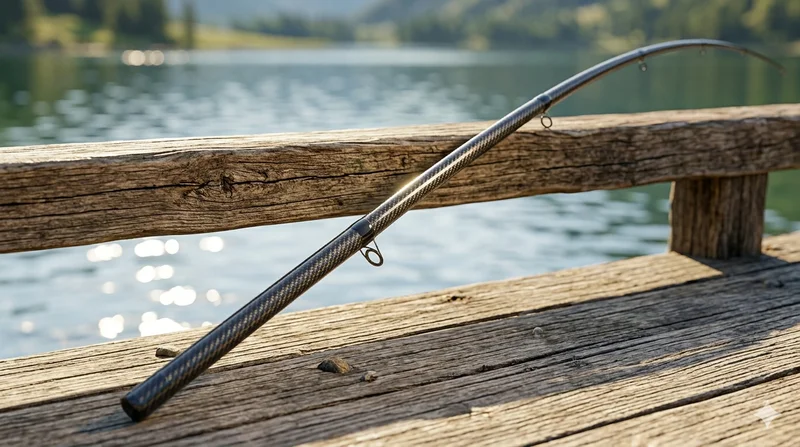
Carbon Fiber Fishing Rod Blank
High-quality carbon fiber fishing rod blank manufactured from multiple grades of Toray carbon fiber cloth. Available in a wide range of lengths, powers, and actions for freshwater and saltwater applications. Suitable for OEM rod building.

Carbon Fiber Plate — 3K Twill T700 3.0mm
Medium-thickness 3.0mm carbon fiber plate offering significantly higher load capacity while maintaining attractive 3K twill finish. Suitable for structural brackets, reinforcement plates, and load-bearing panels.

Carbon Fiber Plate — 3K Twill T700 1.5mm
Thin 1.5mm carbon fiber plate with 3K twill weave surface. Lightweight and stiff, commonly used for covers, panels, drone bodies, and applications requiring a premium aesthetic appearance.
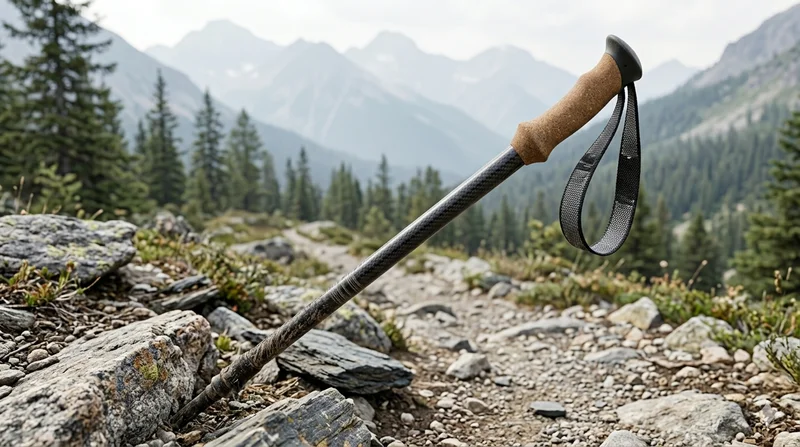
Carbon Fiber Trekking Pole
Lightweight carbon fiber trekking pole manufactured from high-grade carbon fiber tube. Weighs only 160g per pole while providing superior shock absorption and durability for hiking, trail running, and backpacking.

Square Carbon Fiber Tube — 3K Twill T700
Square cross-section carbon fiber tube manufactured with 3K twill weave for torsional strength. Preferred for structural frames, trusses, and support columns where rectangular geometry offers design flexibility.