
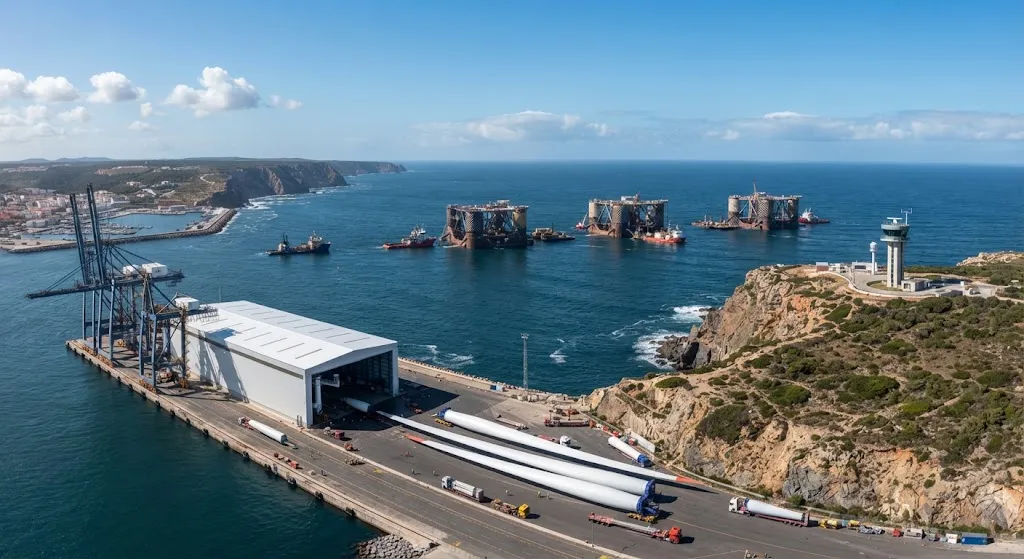
The Iberia Peninsula — Spain and Portugal — is experiencing a wind energy development cycle that will fundamentally reshape European offshore wind geography. While the North Sea has dominated European offshore wind investment for two decades, the Atlantic-facing coasts of Spain and Port
Introduction
The Iberia Peninsula — Spain and Portugal — is experiencing a wind energy development cycle that will fundamentally reshape European offshore wind geography. While the North Sea has dominated European offshore wind investment for two decades, the Atlantic-facing coasts of Spain and Portugal offer deeper waters, stronger and more consistent wind resources, and proximity to European population centers hungry for renewable energy. For carbon fiber suppliers, the Iberian wind buildout represents a multi-billion-euro demand opportunity that is still in its early innings.
Spain targets 20 GW of offshore wind capacity by 2035, up from less than 1 GW in 2025. Portugal targets 10 GW by 2035, with 5 GW allocated to floating offshore wind in the deep Atlantic waters off the Algarve and Alentejo coasts. Combined, the Iberian Peninsula represents 30+ GW of offshore wind capacity requiring 450,000-600,000 tonnes of carbon fiber composites in blades, towers, and substructures. This article examines the market drivers, supply chain dynamics, and practical sourcing strategies for the Iberian wind energy market.
Market Drivers: Why Iberia Now
Three structural factors are converging to accelerate Iberian offshore wind development:
- Deep water floating wind potential: The Atlantic seabed off Spain and Portugal drops to depths of 100-1,000 meters within 20 km of shore — ideal conditions for floating wind platforms that require carbon fiber in mooring lines, dynamic cables, and floating hull structures. The European Commission's Atlantic Strategy identifies the Iberian coast as Europe's largest untapped floating wind resource.
- Grid interconnection: France-Spain and France-Portugal interconnector upgrades (targeting 10 GW capacity by 2030) enable Iberian wind generation to serve French and Central European demand, transforming the Iberian Peninsula from a regional market to a European-scale export hub.
- Industrial policy alignment: Both Spain and Portugal have adopted National Energy and Climate Plans (NECPs) that prioritize offshore wind as a strategic industry, with local content requirements, port infrastructure investment, and supply chain development programs that favor early-mover carbon fiber suppliers.
Spain: The 20 GW Ambition
Spain's offshore wind roadmap targets 20 GW by 2035, with the first commercial-scale projects (1-2 GW) reaching final investment decision (FID) in 2027-2028. The Galician coast (Atlantic) and the Mediterranean coast near Valencia and Catalonia represent the primary development zones. Spain's pipeline includes both fixed-bottom projects in shallow waters (<60 m) and floating wind in deeper Atlantic zones.
| Development Zone | Capacity Target (GW) | Technology | Est. Carbon Fiber Demand (kt) | Timeline |
|---|---|---|---|---|
| Galicia Atlantic | 8-10 | Floating + fixed-bottom | 120-150 | 2028-2035 |
| Mediterranean (Valencia/Catalonia) | 5-7 | Fixed-bottom | 75-105 | 2029-2035 |
| Canary Islands | 3-4 | Floating | 45-60 | 2027-2032 |
| Balearic Islands | 2-3 | Floating | 30-45 | 2030-2035 |
Spain's wind energy supply chain is concentrated in the Basque Country (turbine components), Galicia (port infrastructure), and Valencia (blade manufacturing). Siemens Gamesa's blade factory in A Coruña and Vestas's facility in Daimiel represent existing manufacturing capacity that will require carbon fiber supply chain support as offshore blade production scales.
Portugal: The Floating Wind Pioneer
Portugal has positioned itself as Europe's floating wind pioneer, with the WindFloat Atlantic project (25 MW, operational since 2020) demonstrating commercial viability of floating wind in deep Atlantic waters. Portugal's 10 GW target allocates 5 GW to floating wind — the highest floating-to-fixed ratio in Europe — creating concentrated demand for carbon fiber in floating platform structures, mooring systems, and dynamic inter-array cables.
Portugal's supply chain advantages include deep-water port infrastructure at Sines and Leixões, a established shipbuilding workforce, and government incentives for local content in wind energy projects. The Sines offshore wind complex, targeting 10 GW by 2035, is designed as a hub-and-spoke industrial zone with blade manufacturing, tower fabrication, and assembly facilities co-located with the port.
Carbon Fiber Demand Structure
The Iberian offshore wind buildout creates carbon fiber demand across multiple blade and structural components:
- Blade spar caps: The primary structural element of offshore wind blades, typically 80-120 m long for 15-20 MW turbines. Each 100 m blade set (3 blades) requires 80-120 tonnes of carbon fiber in the spar cap and shear web. A single 1 GW offshore wind farm requires 12-18 sets of blades, consuming 960-2,160 tonnes of carbon fiber.
- Floating platform structures: Semi-submersible and tension-leg platform (TLP) floating wind structures use carbon fiber in hull stiffening, deck structures, and mooring line reinforcement. Each 15 MW floating unit requires 15-25 tonnes of carbon fiber composites.
- Dynamic cables and risers: Submarine power cables connecting floating platforms to shore incorporate carbon fiber strength members for tensile load bearing in dynamic configurations. Each 1 GW of floating wind requires 200-350 km of dynamic cable with carbon fiber armor.
Frequently Asked Questions
How does the Iberian wind market differ from the North Sea for carbon fiber suppliers?
The Iberian market differs in three key ways. First, technology mix: the North Sea is predominantly fixed-bottom (jacket and monopile), while Iberia's deep waters favor floating platforms that use more carbon fiber per MW (25-35 tonnes/MW for floating vs 15-20 tonnes/MW for fixed-bottom). Second, supply chain maturity: North Sea supply chains are established with long-term contracts, while Iberian supply chains are still forming, creating early-mover opportunities. Third, logistics: Iberian ports serve the Atlantic and Mediterranean simultaneously, while North Sea ports are concentrated in a smaller geographic zone. The practical implication is that Iberian wind offers higher carbon fiber intensity per MW but requires more active supplier engagement to secure volume commitments.
What local content requirements apply to Iberian offshore wind projects?
Both Spain and Portugal have adopted local content incentives rather than strict mandates. Spain's Royal Decree 118/2025 requires that offshore wind projects receiving public subsidies achieve 40% local content by value, rising to 60% by 2030. Portugal's Decree-Law 32/2025 provides tax credits (15-25%) for projects using locally manufactured components. For carbon fiber suppliers, this means establishing European manufacturing or conversion capacity (Spain or Portugal) is essential for projects receiving public support, while unsubsidized projects can source globally.
Which Iberian offshore wind projects are most advanced in the pipeline?
Three projects are furthest advanced: (1) WindFloat Atlantic Phase 2 (500 MW, Galicia) — environmental impact assessment complete, FID expected Q2 2027; (2) West Wind (1.5 GW, Galicia) — Siemens Gamesa consortium, permitting in progress, target COD 2029; (3) Sines Offshore Wind (1 GW, Alentejo) — Portuguese government tender awarded 2025, EIA underway. These three projects alone represent 3 GW of capacity requiring 45,000-60,000 tonnes of carbon fiber composites, creating immediate sourcing demand for qualified suppliers.
Conclusion
The Iberia Peninsula represents Europe's next major offshore wind market, with 30+ GW of capacity creating sustained demand for carbon fiber composites across blades, floating platforms, and submarine cables. Spain's 20 GW ambition and Portugal's floating wind leadership combine to form a market that is larger, more carbon-intensive per MW, and earlier in its development cycle than the North Sea. For carbon fiber suppliers, the Iberian wind buildout offers a window to establish position in a high-growth market before incumbent North Sea suppliers dominate.
For suppliers evaluating the Iberian wind market, early engagement with turbine OEMs and project developers is essential. Browse our carbon fiber product range to identify materials suited to offshore wind applications, or contact our engineering team for Iberian market entry support with pricing and logistics guidance.
Related Articles
- Recycled Carbon Fiber Market Forecast 2030: Technology Maturity and Commercialization Path
- South Korea Carbon Fiber Market 2026: Hydrogen Economy and Shipbuilding Innovation
- Wind Turbine Blade Leading Edge Protection 2026: Polyurethane, Tape, and Metallic Shield Solutions
- China Carbon Fiber Overcapacity 2026: Price War Impact and Industry Consolidation
- India Carbon Fiber Market 2026: Wind Energy, Aerospace, and Defense Expansion
- PAN Precursor Market 2026: Acrylonitrile Supply and Carbon Fiber Cost Structure
Interested in Custom Carbon Fiber Products?
Contact our team for competitive pricing and technical specifications.
Get a QuoteRelated Products
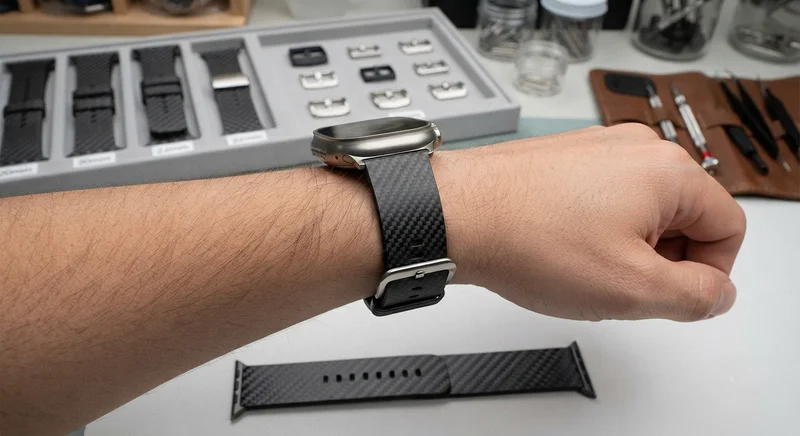
Carbon Fiber Watch Strap — 20mm/22mm Quick-Release
Premium carbon fiber watch strap with quick-release spring bars. Woven from T700 3K twill prepreg with a flexible resin system that conforms to the wrist. Available in 20mm and 22mm lug widths, compatible with Apple Watch, Samsung Galaxy Watch, Garmin, and traditional mechanical watches. Features a stainless steel buckle and carbon fiber keepers. The natural weave pattern makes each strap unique.
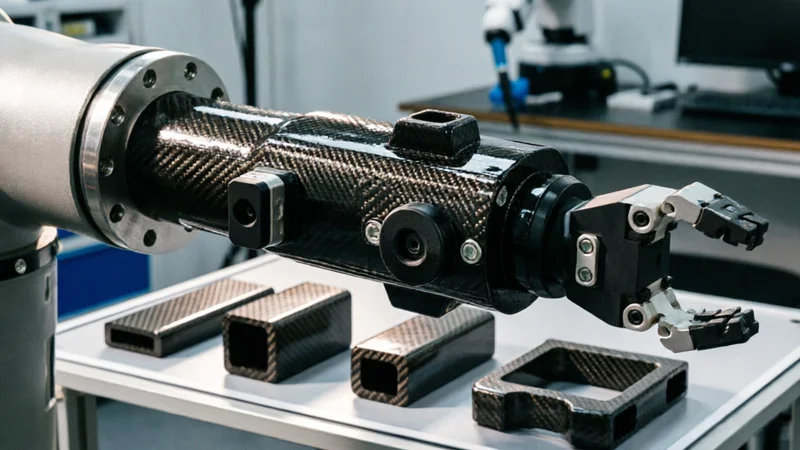
Carbon Fiber Robot End Effector Link — Custom Shape & Sensor Integration
Custom-shaped carbon fiber end effector links for robotic arms. Designed for automation integrators and research labs requiring lightweight, rigid connections between the robot wrist and gripper/tool. Can incorporate sensor mounting bosses, cable routing channels, and quick-change interfaces.
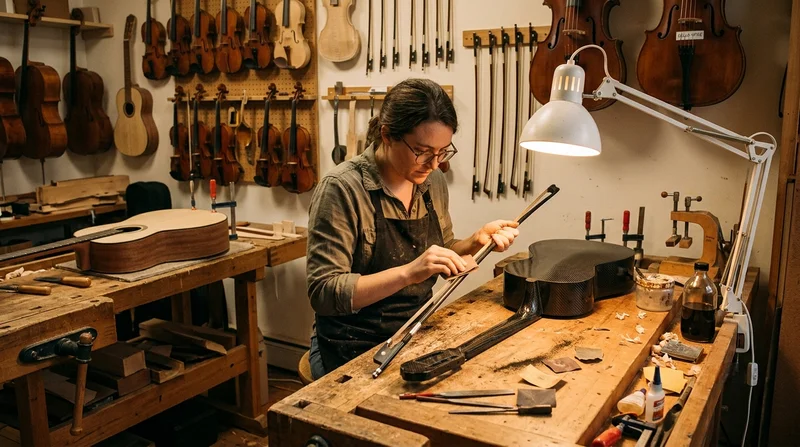
Custom Carbon Fiber Musical Instrument Parts
Carbon fiber components for musical instrument manufacturing offering superior dimensional stability, low weight, and consistent acoustic properties. We produce carbon fiber bows, guitar necks, violin chin rests, drum shells, and wind instrument bodies. Carbon fiber instruments are immune to humidity changes and temperature fluctuations that affect wooden instruments.
Custom Carbon Fiber Medical Device Components
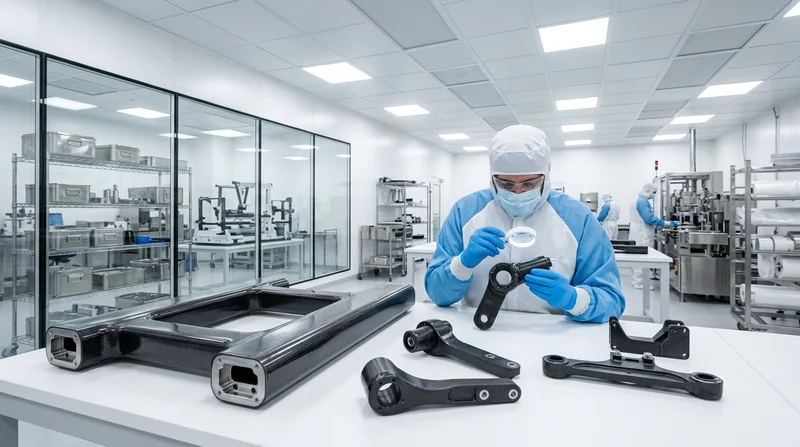
Medical-grade carbon fiber components manufactured for imaging equipment, surgical instruments, and patient support systems. Carbon fiber's radiolucency (X-ray transparency) and high strength-to-weight ratio make it ideal for CT scanner beds, wheelchair frames, surgical robot arms, and MRI-compatible accessories. Biocompatible resin systems available.
Carbon Fiber Steering Wheel — Custom Leather-Wrapped with CF Inlay
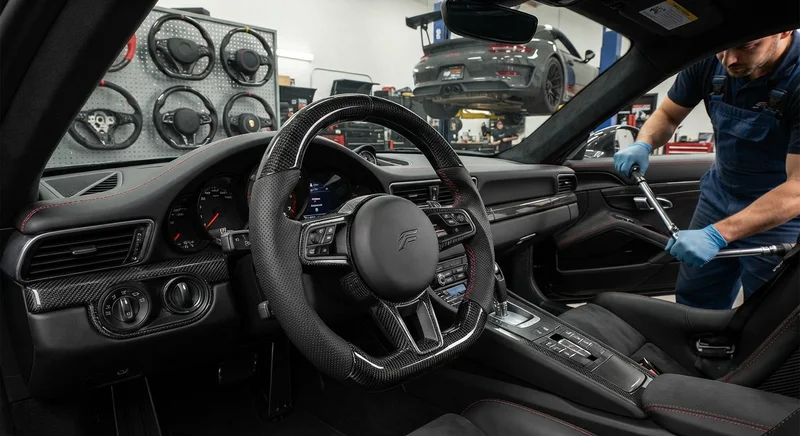
Custom carbon fiber steering wheel with genuine leather wrapping and carbon fiber inlay sections. Molded from T700 3K prepreg for maximum rigidity with a 30% weight reduction over OEM wheels. Available in D-shape (flat bottom) and round profiles. Direct bolt-on fitment for popular sports car and performance vehicle models. Custom stitching color and leather grade available.