

Choosing the right Incoterms 2026 rule is critical for carbon fiber importers managing cross-border logistics, customs compliance, and risk allocation. This article compares FOB, CIF, and DAP rules specifically for carbon fiber shipments with a cost comparison from Shanghai to Rotterdam.
Why Incoterms 2026 Matter for Carbon Fiber Procurement
International procurement of carbon fiber materials — whether in the form of continuous tow, prepreg fabric, woven roving, or pultruded profiles — involves complex logistics chains that cross multiple borders, customs jurisdictions, and regulatory regimes. The Incoterms 2026 rules, published by the International Chamber of Commerce (ICC), define the responsibilities, costs, and risks transferred between buyer and seller at each stage of the transaction. For B2B carbon fiber buyers who may be importing from China, Japan, the United States, or European producers, selecting the right Incoterm rule can mean the difference between a predictable procurement cost and a cascade of unexpected fees, customs delays, and liability disputes.
This article provides a practical comparison of the three most common Incoterm rules used in carbon fiber international trade — FOB (Free on Board), CIF (Cost, Insurance, and Freight), and DAP (Delivered at Place) — with specific guidance for carbon fiber importers. We also examine the 2026 rule updates that directly affect composite material shipments, including new provisions for digital documentation acceptance and cybersecurity responsibilities in data-transfer transactions.
Incoterms 2026 Updates Relevant to Carbon Fiber Trade
The 2026 revision introduced several changes that carbon fiber buyers and sellers should understand before negotiating contracts:
- Digital documentation equivalence: All Incoterms 2026 rules now officially accept electronic records and digital proofs of delivery alongside traditional paper documents. For carbon fiber shipments where certificates of analysis (CoA), material traceability records, and customs declarations accompany the goods, digital acceptance reduces document handling time by 3 to 5 business days per shipment.
- Cybersecurity allocation: New clauses assign responsibility for cyber risks in data-transfer transactions under FCA and DAP rules. Sellers must secure their digital systems against data tampering that could affect shipping instructions or payment releases.
- Security-related clearances: Expanded obligations for ISPS (International Ship and Port Facility Security) code compliance and container security verification — particularly relevant for carbon fiber classified under dual-use export controls.
- Insurance coverage extension: CIF rules now require insurance coverage equivalent to ICC(A) — all-risk clauses — rather than the previous minimum ICC(C) coverage, offering better protection for high-value carbon fiber cargo vulnerable to moisture damage or mechanical handling impact.
FOB: Free on Board — When Buyers Control the Ocean Leg
Under FOB (named port of shipment), the seller's responsibility ends once the goods are loaded on board the vessel nominated by the buyer. The buyer assumes all costs and risks from that point forward, including ocean freight, insurance, unloading, customs clearance at destination, and inland carriage. FOB is the most commonly used rule for carbon fiber exports from Asian manufacturing hubs such as Shanghai, Busan, and Kaohsiung.
Advantages for Carbon Fiber Buyers
- Buyer controls carrier selection — important for carbon fiber sensitive to humidity, as the buyer can specify container dehumidification or desiccant requirements directly with the shipping line
- Buyer can leverage existing freight contracts for better rates on high-volume carbon fiber shipments
- Buyer manages insurance directly, ensuring coverage specific to carbon fiber's moisture, contamination, and handling risks
- Transparent ocean freight cost — particularly advantageous when carbon fiber prices are negotiated EXW (Ex Works) and freight is a separately managed variable
Disadvantages for Carbon Fiber Buyers
- Buyer bears all risk from the port of loading onward, including potential damage during vessel loading if loading is completed without carrier liability
- Customs clearance in the exporting country is the seller's responsibility, but the buyer may need to provide documentation (end-user certificates, import licenses) that the seller requires for export declaration
- Port congestion or vessel scheduling delays at origin directly impact the buyer's supply chain — a critical concern for just-in-time carbon fiber delivery to aerospace or automotive production lines
CIF: Cost, Insurance, and Freight — The Balanced Option
CIF is identical to CFR (Cost and Freight) with the addition of marine insurance arranged by the seller. The seller procures ocean freight and insurance to the named port of destination, but risk transfers to the buyer as soon as the goods pass the ship's rail at the port of loading. Under the 2026 revision, the seller must provide ICC(A) all-risk coverage — a significant upgrade from earlier versions.
Key Considerations for Carbon Fiber CIF Shipments
- The seller controls the insurance policy — buyers must verify that the coverage explicitly includes moisture damage, condensation, and mechanical handling damage, which are the three most common causes of carbon fiber cargo claims
- Sellers typically choose the most economical freight option, which may not meet carbon fiber storage requirements (temperature-controlled containers, humidity monitoring)
- The buyer retains destination-side risk — unloading, customs clearance, and inland transport remain the buyer's responsibility
- CIF is restricted to ocean and inland waterway transport only; it cannot be used for air freight of carbon fiber samples or rush orders
DAP: Delivered at Place — Maximum Seller Responsibility
Under DAP (named place of destination), the seller bears all costs and risks to deliver the goods to a specified location in the buyer's country — typically the buyer's warehouse or factory gate. The seller arranges and pays for export clearance, main carriage (ocean, air, or multimodal), and inland delivery to the named place. The buyer assumes risk and cost only at the point of unloading at the named destination.
When DAP Makes Sense for Carbon Fiber
- First-time importers unfamiliar with customs procedures in their own country can rely on the seller's logistics expertise
- Complex customs clearance for dual-use carbon fiber products — the seller handles all export documentation including end-user certificates and re-export restrictions
- Multimodal shipments where carbon fiber arrives by sea container and is transferred to truck for final delivery — DAP covers the entire multimodal transport chain under a single seller liability
- Buyers with limited logistics staff or warehousing capacity benefit from door-to-door seller management
Side-by-Side Comparison: FOB vs CIF vs DAP for Carbon Fiber
| Criterion | FOB (Named Port) | CIF (Named Port) | DAP (Named Place) |
|---|---|---|---|
| Risk transfer point | On board vessel, port of loading | On board vessel, port of loading | At named destination (buyer's premises) |
| Export customs clearance | Seller | Seller | Seller |
| Main carriage (ocean freight) | Buyer | Seller | Seller |
| Insurance during transit | Buyer | Seller (ICC(A) all-risk) | Seller (ICC(A) recommended) |
| Import customs clearance | Buyer | Buyer | Buyer |
| Destination delivery (inland) | Buyer | Buyer | Seller |
| Unloading at destination | Buyer | Buyer | Buyer |
| Typical carbon fiber cargo value threshold | > $100,000 | $30,000–$150,000 | $50,000–$500,000 |
| Recommended for first-time importers? | No | Conditional | Yes |
Cost Comparison per 20-Foot Container (Shanghai to Rotterdam)
| Cost Element | FOB (Buyer Pays) | CIF (Incl. in Price) | DAP (Incl. in Price) |
|---|---|---|---|
| EXW carbon fiber price (40 rolls, T700 12K tow) | $38,000 | $38,000 | $38,000 |
| Inland haulage to Shanghai port | — | — | — |
| Export customs clearance | — | — | — |
| Ocean freight Shanghai→Rotterdam | $2,850 | $2,850 | $2,850 |
| Marine insurance (0.3% of cargo value) | $125 | $125 | $125 |
| Import customs clearance + duties | $3,420 | $3,420 | $3,420 |
| Inland delivery to buyer's warehouse | $680 | $680 | $680 |
| Total buyer cost | $45,075 | $41,875 | $41,195 |
Note: In the CIF and DAP columns, seller-paid elements are embedded in the product price; the buyer pays a higher unit price that includes these services. The FOB column shows the buyer paying each element separately. Actual pricing depends on negotiation and market conditions.
Best Practices for Carbon Fiber Importers
Documentation Readiness
Carbon fiber shipments require more documentation than standard commodities due to dual-use export control classifications. Ensure the following documents are specified in the Incoterms clause:
- Certificate of Analysis (CoA) with fiber tensile strength, modulus, elongation, and density — required within 5 business days of shipment
- Material Safety Data Sheet (MSDS) for the specific resin system if prepreg or towpreg is involved
- End-user certificate and import license for controlled carbon fiber grades (T800 and above in some jurisdictions)
- Country of origin certificate for preferential tariff treatment under free trade agreements
- Packing list detailing roll weights, spool quantities, and container stowage configuration
Insurance Verification
Under any Incoterm rule, verify that cargo insurance covers carbon fiber-specific risks: condensation damage during ocean transit (temperature differential in containers), crushing of spools or rolls during handling, water ingress from container washing, and theft of high-value tow. Institute Cargo Clauses (A) is the minimum recommended coverage for carbon fiber.
Risk Allocation for Late or Non-Conforming Delivery
The Incoterms 2026 rules do not address breach of contract or late delivery penalties — those belong in the underlying sales contract. Carbon fiber buyers should include a separate liquidated damages clause specifying: acceptable delivery window (+/− 3 days from agreed date), penalty for late delivery (typically 0.5 percent of cargo value per day), quality guarantee period (30 days from delivery for latent defects), and rejection terms for non-conforming material (tensile strength below minimum spec, contamination, or moisture damage).
Frequently Asked Questions
Which Incoterm rule is best for importing carbon fiber prepreg that requires cold-chain logistics?
For temperature-controlled carbon fiber prepreg shipments, DAP is strongly recommended. The seller maintains responsibility throughout the cold chain — including refrigerated container management, temperature monitoring, and documentation of temperature excursions. Under FOB or CIF, the buyer would need to separately contract and verify cold-chain compliance with the carrier at origin, which is operationally complex for a first-time buyer. DAP places the entire cold-chain responsibility on the seller, who typically has established relationships with temperature-controlled logistics providers.
Can I use CIF for air freight shipments of urgent carbon fiber tow samples?
No. CIF is strictly limited to ocean and inland waterway transport under Incoterms 2026. For air freight, use CIP (Carriage and Insurance Paid To) which covers all modes of transport and provides the same ICC(A) insurance requirement. Note that air freight for carbon fiber above 50 kg may trigger additional dangerous goods (DG) shipping charges and documentation requirements under IATA regulations.
How do Incoterms 2026 handle container loading costs for carbon fiber cargo?
The 2026 rules clarify that FOB requires the seller to load the goods into the container at origin (stuffing) and bear the associated labor and securing costs. For carbon fiber, this includes proper spool bracing, desiccant placement, and humidity indicator card installation inside the container. Under FCA (Free Carrier) — which should not be confused with FOB — loading responsibility depends on whether delivery occurs at the seller's premises or at a named terminal. Carbon fiber buyers should explicitly specify loading and securing obligations in the sales contract regardless of the Incoterm rule chosen.
What happens if carbon fiber arrives with moisture damage under CIF terms?
Under CIF, the buyer files the claim with the seller's insurance provider. The seller arranges the insurance, so the buyer must obtain a copy of the insurance certificate and the seller's claim-filing assistance. Under DAP, the seller bears the risk and handles the claim directly with their insurer — the buyer simply rejects the goods and is reimbursed or receives replacement material, provided damage was noted at the time of delivery and documented on the delivery receipt.
Can a Chinese carbon fiber seller and a German buyer use FOB for a multimodal shipment (sea + rail)?
Technically, FOB applies only to sea transport and risk passes when goods are on board the vessel at the port of loading. For multimodal sea + rail shipments, consider FCA (named place) for the seller's delivery to the first carrier, or use DAP with the named final destination. The ICC recommends against using FOB for multimodal transport because the risk transfer point becomes ambiguous when cargo is transferred between different modes.
Part of topic
Related Articles
- Recycled Carbon Fiber Market Forecast 2030: Technology Maturity and Commercialization Path
- South Korea Carbon Fiber Market 2026: Hydrogen Economy and Shipbuilding Innovation
- Wind Turbine Blade Leading Edge Protection 2026: Polyurethane, Tape, and Metallic Shield Solutions
- China Carbon Fiber Overcapacity 2026: Price War Impact and Industry Consolidation
- India Carbon Fiber Market 2026: Wind Energy, Aerospace, and Defense Expansion
- PAN Precursor Market 2026: Acrylonitrile Supply and Carbon Fiber Cost Structure
Interested in Our Products?
Contact our team for competitive pricing and technical specifications.
Get a QuoteRelated Products
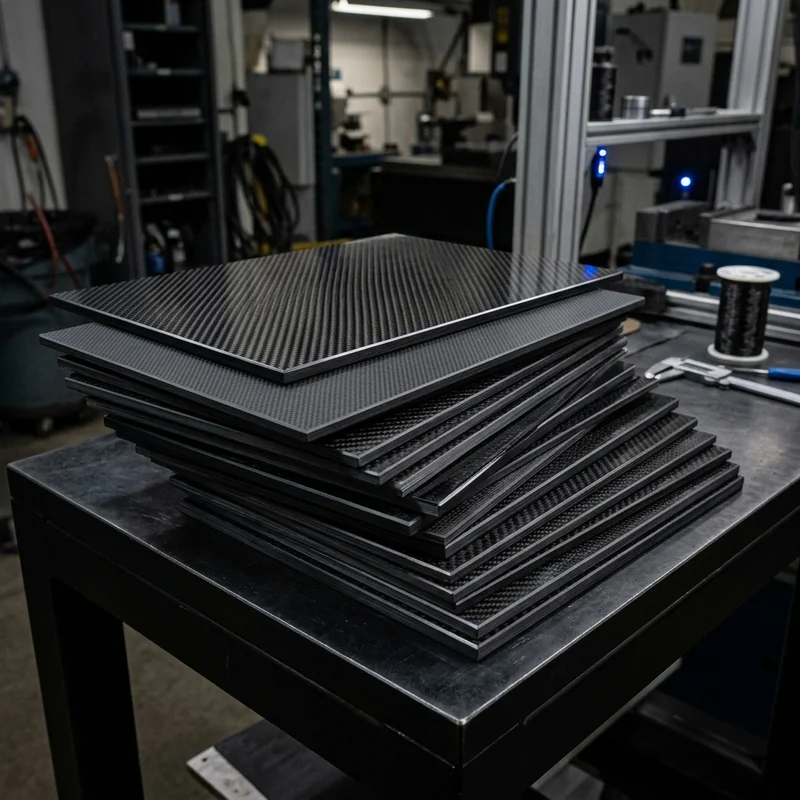
Carbon fiber standard plate-3k stripe
Lightweight, ultra-rigid standard sheets for drone fuselages, robot housings, facades and structural applications.

Carbon Fiber Plate — 3K Twill T700 1.5mm
Thin 1.5mm carbon fiber plate with 3K twill weave surface. Lightweight and stiff, commonly used for covers, panels, drone bodies, and applications requiring a premium aesthetic appearance.

Square Carbon Fiber Tube — 3K Twill T700
Square cross-section carbon fiber tube manufactured with 3K twill weave for torsional strength. Preferred for structural frames, trusses, and support columns where rectangular geometry offers design flexibility.

Carbon Fiber Plate — 3K Twill T700 3.0mm
Medium-thickness 3.0mm carbon fiber plate offering significantly higher load capacity while maintaining attractive 3K twill finish. Suitable for structural brackets, reinforcement plates, and load-bearing panels.
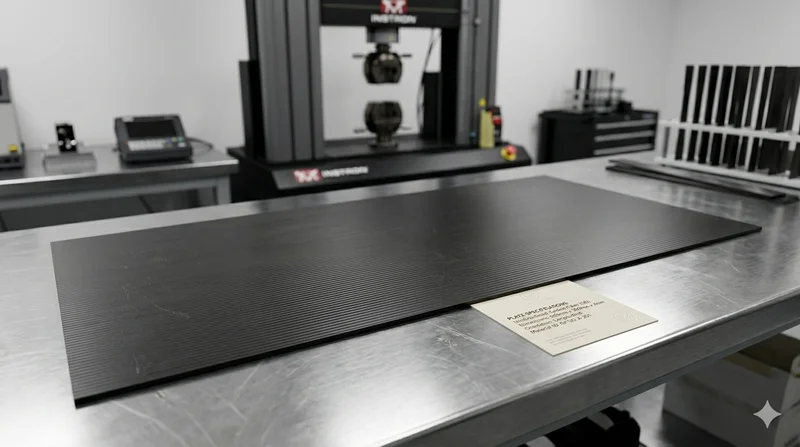
Carbon Fiber Plate — UD Unidirectional T700
Unidirectional carbon fiber plate with all fibers oriented in a single direction for maximum strength along the fiber axis. Essential for structural reinforcements, splints, and applications where load direction is predictable.