
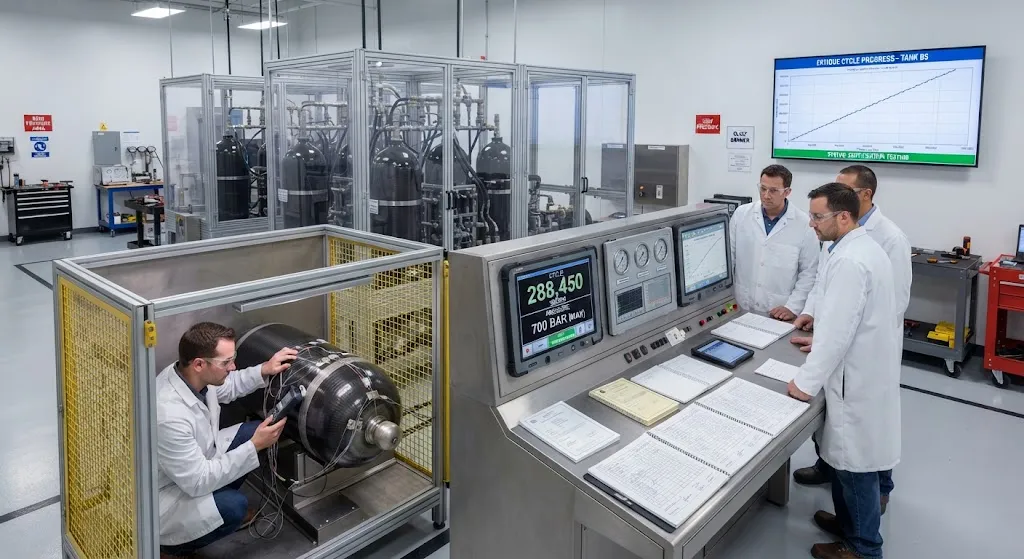
The pressure cycle is the unit of truth for a hydrogen tank. A tank filled to 350 or 700 bar and emptied again experiences a fatigue load that no single burst test can represent: the liner deforms, the carbon fiber overwrap carries the alternating load, and small defects grow cycle by c
Introduction
The pressure cycle is the unit of truth for a hydrogen tank. A tank filled to 350 or 700 bar and emptied again experiences a fatigue load that no single burst test can represent: the liner deforms, the carbon fiber overwrap carries the alternating load, and small defects grow cycle by cycle until the vessel or its liner fails. For fleet operators the difference between 150,000 and 300,000 cycles is the difference between a five-year replacement cycle and a decade of service, and it directly changes the economics of owning a hydrogen vehicle.
The certification world is responding to this reality with a tightening cycle. The ISO 11439 framework, which has governed cylinder fatigue qualification across the industry, is moving toward more demanding fatigue test programs with stricter requirements expected around 2027-2028, and carbon footprint accounting is projected to be added to hydrogen storage certification between 2028 and 2030. This article walks through the fatigue mechanisms behind the cycle-life gap, the certification path as it exists today, and the changes tank makers, certifiers and fiber suppliers should prepare for.
Why Type IV Outlasts Type III in Cycling
The cycle-life gap between Type III and Type IV tanks is a liner story. In a Type III tank the liner is metallic — typically aluminum or steel — and it participates in the structural load path. Each pressurization cycle pushes the metal liner into plastic deformation at the higher end of the pressure range, and the liner accumulates damage at stress concentrations around the boss and the dome transition. The fatigue life of the vessel is therefore bounded by the metal liner's crack resistance, and the practical consequence is a typical service life of roughly 150,000 cycles, which corresponds to 5-7 years of daily fleet operation.
A Type IV tank replaces the metal liner with a polymer liner that does not carry primary structural load. The carbon fiber overwrap, which is virtually insensitive to fatigue under the relatively low alternating stresses it sees in service, carries the pressure loads, while the polymer liner mainly manages permeation and the sealing interface. Because the load-bearing composite is not the fatigue-critical component, Type IV tanks commonly demonstrate 300,000 cycles and beyond, translating to 8-12 years of service. This difference is not incidental — it is the design rationale for the polymer-lined configuration in heavy-duty applications where daily refills accumulate cycles quickly.
Cycle Life and Design Pressure in Perspective
The table below summarizes the fatigue characteristics that matter in supplier qualification:
| Parameter | Type III Tank | Type IV Tank |
|---|---|---|
| Liner material | Aluminum or steel (load-bearing) | Polymer (non-structural) |
| Typical cycle life | ~150,000 cycles | 300,000+ cycles |
| Typical service window | 5-7 years | 8-12 years |
| Fatigue-critical element | Metallic liner at boss and dome | Composite overwrap (low alternating stress) |
| Common design pressure | 350-700 bar | 350-700 bar |
Certification programs verify these properties with defined cycle profiles rather than with a single number. The qualifying test typically runs from ambient pressure to the nominal working pressure at a specified rate, with additional cycling at intermediate pressures to represent partial refills, and occasional tolerance band checks near the service pressure. The cycle count in the qualification test is deliberately set below the demonstrated capability in most cases, but the margin between the tested count and the field life is exactly what fleet economics depend on.
The Evolving ISO 11439 Certification Path
ISO 11439 has been the anchor standard for cylinder fatigue qualification, and its evolution tracks two pressures: field failure evidence and the growth of hydrogen commercial fleets. The current framework already requires cycling tests, proof tests and burst verification, but the certification community is preparing a more demanding regime. Stricter fatigue test requirements are expected around 2027-2028, driven by two observations: the first generation of high-usage fleet tanks is approaching its design life, and field data is showing that accelerated real-world duty — more partial refills, hotter climates, aggressive driving cycles — stresses tanks harder than the standard test profile assumed.
Beyond fatigue mechanics, the certification path is absorbing environmental accounting. Carbon footprint rules are projected to enter hydrogen storage certification between 2028 and 2030, meaning tank qualification will eventually include a documented cradle-to-gate footprint alongside mechanical performance. For carbon fiber suppliers this is a structural shift: the fiber's production footprint will become part of the tank's certified data, so producers who can document low-carbon carbonization will have a qualification advantage in the storage segment, just as they are beginning to see in wind blade components under the EU's carbon border mechanism.
Design and Supply Measures That Extend Cycle Life
Extending cycle life is a combined engineering and procurement task. The practices below are the ones that repeatedly show up in qualification programs for long-life tanks:
- Boss and dome design: shaping the dome transition and boss geometry to avoid stress concentrations that localize liner and fiber damage during cycling.
- Residual stress management: using autofrettage or equivalent processes on metallic-lined tanks to place the liner in a favorable mean stress state.
- Fiber selection for cyclic stability: choosing intermediate-modulus grades with demonstrated fatigue response and avoiding fiber variability that degrades the overwrap under repeated load.
- Qualification at realistic duty: testing at the actual service pressure profile — including partial refills and temperature bands — rather than only at nominal conditions.
- Inline flaw control: monitoring winding tension, void content and liner thickness during production so defects that initiate early fatigue failure are caught before the tank ships.
For procurement teams, the implication is that cycle-life claims are only as good as the test evidence behind them. A qualified 300,000-cycle Type IV tank from a supplier with documented inline quality control is a different asset than a tank quoted with the same number but tested only at nominal conditions, and the certification evolution toward stricter fatigue programs will widen that difference.
Frequently Asked Questions
Why do Type IV tanks have a longer fatigue life than Type III tanks?
The difference is in the liner. Type III tanks use a metal liner that carries structural load and accumulates fatigue damage at stress concentrations under each pressure cycle, which bounds typical life at roughly 150,000 cycles. Type IV tanks use a polymer liner that does not carry primary load, so the carbon fiber overwrap bears the pressure forces with low alternating stresses and the vessel commonly reaches 300,000 cycles and beyond. The trade-off is that Type IV tanks must manage hydrogen permeation through the polymer, while Type III tanks must manage metal-liner fatigue and crack growth.
What is changing in hydrogen tank certification around 2027-2028?
Stricter fatigue test requirements are expected around 2027-2028, responding to the first generation of high-usage fleet tanks approaching their design life and to field data showing real-world duty stresses tanks harder than older test profiles assumed. The ISO 11439-based path is moving toward more demanding cycle profiles, additional intermediate-pressure cycling, and fuller documentation of test margins. Between 2028 and 2030, carbon footprint accounting is projected to enter hydrogen storage certification, which will eventually make the fiber production footprint part of the certified tank data.
How does the carbon footprint requirement affect carbon fiber suppliers?
Once carbon footprint accounting enters hydrogen storage certification, the fiber's cradle-to-gate footprint becomes part of the tank's certified data package. Suppliers who can document low-carbon carbonization, transparent energy sources and verified production footprints will hold a qualification advantage in the storage segment, because tank makers will need that data to certify their vessels. This mirrors the trend already visible in wind blade components under the EU carbon border mechanism, where documented footprint data is becoming a commercial requirement rather than an optional ESG exercise.
Conclusion
The fatigue life of a hydrogen tank — 150,000 cycles for a typical Type III, 300,000 and beyond for a Type IV — is the property that determines whether the vessel survives a fleet's economic life. The certification path built around ISO 11439 is tightening in response, with stricter fatigue test programs expected around 2027-2028 and carbon footprint accounting projected to enter the qualification between 2028 and 2030. Buyers should treat cycle-life claims as test-data claims, and suppliers should treat qualification evidence and footprint documentation as the new competitive currency.
Whether you are specifying tanks or selecting fiber for a storage program, the qualification data behind the material matters as much as the headline strength. Browse our carbon fiber grades for pressure vessel applications, or talk to our engineering team about fatigue-test documentation and fiber selection for your certification program.
Part of topic
Related Articles
- Bio-Based Carbon Fiber Precursors: Lignin and Polyethylene for Low-Cost Production
- Large-Tow Carbon Fiber Cost Analysis: 48K vs 60K Price-Performance Comparison
- Carbon Fiber-Resin Interface Bonding: Surface Treatment and Coupling Agent Optimization
- Digital Twin for Carbon Fiber Manufacturing: Real-Time Process Monitoring and Defect Prevention
- Thermoplastic Carbon Fiber Welding for Automotive: Ultrasonic and Induction Welding Process Windows
- Large-Tow Carbon Fiber Wet Spinning: Process Optimization for 48K/60K Production Efficiency
Interested in Our Products?
Contact our team for competitive pricing and technical specifications.
Get a QuoteRelated Products
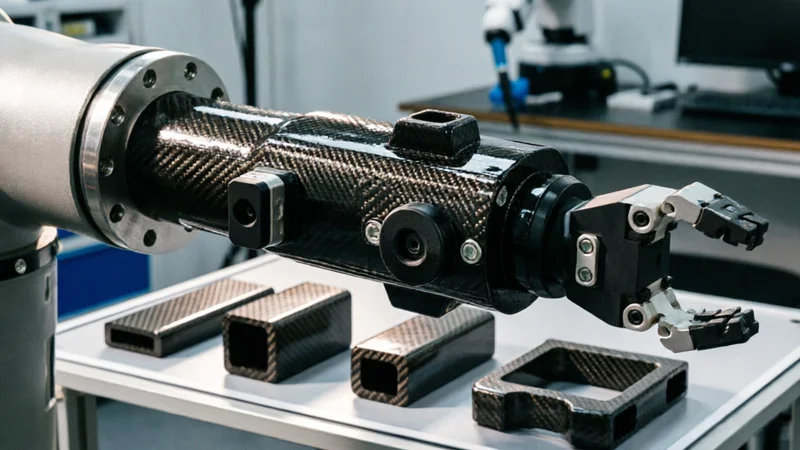
Carbon Fiber Robot End Effector Link — Custom Shape & Sensor Integration
Custom-shaped carbon fiber end effector links for robotic arms. Designed for automation integrators and research labs requiring lightweight, rigid connections between the robot wrist and gripper/tool. Can incorporate sensor mounting bosses, cable routing channels, and quick-change interfaces.

Custom Carbon Fiber Musical Instrument Parts
Carbon fiber components for musical instrument manufacturing offering superior dimensional stability, low weight, and consistent acoustic properties. We produce carbon fiber bows, guitar necks, violin chin rests, drum shells, and wind instrument bodies. Carbon fiber instruments are immune to humidity changes and temperature fluctuations that affect wooden instruments.
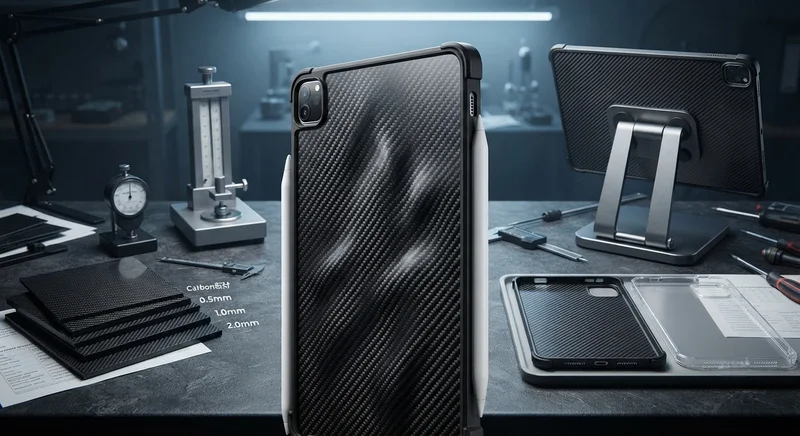
Carbon Fiber Tablet Case — Ultra-Light Protective Shell
Lightweight carbon fiber protective case for tablets and iPads. Molded from T700 3K prepreg with reinforced corner protection. Adds minimal weight while providing superior rigidity and drop protection compared to polycarbonate or silicone cases. Ideal for field workers, enterprise deployments, and professionals requiring durable tablet protection.
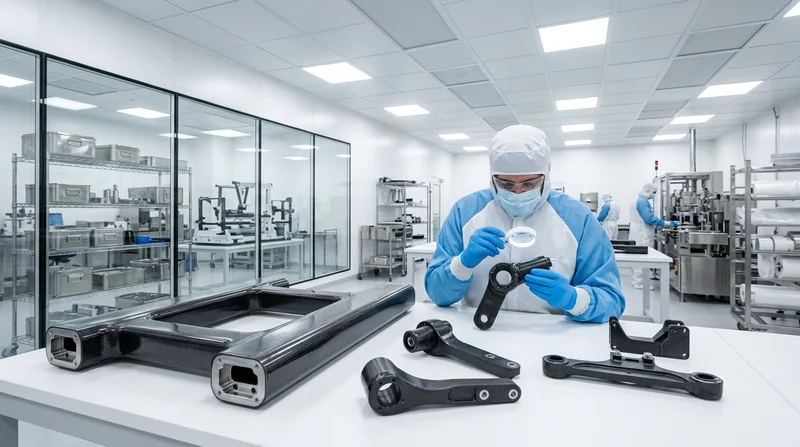
Custom Carbon Fiber Medical Device Components
Medical-grade carbon fiber components manufactured for imaging equipment, surgical instruments, and patient support systems. Carbon fiber's radiolucency (X-ray transparency) and high strength-to-weight ratio make it ideal for CT scanner beds, wheelchair frames, surgical robot arms, and MRI-compatible accessories. Biocompatible resin systems available.

Carbon Fiber Plate — High-Gloss Decorative
High-gloss decorative carbon fiber plate with a mirror-like surface finish. The glossy coating enhances the visible 3K twill weave, creating a premium aesthetic for consumer-facing applications. Lightweight yet stiff, available in thin gauges for easy cutting and forming.