Most builders looking up how cut carbon fiber tube methods are already mid-project, holding a tube that needs a clean square end. Delamination at the cut is the failure that costs a rebuild: once the plies separate at the exit edge, the tube loses hoop integrity and the damaged length has to be trim
Introduction
Most builders looking up how cut carbon fiber tube methods are already mid-project, holding a tube that needs a clean square end. Delamination at the cut is the failure that costs a rebuild: once the plies separate at the exit edge, the tube loses hoop integrity and the damaged length has to be trimmed off, wasting material and schedule. The good news is that delamination is almost always a tooling and technique problem, not a material problem — carbon fiber tube responds predictably to the right blade, the right feed, and a rigid fixture.
This guide covers tool selection, feed rates, wet versus dry cutting, and the deburring steps that turn a rough cut into a mountable end, then closes with the tolerances to specify when ordering custom cut carbon fiber.
How Cut Carbon Fiber Tube: Tool Selection for Clean Edges
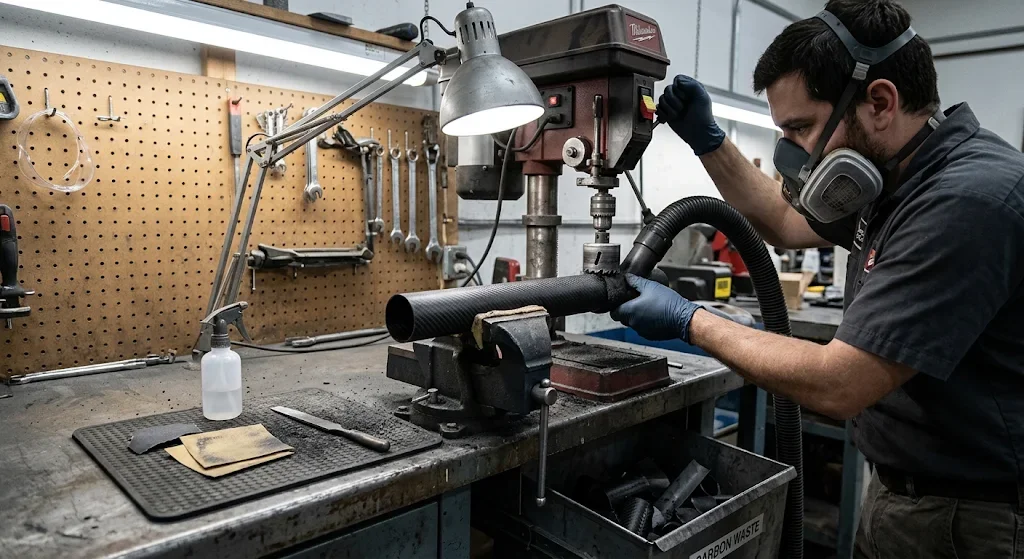
Three tool families dominate tube cutting. A carbide-tipped hole saw with 80 to 120 teeth per inch cuts wall thicknesses up to about 2 mm cleanly and is the workhorse for short production runs. A diamond-rimmed blade on a chop saw or table saw handles thicker walls and larger diameters, at higher tool cost but longer blade life. A fine-tooth circular saw blade (60 to 80 teeth, carbide or CBN) sits between the two and suits mixed tube and plate work. High-speed steel blades dull almost immediately against carbon abrasion and should not be used.
- Carbide hole saw: best for diameters 8 to 60 mm; cut speed 1,500 to 2,500 RPM; pairs with a drill press and a padded backing block for square ends.
- Diamond blade: best for walls above 2 mm and diameters above 60 mm; run wet; keep the blade dressed so the rim does not glaze.
- Fine-tooth circular blade: best when the same setup must also cut carbon fiber plate; use a zero-clearance insert to support fibers at the exit.
| Tool | Best wall range | Typical speed | Coolant | Edge quality |
|---|---|---|---|---|
| Carbide hole saw (80-120 TPI) | 0.5-2.0 mm | 1,500-2,500 RPM | Optional | Fine, minimal burr |
| Diamond rim blade | 1.0-5.0 mm | 2,000-4,000 RPM | Required (wet) | Very fine |
| Fine-tooth carbide blade | 0.5-3.0 mm | 2,500-3,500 RPM | Preferred | Fine with support |
| HSS blade | Any | Any | Any | Poor, heavy burr |
Blade condition matters as much as blade type. A glazed diamond rim or a dull carbide tooth rubs instead of cutting, raises heat, and softens the resin matrix right where delamination starts. Replace or dress the blade at the first sign of smoke or a polished (rather than matte) cut face.
How to Cut Carbon Fiber Plate and Tube: Feed Rates Compared
Feed rate is the variable most often set too aggressive. A carbon fiber tube should advance slowly enough that the blade clears chips before they pack — in practice, a steady hand feed with light pressure, letting the tool do the work. Forcing the cut increases heat, pulls fibers out of the matrix, and opens the exit plies. On a chop saw, use a full downstroke over 3 to 5 seconds rather than a fast chop. On a drill press with a hole saw, peck feed in 1 to 2 mm increments clears dust and keeps the rim cool.
Wet cutting is the single biggest lever for edge quality. A fine water mist or a flooded trough suppresses carbon dust (a respiratory hazard and an equipment abrasive) and carries heat away from the resin. If wet cutting is not practical, use a shop-vacuum shroud at the cut and wear an N95 or better; dry cutting is acceptable for short runs when dust control is in place, but the cut face will need more deburring.
Clamping closes the loop. A padded vise or a cradle with soft jaws holds the tube without crushing the wall, and a backing block behind the exit face supports the last plies so they are cut rather than broken. Unclamped free-hand cuts are the most common source of exit-side delamination, even with a sharp blade.
Custom Cut Carbon Fiber: Tolerances and Edge Finish for Tube and Plate
When the cut is outsourced, the tolerance stack on the quote decides whether parts drop into frames on arrival. For square-cut tube ends, specify length tolerance of ±0.5 mm as a baseline and ±0.2 mm when the tube locates a bearing or a press-fit mount. Perpendicularity (squareness of the end face to the tube axis) is often the tighter spec: 0.1 mm over the wall thickness is achievable with a supported cut and should be written into the drawing, not left to the shop floor.
Edge finish needs its own line item. A deburred, matte-cut end is ready for bonding or insert installation; a glossy smear-cut end indicates resin re-weld and must be dressed with 120 to 240 grit before adhesive will wet it properly. Ask whether the supplier deburrs both faces and whether they clean residual carbon dust from the bore — dust left in the bore migrates into bonded joints later. For custom cut carbon fiber plate, add a chamfer callout (0.3 to 0.5 mm) on both faces so sharp carbon edges do not cut wiring or skin during assembly.
Frequently Asked Questions
Can I cut carbon fiber tube with a regular saw?
Only with a carbide or diamond blade and proper dust control. A general-purpose wood or metal blade dulls immediately, generates heat, and tears fibers, producing heavy delamination. Use a blade with 60 teeth per inch or more, run the cut slowly, and support the exit face.
What is the best way to prevent delamination when cutting thin-wall tube?
Support the exit face with a backing block, cut wet or with vacuum extraction, and feed slowly. For walls under 1 mm, a fine-tooth blade with a zero-clearance insert and light peck feed keeps the last plies intact; clamp close to the cut line so the wall cannot vibrate.
Should carbon fiber tube ends be cut square or angled?
Square for almost every structural joint — butt joints, bonded sleeves, and press-fit mounts all assume a square reference face. Angled cuts are only specified for mitered frames and should be called out on the drawing with the angle and the tolerance, because free-hand miters drift and ruin fit-up.
Conclusion
Cutting carbon fiber tube without delamination comes down to a sharp carbide or diamond tool, slow feed with a supported exit face, wet cutting where possible, and a written tolerance stack when the cut is outsourced. YongXian supplies carbon fiber tubes cut to length with square, deburred ends: browse cut-to-length carbon fiber tubes or send your cut list and tolerance requirements.
Part of topic
Related Articles
- Prusament PETG Carbon Fiber: Print Settings and Mechanical Behavior
- Small Carbon Fiber Rods: Diameters, Stock Lengths, and Uses
- How to Create Carbon Fiber Parts: Tooling Choices Compared
- A sheet of carbon fiber: Anatomy of Cloth, Resin, and Cure
- Full Carbon Fiber Plates: 100% Laminate vs Hybrid Layups
- How to Make Carbon Fiber Parts: Wet Layup to Autoclave
Interested in Our Products?
Contact our team for competitive pricing and technical specifications.
Get a QuoteRelated Products
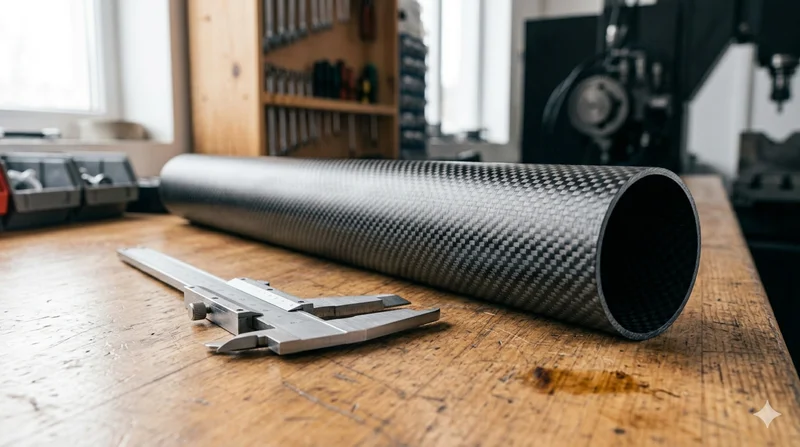
Round Carbon Fiber Tube — 3K Plain Weave T700
Standard round carbon fiber tube manufactured from Toray T700 grade fiber with 3K plain weave. Offers balanced strength and stiffness for general industrial applications including robotics, automation, sports equipment, and aerospace structures.
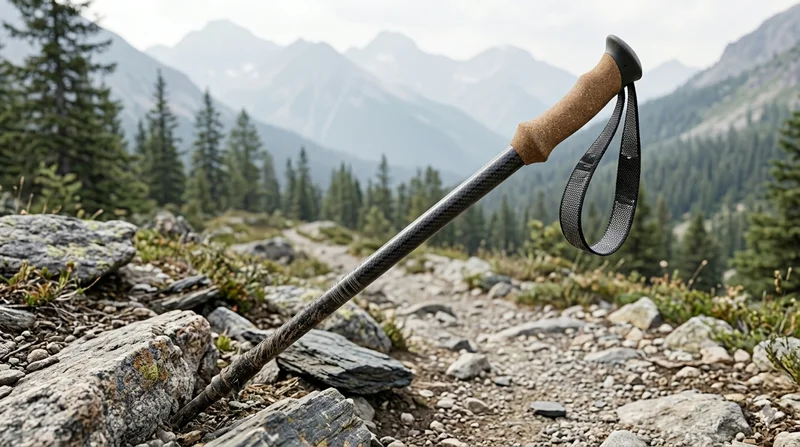
Carbon Fiber Trekking Pole
Lightweight carbon fiber trekking pole manufactured from high-grade carbon fiber tube. Weighs only 160g per pole while providing superior shock absorption and durability for hiking, trail running, and backpacking.
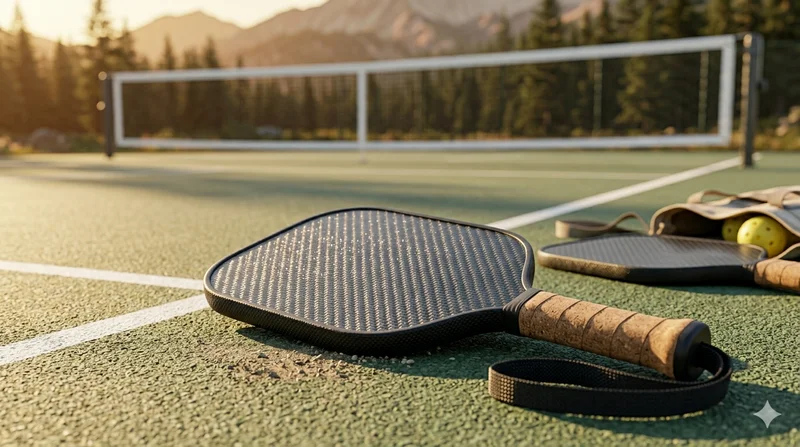
Carbon Fiber Pickleball Paddle
High-performance pickleball paddle with Toray T700 carbon fiber face and polypropylene honeycomb core. Delivers excellent power-to-weight ratio, spin generation, and vibration dampening for competitive play.
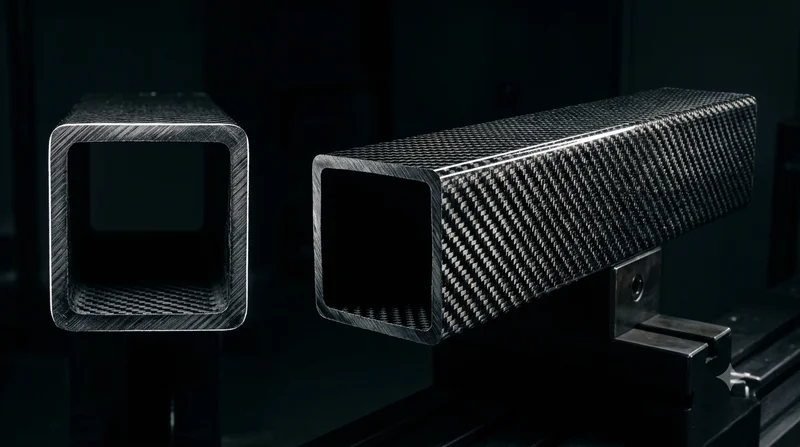
Square Carbon Fiber Tube — 3K Twill T700
Square cross-section carbon fiber tube manufactured with 3K twill weave for torsional strength. Preferred for structural frames, trusses, and support columns where rectangular geometry offers design flexibility.
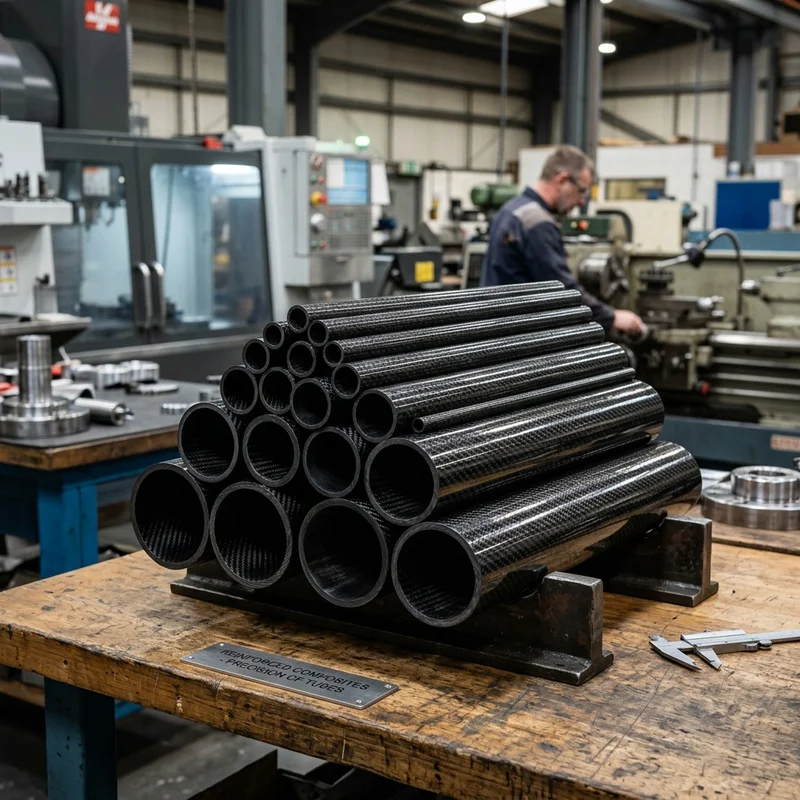
Round Carbon Fiber Tube — 3K Twill
Lightweight and ultra-stiff round tubes ideal for drone frames, robotics, and structural applications.